Artwork
Désert
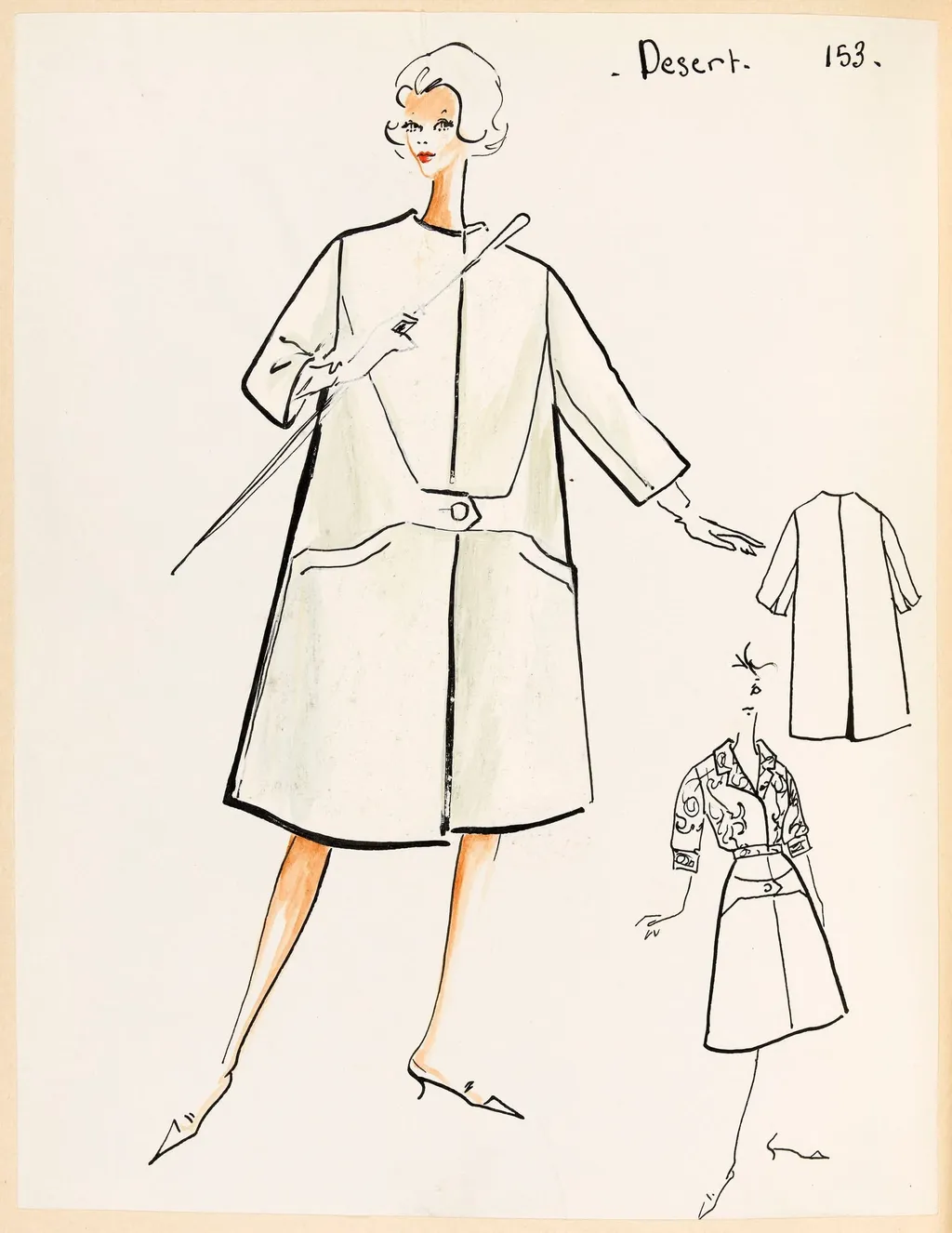
Désert is a drawing by Marie-Louise Carven. It dates from 1959 and is held in the collection of the Palais Galliera - Musée de la Mode de la Ville de Paris.
About this work
Overview
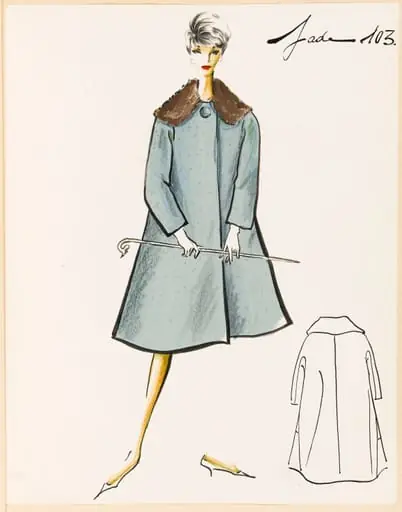
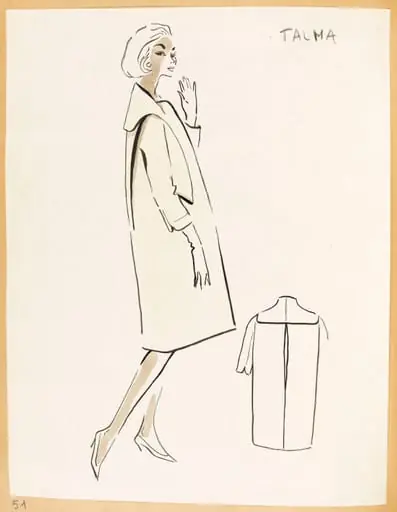
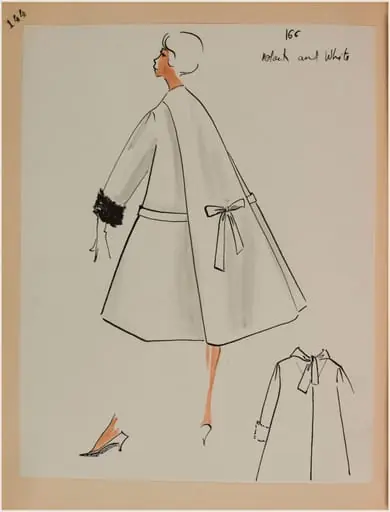
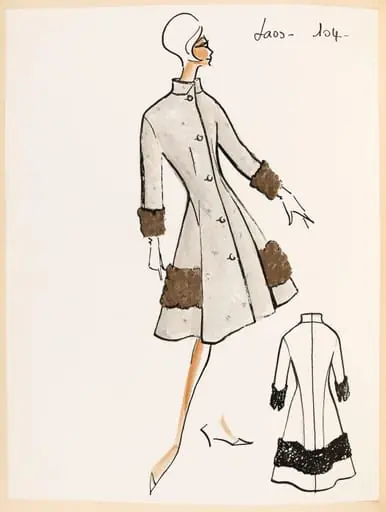
Created around 1959 by French designer Marie-Louise Carven, *Désert* is a fashion sketch that reflects her approach to wearable, understated design.
Created around 1959 by French designer Marie-Louise Carven, *Désert* is a fashion sketch that reflects her approach to wearable, understated design. Carven, who established her label in 1945, focused on garments suited to petite figures and emphasized practicality over ornamentation. This drawing, part of the Museum of Ethnography’s collection, captures two figures in simplified forms, suggesting a vision of everyday clothing rather than haute couture.
Subject & Meaning
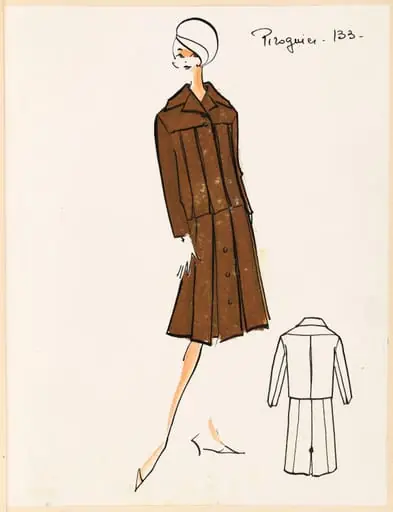
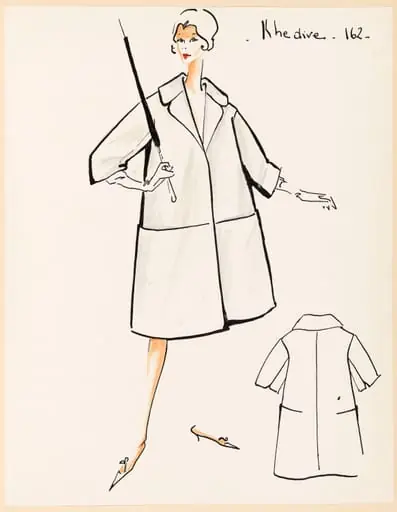
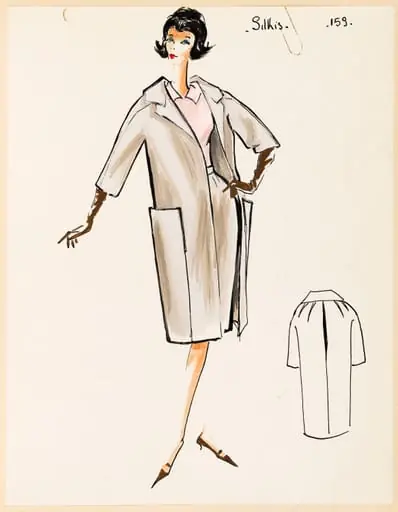
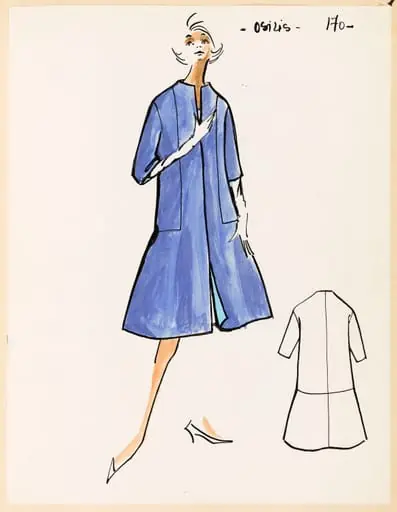
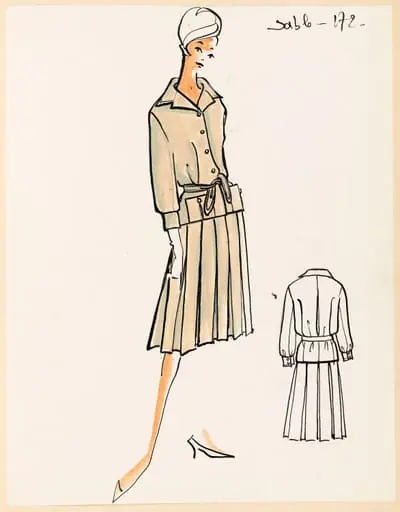
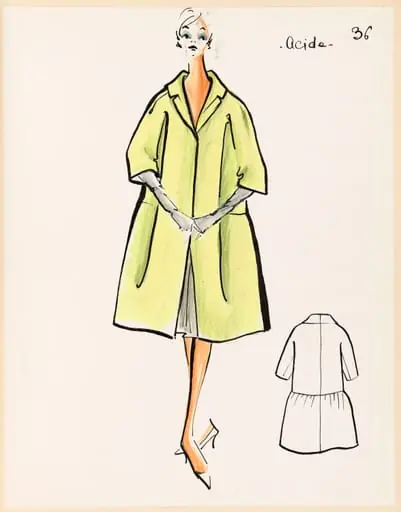
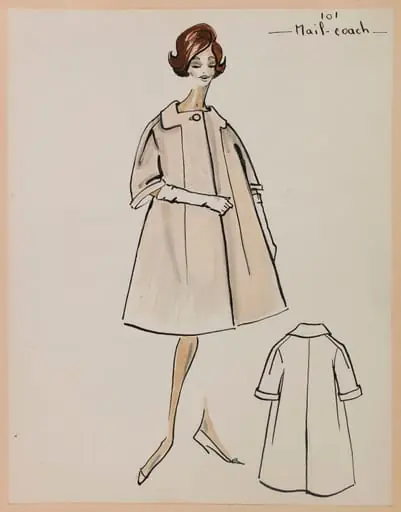
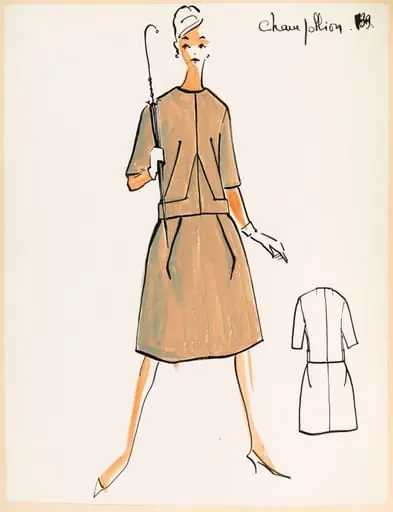
The sketch depicts two women in modest, functional outerwear—one in a light gray coat with belt and pockets, the other in a loosely cut jacket with a bold pattern. The presence of a folded paper in one hand and the label 'Désert' suggest a narrative or collection title, possibly evoking simplicity or spatial minimalism. The figures are rendered without embellishment, reinforcing Carven’s emphasis on utility and quiet elegance in women’s daily attire.
Technique & Style
Carven employed loose, fluid strokes to define form, avoiding fine detail in favor of broad shapes and implied shadows. The drawing’s economy of line conveys movement and structure without reliance on intricate rendering. Fabric texture is suggested through contour and fold, not texture work, aligning with her design philosophy: clarity of silhouette and comfort over decorative excess.
History & Provenance
The sketch entered the collection of the Museum of Ethnography, a rare placement for a fashion design, indicating its significance as a cultural artifact. Created during the rise of prêt-à-porter in postwar Paris, *Désert* represents Carven’s role in shifting fashion toward accessible, mass-produced garments. Its preservation suggests recognition of her contribution to modern dress beyond the runway.
Context
In the late 1950s, Parisian fashion was dominated by haute couture, yet Carven championed ready-to-wear for everyday women. Her use of lightweight fabrics like gingham and lace, alongside tailored fits, responded to changing lifestyles and the demand for practical clothing. *Désert* reflects this shift—its unadorned forms align with broader societal moves toward simplicity and functionality in postwar Europe.
Legacy
Carven’s work, including *Désert*, helped redefine fashion’s relationship to the body and daily life. By prioritizing fit, fabric, and ease over spectacle, she influenced the trajectory of modern prêt-à-porter. Though not widely celebrated in mainstream fashion history, her sketches remain important records of a quieter, more inclusive vision of women’s clothing that resonated beyond elite circles.
Artist & collection
Artist
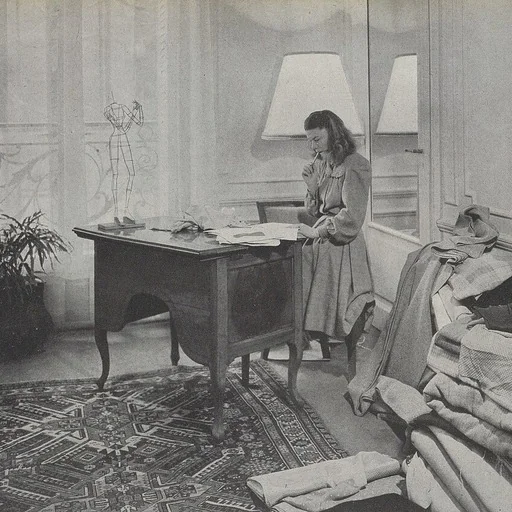
Marie-Louise Carven (31 August 1909 – 8 June 2015), born Carmen de Tommaso, was a French fashion designer who founded the house of Carven in 1945.
Museum
Palais Galliera - Musée de la Mode de la Ville de Paris
Continue through works from the same source collection.
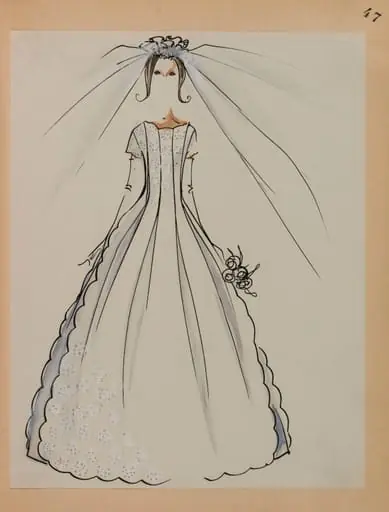 Robe de mariée festonnée et son voile
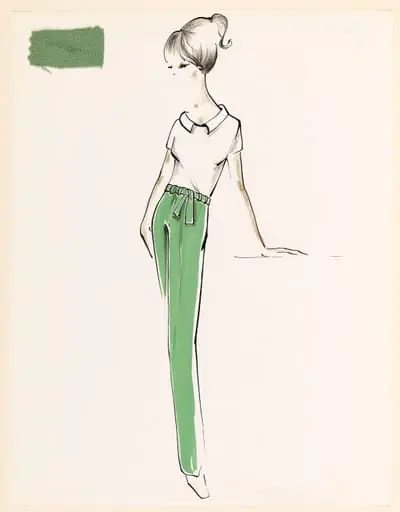 Haut blanc à manches courtes et pantalon vert à ceinture nouée
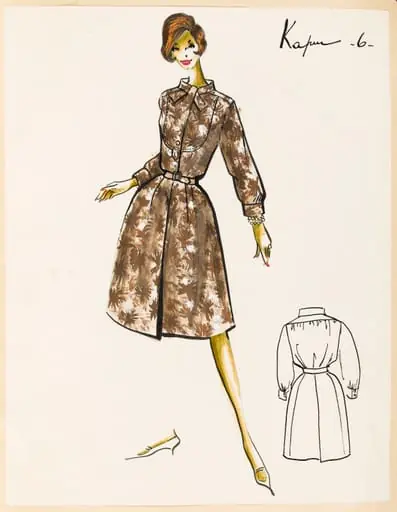 Kapur
Kapur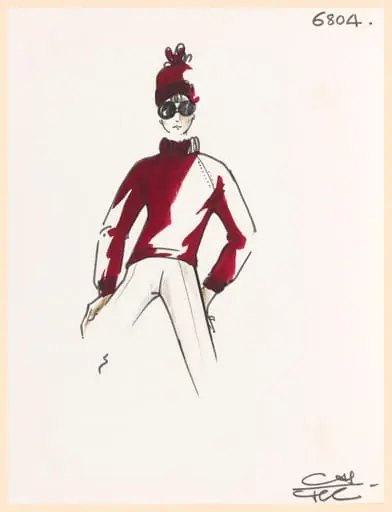 Pull-over à manches longues pourpre, bonnet assorti, pantalon et lunettes de soleil
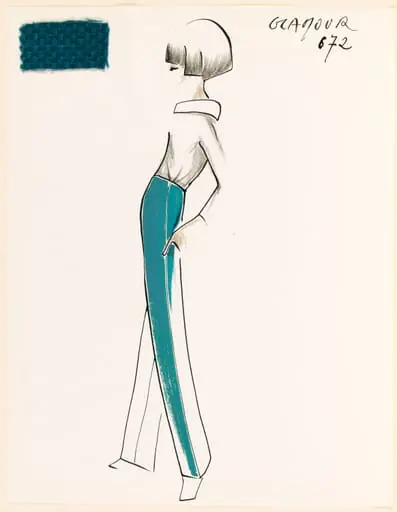 GLAMOUR
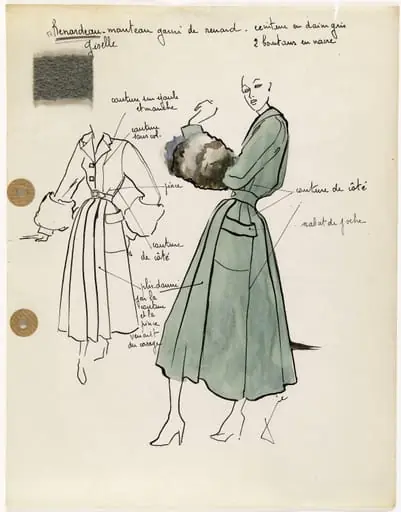 'Renardeau'
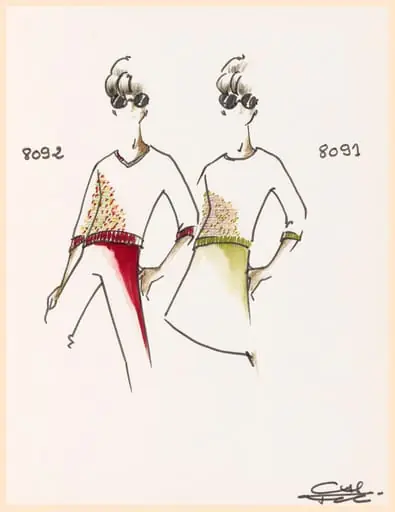 Pull-over à manches trois quarts et à encolure V à motifs multicolores, pantalon cerise et lunettes de soleil
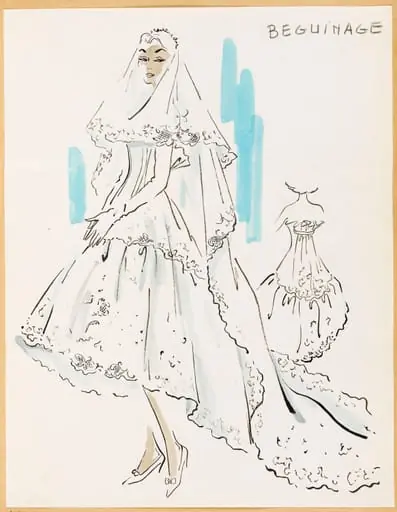 Béguinage