Artwork
Fushia (sic)
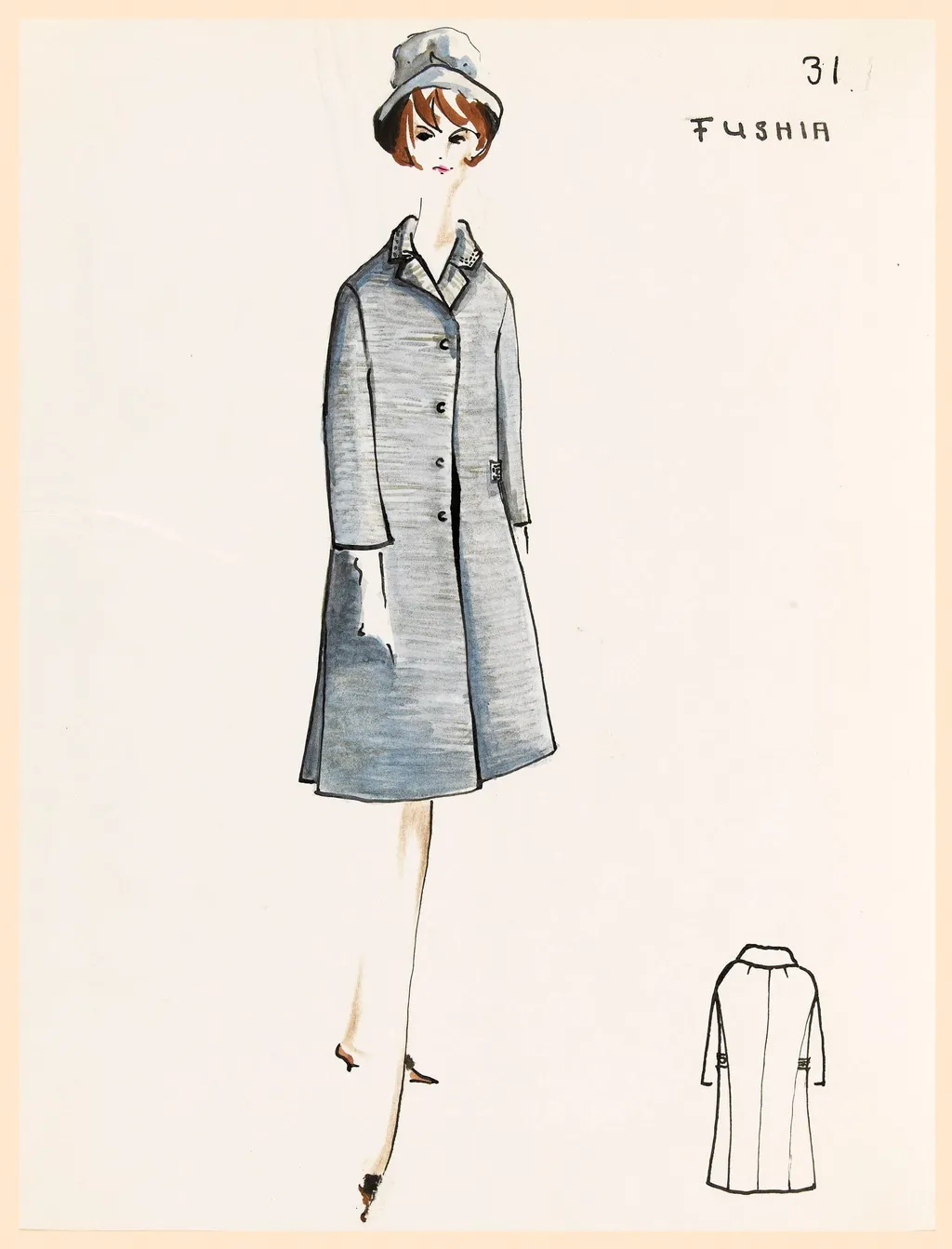
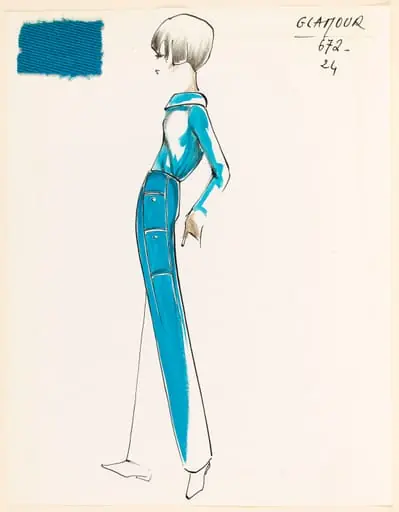
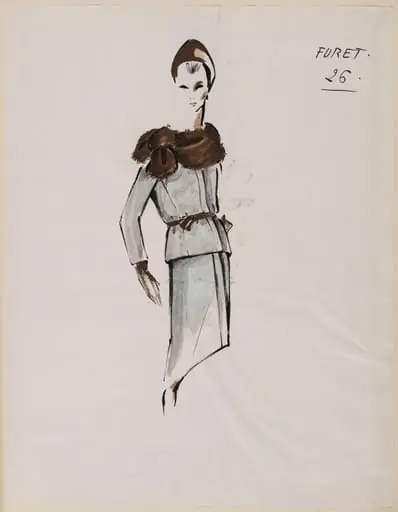
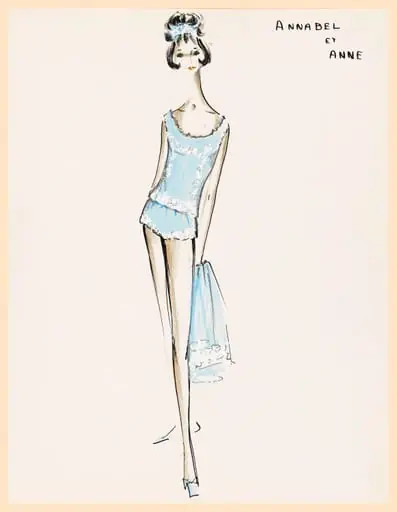
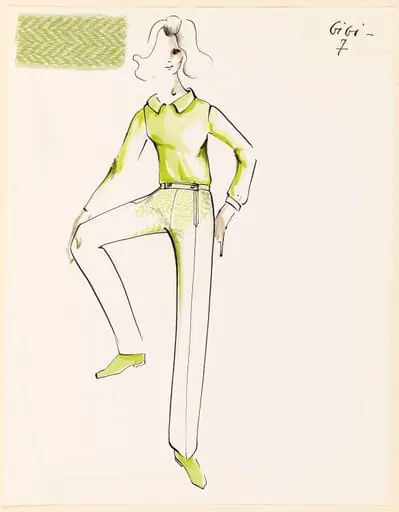
Fushia (sic) is a drawing by Carven. It dates from 1967 and is held in the collection of the Palais Galliera - Musée de la Mode de la Ville de Paris.
About this work
The style of the clothing and the simplicity of the background suggest that it may have been created for a fashion magazine or catalog.
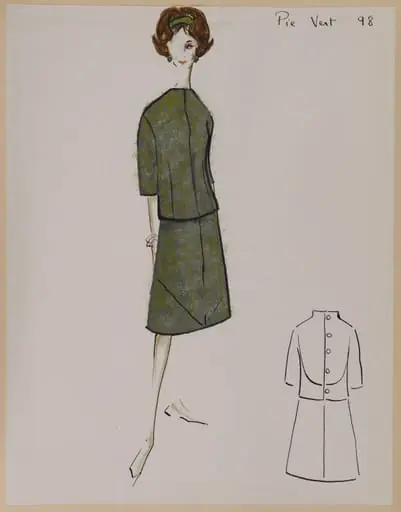
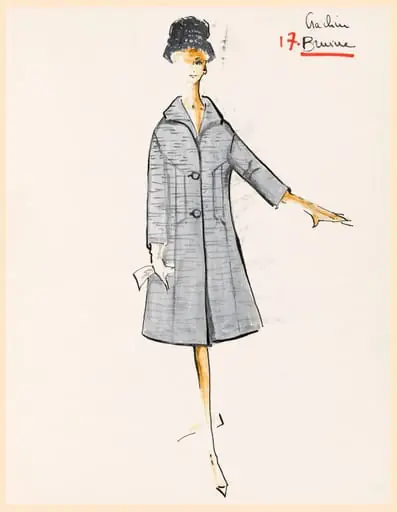
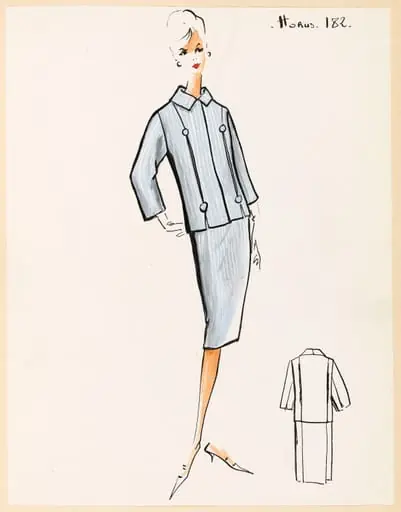
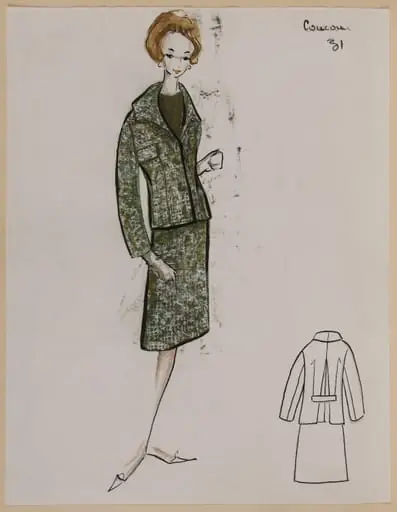
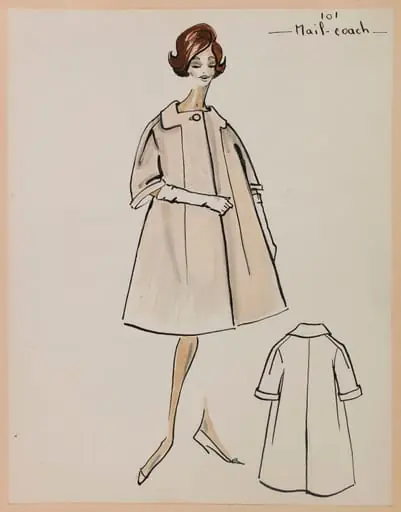
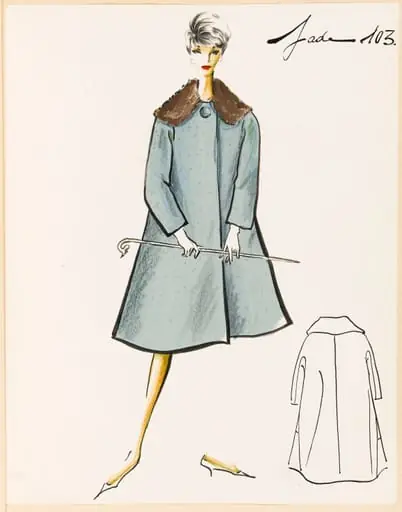
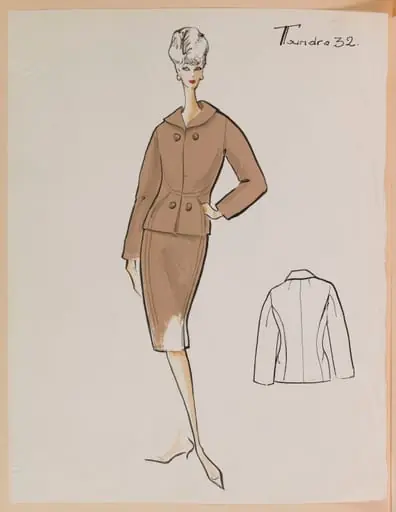
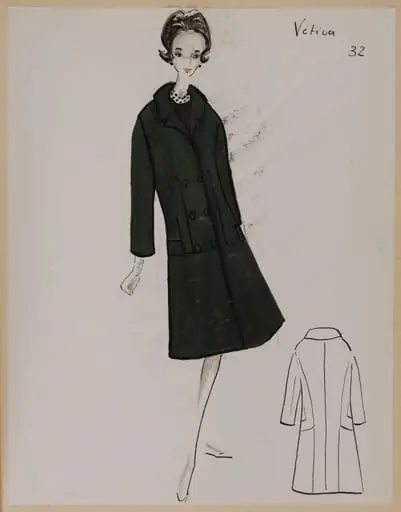
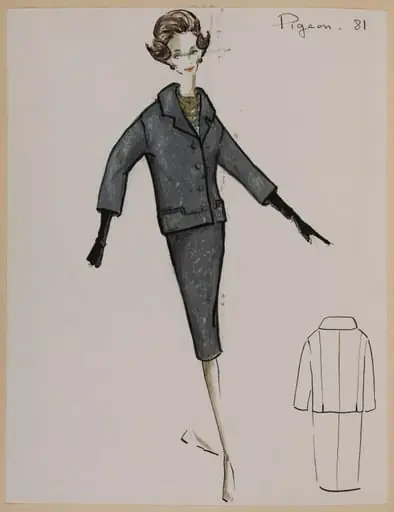
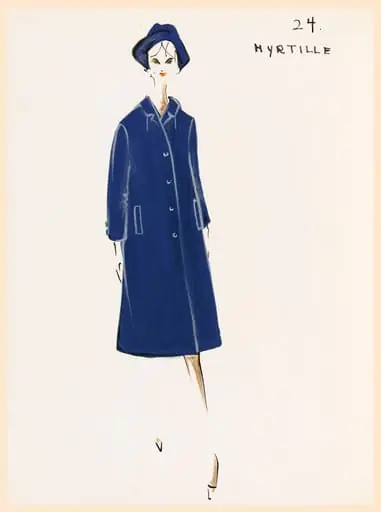
The image shows a woman wearing a long coat and a hat. The coat is knee-length and has a collar and buttons down the front. The woman is standing with her left leg slightly bent, and her right arm is at her side. She is wearing high heels and has short hair. The background of the image is white.
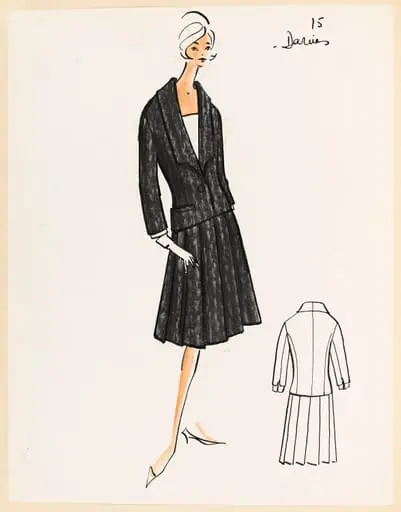
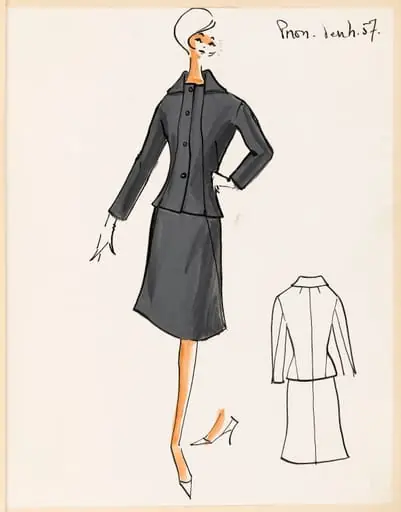
In the bottom-right corner of the image, there is a small drawing of the back of the coat. The coat has a collar and buttons down the back, and it is shown from a side view.
The image appears to be a fashion illustration, possibly from the mid-20th century. The style of the clothing and the simplicity of the background suggest that it may have been created for a fashion magazine or catalog. To learn more about the artist's work, look up Carven.
Overview
Fushia, dated circa 1967, is a fashion illustration attributed to the designer Carven. Executed in ink or pencil on paper, it depicts a woman in a tailored knee-length coat with a structured collar and front buttoning. The image is rendered against a plain white background, emphasizing the garment’s form. A small supplementary drawing in the lower right shows the coat’s back detail, indicating a focus on construction as much as silhouette.
Subject & Meaning
The figure is portrayed with minimal facial detail, directing attention to the clothing rather than identity. Her posture—slightly weight-shifted, one arm relaxed—suggests casual poise, aligning with mid-century ideals of understated elegance. The illustration functions as a technical record of design, not a narrative portrait, reflecting the garment’s role in commercial fashion dissemination during the era.
Technique & Style
The illustration employs clean, linear strokes with restrained shading, typical of fashion drafting of the period. The white background isolates the form, enhancing clarity for reproduction. The inclusion of the rear view as a secondary sketch demonstrates a methodical approach to presenting garment construction, a standard practice in fashion catalogs and design portfolios of the time.
History & Provenance
The work resides in the collection of the Museum of Ethnography, suggesting its value as a cultural artifact rather than a fine art piece. Its acquisition likely reflects institutional interest in documenting everyday fashion as part of social history. No public record of prior ownership or exhibition exists beyond its current institutional custody.
Context
Created in the late 1960s, the illustration aligns with a period when ready-to-wear fashion was expanding rapidly. Designers like Carven emphasized clean lines and wearable silhouettes for middle-class consumers. Such illustrations were commonly produced for catalogs or magazine spreads, serving as visual guides for production and retail rather than artistic expression.
Legacy
Fushia endures as a representative example of mid-century fashion documentation. It contributes to the understanding of how clothing was visually communicated before digital media, preserving the aesthetic and technical priorities of a designer whose work bridged haute couture and accessible fashion. Its preservation underscores the growing recognition of fashion as material culture.
Artist & collection
Artist
These delicate ink-on-paper drawings capture the quiet poetry of everyday things: pinecones, reeds, apples.

Museum
Palais Galliera - Musée de la Mode de la Ville de Paris
Continue through works from the same source collection.