Artwork
Koh-i-noor
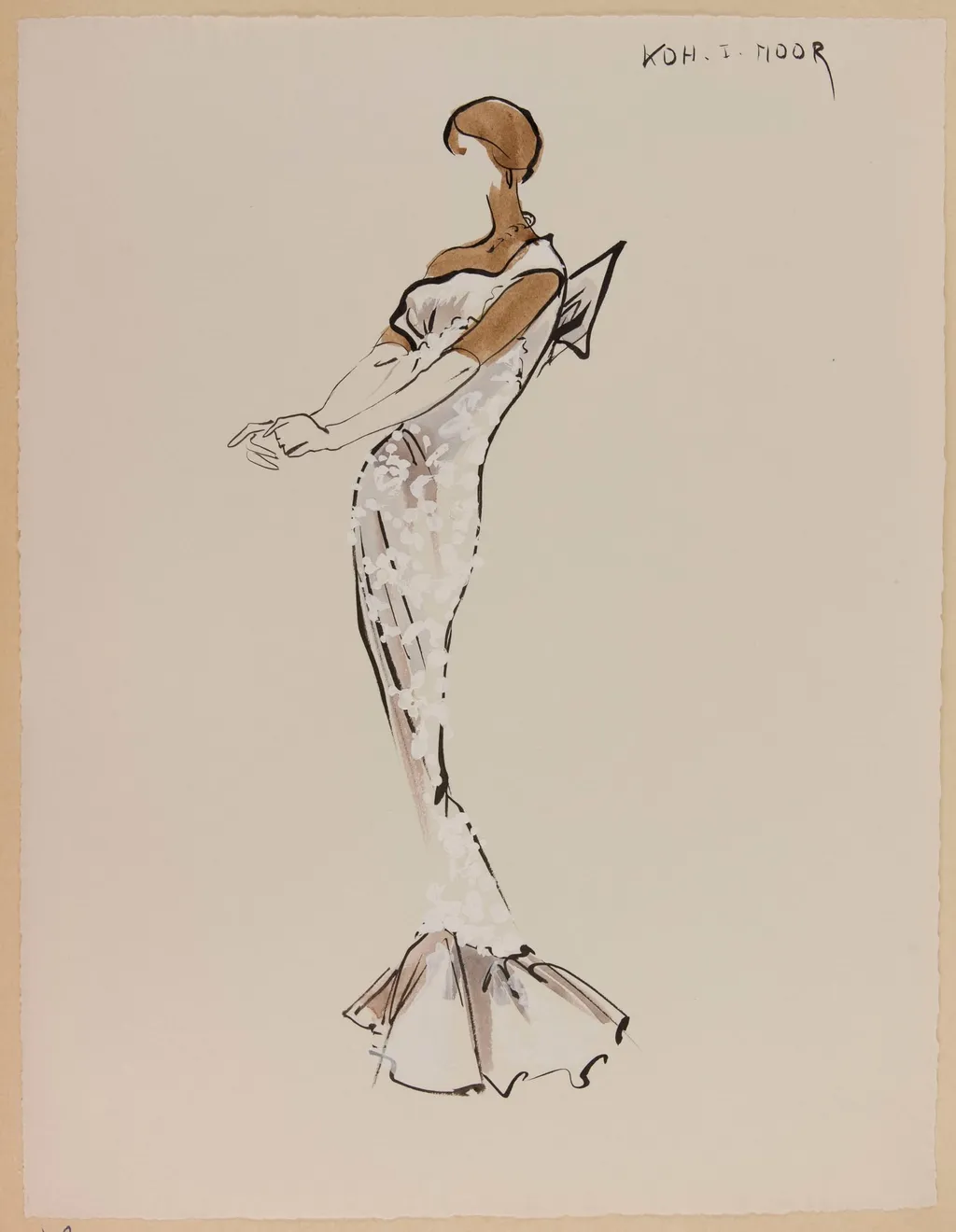
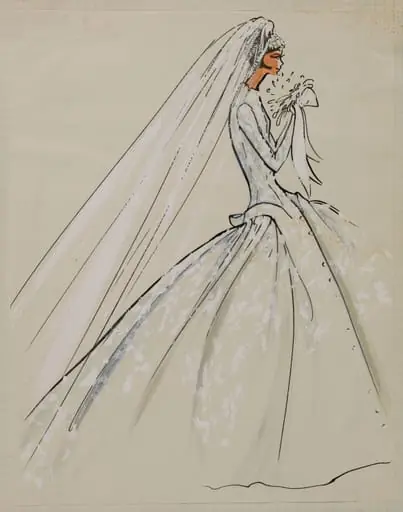
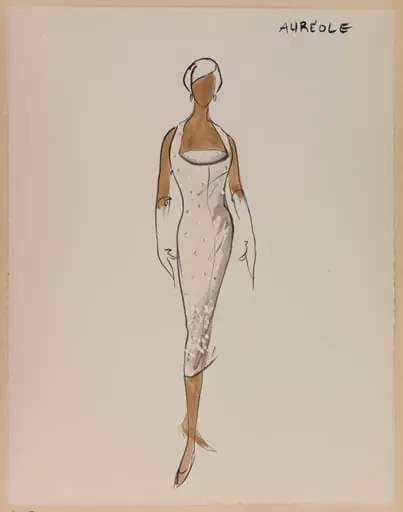
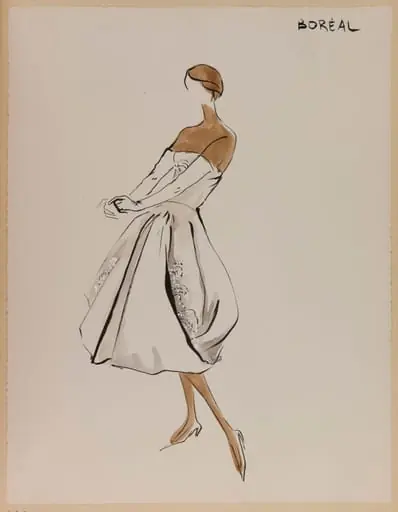
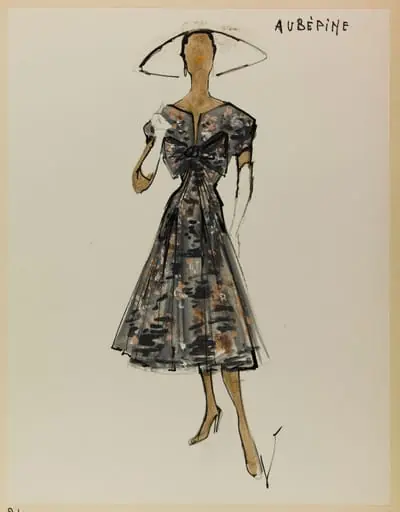
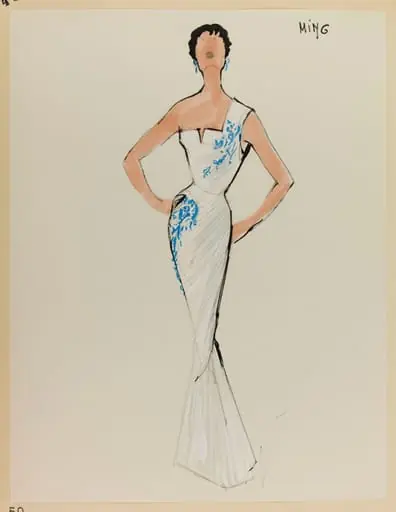
Koh-i-noor is a drawing by Carven. It dates from 1956 and is held in the collection of the Palais Galliera - Musée de la Mode de la Ville de Paris.
About this work
Overview
Created around 1956 by Carven, Koh-i-noor is a pencil sketch on paper, currently held by the Museum of Ethnography. The work captures a single moment of motion through minimal, energetic lines. Though small in scale and unadorned in medium, it conveys a sense of dynamic presence. The title, inscribed in the corner, suggests a symbolic layer beyond the figure’s physical form.
Subject & Meaning
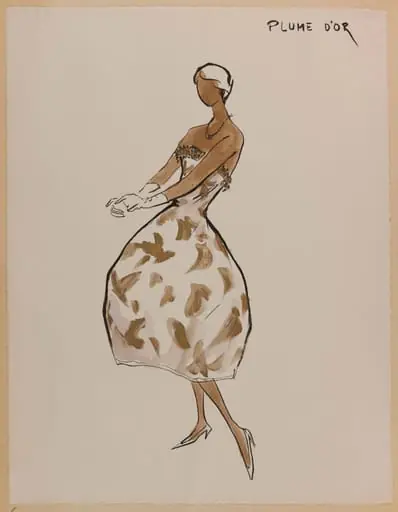
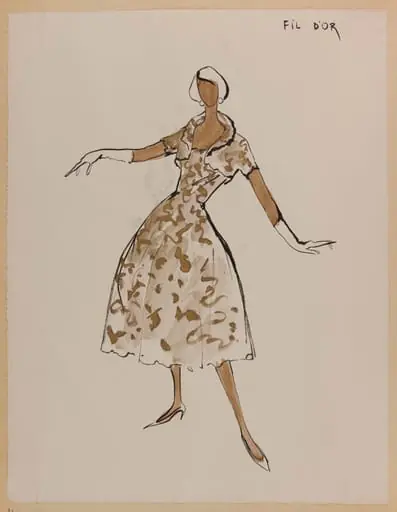
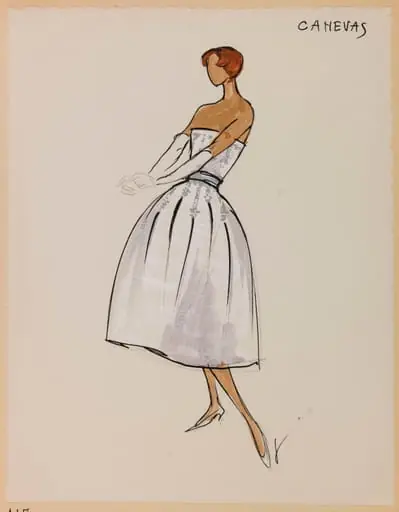
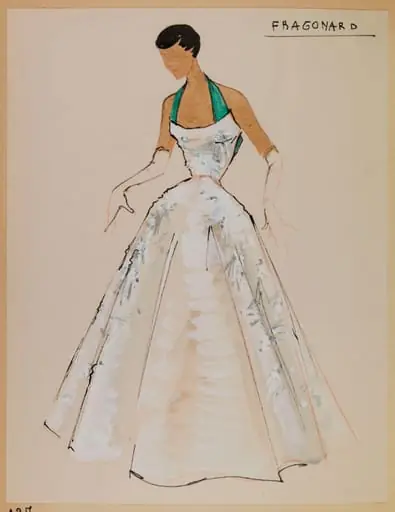
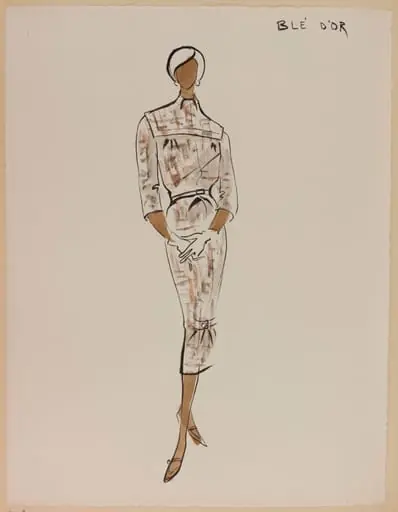
The drawing depicts a woman in mid-motion, her arms extended and dress swirling around her legs. Her posture suggests dance or ritual movement, though no specific cultural context is confirmed. The title 'Koh-i-noor,' referencing a famous diamond, may imply value, rarity, or luminosity—perhaps evoking the figure’s grace as something precious or elusive.
Technique & Style
Carven employed swift, loose pencil strokes to suggest form and motion rather than define it precisely. Light hatching and sparse shading define the folds of fabric and hair, while the figure’s contours remain open and fluid. The absence of heavy outlines and the emphasis on implied movement reflect a focus on gesture over detail, aligning with expressive drawing traditions.
History & Provenance
The work entered the collection of the Museum of Ethnography after Carven’s lifetime, though its path from creation to acquisition remains undocumented. No exhibition history or correspondence linking the artist to the title is publicly available. Its presence in an ethnographic institution, rather than a fine arts setting, invites questions about how such works are categorized and interpreted.
Context
Made in the mid-1950s, the drawing coincides with a period when many artists explored spontaneous mark-making as a way to access emotion and movement. While Carven’s broader oeuvre is not widely studied, this sketch aligns with broader postwar interests in abstraction and bodily expression, particularly in works that prioritize immediacy over finish.
Legacy
Koh-i-noor endures as a quiet example of how minimal means can convey complex presence. It is not reproduced widely, but within the museum’s collection, it serves as a touchstone for discussions on gesture, material restraint, and the boundaries between ethnographic and artistic representation. Its power lies in its restraint, not its scale.
Artist & collection
Artist
These delicate ink-on-paper drawings capture the quiet poetry of everyday things: pinecones, reeds, apples.
Museum
Palais Galliera - Musée de la Mode de la Ville de Paris
Continue through works from the same source collection.