Artwork
Liam
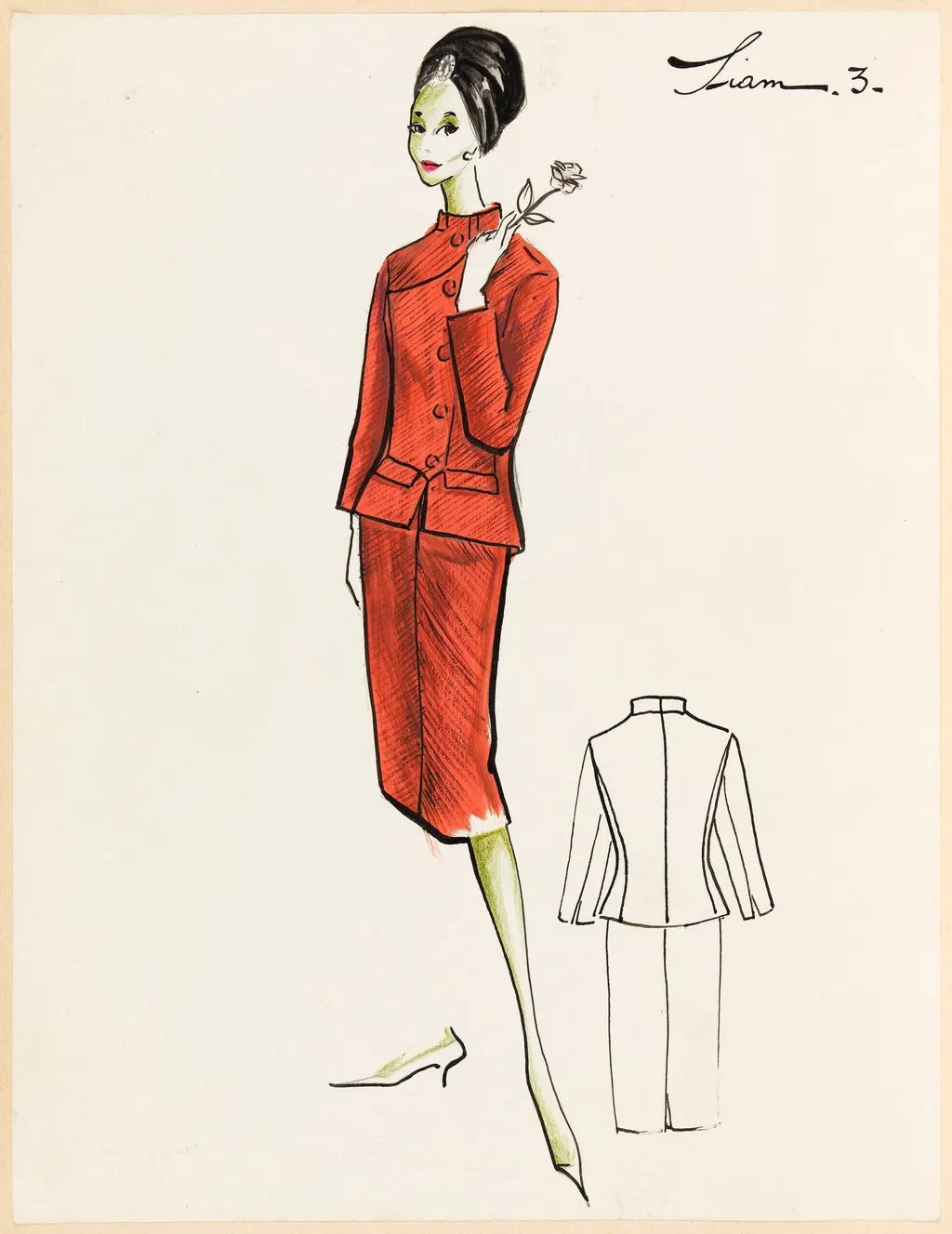
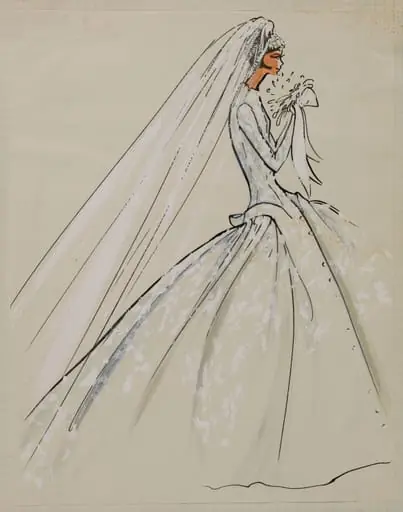
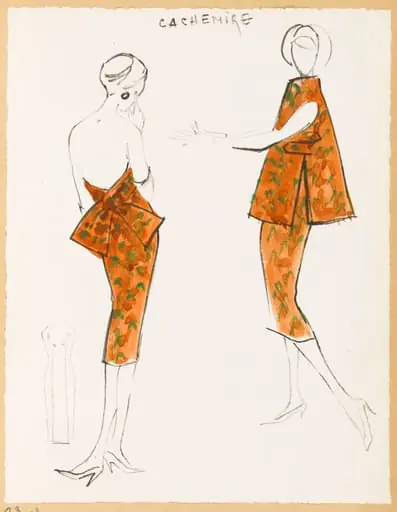
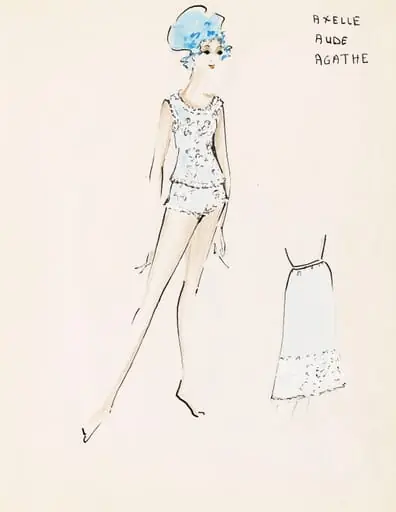
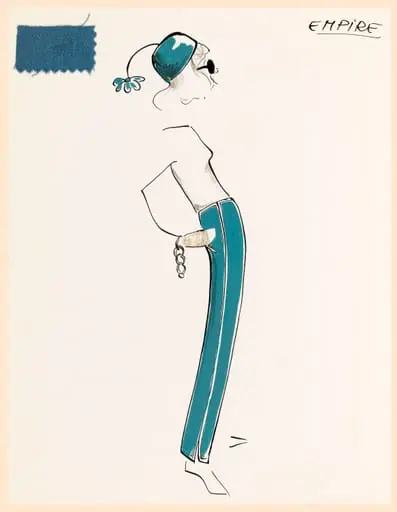
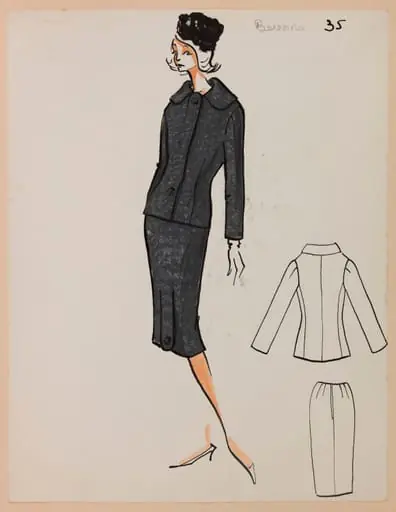
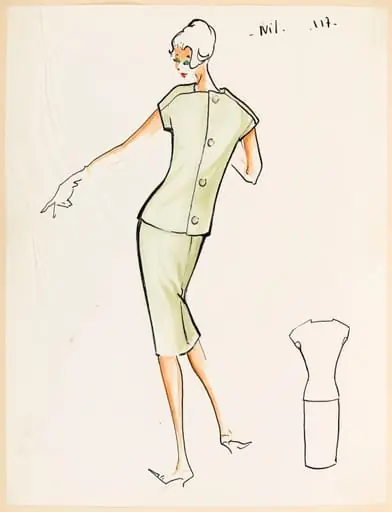
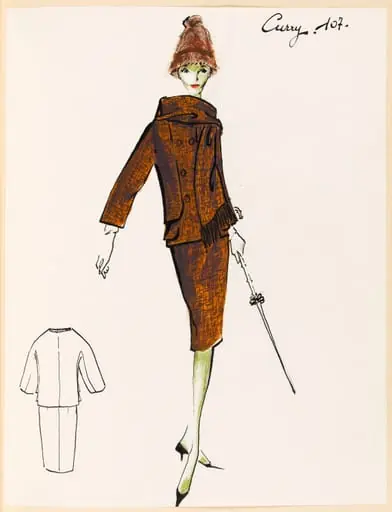
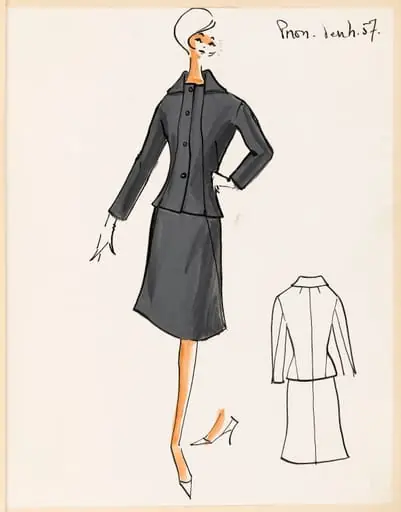
Liam is a drawing by Carven. It dates from 1959 and is held in the collection of the Palais Galliera - Musée de la Mode de la Ville de Paris.
About this work
Overview
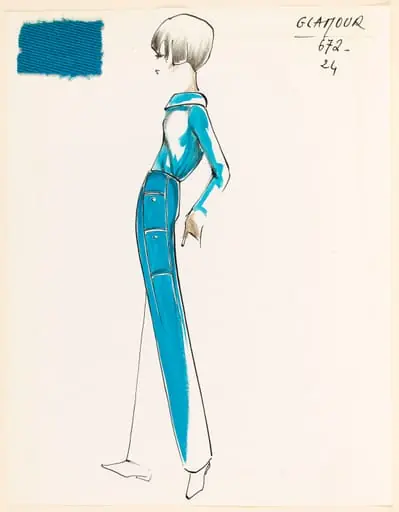
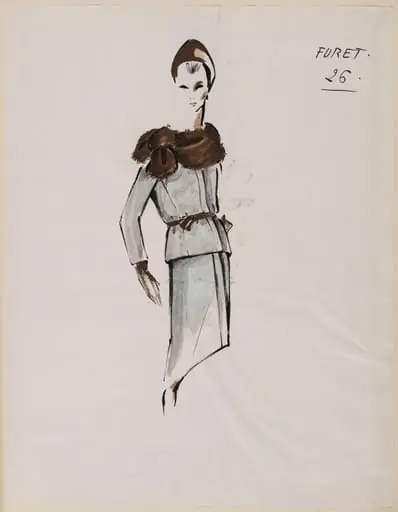
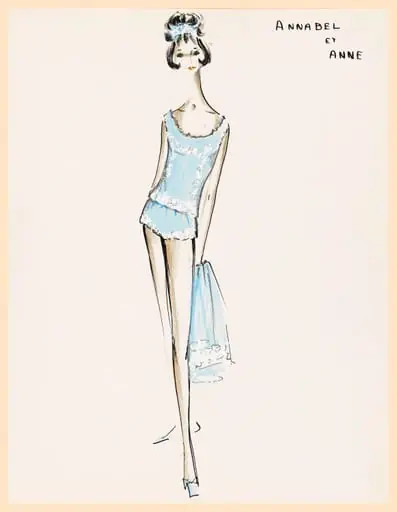
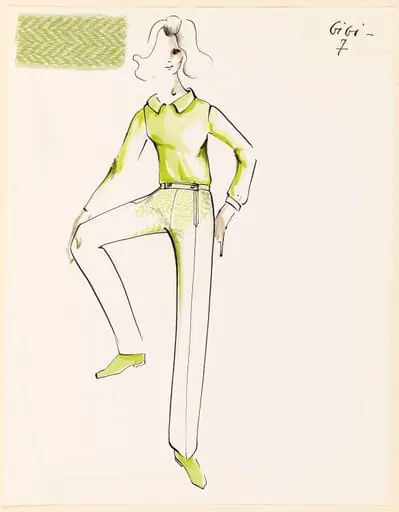
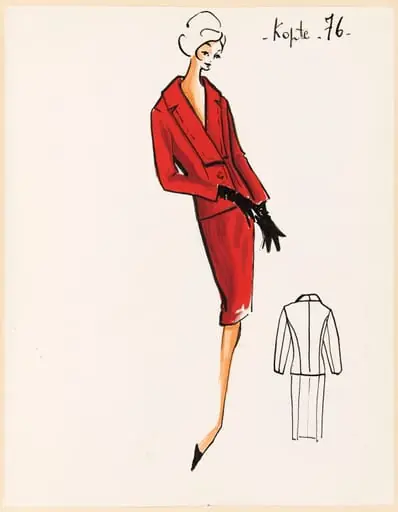
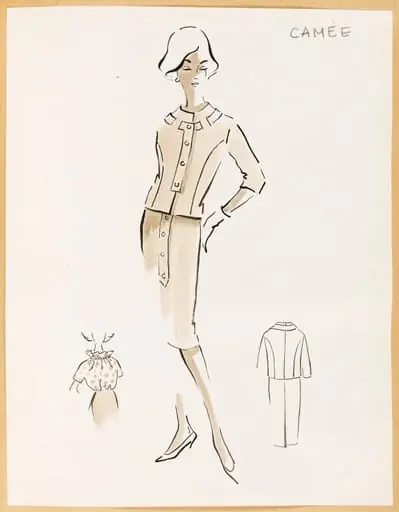
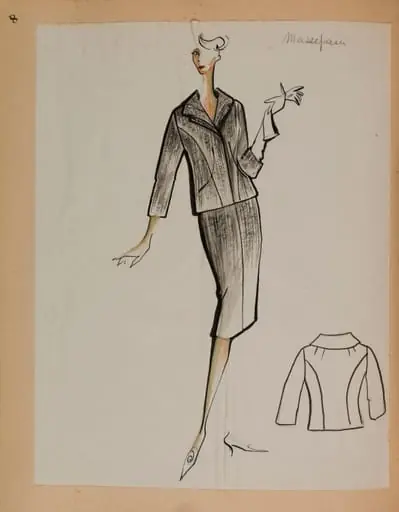
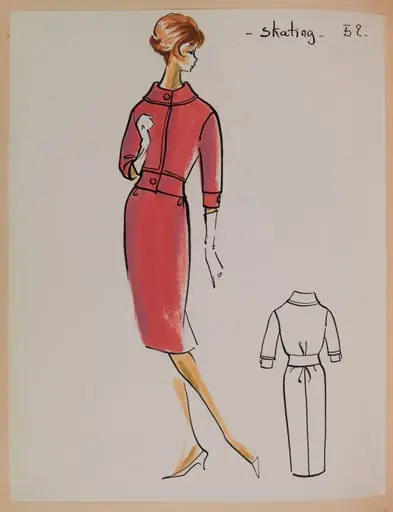
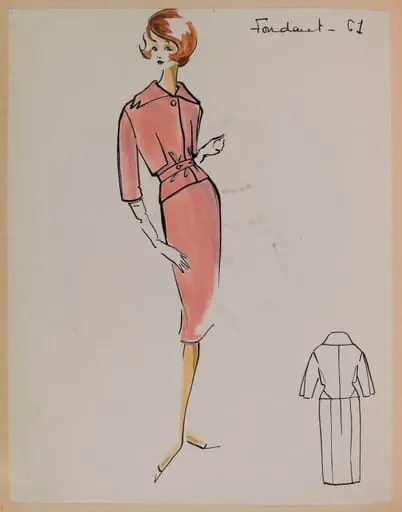
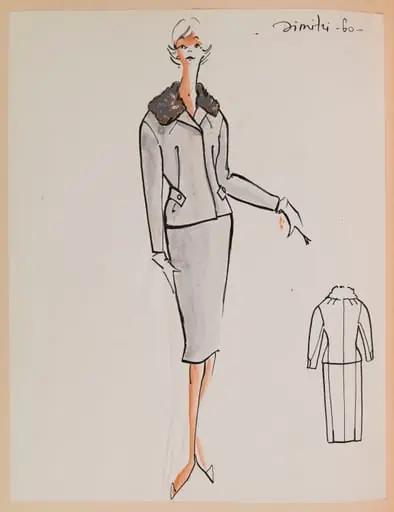
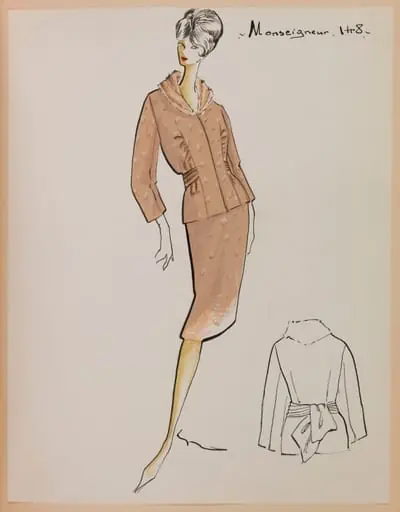
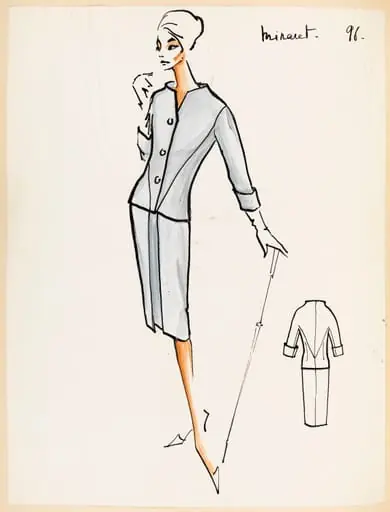
Created around 1959 by the designer Carven, this drawing depicts a woman in a stylized, minimalist form. Rendered in ink or pencil on off-white paper, the image is held in the collection of the Museum of Ethnography. Though labeled as an artwork, its aesthetic aligns with fashion illustration, suggesting a connection to mid-century design practice rather than fine art tradition.
Subject & Meaning
Her poised stance and refined attire suggest an idealized femininity, possibly reflecting mid-century fashion ideals.
The figure is a woman dressed in a tailored red jacket and skirt, with a polo neck and turban-style hair. She holds a white rose in her right hand, a subtle symbol often associated with elegance or quiet resilience. Her poised stance and refined attire suggest an idealized femininity, possibly reflecting mid-century fashion ideals. The absence of facial features invites focus on silhouette and garment rather than identity.
Technique & Style
The drawing employs clean, sparse lines with minimal shading, emphasizing form over detail. The woman’s figure is rendered with precision, while the background remains unadorned, enhancing the focus on costume. To her right, a faint outline of a jacket and pants suggests a secondary figure or garment, possibly indicating a design study. The palette is restrained, relying on the contrast of red and white against a neutral ground.
History & Provenance
The work entered the Museum of Ethnography’s collection without documented provenance prior to its acquisition. Its origin as a fashion sketch by Carven, a French designer known for clothing and textile innovation, implies it may have been part of a private archive or editorial portfolio. The date, c. 1959, situates it within a period of postwar French fashion revival.
Context
In the late 1950s, fashion illustration was a vital medium for designers to communicate silhouettes and styling before photographic documentation became dominant. Carven, active in Parisian couture, often blended simplicity with elegance. This drawing reflects that ethos, capturing a moment when fashion design prioritized clean lines and wearable sophistication over ornamentation.
Legacy
Though not widely exhibited, the drawing contributes to understanding how fashion designers documented their work in an era before digital tools. Its preservation in an ethnographic museum underscores its value as a cultural artifact of daily life and aesthetic practice. It remains a quiet testament to the intersection of design, gender, and material culture in mid-century Europe.
Artist & collection
Artist
These delicate ink-on-paper drawings capture the quiet poetry of everyday things: pinecones, reeds, apples.
Museum
Palais Galliera - Musée de la Mode de la Ville de Paris
Continue through works from the same source collection.