Artwork
Nil
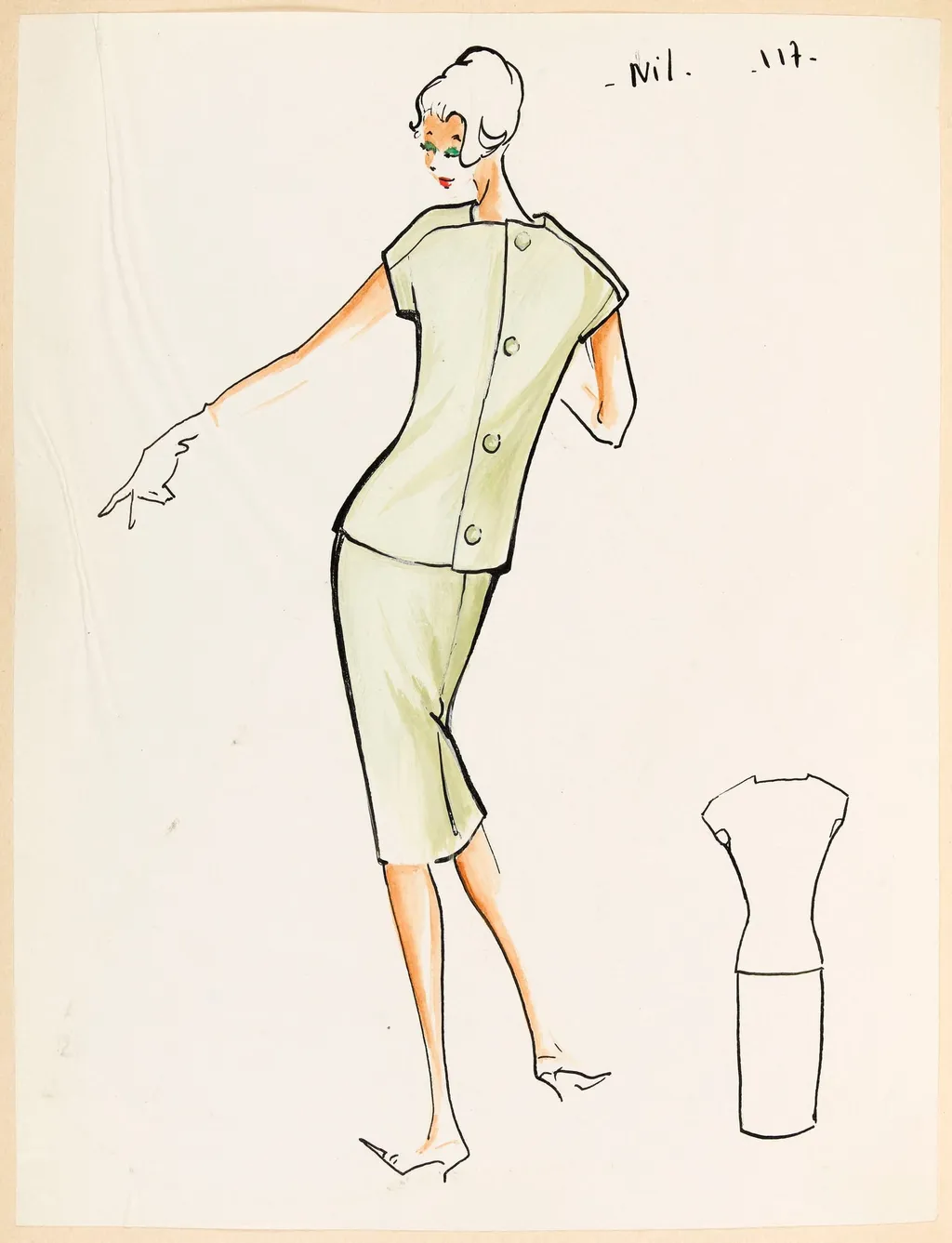
Nil is a drawing by Marie-Louise Carven. It dates from 1959 and is held in the collection of the Palais Galliera - Musée de la Mode de la Ville de Paris.
About this work
Overview
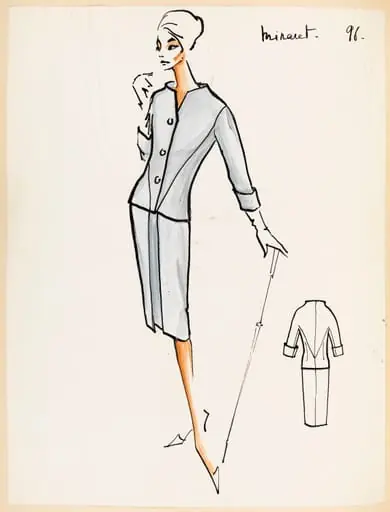
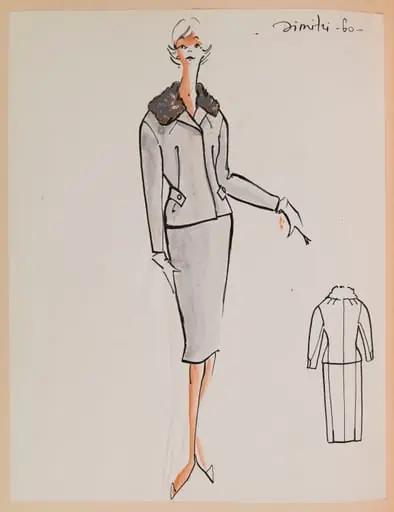
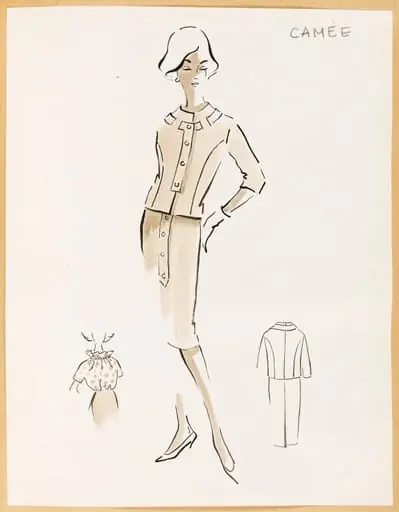
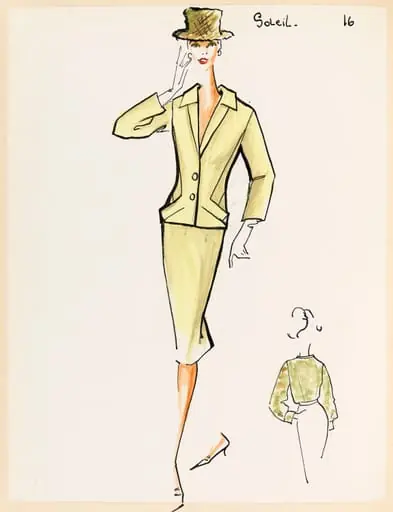
This sketch, dated circa 1959, originates from the design process of Marie-Louise Carven, founder of the Parisian fashion house Carven established in 1945.
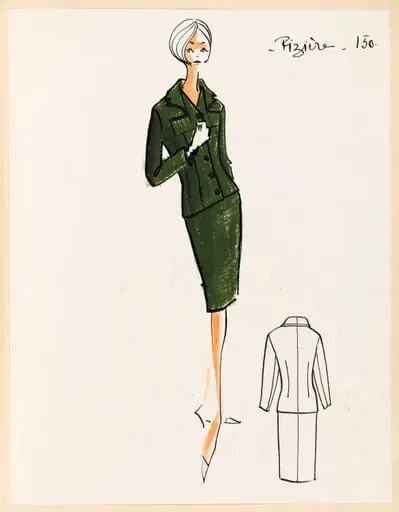
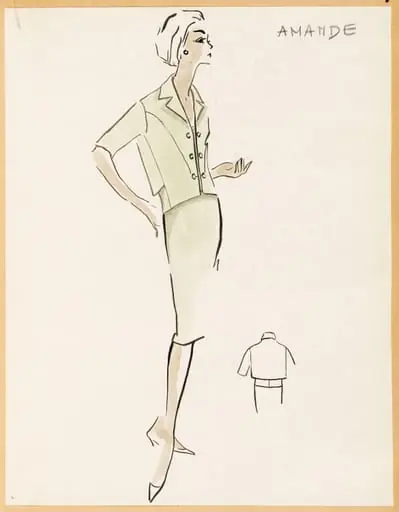
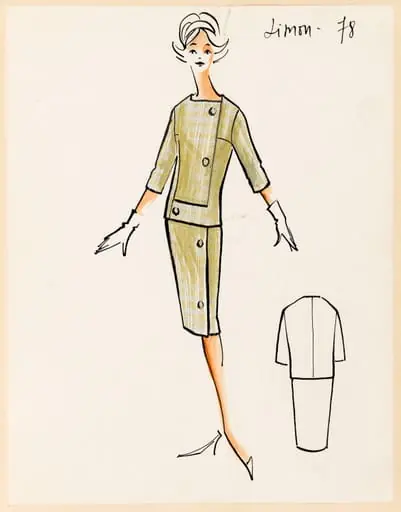
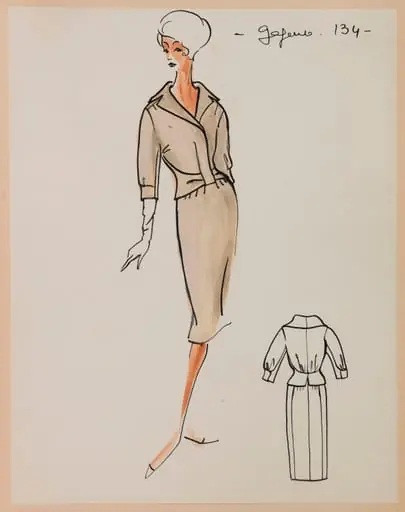
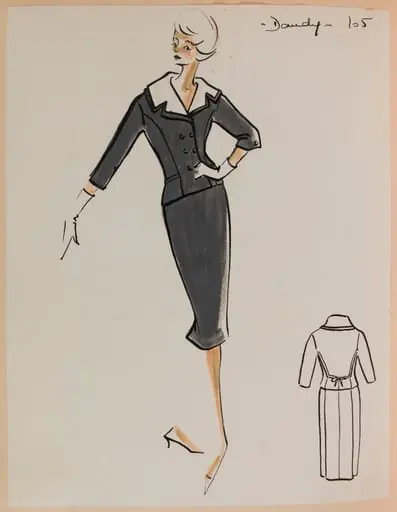
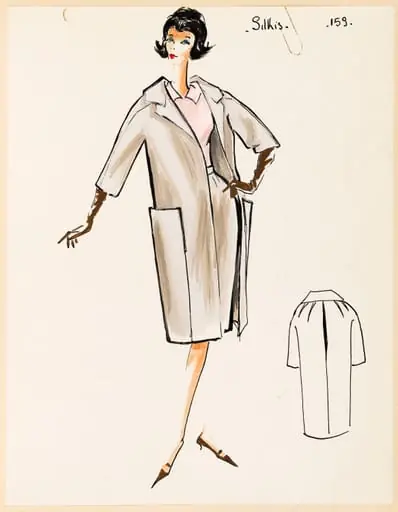
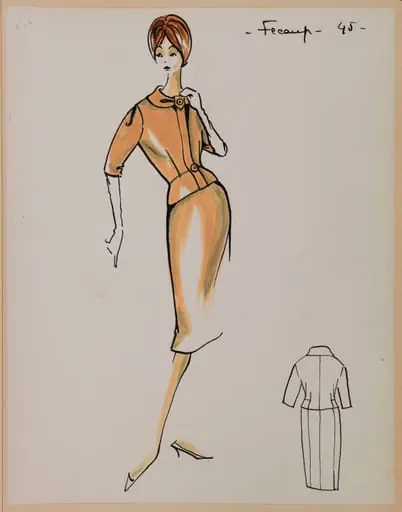
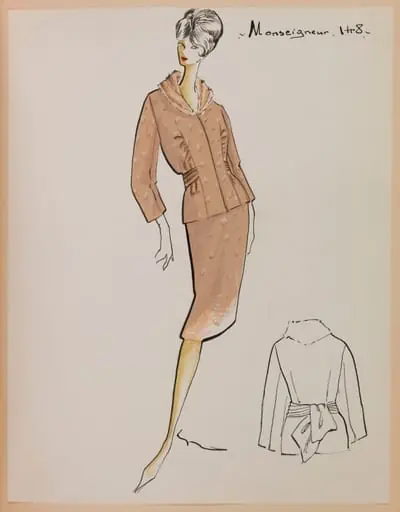
This sketch, dated circa 1959, originates from the design process of Marie-Louise Carven, founder of the Parisian fashion house Carven established in 1945. Executed in ink or pencil, it captures a back view of a woman in a modest green dress, accompanied by a flattened pattern layout to the right. The drawing reflects Carven’s focus on practical, wearable designs for everyday life, aligning with her pioneering role in developing ready-to-wear fashion in postwar France.
Subject & Meaning
The figure depicted is rendered without ornamentation, suggesting a focus on functionality and fit rather than theatricality. The simple dress, short-sleeved and straight-cut, implies an intended use for work or informal settings. The outstretched arm and neutral posture convey natural movement, reinforcing Carven’s design philosophy: clothing that accommodates the body’s motion without constriction, appealing to the modern, active woman of the late 1950s.
Technique & Style
The sketch employs loose, fluid lines that prioritize silhouette and proportion over fine detail. The back view allows the designer to emphasize the dress’s structure and drape, while the adjacent pattern layout serves as a technical reference. The absence of facial features or decorative elements shifts attention to form and construction, characteristic of fashion designers’ working drawings, where clarity and efficiency outweigh aesthetic finish.
History & Provenance
The drawing is held in the collection of the Museum of Ethnography, a repository more commonly associated with cultural artifacts than fashion. Its inclusion there suggests an institutional recognition of clothing as a cultural artifact reflecting social norms and daily life. The piece likely entered the collection through donation or acquisition from Carven’s archive, underscoring its value as a document of mid-century design practice.
Context
In the late 1950s, Parisian couture was transitioning toward accessible fashion. Carven was among the first to formalize a ready-to-wear line, making tailored garments available beyond elite clients. Her designs, often in light fabrics like gingham and lace, catered to petite frames and active lifestyles. This sketch exemplifies that shift—designing for real bodies in real contexts, not just runway ideals.
Legacy
Carven’s emphasis on practicality and fit influenced later generations of designers who prioritized wearability. Her patenting of the push-up bra and early adoption of ready-to-wear helped redefine fashion’s relationship with the consumer. This sketch, though modest in scale, represents a broader movement toward democratizing design—where clothing was no longer solely ceremonial, but integrated into the rhythms of daily existence.
Artist & collection
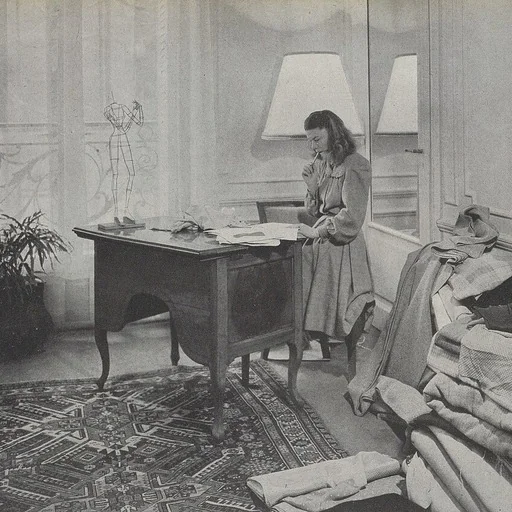
Artist
Marie-Louise Carven (31 August 1909 – 8 June 2015), born Carmen de Tommaso, was a French fashion designer who founded the house of Carven in 1945.

Museum
Palais Galliera - Musée de la Mode de la Ville de Paris
Continue through works from the same source collection.
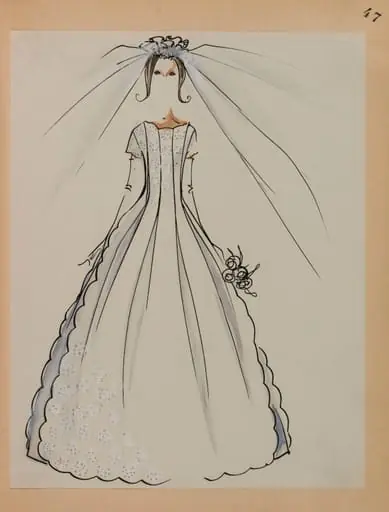 Robe de mariée festonnée et son voile
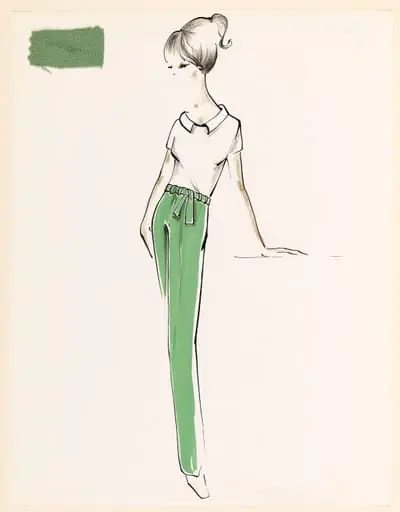 Haut blanc à manches courtes et pantalon vert à ceinture nouée
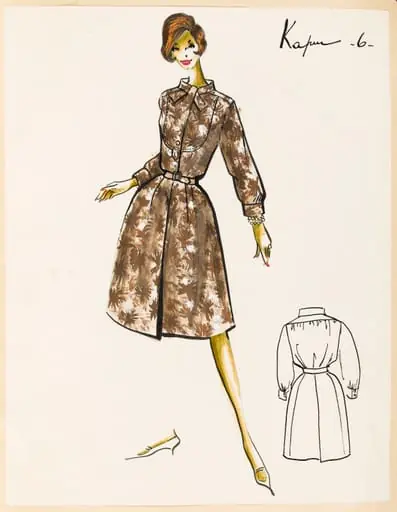 Kapur
Kapur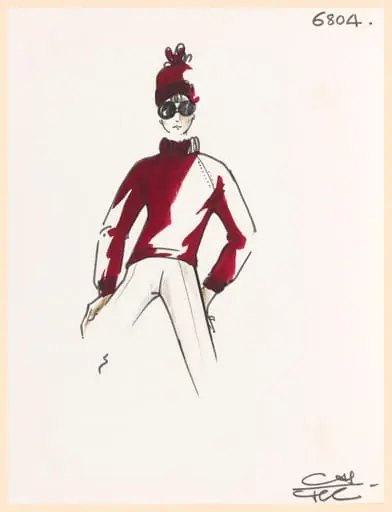 Pull-over à manches longues pourpre, bonnet assorti, pantalon et lunettes de soleil
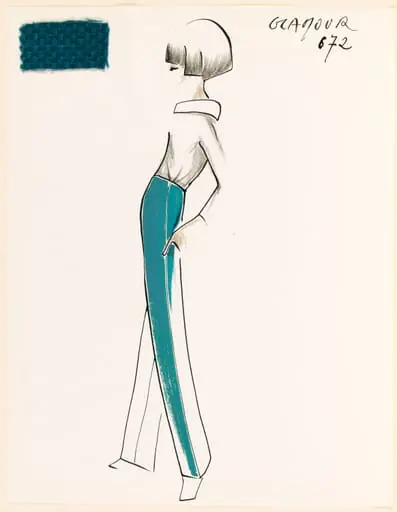 GLAMOUR
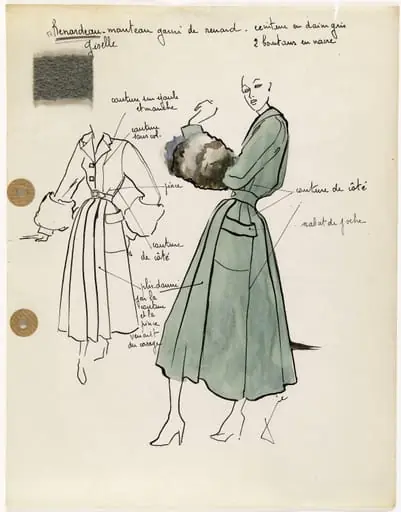 'Renardeau'
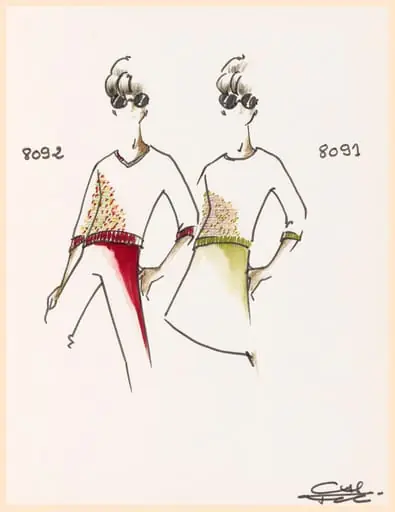 Pull-over à manches trois quarts et à encolure V à motifs multicolores, pantalon cerise et lunettes de soleil
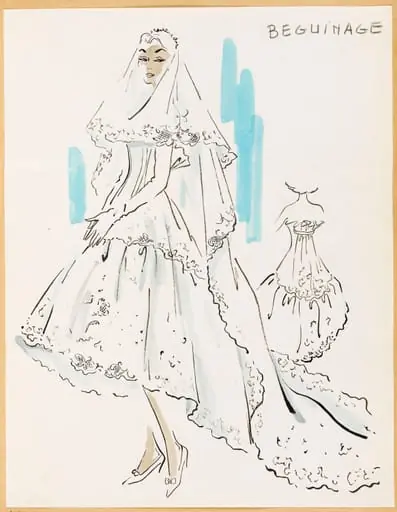 Béguinage