Artwork
Châtaigne
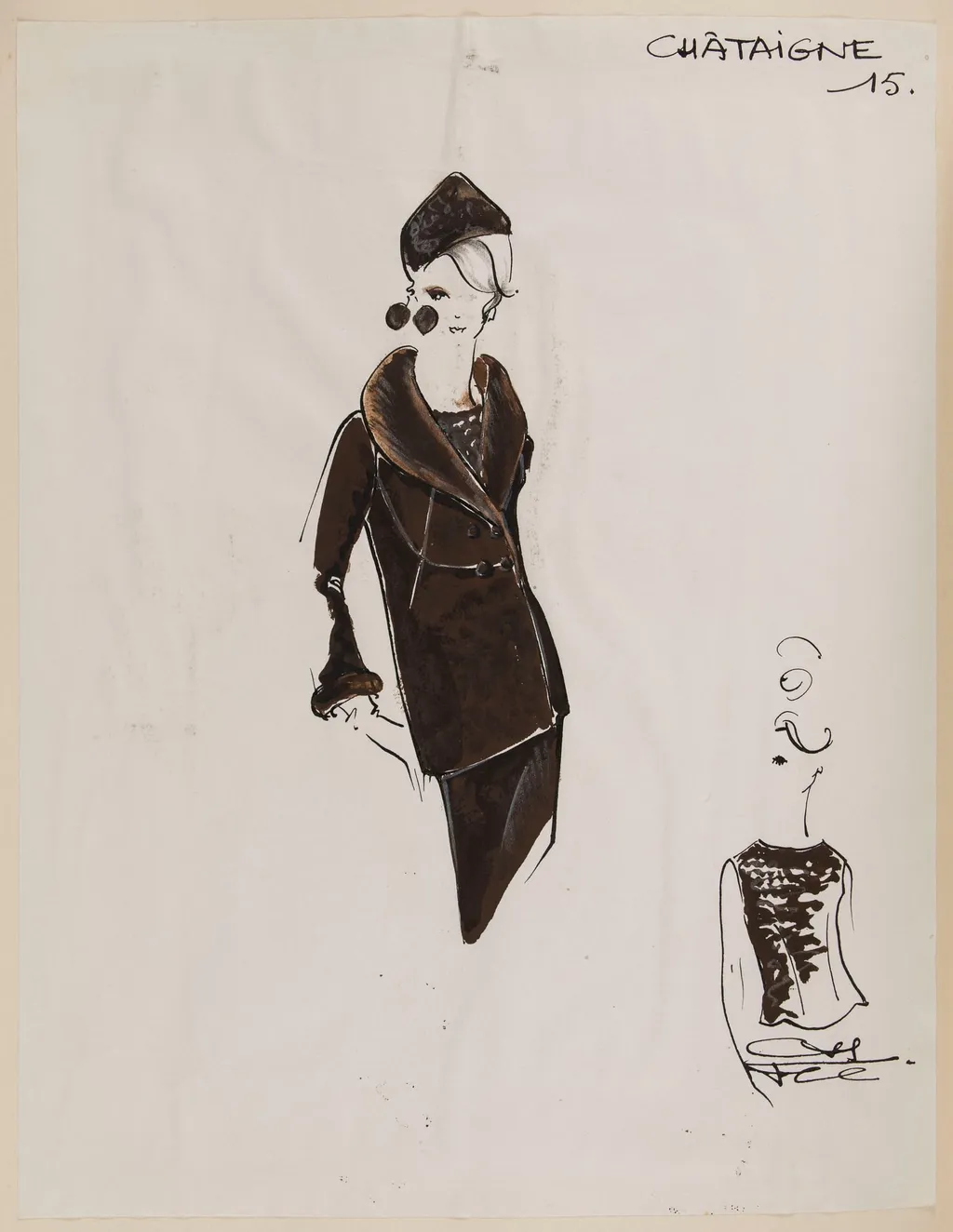
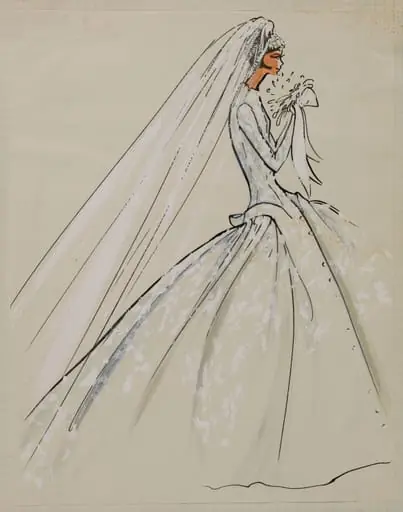
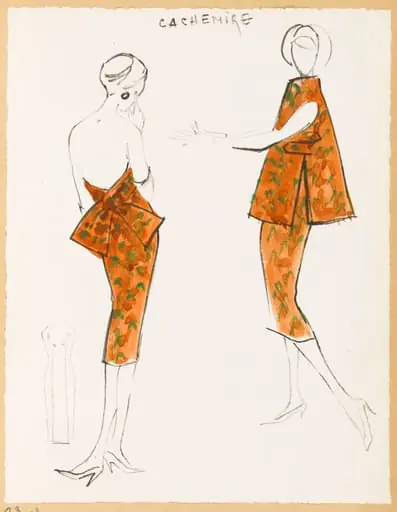
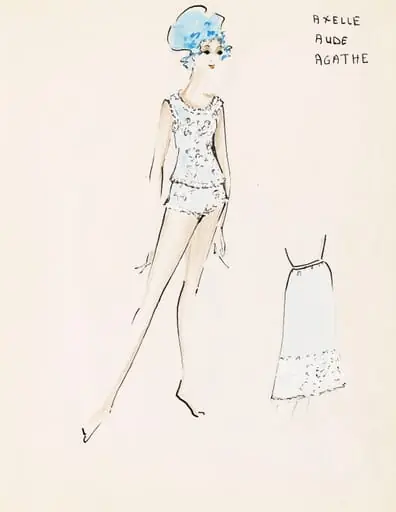
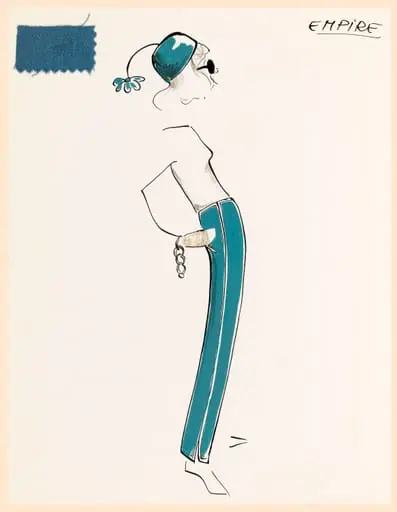
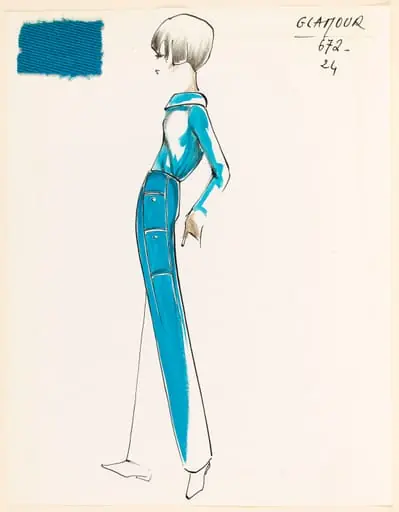
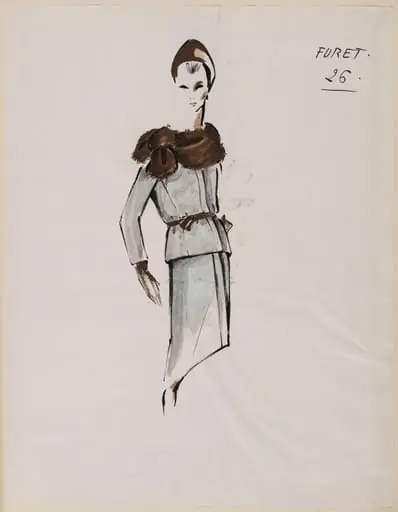
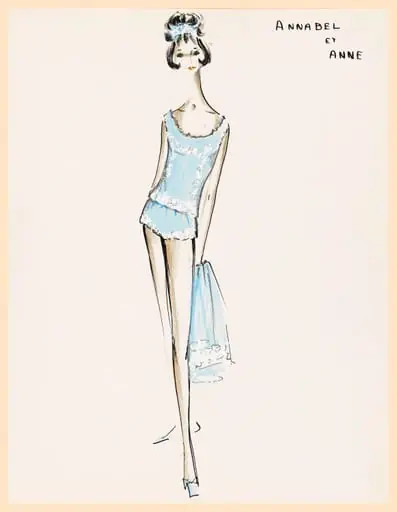
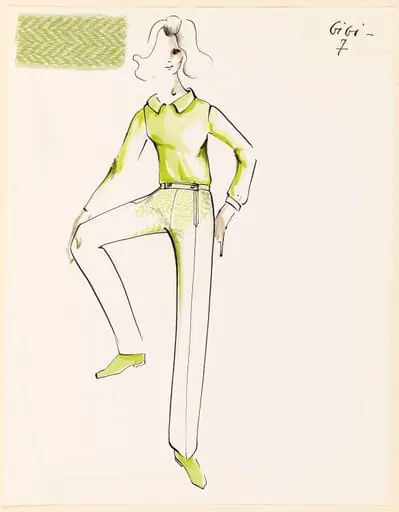
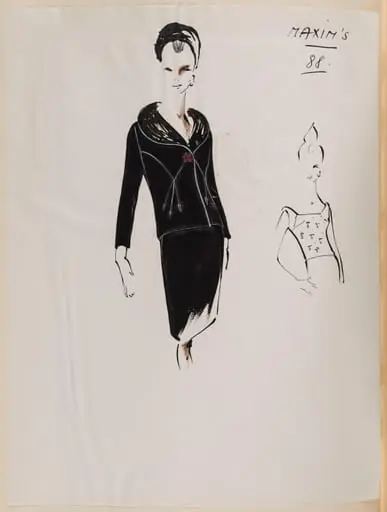
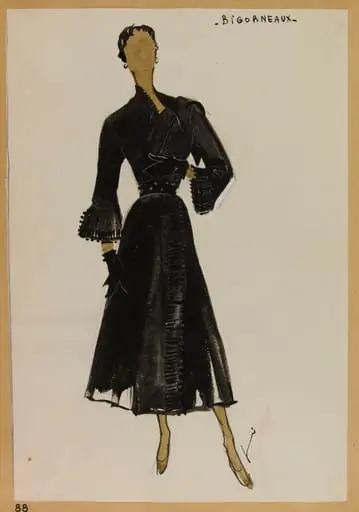
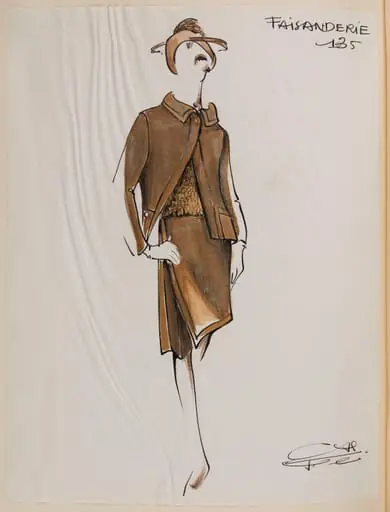
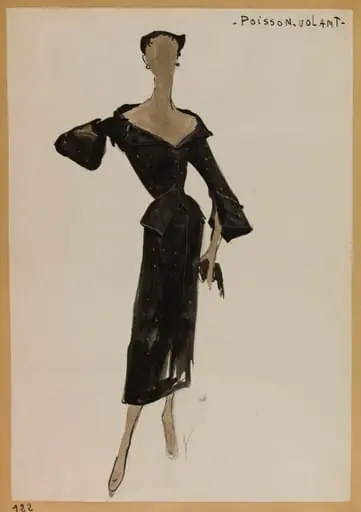
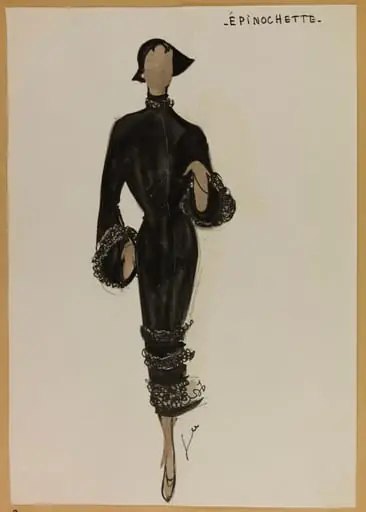
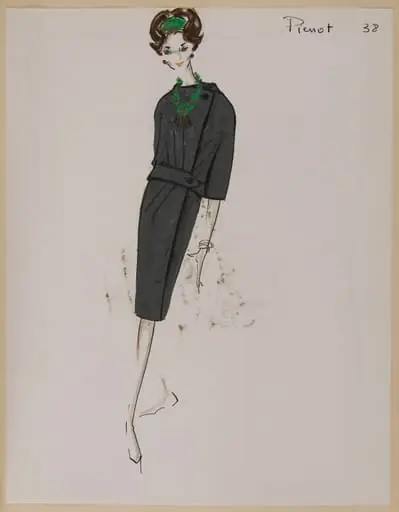
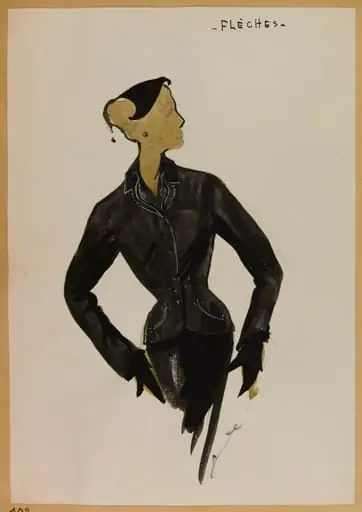
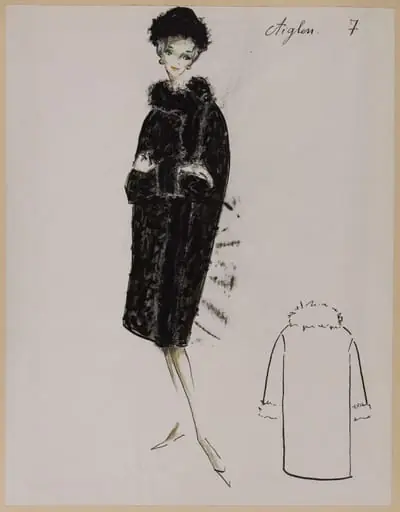
Châtaigne is a drawing by Carven. It dates from 1963 and is held in the collection of the Palais Galliera - Musée de la Mode de la Ville de Paris.
About this work
Overview
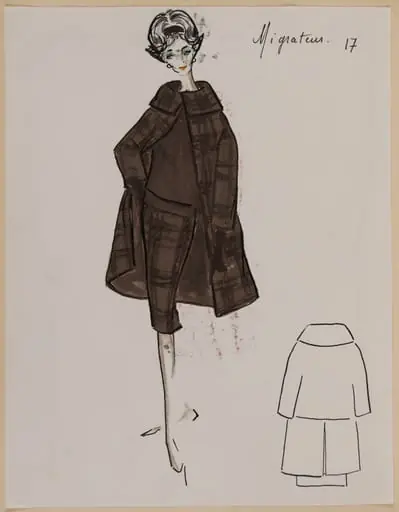
A secondary sketch of a corset-like garment appears in the margin, hinting at layered construction beneath the outerwear.
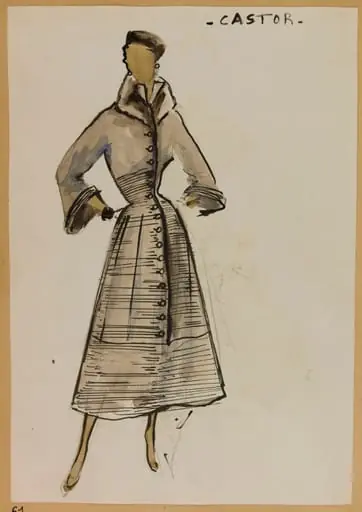
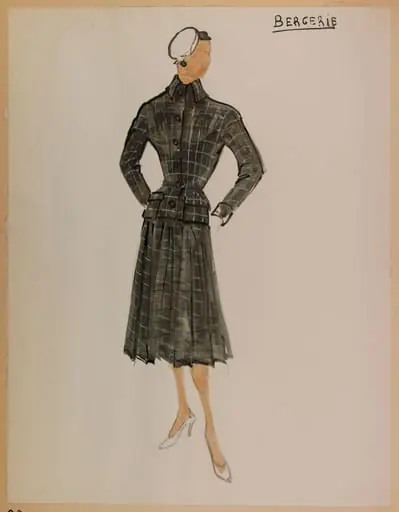
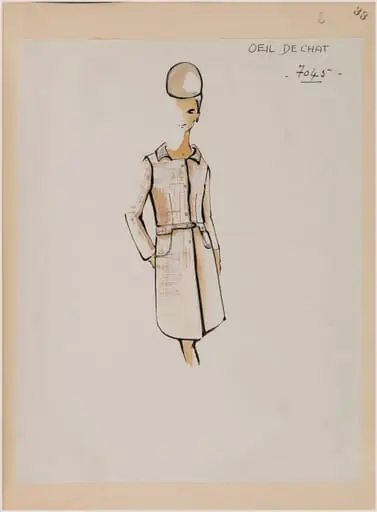
Châtaigne is a pencil sketch from around 1963 by the French fashion designer Carven. It resides in the collection of the Museum of Ethnography. The drawing captures a figure dressed in a tailored coat with a high collar, belt, and large pockets. Hands are concealed, and the posture suggests stillness. A secondary sketch of a corset-like garment appears in the margin, hinting at layered construction beneath the outerwear.
Subject & Meaning
The figure represents an everyday adult, likely female, dressed in practical yet structured clothing. The absence of facial features and minimal detail shifts focus to the silhouette and fit of the garments. The inclusion of the corset sketch suggests an interest in underpinnings that shape outerwear, revealing an underlying concern with how clothing interacts with the body’s form rather than ornamentation.
Technique & Style
Carven employed swift, confident lines to define the contours of the coat and its structural elements. The drawing avoids fine detailing, emphasizing volume and proportion instead. The bold strokes convey movement and form efficiently, characteristic of fashion sketches meant to communicate design intent rather than finish. The marginal corset is rendered with similar economy, reinforcing the sketch’s functional purpose.
History & Provenance
The work entered the Museum of Ethnography’s collection as part of a broader archive of fashion documentation. Its origin traces to Carven’s personal sketchbook from the early 1960s, a period when the designer was refining her signature blend of tailored simplicity and functional elegance. The sketch was preserved not as a finished design but as a working record of her design process.
Context
In the early 1960s, Parisian fashion designers increasingly documented their ideas through rapid sketches, prioritizing silhouette over decoration. Carven’s work reflected this trend, aligning with postwar ideals of practicality and understated refinement. The inclusion of undergarments in the margin reveals a designer’s awareness of the body’s role in shaping clothing, a concern shared by contemporaries focused on wearable structure.
Legacy
Châtaigne survives as a representative example of Carven’s approach to design documentation. Its preservation in an ethnographic museum underscores its value as a cultural artifact of mid-century fashion practice. Rather than signaling a finished garment, it illustrates the quiet, methodical thinking behind clothing construction — a testament to the intellectual labor behind everyday wear.
Artist & collection
Artist
These delicate ink-on-paper drawings capture the quiet poetry of everyday things: pinecones, reeds, apples.

Museum
Palais Galliera - Musée de la Mode de la Ville de Paris
Continue through works from the same source collection.