Artwork
Maya
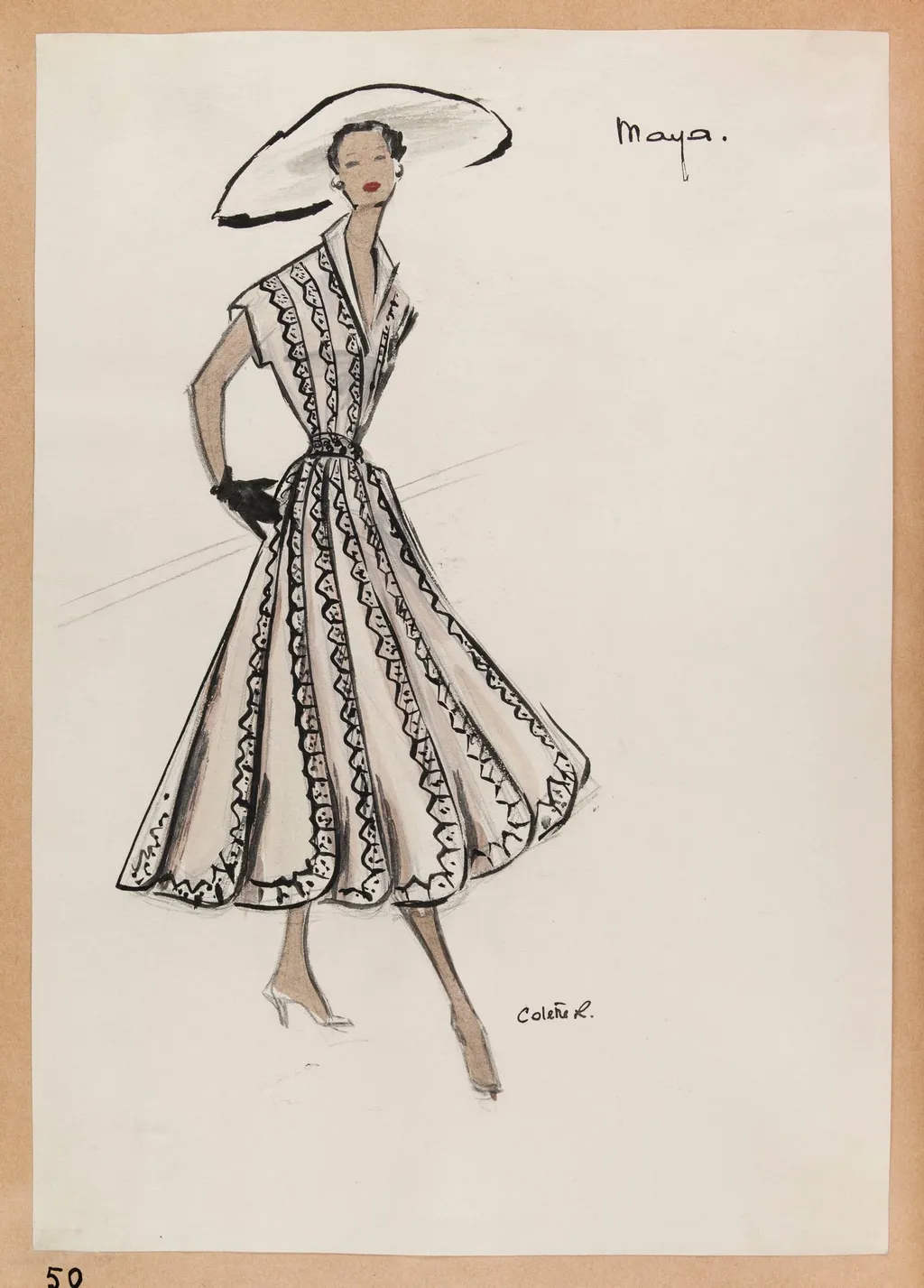
Maya is a drawing by Carven. It dates from 1951 and is held in the collection of the Palais Galliera - Musée de la Mode de la Ville de Paris.
About this work
Overview
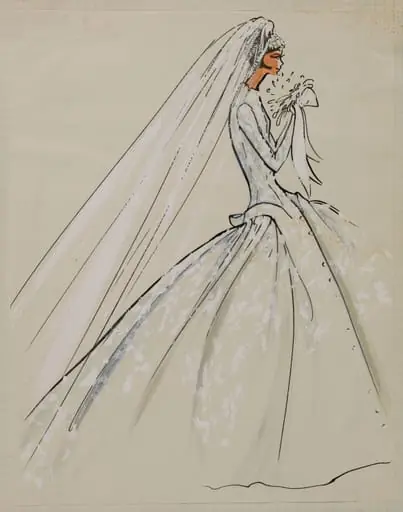
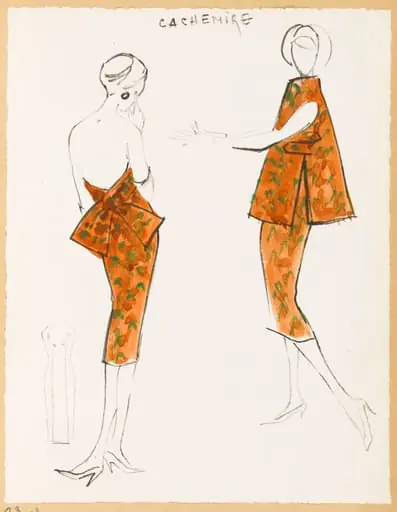
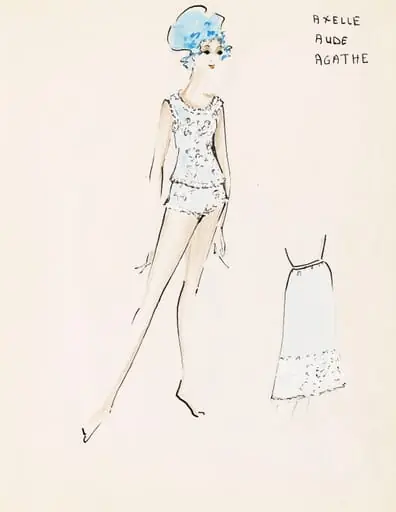
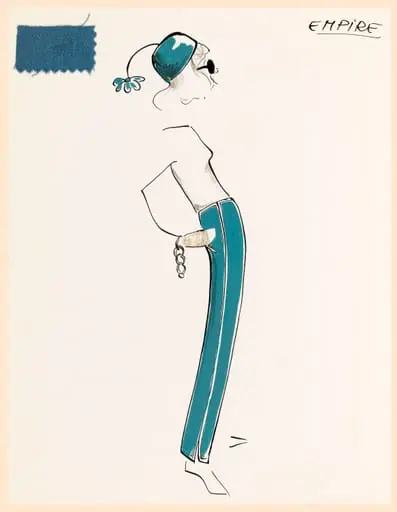
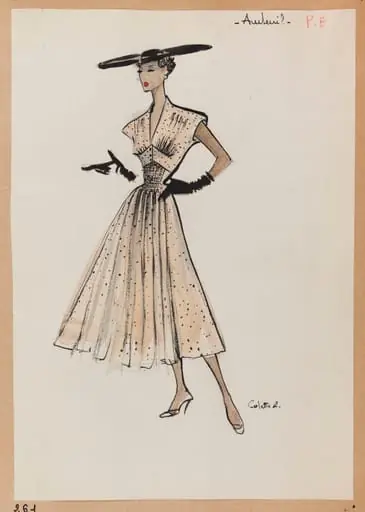
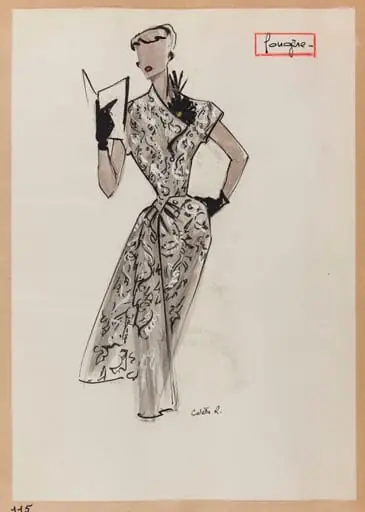
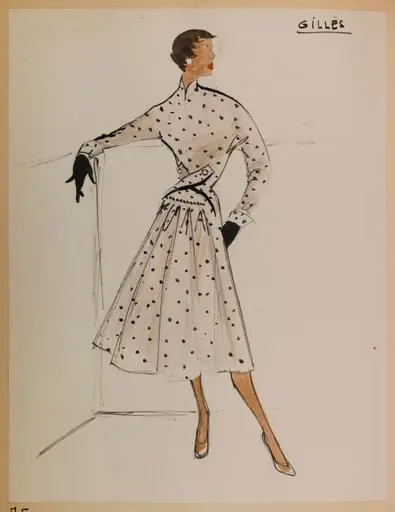
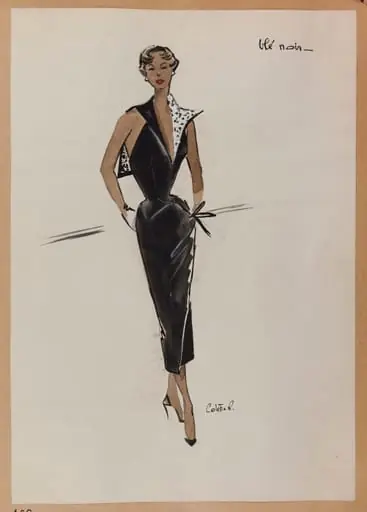
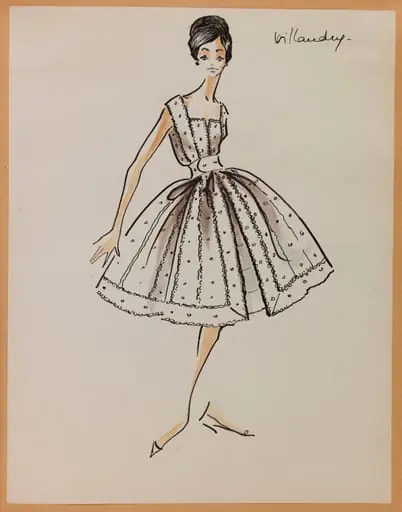
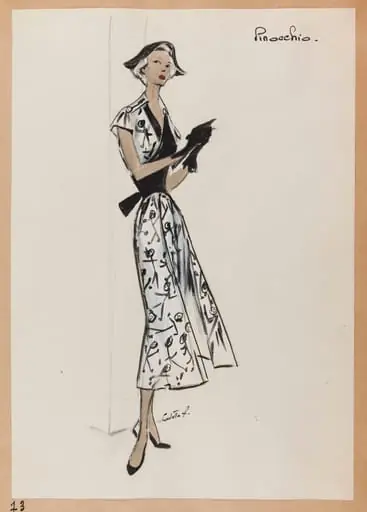
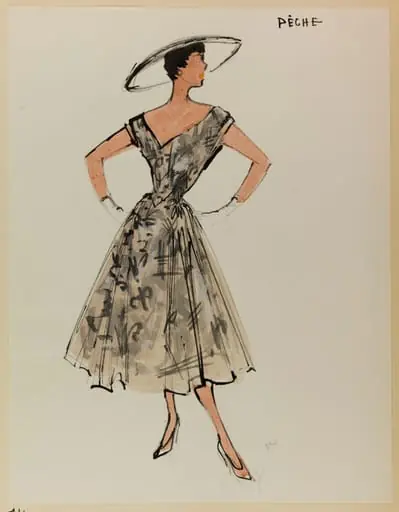
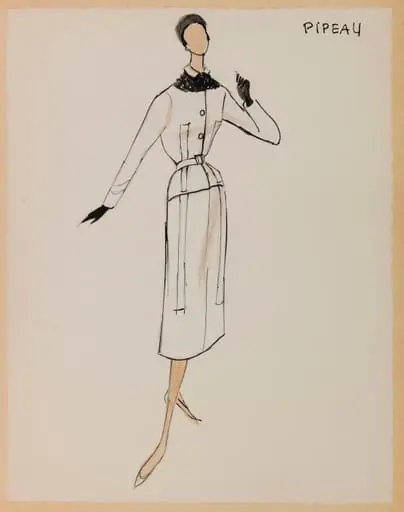
Created around 1951 by Carven, this ink drawing depicts a woman in formal attire, rendered with clean lines and minimal detail. The work is part of the Museum of Ethnography’s collection, where it is preserved as an example of mid-20th-century fashion illustration. The composition is sparse, with no background elements, focusing attention entirely on the figure and her garments.
Subject & Meaning
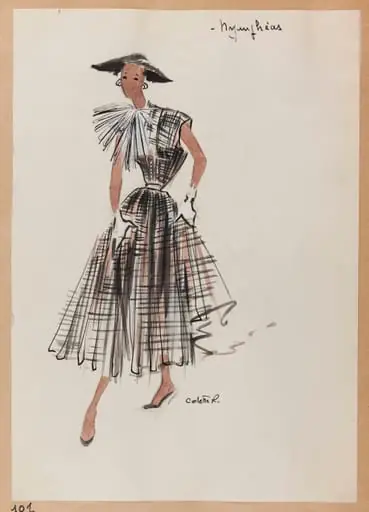
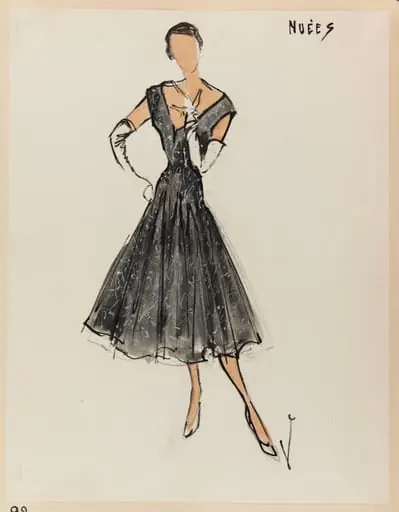
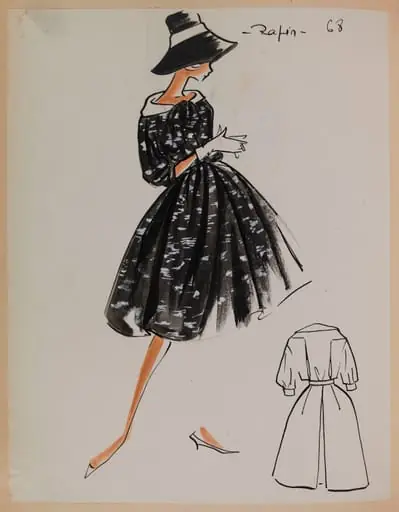
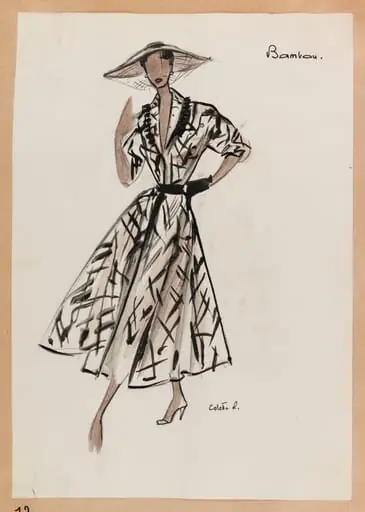
The subject is a woman dressed in a white dress with black decorative patterning, paired with a matching hat, gloves, and high heels.
The subject is a woman dressed in a white dress with black decorative patterning, paired with a matching hat, gloves, and high heels. Her posture—left leg forward, right hand on hip—suggests poise and self-possession. The attire reflects postwar ideals of feminine elegance, possibly referencing Parisian haute couture trends of the era, though no specific narrative or cultural context is indicated beyond the clothing itself.
Technique & Style
The drawing employs precise ink lines to define form and texture, with contrast achieved through the interplay of white paper and black accents. The dress’s full skirt and waist belt are rendered with subtle contouring, while the hat and gloves are simplified into clean shapes. The absence of shading or color emphasizes line and silhouette, aligning with fashion-drawing conventions of the time that prioritized clarity over realism.
History & Provenance
The work entered the Museum of Ethnography’s collection after its creation in the early 1950s. Its origin as a design study or fashion plate is unconfirmed, but its preservation suggests it was valued for its representation of contemporary dress. No record of prior ownership or exhibition history is publicly documented beyond its current institutional home.
Context
In the early 1950s, fashion illustration was a key medium for communicating design trends, particularly in Europe. Carven, known for her couture house, often collaborated with illustrators to promote her collections. This drawing may have been produced as a reference or promotional piece, capturing the refined, structured silhouettes favored in postwar women’s fashion.
Legacy
The drawing remains a quiet artifact of mid-century fashion aesthetics, preserved not for its artistic innovation but for its documentation of period dress. It contributes to broader scholarly interest in how clothing was visually encoded and disseminated in the pre-digital age, offering insight into the intersection of design, gender, and presentation in mid-century Europe.
Artist & collection
Artist
These delicate ink-on-paper drawings capture the quiet poetry of everyday things: pinecones, reeds, apples.
Museum
Palais Galliera - Musée de la Mode de la Ville de Paris
Continue through works from the same source collection.