Artwork
Bambou
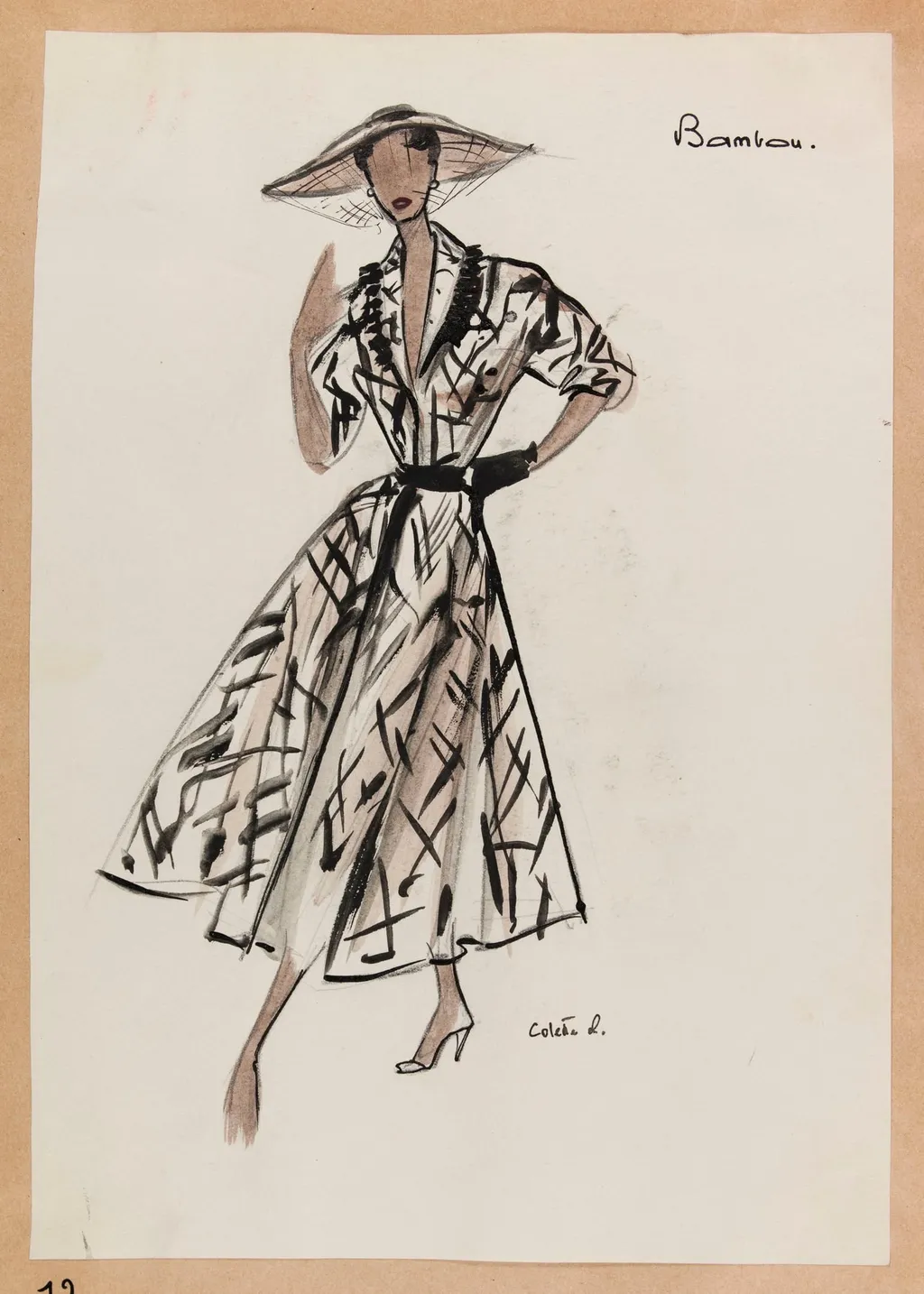
Bambou is a drawing by Marie-Louise Carven. It dates from 1951 and is held in the collection of the Palais Galliera - Musée de la Mode de la Ville de Paris.
About this work
Overview
Created around 1951 by French designer Marie-Louise Carven, *Bambou* is a hand-drawn sketch that captures a garment from her fashion house, established in 1945.
Created around 1951 by French designer Marie-Louise Carven, *Bambou* is a hand-drawn sketch that captures a garment from her fashion house, established in 1945. Though not a finished garment, the drawing functions as a design record, illustrating Carven’s interest in fluid silhouettes and natural motifs. The piece is preserved in the Museum of Ethnography, where it is valued as a document of mid-century French fashion design rather than fine art.
Subject & Meaning
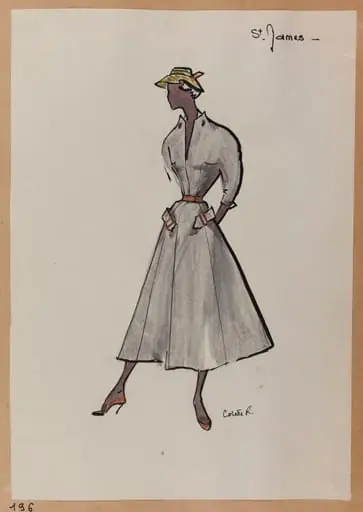
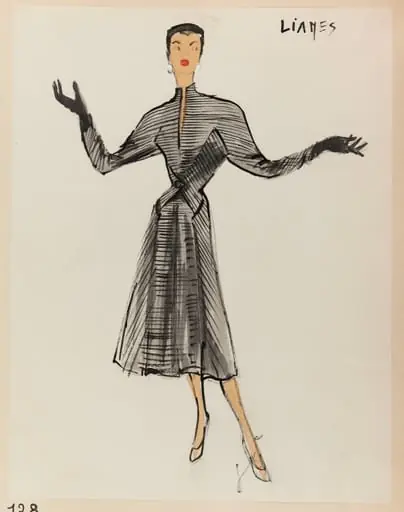
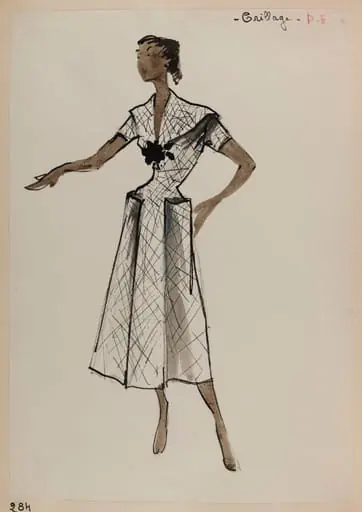
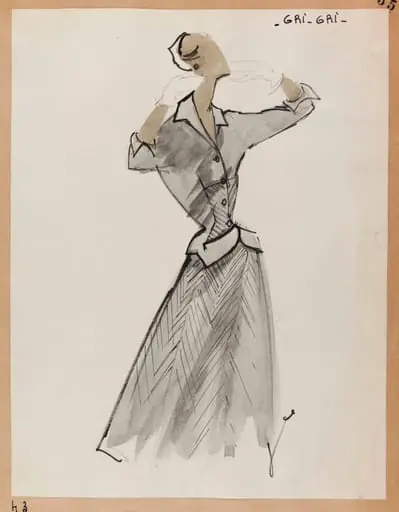
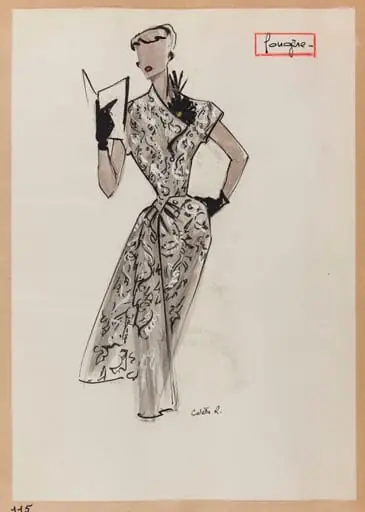
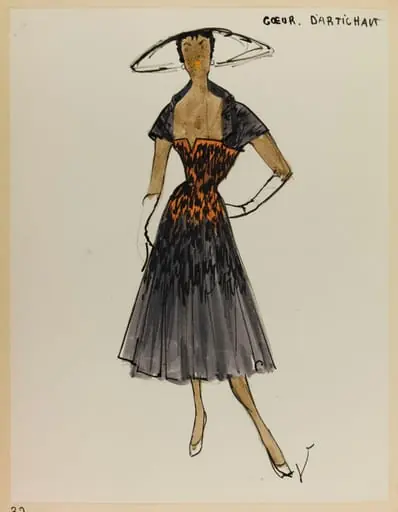
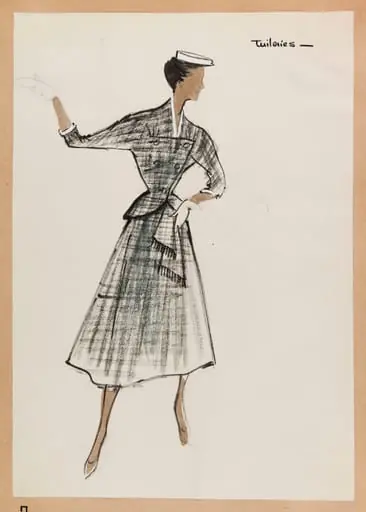
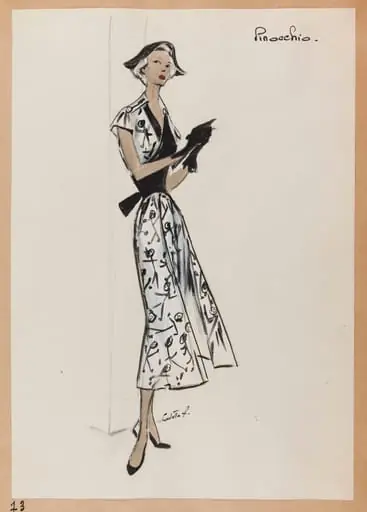
The drawing portrays a woman in a long, flared dress with a wide-brimmed hat, standing in a relaxed, forward-stepping pose. The bamboo-inspired pattern—suggested by intersecting dark lines over a lighter ground—evokes organic rhythm and lightness. The motif aligns with Carven’s aesthetic of integrating nature into wearable form, reflecting postwar desires for elegance rooted in simplicity and movement rather than ornamentation.
Technique & Style
Rendered in loose, energetic lines, the sketch conveys immediacy and spontaneity. Cross-hatching builds texture in the dress, suggesting depth without shading, while the absence of detail in the face and hands directs focus to the garment’s form. The fluidity of the lines mimics the drape of fabric, reinforcing the design’s emphasis on movement. The word 'Bambou' is inscribed in the corner, anchoring the image to its intended name and inspiration.
History & Provenance
Carven, one of the first French couturiers to embrace prêt-à-porter, produced *Bambou* during a period of transition in fashion, when ready-to-wear began to challenge haute couture dominance. The sketch likely served as a prototype or presentation piece for clients or manufacturers. Its current location in the Museum of Ethnography suggests its recognition as a cultural artifact representing postwar French design practices.
Context
In the early 1950s, French fashion was redefining itself after wartime austerity. Carven’s designs catered to petite figures and emphasized comfort without sacrificing refinement. The bamboo motif, drawn from Asian aesthetics popular in Europe at the time, reflected broader interests in Eastern minimalism. This sketch exemplifies how designers translated cultural references into wearable, everyday elegance.
Legacy
Though not widely exhibited, *Bambou* remains a quiet testament to Carven’s innovative approach to design and her role in democratizing fashion. The sketch’s emphasis on movement, natural forms, and accessible silhouettes foreshadowed later trends in casual luxury. Its preservation in an ethnographic context underscores its significance as a cultural object, bridging fashion, craft, and daily life.
Artist & collection
Artist
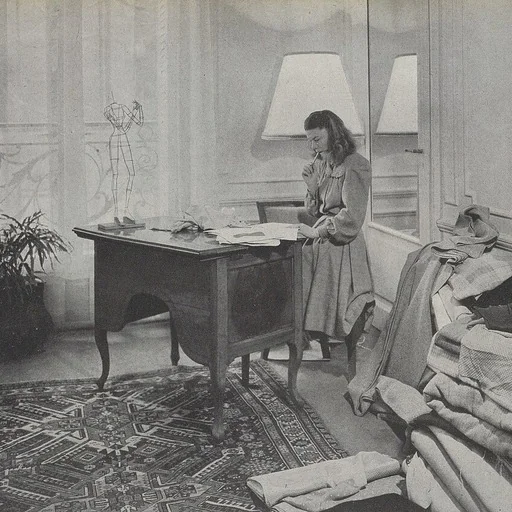
Marie-Louise Carven (31 August 1909 – 8 June 2015), born Carmen de Tommaso, was a French fashion designer who founded the house of Carven in 1945.
Museum
Palais Galliera - Musée de la Mode de la Ville de Paris
Continue through works from the same source collection.
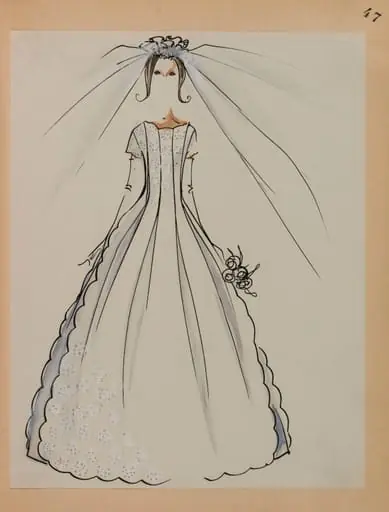 Robe de mariée festonnée et son voile
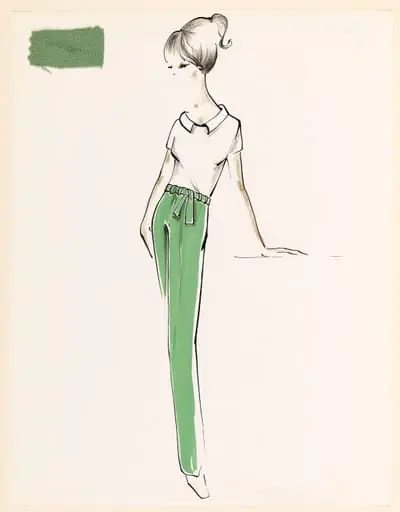 Haut blanc à manches courtes et pantalon vert à ceinture nouée
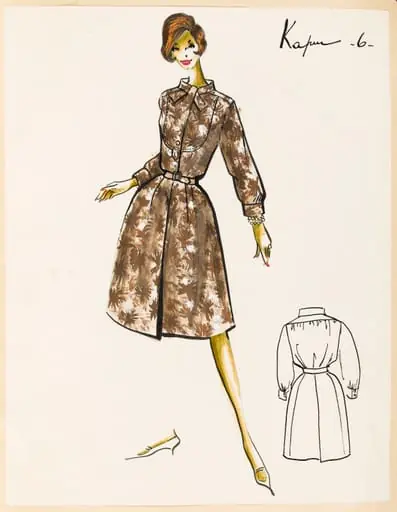 Kapur
Kapur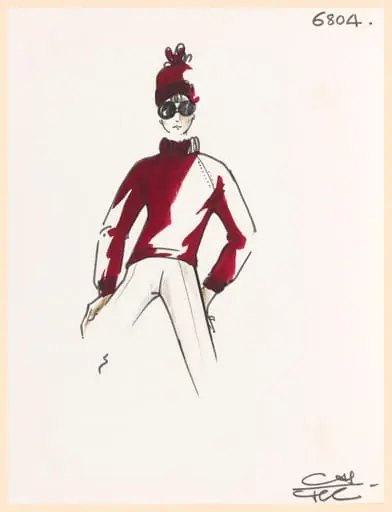 Pull-over à manches longues pourpre, bonnet assorti, pantalon et lunettes de soleil
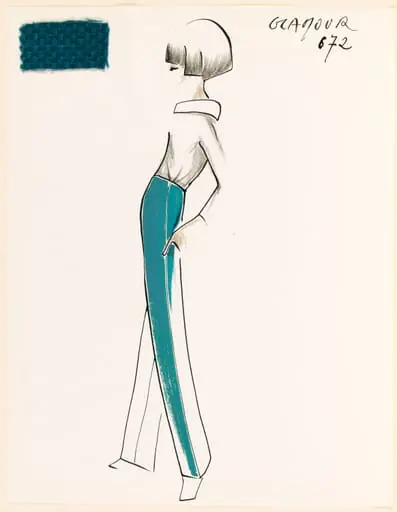 GLAMOUR
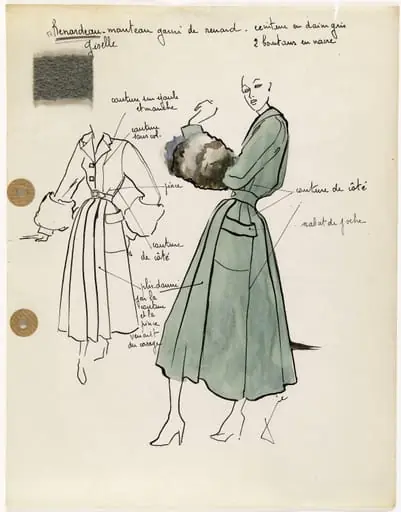 'Renardeau'
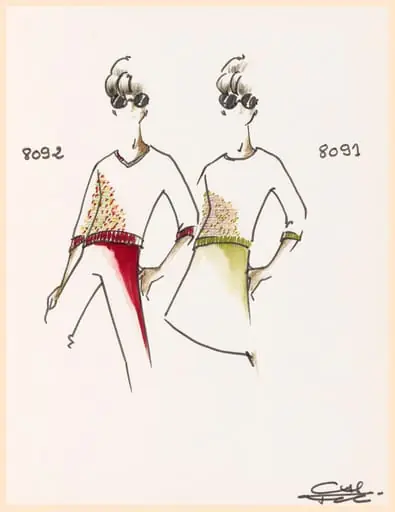 Pull-over à manches trois quarts et à encolure V à motifs multicolores, pantalon cerise et lunettes de soleil
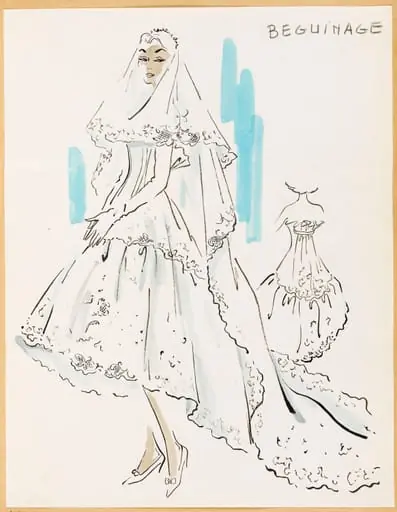 Béguinage