Artwork
Mikado
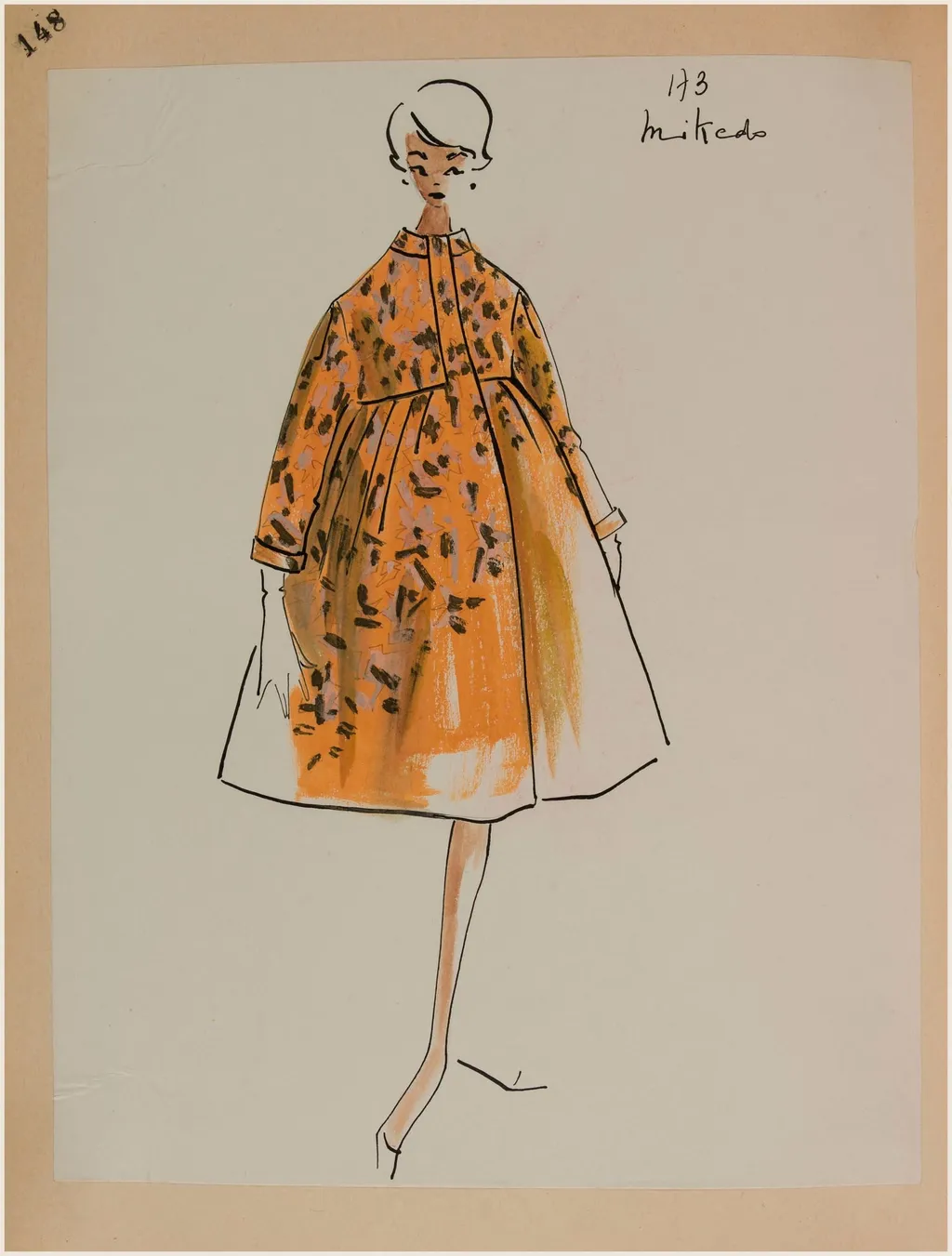
Mikado is a drawing by Carven. It dates from 1958 and is held in the collection of the Palais Galliera - Musée de la Mode de la Ville de Paris.
About this work
Overview
Created around 1958 by the fashion house Carven, this ink sketch is titled Mikado and is part of the Museum of Ethnography’s collection.
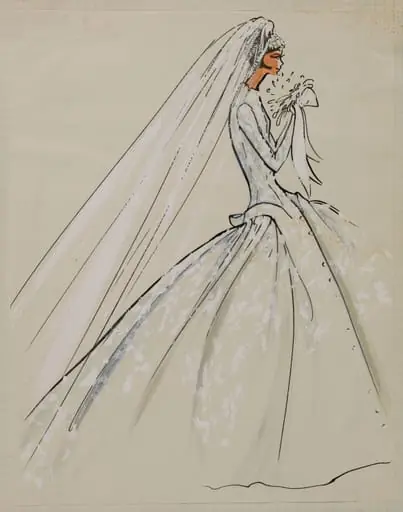
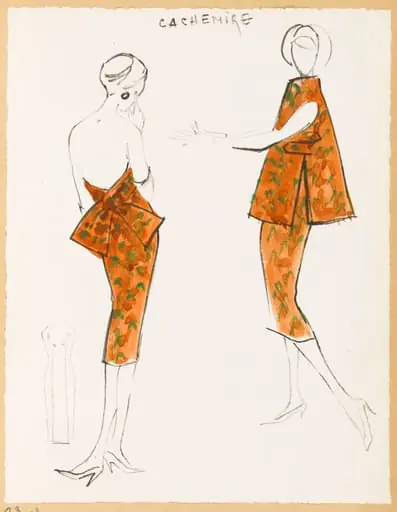
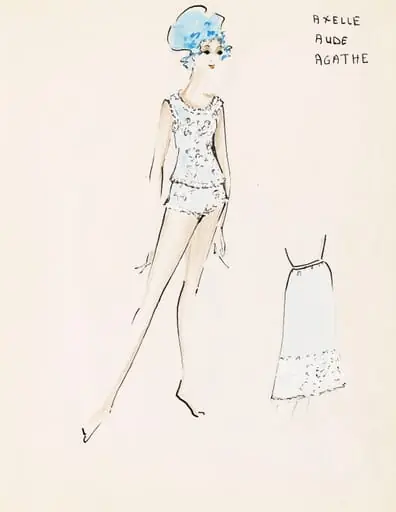
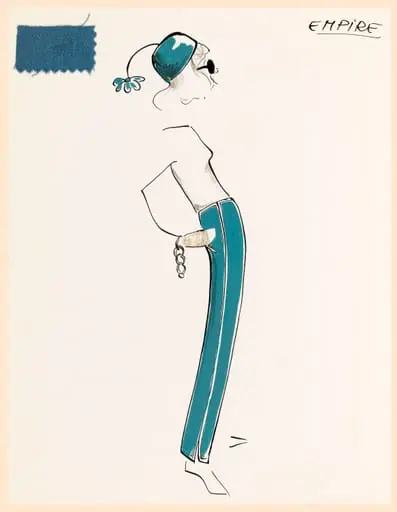
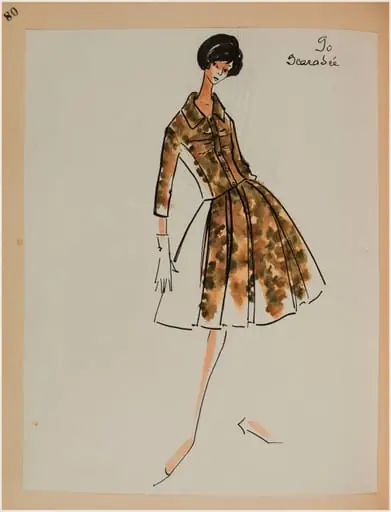
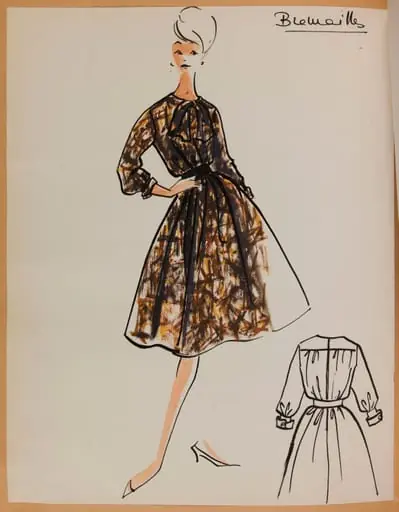
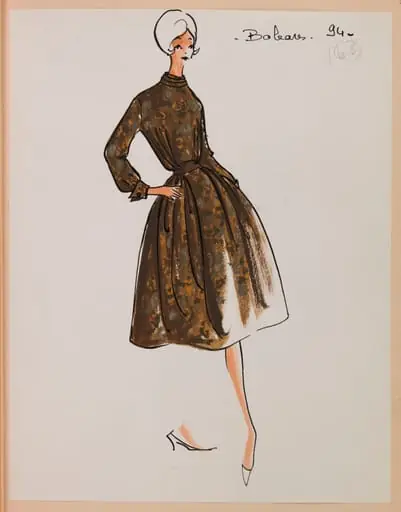
Created around 1958 by the fashion house Carven, this ink sketch is titled Mikado and is part of the Museum of Ethnography’s collection. It depicts a stylized female figure dressed in an elaborate garment, rendered with minimal detail and fluid brushwork. The focus is entirely on the clothing, suggesting the drawing served as a design reference rather than a portrait. Its informal execution points to its function within a creative process.
Subject & Meaning
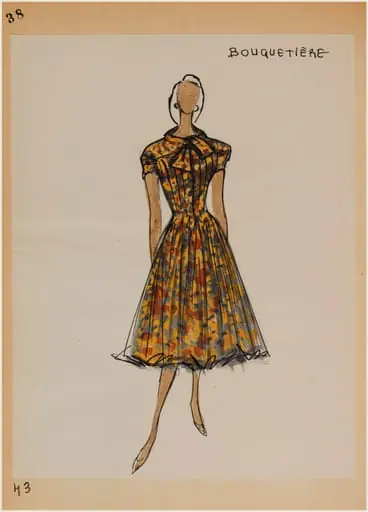
The figure wears a long, orange gown with dark, organic patterns resembling leaves, a high collar, and wide, flared sleeves. The absence of facial features or body detail shifts attention to the garment’s structure and ornamentation. The name 'Mikado' inscribed in the corner likely functions as a design identifier, possibly referencing Japanese imperial associations, though no explicit cultural narrative is conveyed beyond the aesthetic.
Technique & Style
Executed in loose, rapid ink lines, the drawing emphasizes movement and form over precision. The dress is suggested rather than defined, with minimal shading and no background to distract. The brushwork conveys spontaneity, typical of fashion sketches used to capture ideas quickly. This approach reflects a working method prioritizing efficiency and visual impact over finished detail.
History & Provenance
The sketch entered the Museum of Ethnography’s holdings as part of a broader collection of fashion-related materials. Its origin lies within Carven’s design studio during the late 1950s, a period when the house was actively exploring exoticized silhouettes. Its preservation suggests recognition of its value as a document of mid-century design practice, rather than as a finished artwork.
Context
In the late 1950s, European fashion houses frequently drew inspiration from non-Western aesthetics, often abstracting them into stylized forms. Mikado reflects this trend, using simplified motifs and a monochromatic palette to evoke an imagined Eastern elegance. Such sketches were internal tools, circulated among designers and tailors to guide construction, not public presentations.
Legacy
As a working sketch, Mikado offers insight into the iterative nature of fashion design. Its preservation in an ethnographic museum highlights a shift in how fashion artifacts are valued—not merely as garments, but as cultural records of creative labor. It remains a quiet example of how design ideas, once ephemeral, become historical evidence.
Artist & collection
Artist
These delicate ink-on-paper drawings capture the quiet poetry of everyday things: pinecones, reeds, apples.
Museum
Palais Galliera - Musée de la Mode de la Ville de Paris
Continue through works from the same source collection.