Artwork
Bremailles
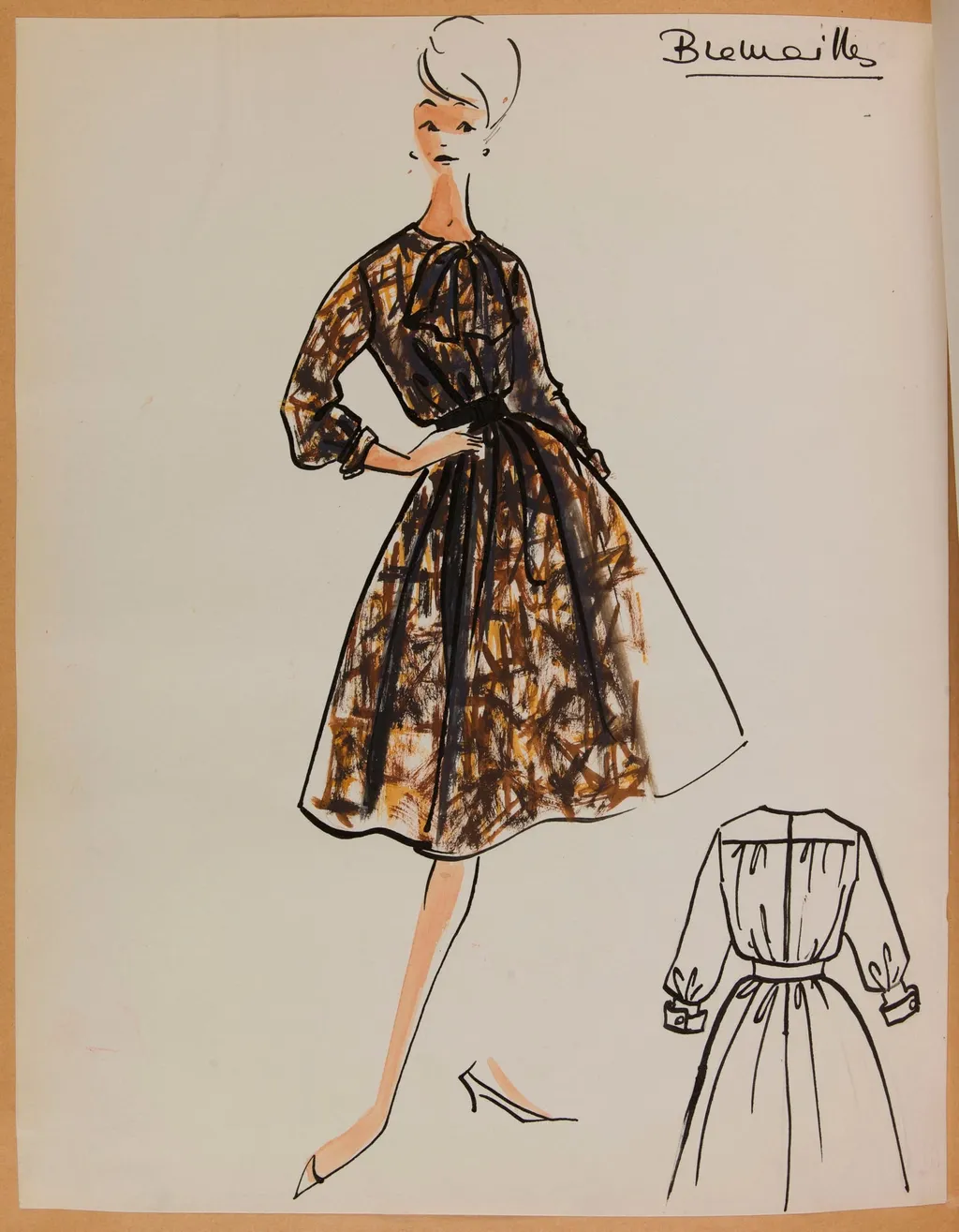
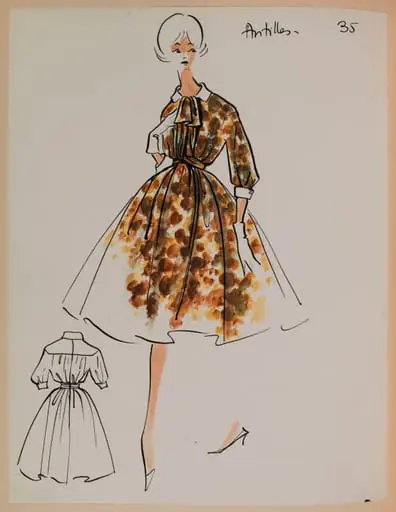
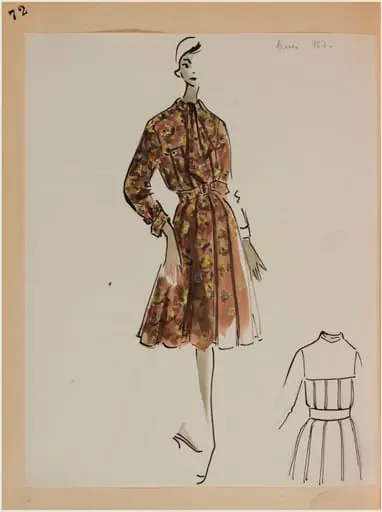
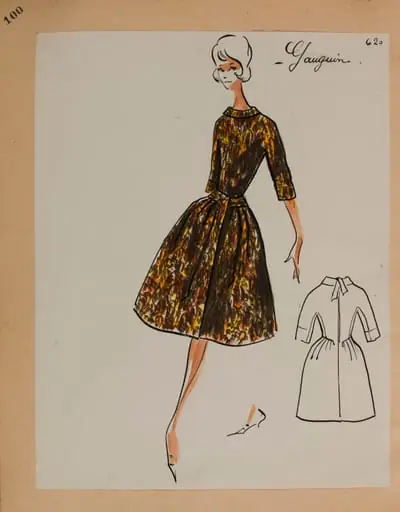
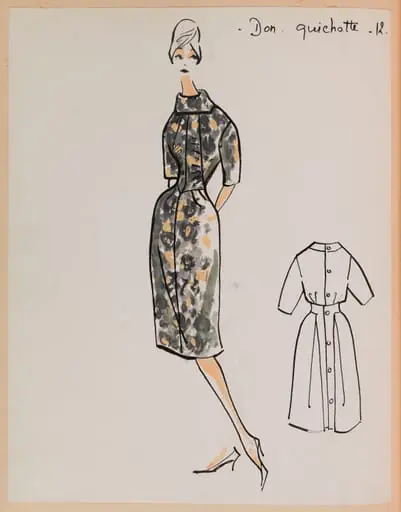
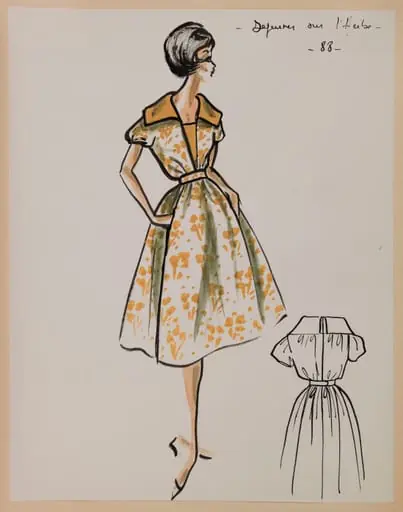
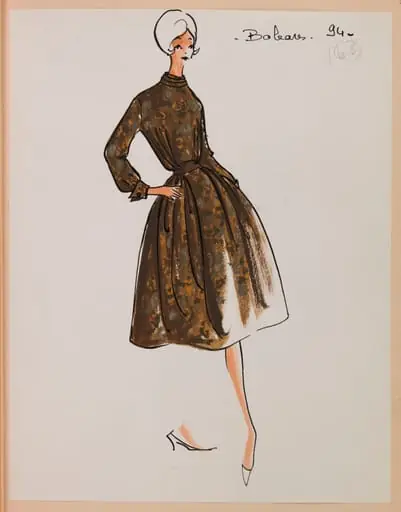
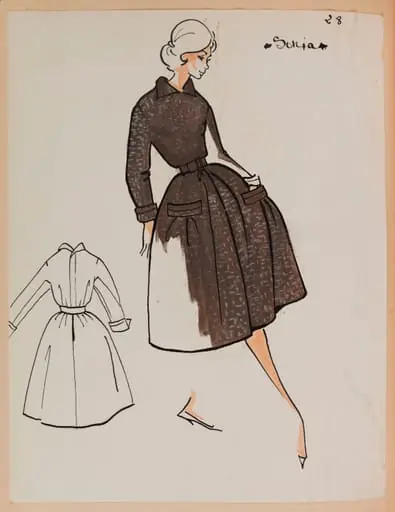
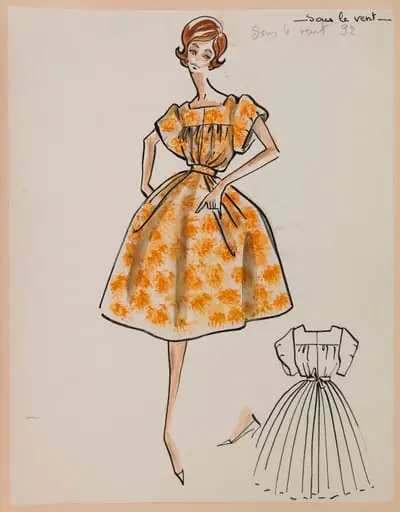
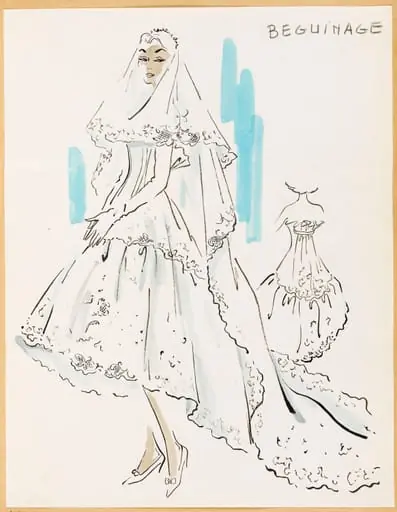
Bremailles is a drawing by Marie-Louise Carven. It dates from 1958 and is held in the collection of the Palais Galliera - Musée de la Mode de la Ville de Paris.
About this work
Overview
The work captures a design intended for everyday wear, reflecting Carven’s focus on accessible, well-proportioned clothing for smaller frames.
Created around 1958, *Bremailles* is a fashion sketch by Marie-Louise Carven, founder of the Parisian house Carven established in 1945. The work captures a design intended for everyday wear, reflecting Carven’s focus on accessible, well-proportioned clothing for smaller frames. Executed in ink with minimal detail, the sketch prioritizes form and movement over ornamentation. It resides in the Museum of Ethnography’s collection, underscoring its significance as a document of mid-century French design practice.
Subject & Meaning
The sketch depicts a knee-length dress with softly flared skirt and gently puffed sleeves, designed for ease and grace. The absence of elaborate decoration suggests an emphasis on functionality and quiet elegance. The title *Bremailles*, inscribed in the corner, may reference a textile pattern or a poetic descriptor, though its exact meaning remains unconfirmed. The inclusion of a rear view indicates careful consideration of construction and fit, aligning with Carven’s commitment to wearable, thoughtful design.
Technique & Style
Carven rendered the design with swift, assured ink strokes that define silhouette rather than detail. Shadows and contours are suggested through fluid lines, avoiding fine rendering in favor of expressive economy. The dual views—front and back—are rendered with equal simplicity, emphasizing structural clarity. This approach reflects a designer’s working method: rapid visualization of form, prioritizing proportion and movement over decorative precision.
History & Provenance
Marie-Louise Carven launched her fashion house in 1945 and was among the first Parisian couturiers to develop a ready-to-wear line, bridging haute couture and mass-market fashion. *Bremailles* dates from the late 1950s, a period when her brand expanded its reach beyond elite clients. The sketch entered the Museum of Ethnography’s collection as part of a broader effort to document everyday fashion as cultural artifact, rather than solely as high art.
Context
In postwar France, fashion was shifting toward practicality and democratization. Carven’s designs responded to changing lifestyles, favoring lightweight fabrics and adaptable silhouettes for working women. *Bremailles* exemplifies this trend—neither theatrical nor rigid, but quietly modern. Its preservation in an ethnographic museum highlights how mid-century designers contributed to everyday material culture, not just elite aesthetics.
Legacy
Carven’s emphasis on proportion, comfort, and accessibility influenced later generations of designers who prioritized wearability. *Bremailles*, though a single sketch, represents a broader movement toward democratized fashion in mid-century Europe. Its presence in a museum of ethnography affirms its role as a cultural object, documenting how design responds to social needs rather than merely expressing trend or luxury.
Artist & collection
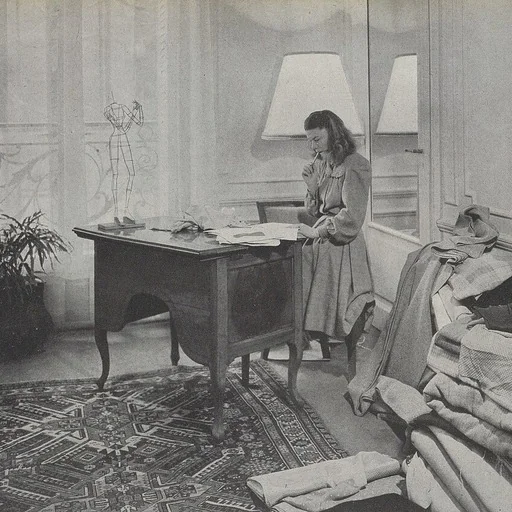
Artist
Marie-Louise Carven (31 August 1909 – 8 June 2015), born Carmen de Tommaso, was a French fashion designer who founded the house of Carven in 1945.
Museum
Palais Galliera - Musée de la Mode de la Ville de Paris
Continue through works from the same source collection.
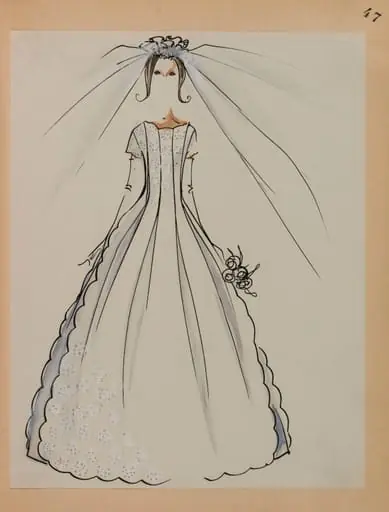 Robe de mariée festonnée et son voile
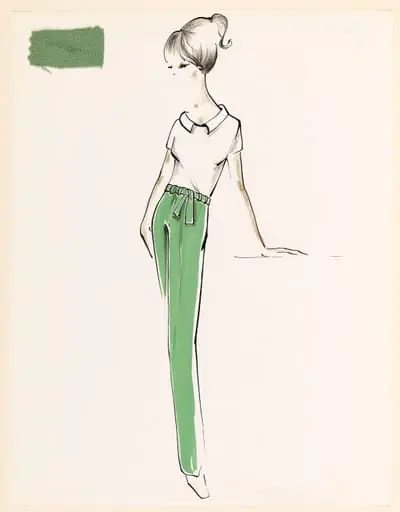 Haut blanc à manches courtes et pantalon vert à ceinture nouée
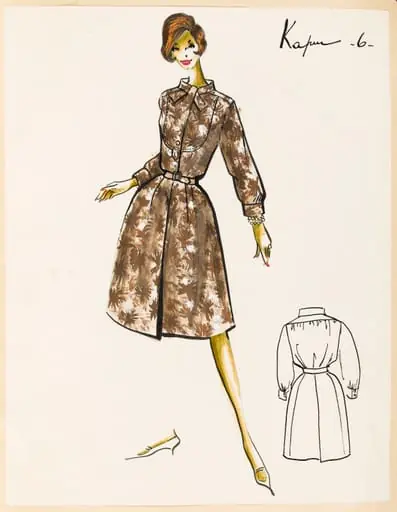 Kapur
Kapur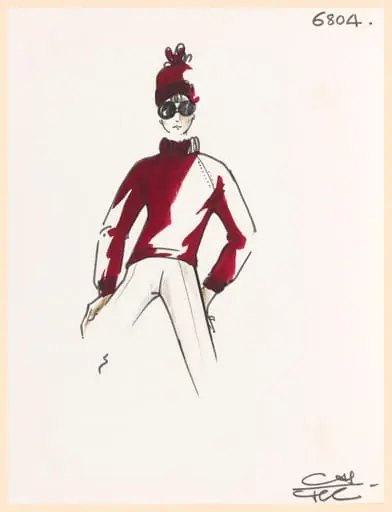 Pull-over à manches longues pourpre, bonnet assorti, pantalon et lunettes de soleil
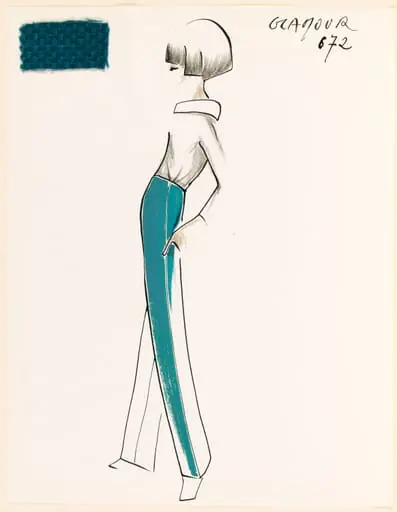 GLAMOUR
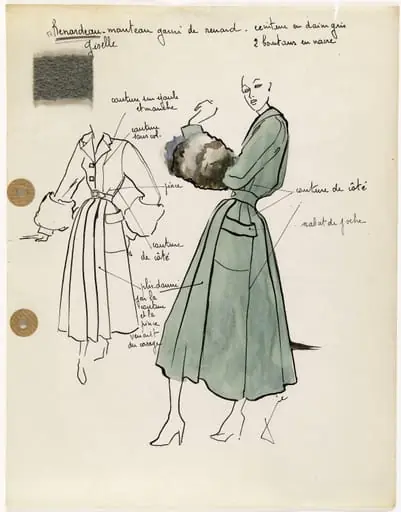 'Renardeau'
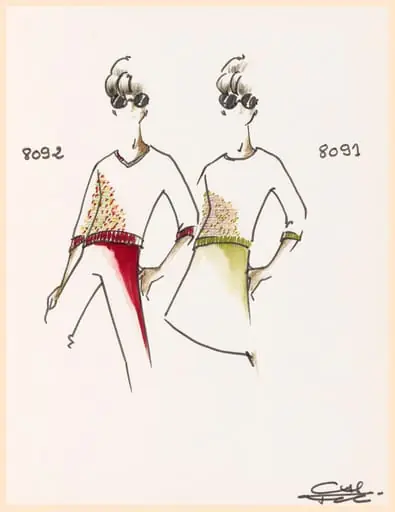 Pull-over à manches trois quarts et à encolure V à motifs multicolores, pantalon cerise et lunettes de soleil
 Béguinage