Artwork
Mimi Pinson
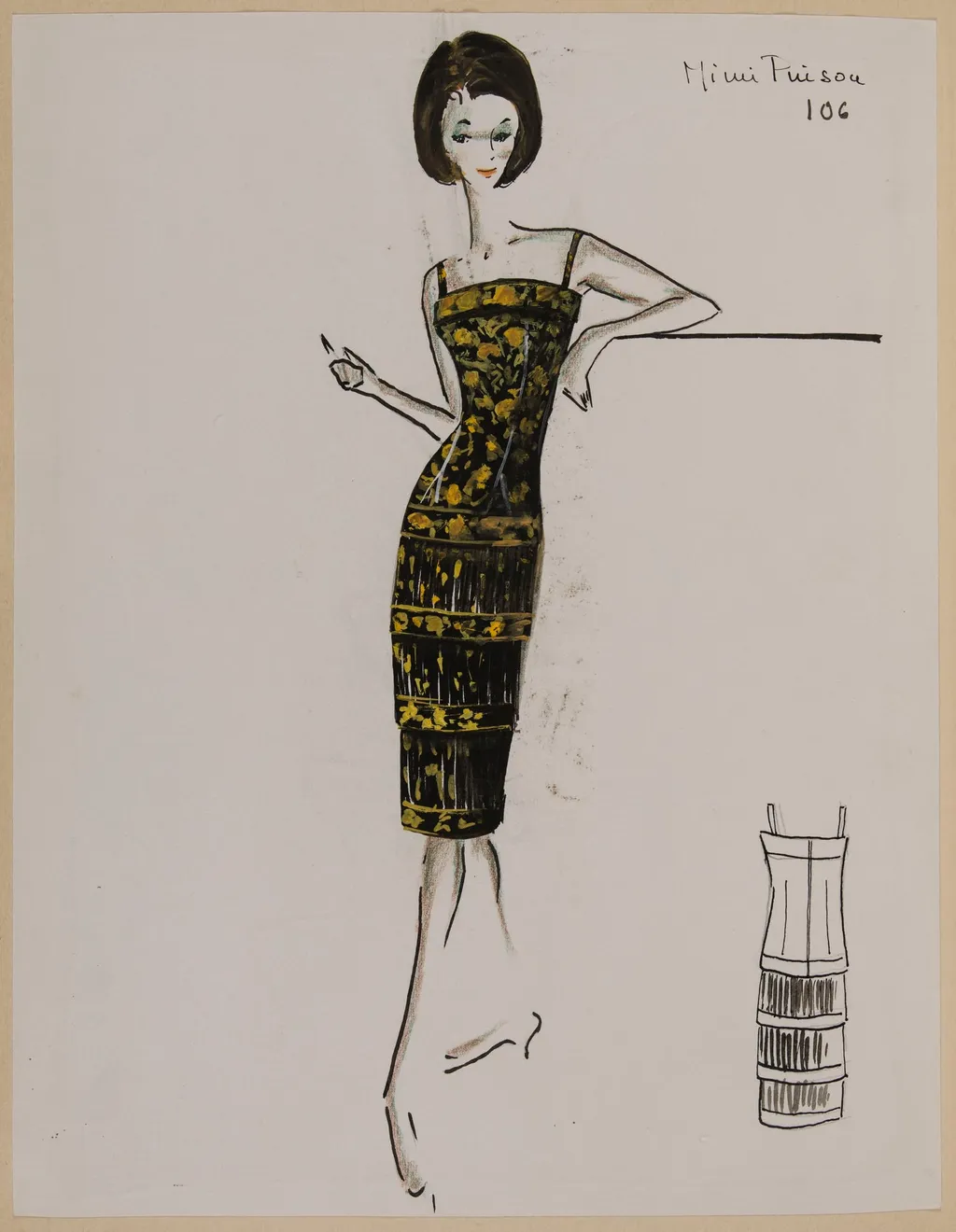
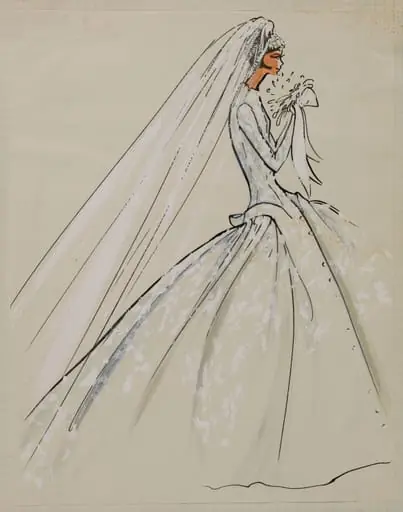
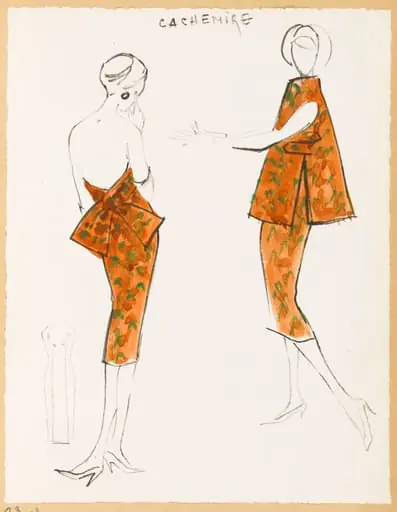
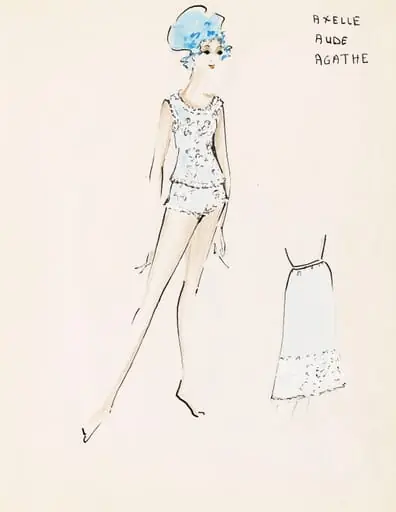
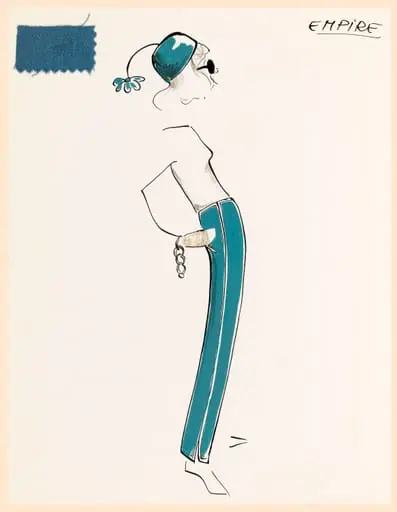
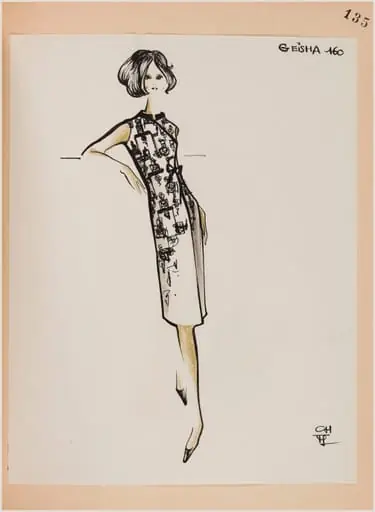
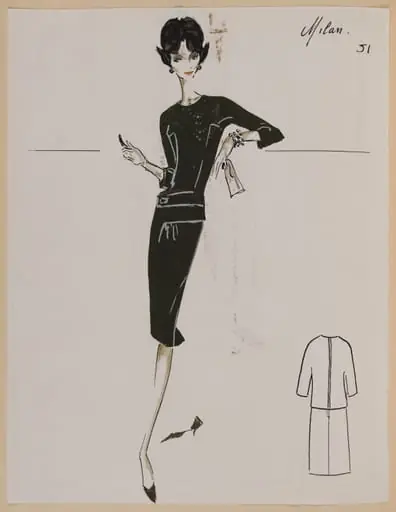
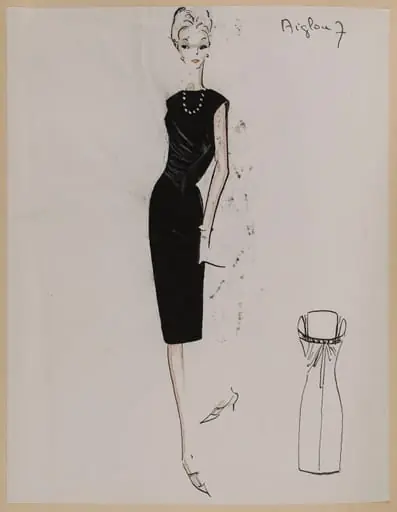
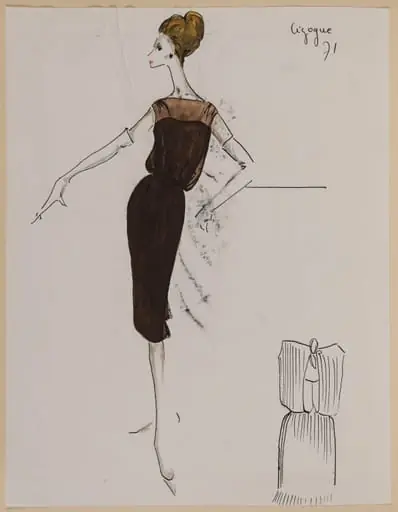
Mimi Pinson is a drawing by Carven. It dates from 1960 and is held in the collection of the Palais Galliera - Musée de la Mode de la Ville de Paris.
About this work
Overview
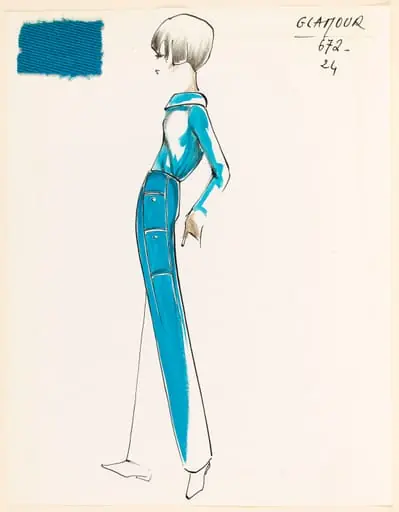
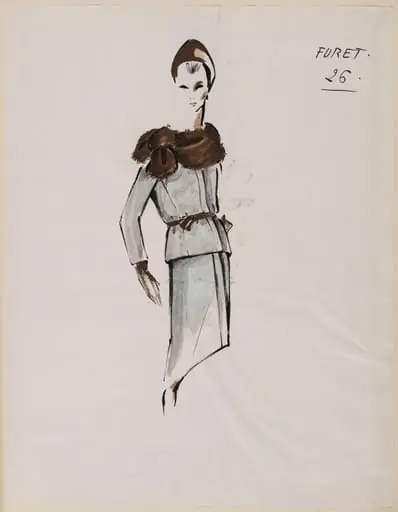
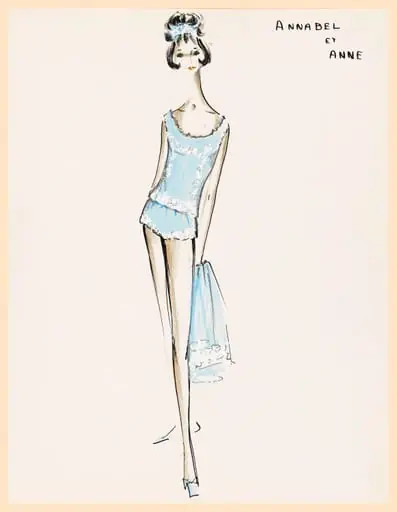
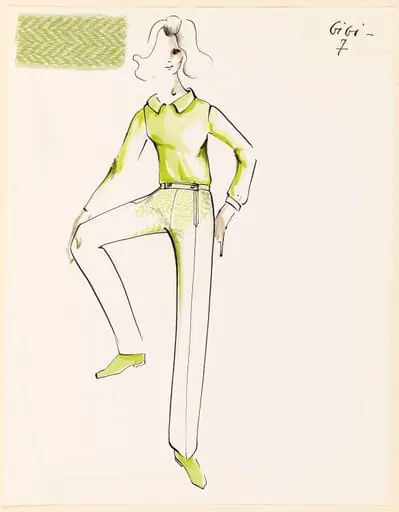
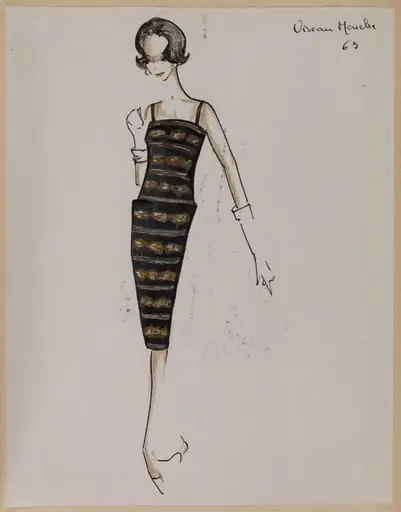
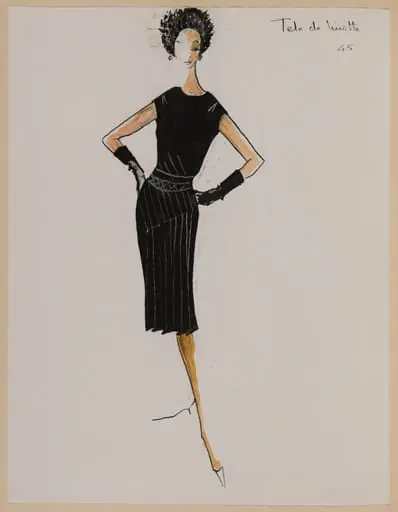
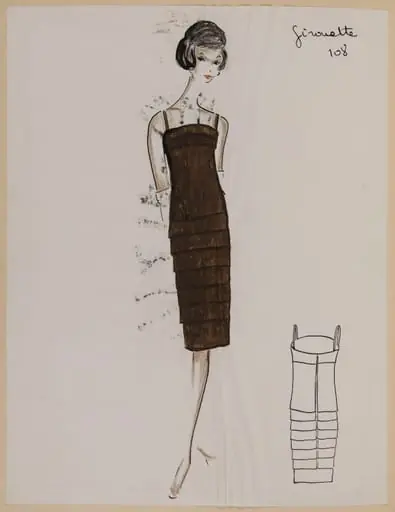
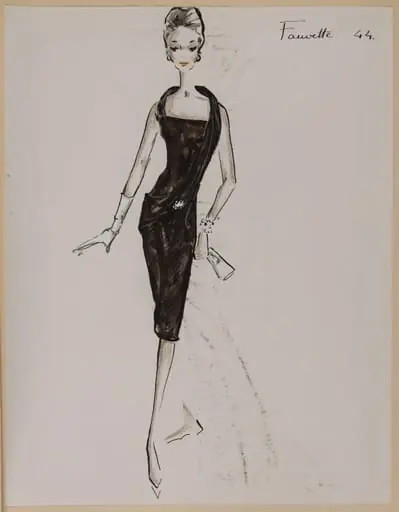
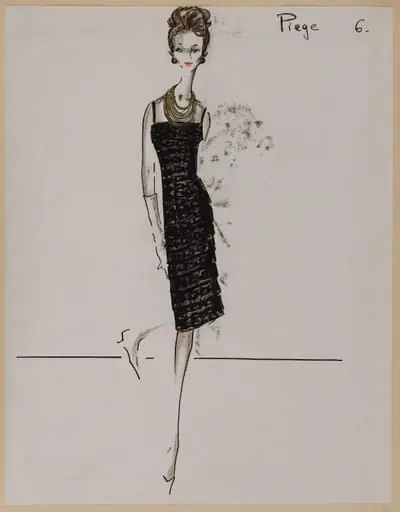
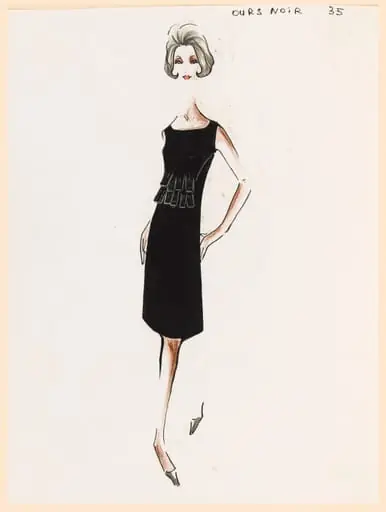
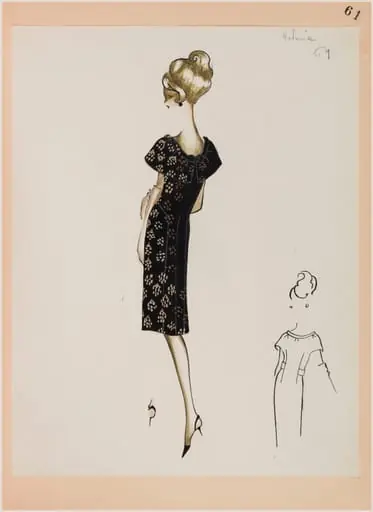
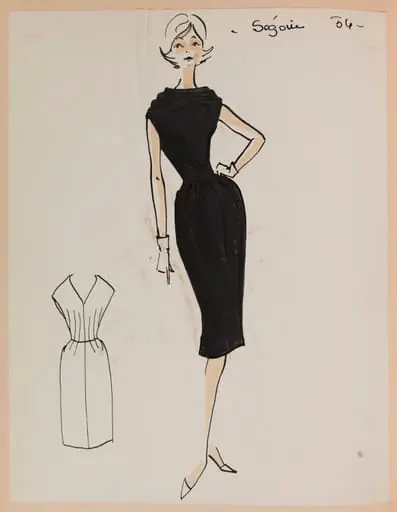
Created around 1960 by the French designer Carven, this ink sketch captures a figure named Mimi Pinson in a dynamic, abbreviated style. Executed with swift, confident lines, it functions as a fashion study rather than a finished illustration. The work resides in the collection of the Museum of Ethnography, where it is preserved as an example of mid-century design thinking in motion.
Subject & Meaning
Mimi Pinson, a figure associated with Parisian youth culture of the era, is depicted with poised self-assurance. Her stance—one hand on the hip, the other holding a small, indistinct object—suggests casual elegance. The name implies a literary or cultural archetype, possibly drawn from popular fiction, rendered here not as a portrait but as an embodiment of contemporary style and attitude.
Technique & Style
The drawing employs loose, economical linework to emphasize silhouette and pattern over anatomical precision. Bold, vertical stripes at the dress’s hem echo the rhythmic lines of a nearby vase sketch, linking garment and object through formal repetition. The black-and-gold palette, rendered in ink and wash, prioritizes visual impact over detail, reflecting the immediacy of fashion drafting.
History & Provenance
The sketch entered the Museum of Ethnography’s collection as part of a broader acquisition of design materials from Carven’s studio. Its origin as a working drawing, not a public advertisement, indicates its role in the designer’s creative process. No earlier ownership records are documented, suggesting it remained within the designer’s circle until institutional acquisition.
Context
In the early 1960s, Parisian fashion houses increasingly relied on rapid sketches to communicate evolving silhouettes to clients and ateliers. Carven’s approach, blending artistic spontaneity with commercial intent, mirrored a broader shift toward expressive, less rigid design documentation. This piece reflects that transition, capturing style as fluid and personal rather than static and formal.
Legacy
The sketch endures as a quiet testament to the role of informal drawing in fashion design. It reveals how designers used gesture and pattern to convey mood and movement before final construction. Though not widely exhibited, it remains a valuable artifact for understanding the unpolished, intuitive side of mid-century French fashion practice.
Artist & collection
Artist
These delicate ink-on-paper drawings capture the quiet poetry of everyday things: pinecones, reeds, apples.

Museum
Palais Galliera - Musée de la Mode de la Ville de Paris
Continue through works from the same source collection.