Artwork
Nagi
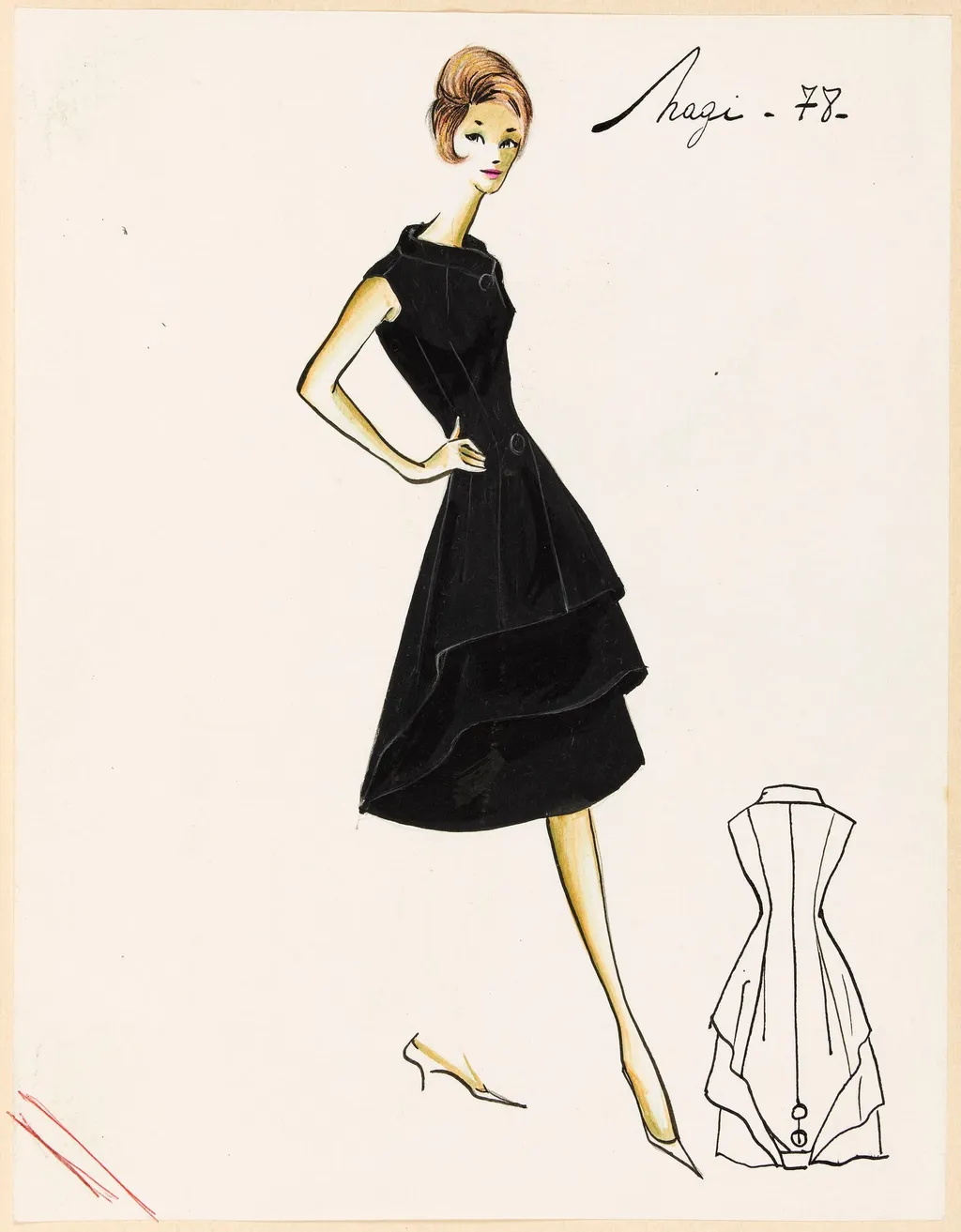
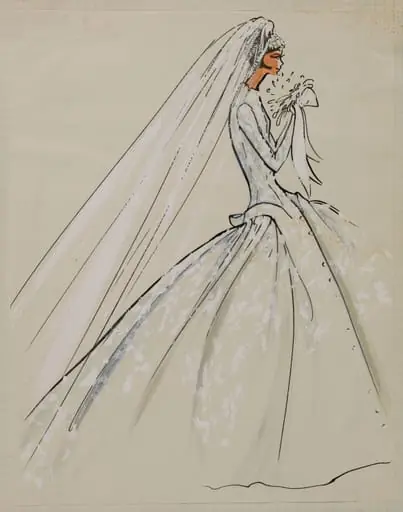
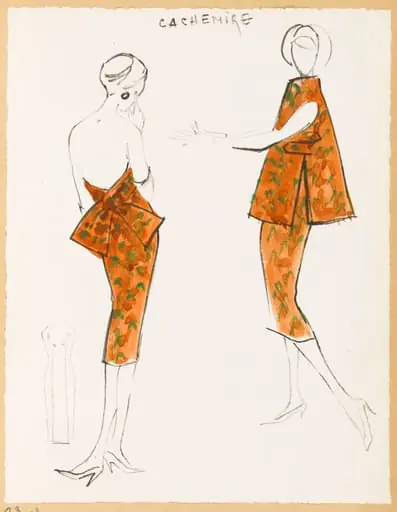
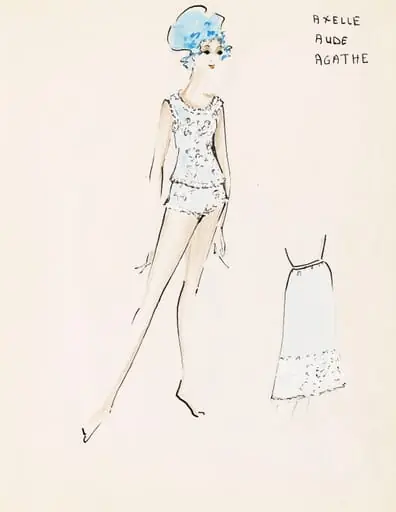
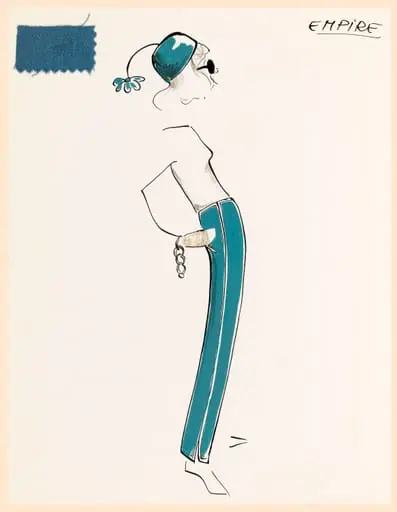
Nagi is a drawing by Carven. It dates from 1959 and is held in the collection of the Palais Galliera - Musée de la Mode de la Ville de Paris.
About this work
Overview
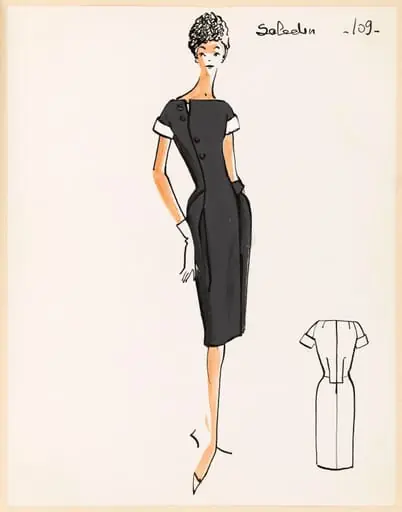
Nagi, attributed to the fashion house Carven and dated to around 1959, is part of the collection at the Museum of Ethnography. The piece is presented as an image that captures a single figure in a stylised, mid‑century outfit, offering a concise visual study of contemporary women’s attire.
Subject & Meaning
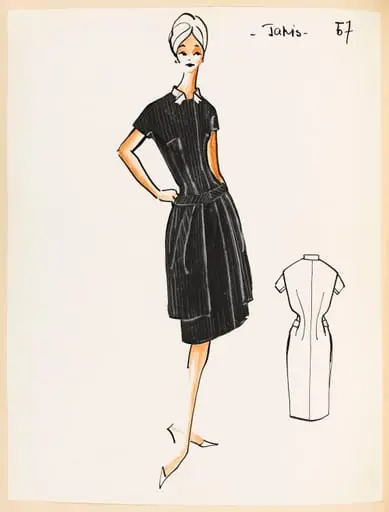
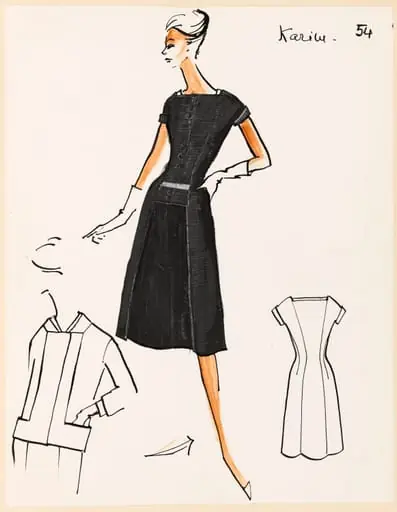
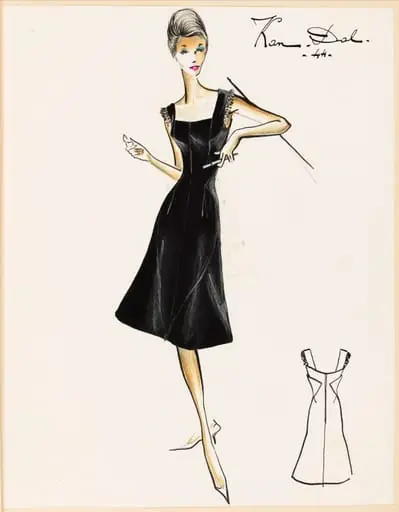
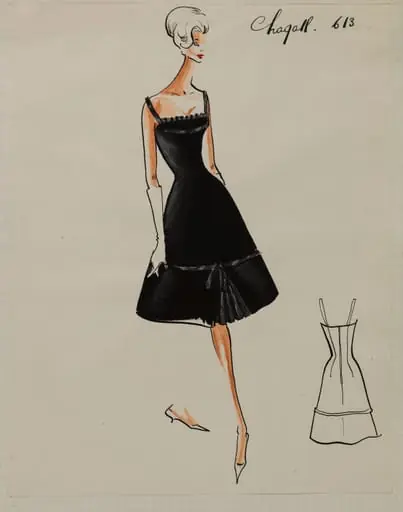
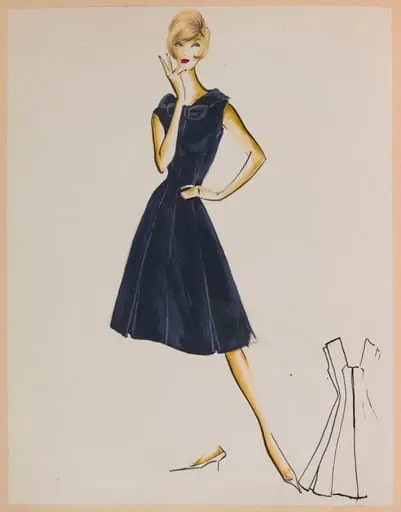
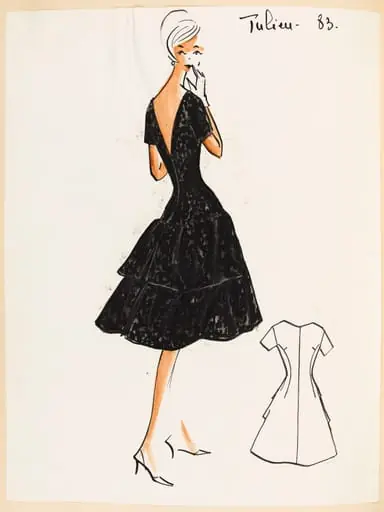
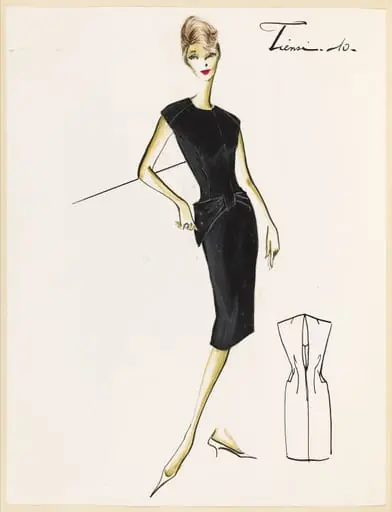
The composition centres on a woman dressed in a modest black dress with short sleeves, a fitted waist and a subtly flared skirt. She stands with one hand on her hip, hair neatly pulled back, suggesting poise and confidence. A secondary sketch of the same dress from the rear provides a comparative view of its silhouette.
Technique & Style
Carven employs clean, unembellished lines to define the garment’s shape, avoiding decorative folds or ruffles. The drawing’s simplicity highlights the dress’s ease of movement while retaining a refined appearance, emphasizing form over ornamentation.
History & Provenance
Created circa 1959, Nagi entered the Museum of Ethnography’s holdings as part of its broader acquisition of mid‑twentieth‑century fashion documentation. The work reflects Carven’s design ethos during a period of evolving women’s fashion.
Context
The image reflects post‑war trends toward streamlined, functional clothing for women, aligning with Carven’s reputation for accessible elegance. The dual perspective—front and back—offers insight into design considerations of the era, illustrating how silhouette and practicality were balanced.
Artist & collection
Artist
These delicate ink-on-paper drawings capture the quiet poetry of everyday things: pinecones, reeds, apples.
Museum
Palais Galliera - Musée de la Mode de la Ville de Paris
Continue through works from the same source collection.