Artwork
Nambou
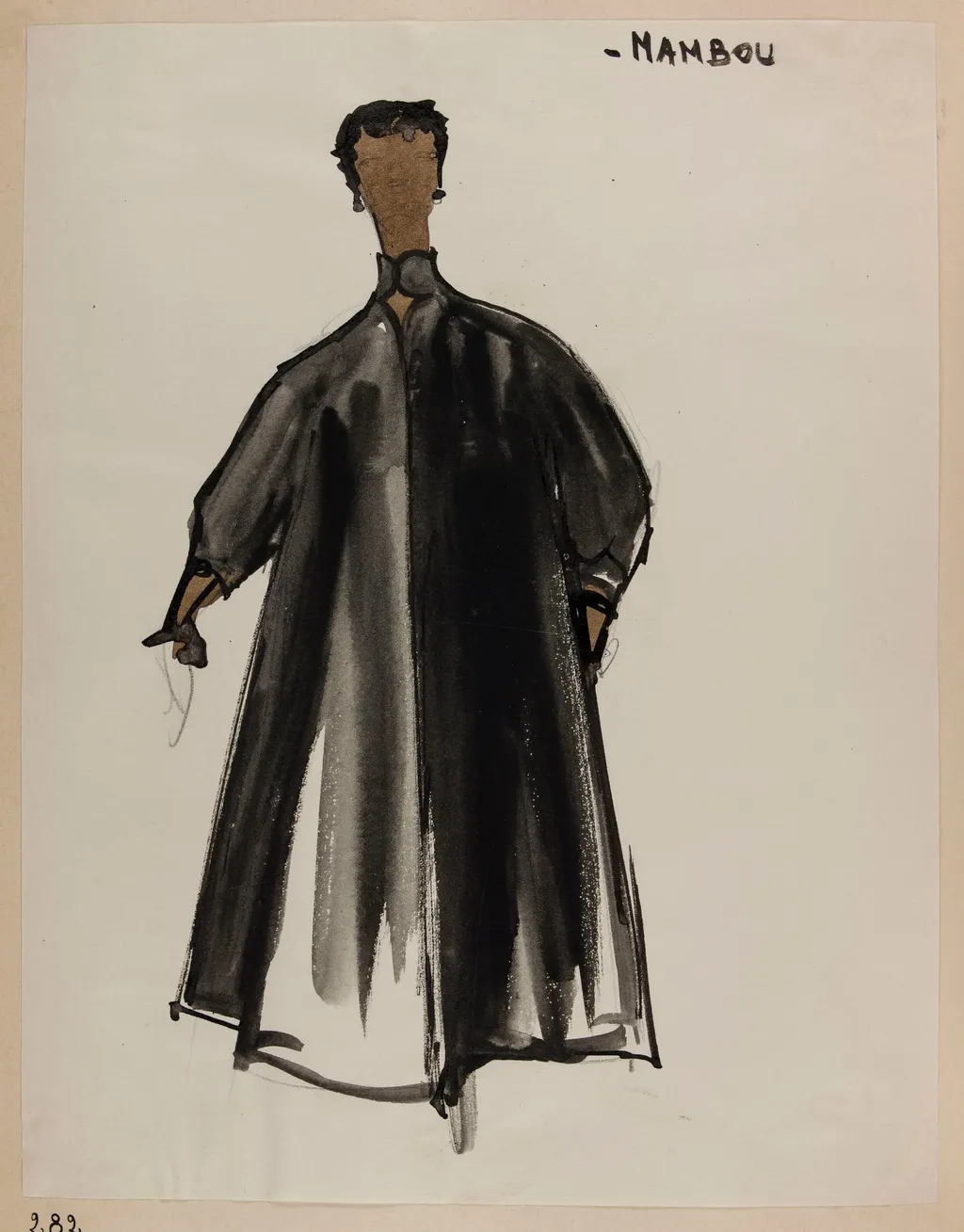
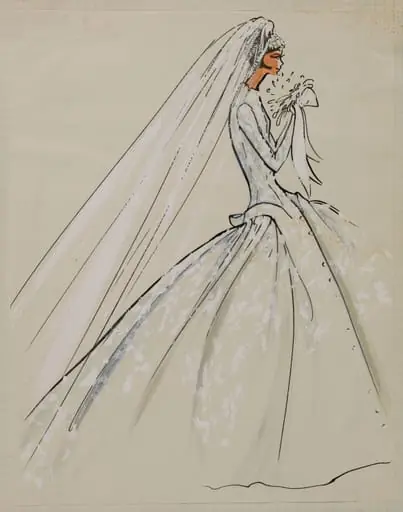
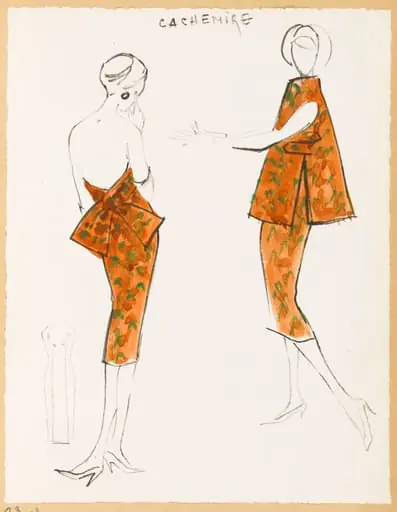
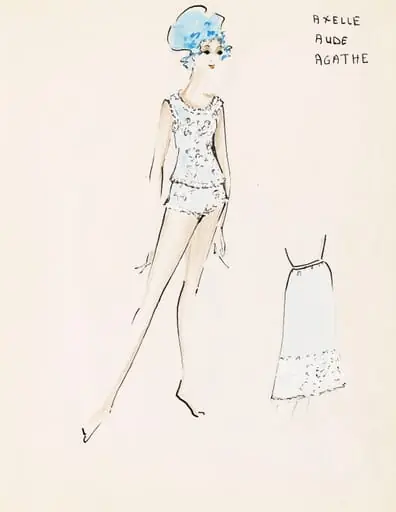
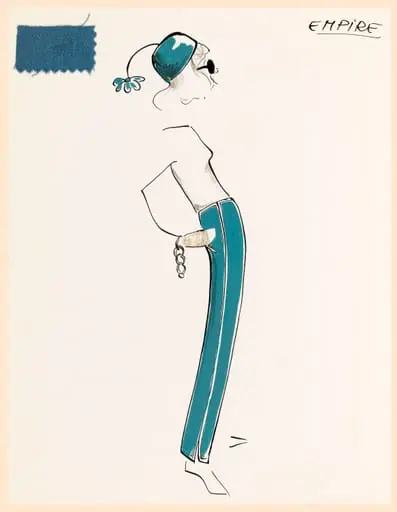
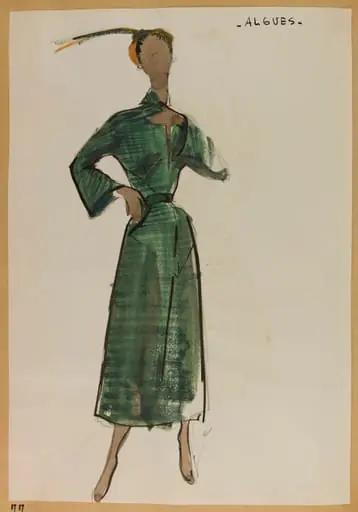
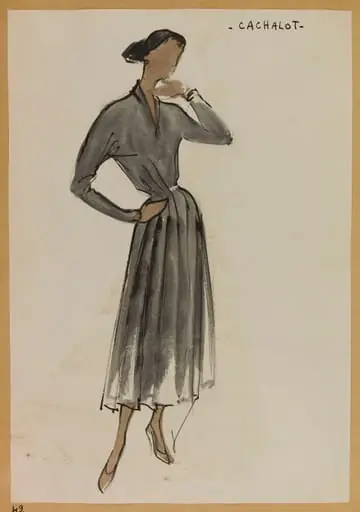
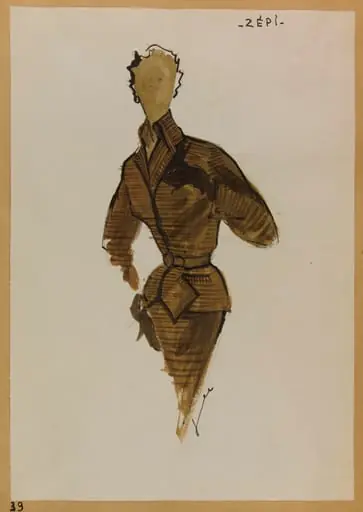
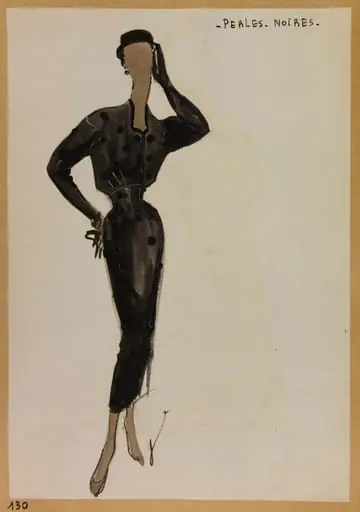
Nambou is a drawing by Carven. It dates from 1952 and is held in the collection of the Palais Galliera - Musée de la Mode de la Ville de Paris.
About this work
Overview
It resides in the collection of the Museum of Ethnography, where it is preserved as part of a broader archive of 20th-century fashion documentation.
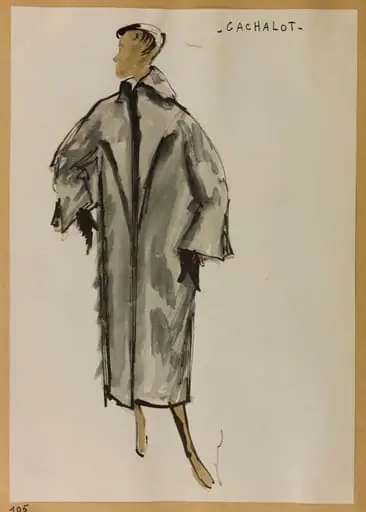
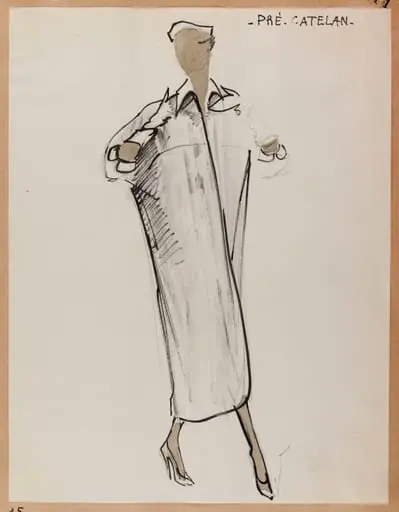
Nambou is a pencil sketch created in 1952 by the French designer Carven. Executed with swift, assured lines, it captures a figure in a long, dark coat with a high collar and tucked hands. The drawing bears the title in the upper right corner and was likely made as a preparatory study. It resides in the collection of the Museum of Ethnography, where it is preserved as part of a broader archive of 20th-century fashion documentation.
Subject & Meaning
The figure in Nambou is anonymous, its features reduced to minimal strokes, emphasizing posture and garment over identity. The coat, rendered with subtle tonal shifts, suggests volume and movement, hinting at a sense of quiet dignity or introspection. The hands concealed in pockets imply stillness or reserve. The title, Nambou, offers no clear reference, leaving interpretation open to the viewer’s perception of form and mood.
Technique & Style
Carven employed bold, fluid pencil lines to define the coat’s silhouette, using light shading to suggest fabric weight and sheen. The sketch’s rapid execution reveals an intuitive grasp of form, with minimal detail on the face and limbs, focusing attention on the garment’s structure. The contrast between the loose, flowing coat and the restrained, almost abstracted head creates a dynamic tension between detail and suggestion.
History & Provenance
Created in 1952, Nambou entered the Museum of Ethnography’s collection as part of Carven’s personal archive of fashion studies. Its presence there reflects the institution’s interest in documenting design processes beyond finished garments. No public record of prior ownership exists, and the sketch appears to have remained within the designer’s circle until its institutional acquisition.
Context
In early 1950s Paris, fashion designers often produced quick sketches to explore silhouettes before construction. Nambou aligns with this practice, capturing a moment of creative experimentation. While Carven was known for tailored womenswear, this piece reveals a more abstract, expressive approach to form—suggesting a personal exploration outside commercial commissions.
Legacy
Nambou endures as a quiet example of fashion drawing as both technical exercise and artistic expression. It contributes to the understanding of how designers translated ideas from paper to fabric, preserving the immediacy of the creative process. Though not widely exhibited, it remains a significant artifact within the Museum of Ethnography’s study of mid-century design methodology.
Artist & collection
Artist
These delicate ink-on-paper drawings capture the quiet poetry of everyday things: pinecones, reeds, apples.
Museum
Palais Galliera - Musée de la Mode de la Ville de Paris
Continue through works from the same source collection.