Artwork
Orgeuilleuse
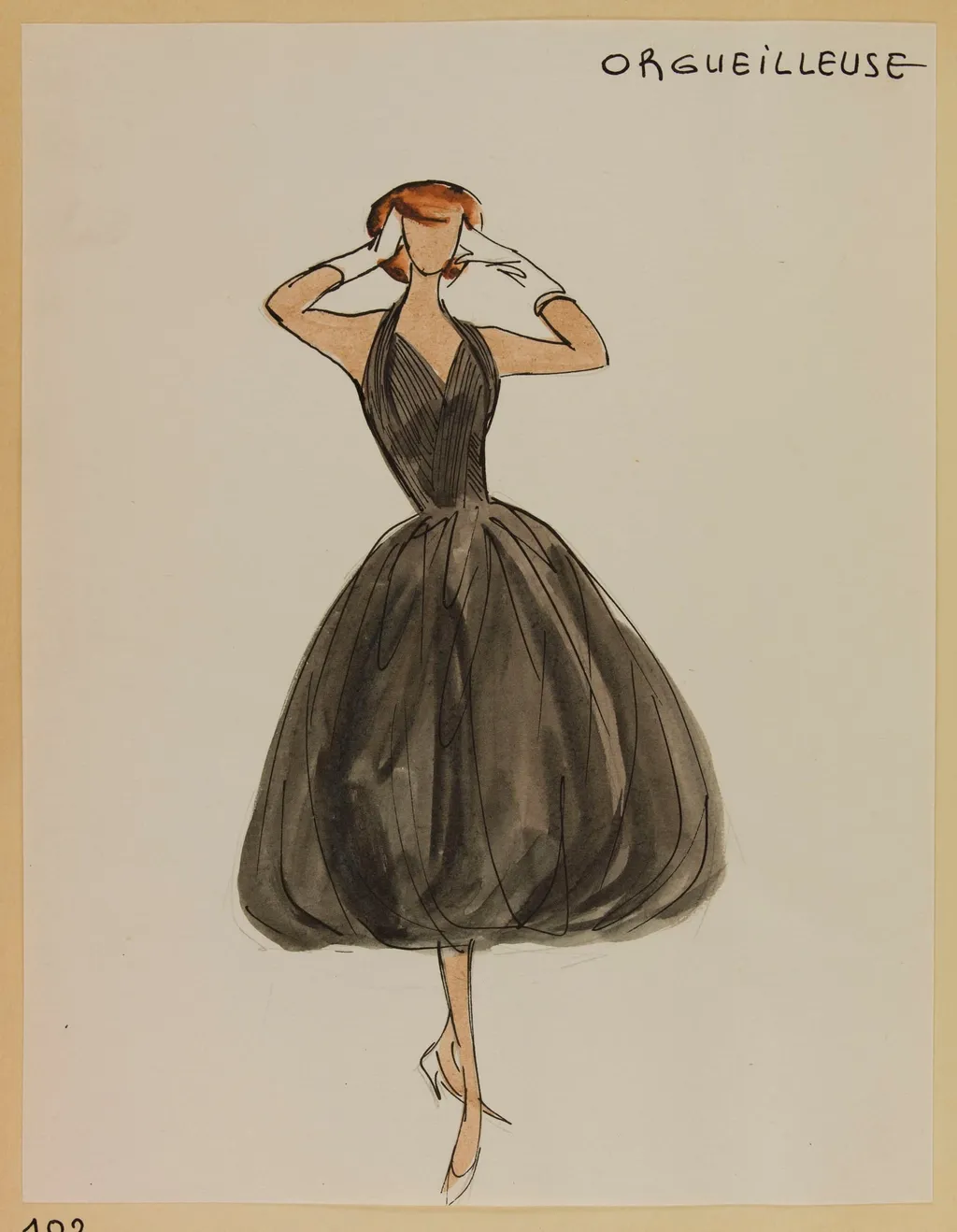
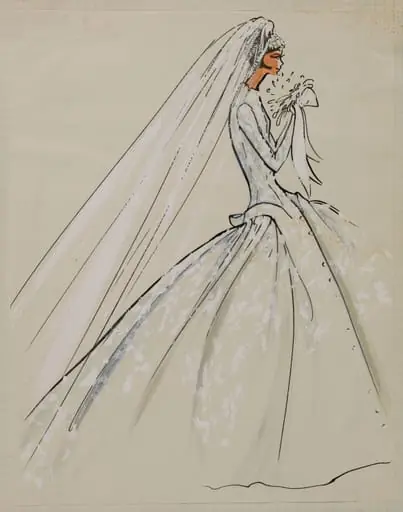
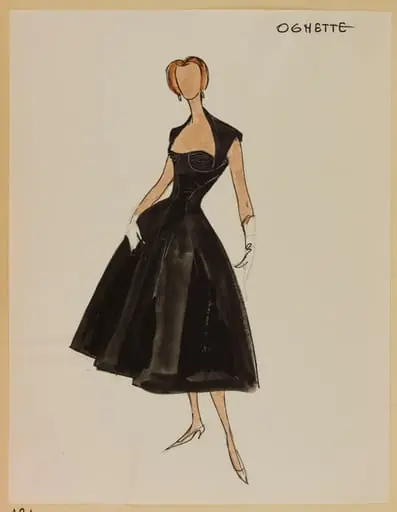
Orgeuilleuse is a drawing by Carven. It dates from 1955 and is held in the collection of the Palais Galliera - Musée de la Mode de la Ville de Paris.
About this work
Overview
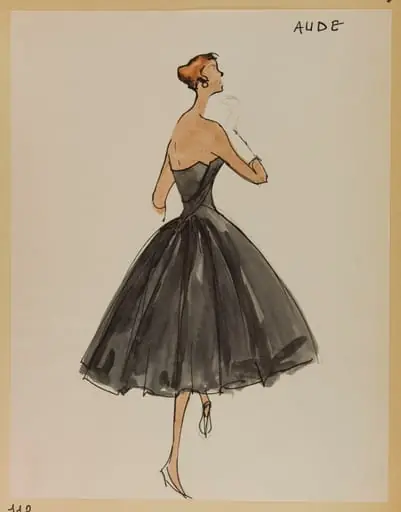
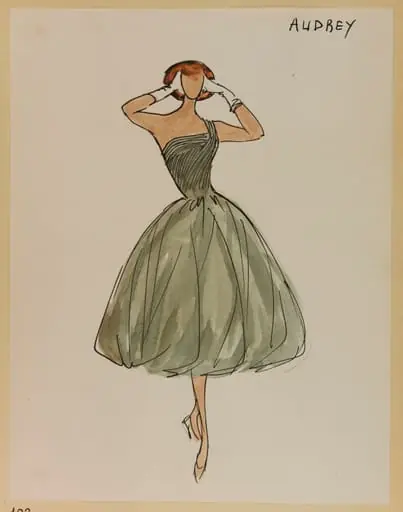
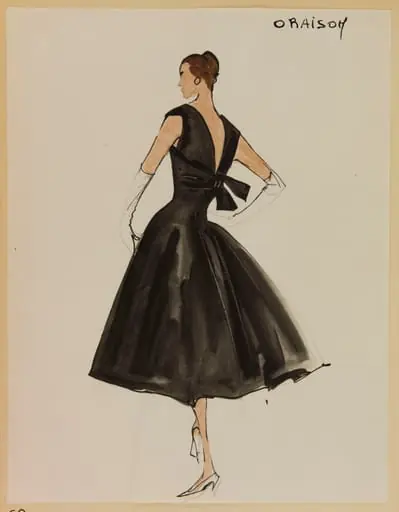
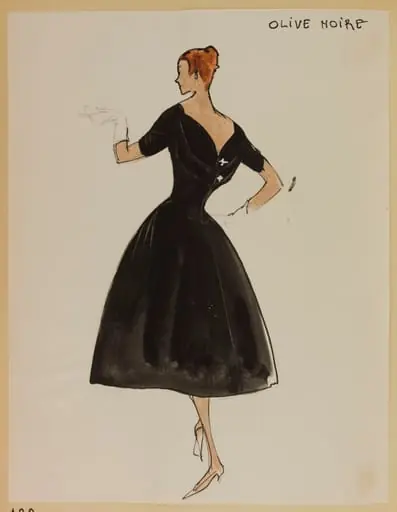
Orgeuilleuse is a pencil sketch attributed to the designer Carven, dated around 1955. Executed in monochrome tones of gray and brown, it captures a single figure in motion. The drawing is held in the collection of the Museum of Ethnography and is notable for its spontaneous, energetic line work. Though brief in execution, the composition conveys a distinct sense of posture and presence.
Subject & Meaning
The figure is a woman dressed in a long, structured gown with a fitted upper body and a full, flaring skirt. Her hand rests lightly atop her head, a gesture that suggests introspection or quiet defiance. The French word 'Orgueilleuse'—meaning 'proud'—is inscribed above, framing the image as an expression of dignified self-possession rather than mere fashion illustration.
Technique & Style
Carven employed swift, assured pencil strokes to define form without heavy shading. The lines are loose yet deliberate, avoiding detail in favor of rhythm and silhouette. The absence of color and minimal use of cross-hatching emphasize the immediacy of the drawing, aligning it with preparatory studies rather than finished works. The effect is one of quiet urgency.
History & Provenance
The sketch entered the Museum of Ethnography’s collection in the latter half of the 20th century, though its exact acquisition path remains undocumented. It is not known whether it was created for a specific garment design or as a standalone study. Its preservation suggests it was valued for its expressive quality rather than its functional role in fashion production.
Context
Its ethnographic placement hints at broader cultural interest in the representation of female demeanor in mid-century Europe.
Created during a period when fashion designers often sketched by hand, Orgeuilleuse reflects the transition from artisanal drafting to industrial design processes. While Carven is primarily known for textile and couture work, this drawing reveals a personal, introspective side. Its ethnographic placement hints at broader cultural interest in the representation of female demeanor in mid-century Europe.
Legacy
The drawing endures as an example of how fashion designers used quick sketches to capture emotional nuance alongside silhouette. Though not widely exhibited, it remains a quiet reference point for those studying the intersection of gesture, identity, and design. Its simplicity invites reflection on how pride, as a quiet trait, can be rendered through line alone.
Artist & collection
Artist
These delicate ink-on-paper drawings capture the quiet poetry of everyday things: pinecones, reeds, apples.
Museum
Palais Galliera - Musée de la Mode de la Ville de Paris
Continue through works from the same source collection.