Artwork
Hortense
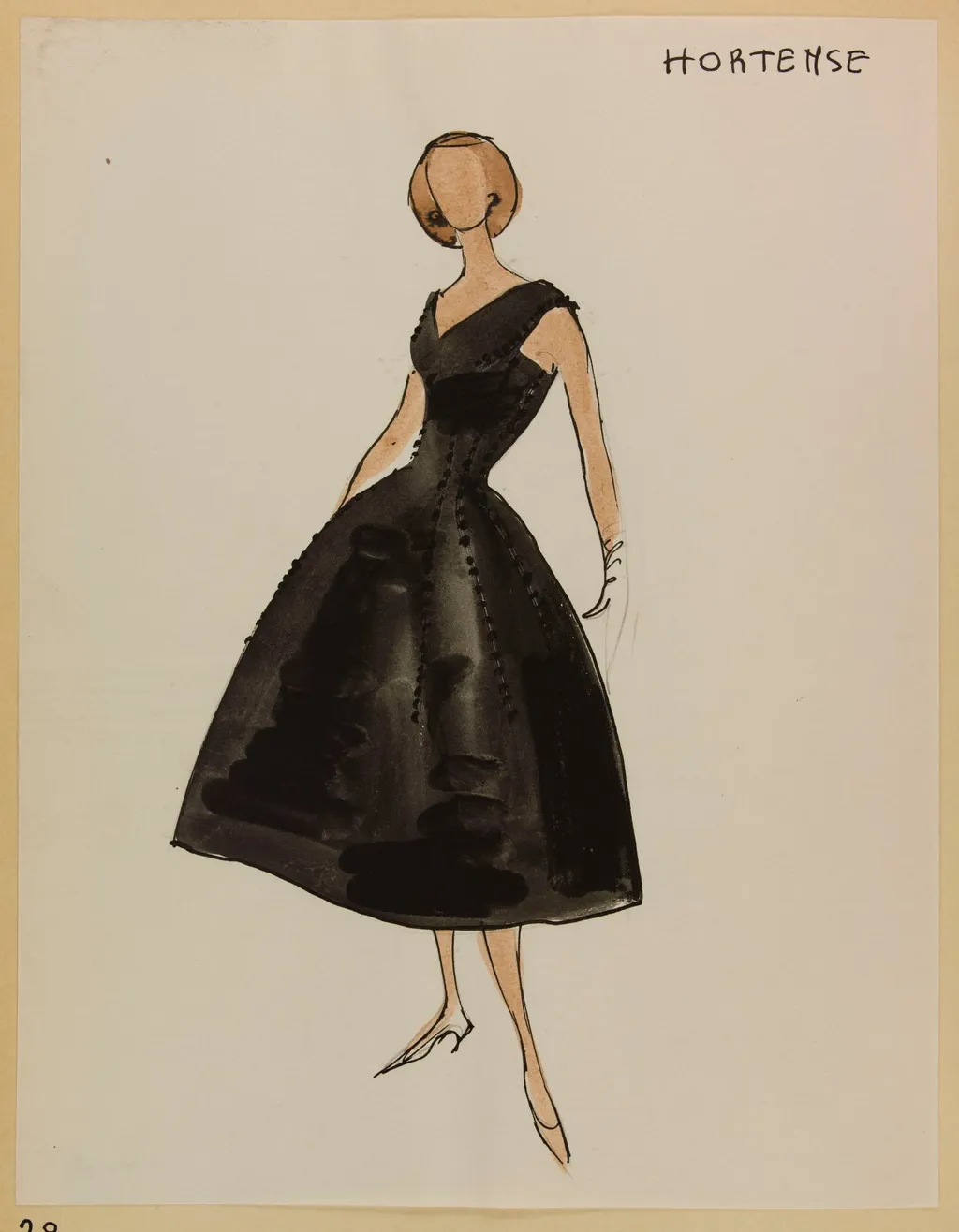
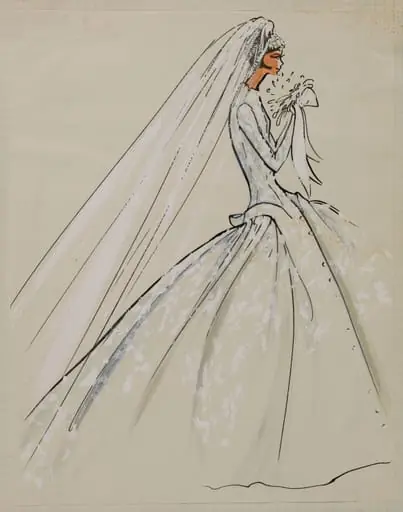
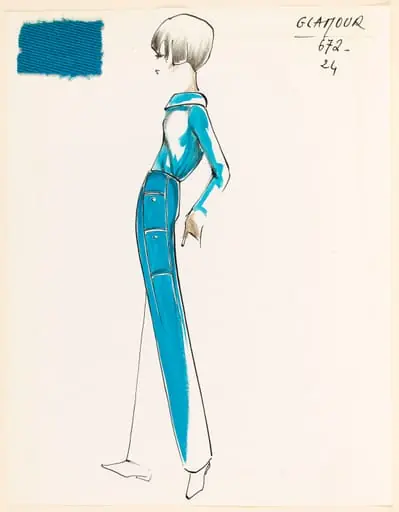
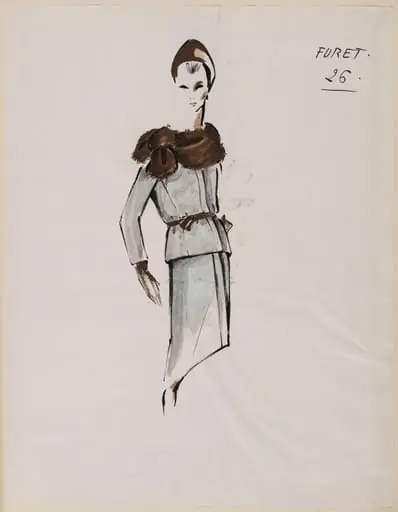
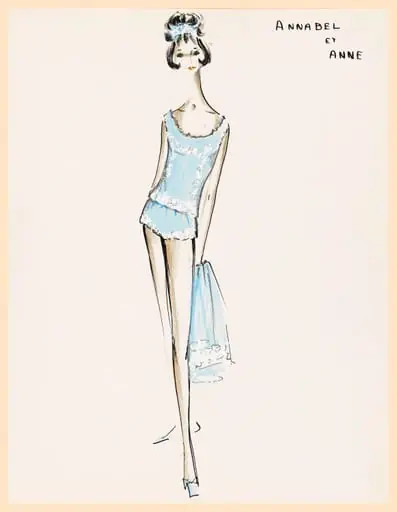
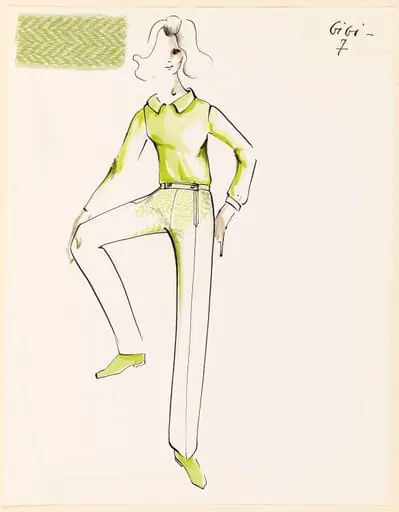
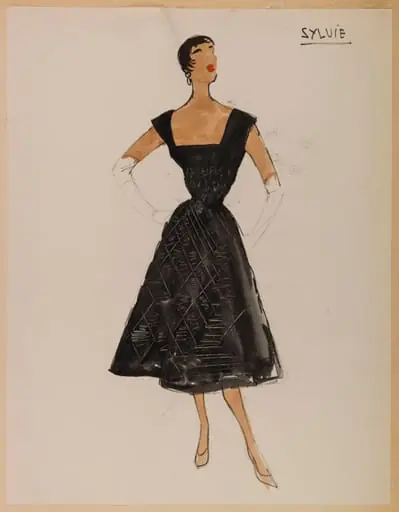
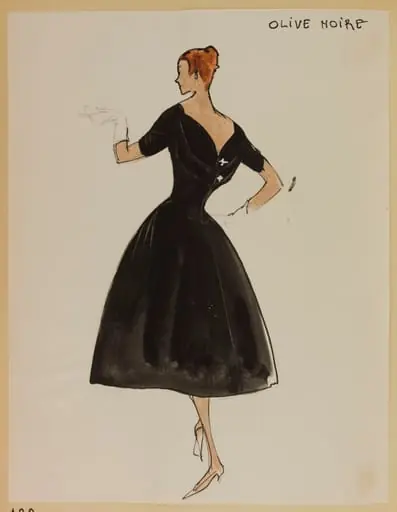
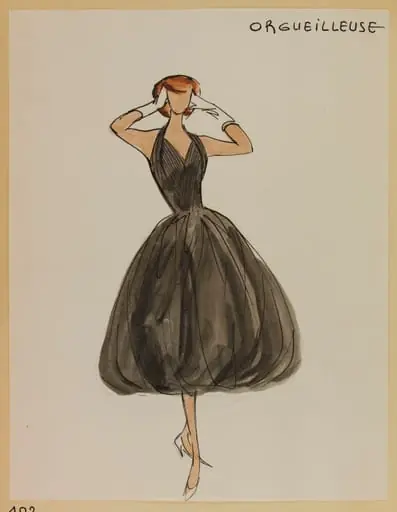
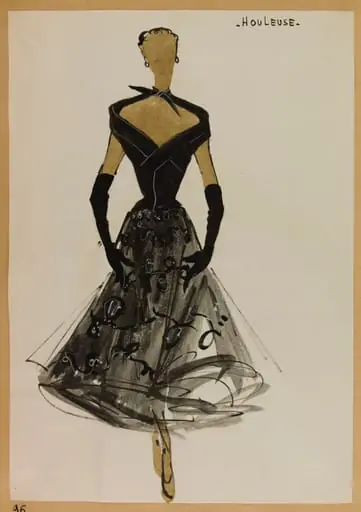
Hortense is a drawing by Carven. It dates from 1955 and is held in the collection of the Palais Galliera - Musée de la Mode de la Ville de Paris.
About this work
Overview
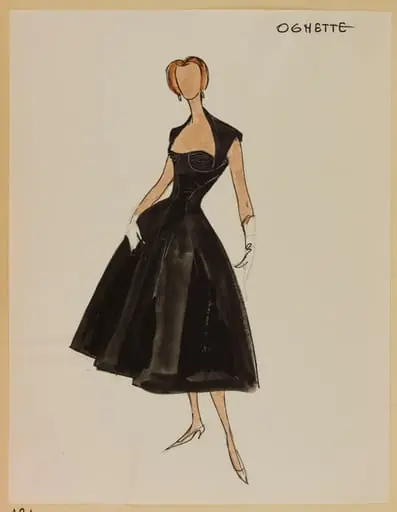
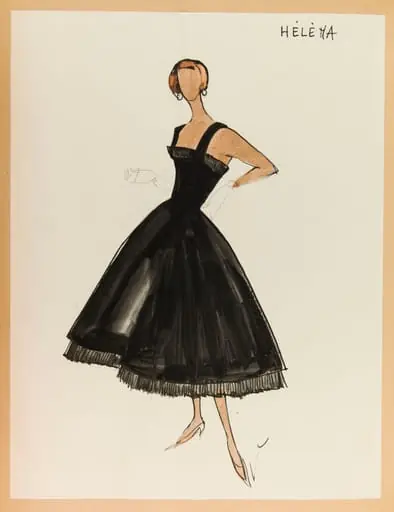
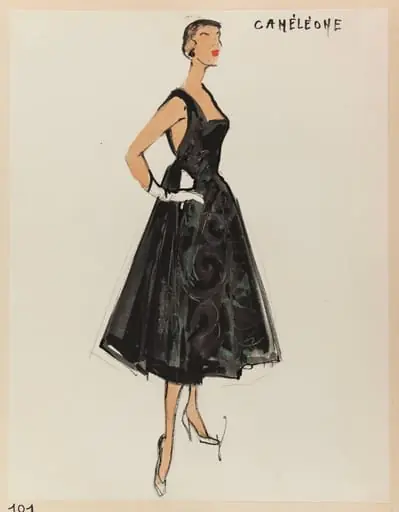
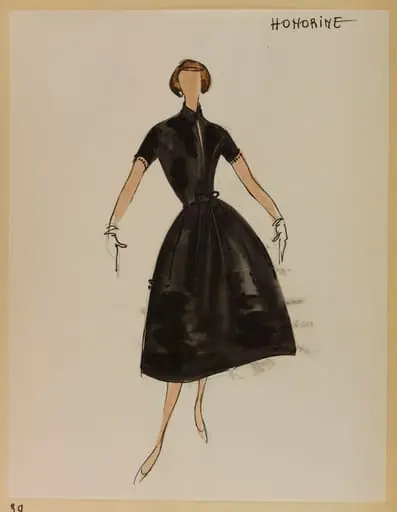
Hortense, created around 1955 by the artist Carven, is a painted portrait of a woman rendered in muted tones. The work is part of the collection at the Museum of Ethnography. Its composition emphasizes stillness and restraint, with the figure positioned centrally against a neutral background. The absence of facial features and the minimal detail contribute to an anonymous, contemplative presence.
Subject & Meaning
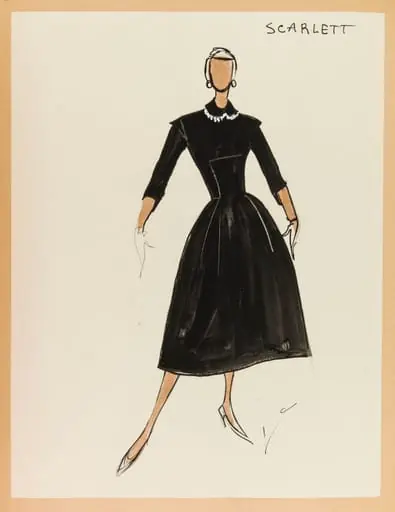
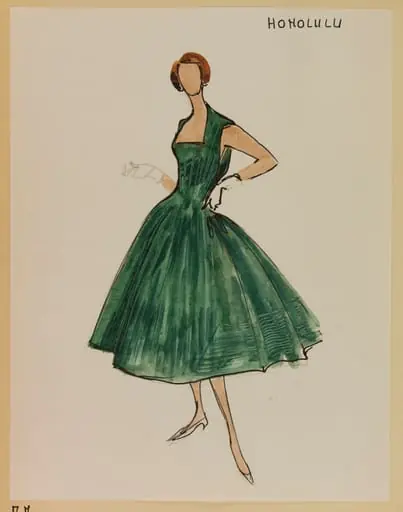
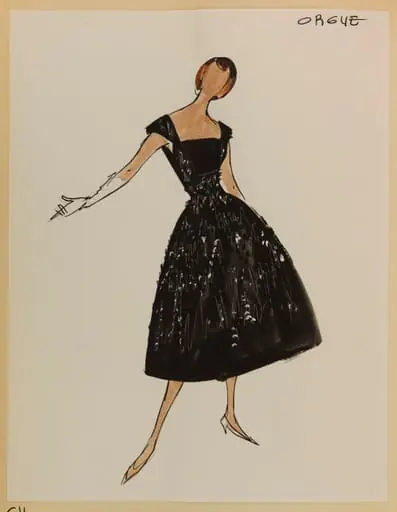
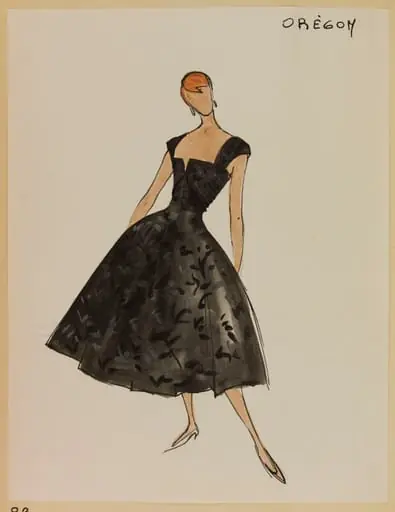
The subject is a woman dressed in a black gown with a V-neck and dotted trim along the hem and sleeves. Her posture—slightly weight-shifted with one leg bent—suggests quiet movement or pause. The obscured face and short hair remove personal identifiers, inviting interpretation as a representation of anonymity, ritual, or universal femininity rather than a specific individual.
Technique & Style
The dress’s dotted detailing is rendered with deliberate, small marks, possibly achieved through stippling or fine cross-hatching.
Carven employed a restrained palette and precise line work to define the figure’s form. The dress’s dotted detailing is rendered with deliberate, small marks, possibly achieved through stippling or fine cross-hatching. The background’s light beige creates a soft contrast, enhancing the dress’s silhouette without competing for attention. The style favors clarity over ornamentation, aligning with mid-century modernist tendencies.
History & Provenance
The painting entered the Museum of Ethnography’s collection in the late 1950s, following its exhibition in a regional gallery. Little documentation exists regarding its creation or early ownership. Carven’s limited public record makes tracing the work’s provenance difficult, though its inclusion in an ethnographic context suggests an interest in cultural representation over personal biography.
Context
Created in postwar Europe, Hortense reflects a broader artistic shift toward abstraction and psychological subtlety. While not overtly political, its focus on form and absence of identity resonates with contemporaneous inquiries into individuality and anonymity. The work’s placement in an ethnographic museum may reflect an attempt to frame modern figures as cultural archetypes.
Legacy
Hortense remains a quiet example of mid-century figurative painting that prioritizes mood over narrative. It has not been widely reproduced or studied, but its presence in the Museum of Ethnography has prompted occasional scholarly attention regarding the intersection of modern art and ethnographic display. Its enduring value lies in its understated ambiguity.
Artist & collection
Artist
These delicate ink-on-paper drawings capture the quiet poetry of everyday things: pinecones, reeds, apples.
Museum
Palais Galliera - Musée de la Mode de la Ville de Paris
Continue through works from the same source collection.