Artwork
Othello
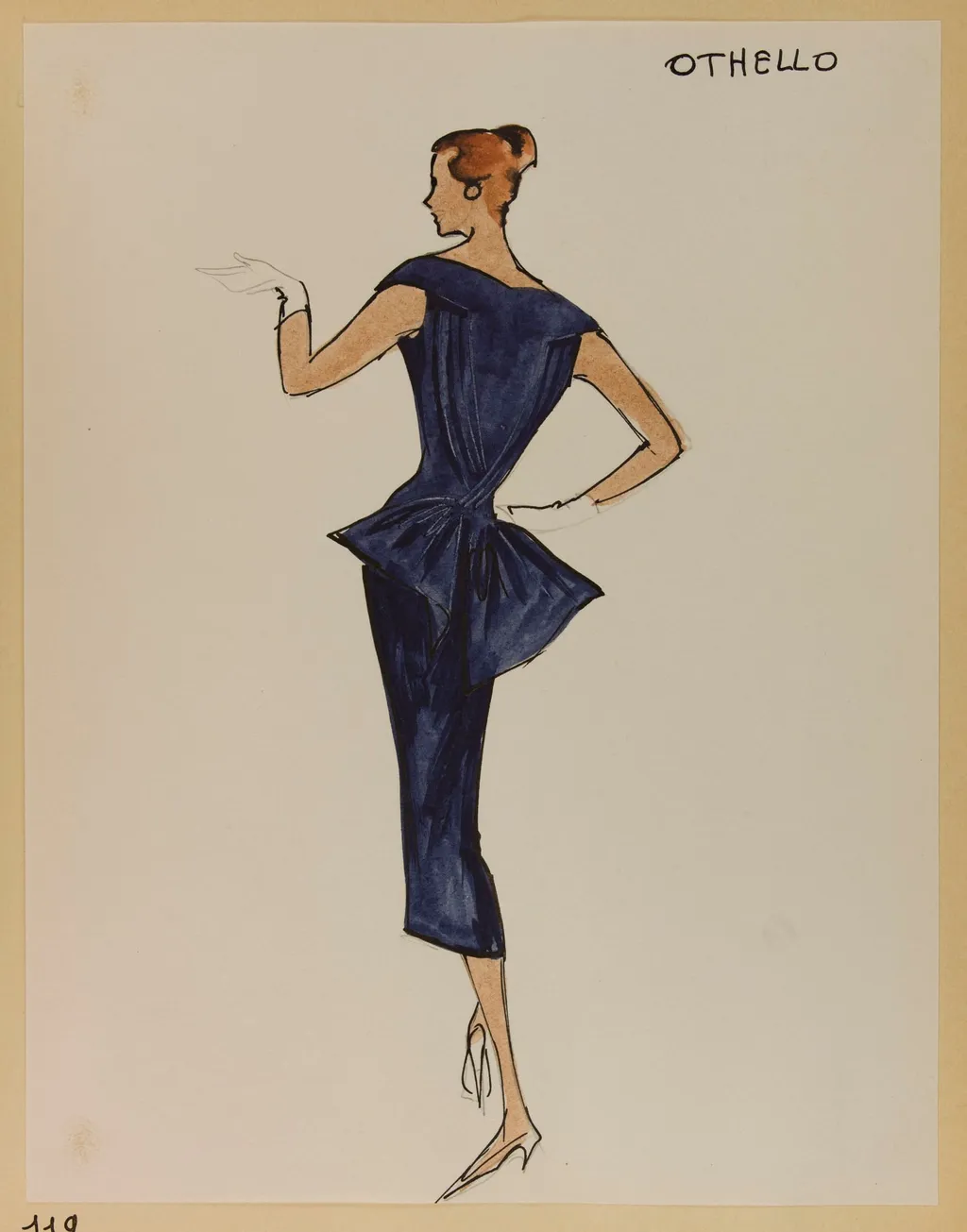
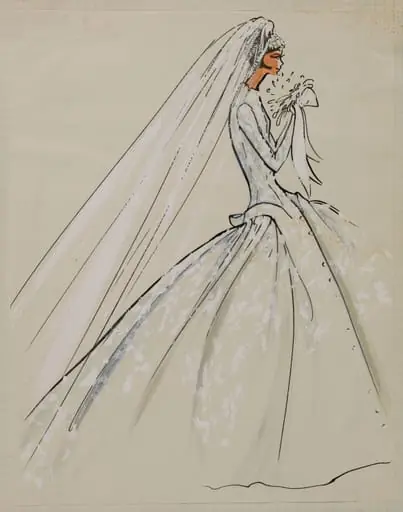
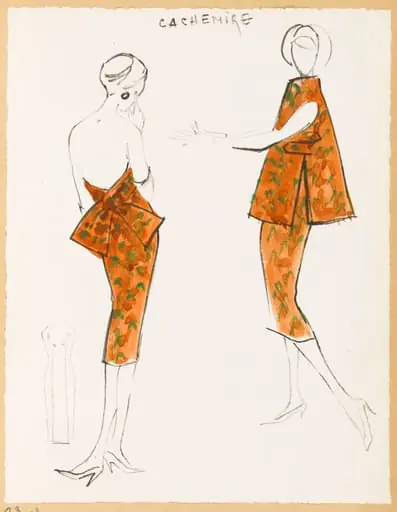
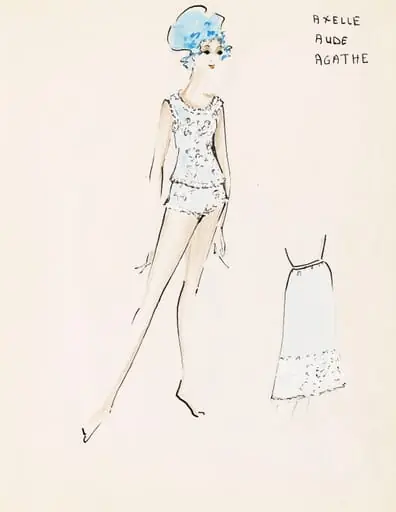
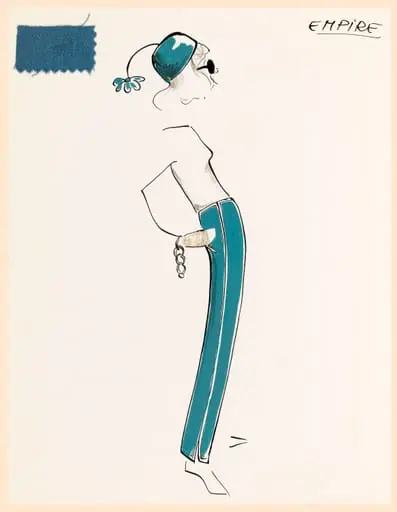
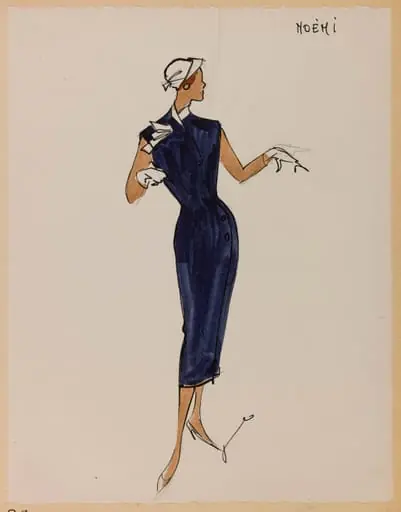
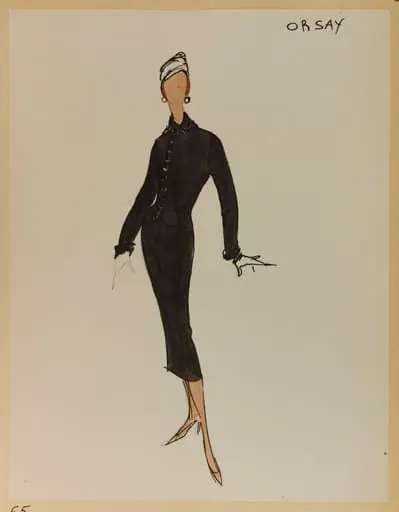
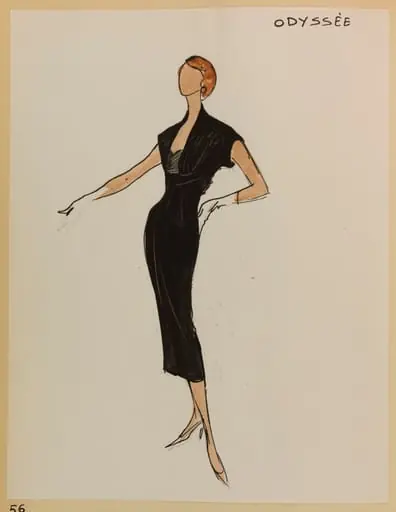
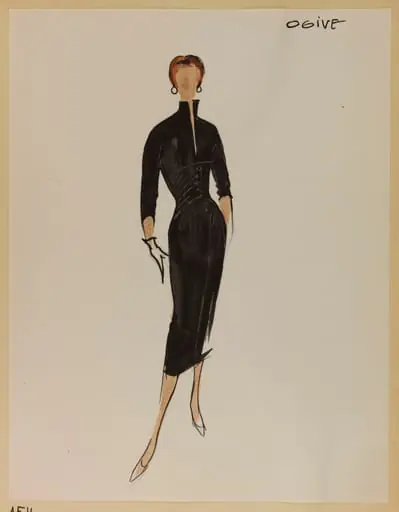
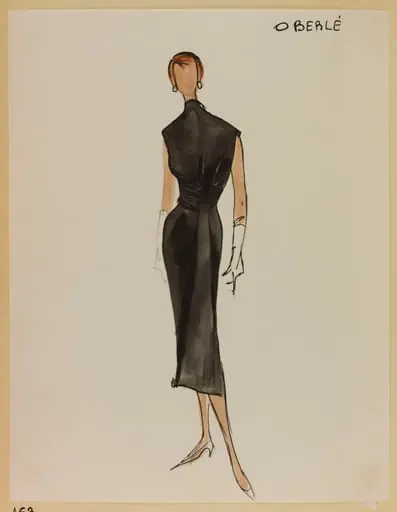
Othello is a drawing by Carven. It dates from 1955 and is held in the collection of the Palais Galliera - Musée de la Mode de la Ville de Paris.
About this work
Overview
Executed with swift, unrefined lines and little shading, the drawing functions as a fashion study rather than a portrait.
Created around 1955 by the French fashion designer Carven, this ink sketch captures a figure from behind, dressed in a tailored blue gown with a cinched waist and flared hem. Executed with swift, unrefined lines and little shading, the drawing functions as a fashion study rather than a portrait. It resides in the collection of the Museum of Ethnography, where it is cataloged under the title 'Othello'—a reference to the garment’s design name, not the subject.
Subject & Meaning
The figure is anonymous, her identity obscured by her posture and the focus on attire. She holds a cigarette, a subtle nod to mid-century feminine poise, but the composition avoids narrative or emotional cues. The title 'Othello' ties the image to fashion design rather than literature or character, suggesting the sketch served as a record of a garment’s silhouette and drape, not a depiction of a person.
Technique & Style
Rendered in loose, confident ink strokes, the drawing emphasizes movement and form over detail. Minimal shading and absence of facial features direct attention to the dress’s structure. The sketch’s spontaneity reflects the quick observational methods common in fashion ateliers, where designers captured the essence of a garment’s drape and flow before final construction.
History & Provenance
The sketch entered the Museum of Ethnography’s collection as part of a broader archive of mid-century fashion documentation. Its origin lies within Carven’s design studio, where such studies were used internally to refine silhouettes. The museum acquired it as an artifact of postwar French fashion practice, valuing its role in understanding design processes rather than its artistic merit alone.
Context
In the 1950s, fashion houses like Carven relied on rapid sketches to communicate designs to tailors and clients. This drawing reflects the industry’s shift toward streamlined, wearable elegance after wartime austerity. The cigarette, a common motif in fashion imagery of the era, signals modernity and urban sophistication, aligning the garment with contemporary ideals of feminine independence.
Legacy
Though not widely exhibited, the sketch remains a quiet testament to the ephemeral nature of fashion design. It preserves the immediacy of a designer’s hand and the practical function of sketches in garment development. As such, it contributes to scholarly understanding of how haute couture was conceived—not as finished art, but as evolving drafts in motion.
Artist & collection
Artist
These delicate ink-on-paper drawings capture the quiet poetry of everyday things: pinecones, reeds, apples.
Museum
Palais Galliera - Musée de la Mode de la Ville de Paris
Continue through works from the same source collection.