Artwork
Ogive
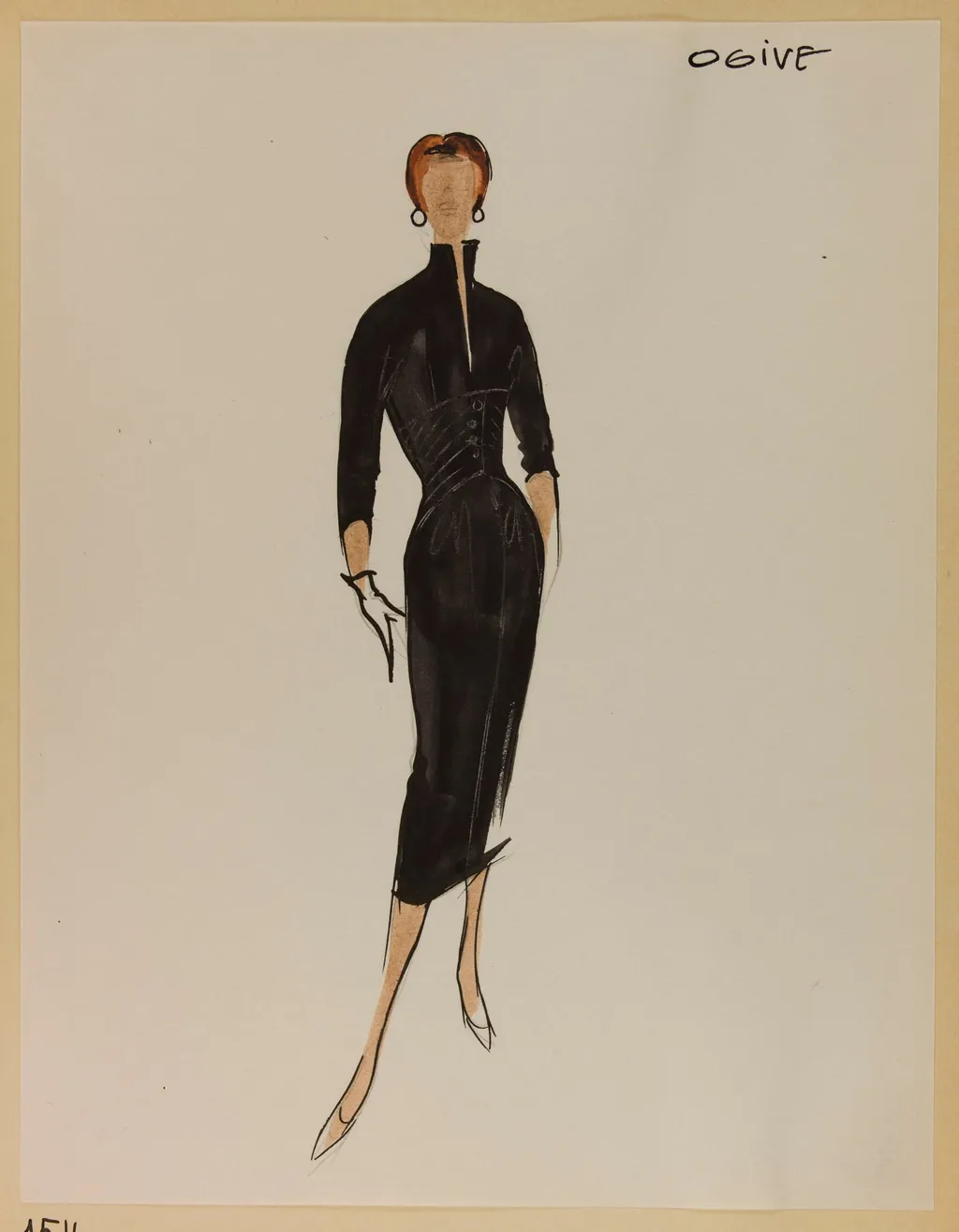
Ogive is a drawing by Marie-Louise Carven. It dates from 1955 and is held in the collection of the Palais Galliera - Musée de la Mode de la Ville de Paris.
About this work
Overview
It depicts a woman in a tailored black dress with a pronounced V-neck and a narrow waist that flares gently toward the hem.
Ogive is a fashion sketch by Marie-Louise Carven, created around 1955, and held in the Museum of Ethnography’s collection. It depicts a woman in a tailored black dress with a pronounced V-neck and a narrow waist that flares gently toward the hem. Executed in swift, unembellished lines, the drawing reflects Carven’s approach to design as both functional and elegant, emphasizing movement and proportion over ornamentation.
Subject & Meaning
The figure in Ogive embodies a quiet sophistication suited to postwar urban life. The dress’s arched waistline—possibly referencing the architectural term 'ogive'—suggests a structural elegance that flatters a petite frame. Minimal accessories, like simple hoops, reinforce the design’s restraint. The sketch captures an ideal of modern femininity: uncluttered, mobile, and grounded in everyday wear rather than theatrical display.
Technique & Style
Carven rendered Ogive with rapid, confident strokes, using little to no shading. The lines are clean and economical, prioritizing silhouette over detail. This method aligns with fashion illustration practices of the time, where speed and clarity were essential for design development. The absence of color or texture hints at its function as a working drawing, likely used to communicate form to tailors or clients before production.
History & Provenance
Marie-Louise Carven founded her Parisian fashion house in 1945, focusing on accessible, well-cut garments for smaller builds. Ogive emerged during the mid-1950s, a period when she was expanding her prêt-à-porter offerings. The sketch entered the Museum of Ethnography’s collection as part of a broader effort to document the evolution of everyday dress, reflecting Carven’s role in democratizing fashion beyond haute couture.
Context
In the 1950s, women’s fashion increasingly favored practicality without sacrificing grace. Ogive reflects this shift, echoing the streamlined silhouettes of the late 1930s but refined for a postwar audience seeking versatility. Carven’s use of lightweight fabrics and modest proportions aligned with the growing demand for clothing that supported active, urban lifestyles, distinguishing her from more ornate contemporaries.
Legacy
Ogive stands as a testament to Carven’s influence on accessible design. Her emphasis on fit for petite figures and early adoption of ready-to-wear methods helped redefine fashion production. Though the sketch is modest in scale, it encapsulates a broader movement toward functional elegance, influencing later designers who prioritized wearability and subtle structure over excess.
Artist & collection
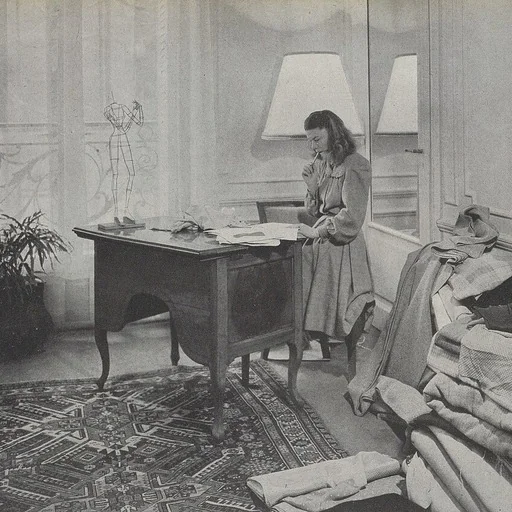
Artist
Marie-Louise Carven (31 August 1909 – 8 June 2015), born Carmen de Tommaso, was a French fashion designer who founded the house of Carven in 1945.
Museum
Palais Galliera - Musée de la Mode de la Ville de Paris
Continue through works from the same source collection.
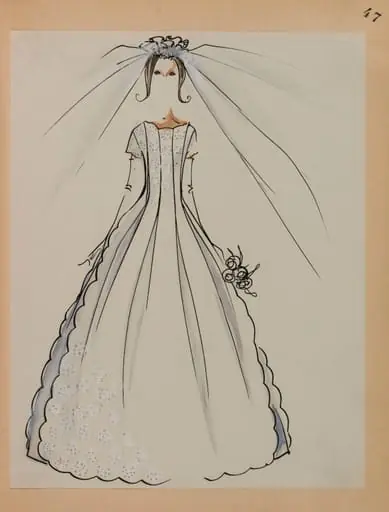 Robe de mariée festonnée et son voile
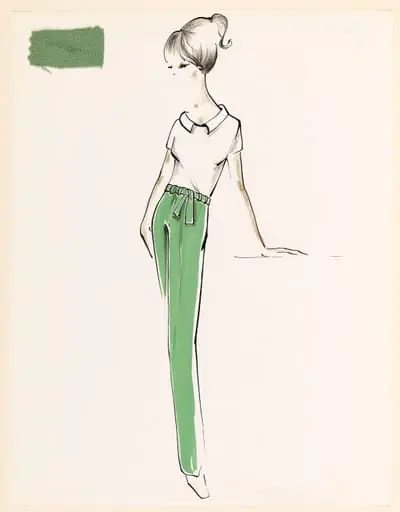 Haut blanc à manches courtes et pantalon vert à ceinture nouée
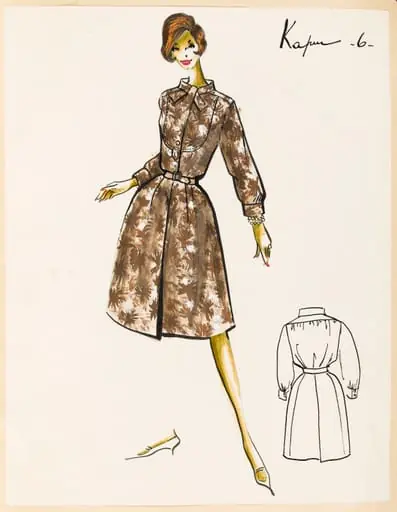 Kapur
Kapur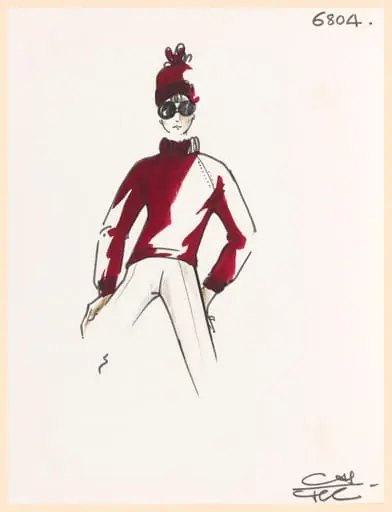 Pull-over à manches longues pourpre, bonnet assorti, pantalon et lunettes de soleil
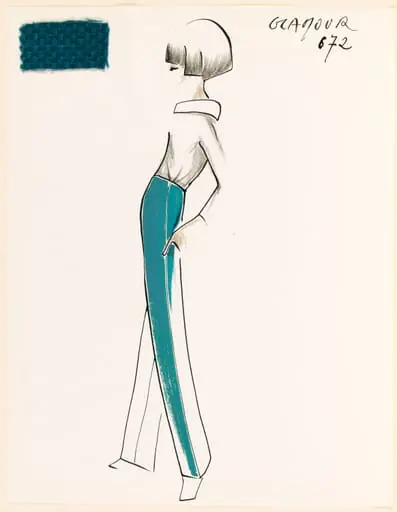 GLAMOUR
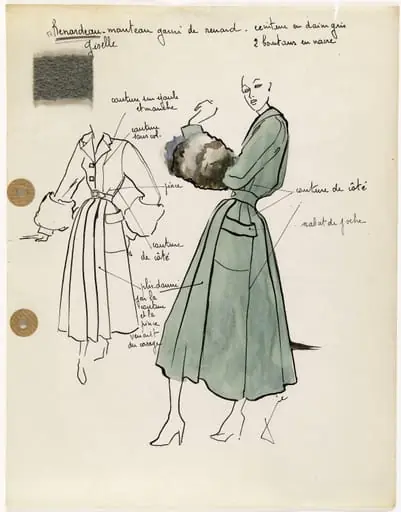 'Renardeau'
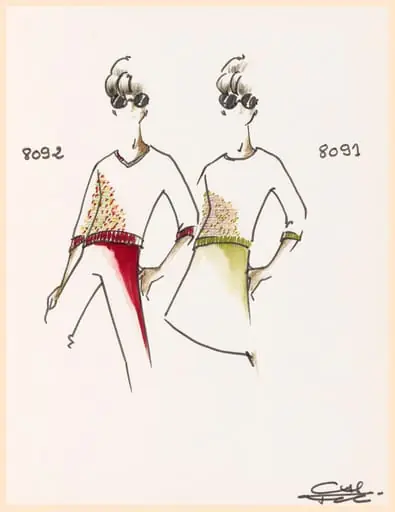 Pull-over à manches trois quarts et à encolure V à motifs multicolores, pantalon cerise et lunettes de soleil
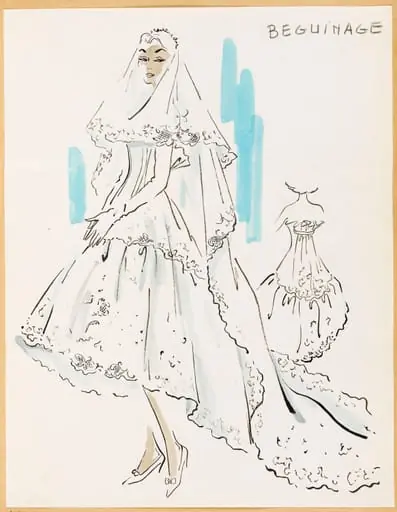 Béguinage