Artwork
Eivire
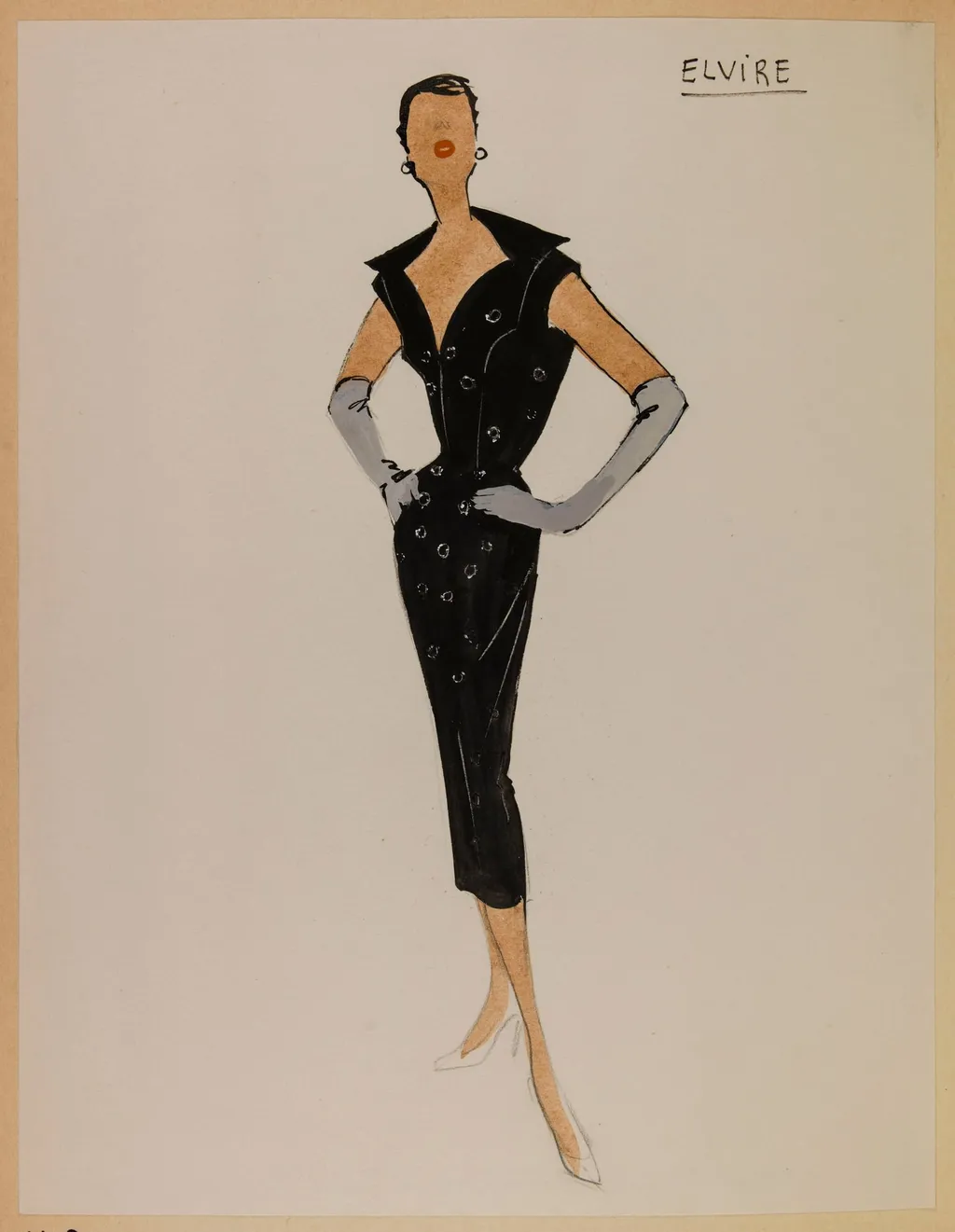
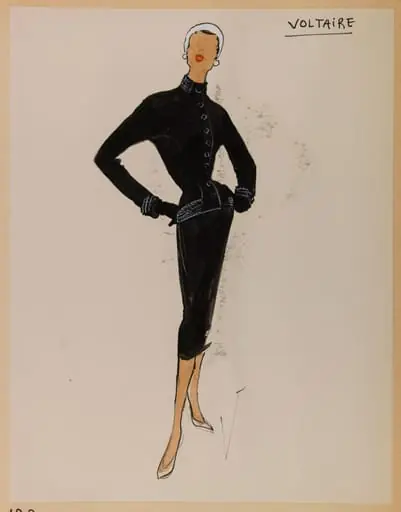
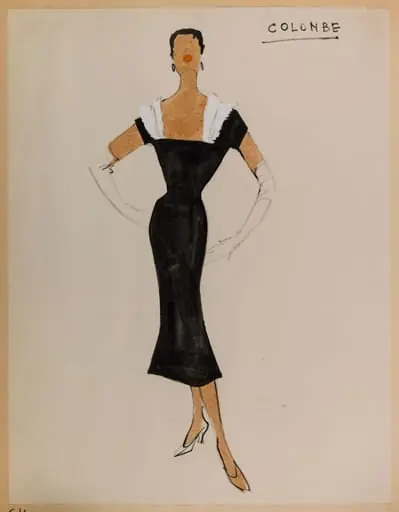
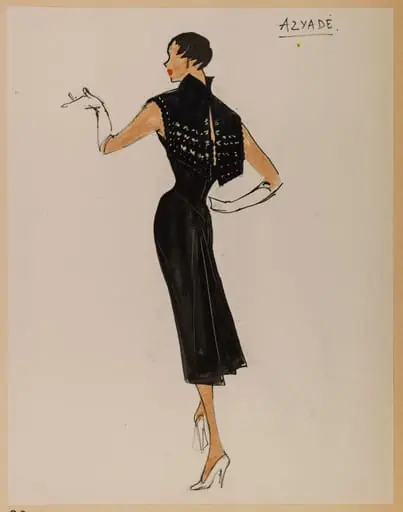
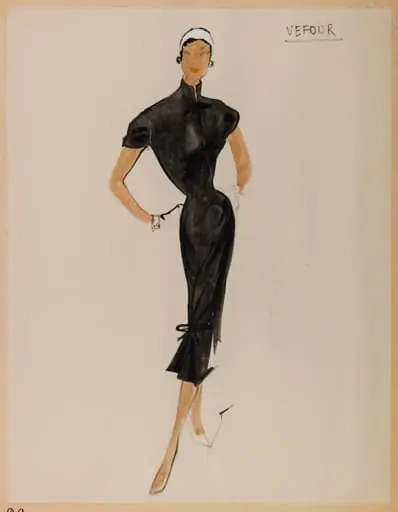
Eivire is a drawing by Marie-Louise Carven. It dates from 1953 and is held in the collection of the Palais Galliera - Musée de la Mode de la Ville de Paris.
About this work
Overview
It captures a stylized woman in attire consistent with Carven’s aesthetic—minimalist, refined, and tailored for a modern sensibility.
Eivire is a painted portrait created around 1953, attributed to Marie-Louise Carven, a French fashion designer. Though primarily known for her clothing, Carven produced this work as a visual extension of her design philosophy. The piece is part of the Museum of Ethnography’s collection, suggesting its cultural significance beyond fashion. It captures a stylized woman in attire consistent with Carven’s aesthetic—minimalist, refined, and tailored for a modern sensibility.
Subject & Meaning
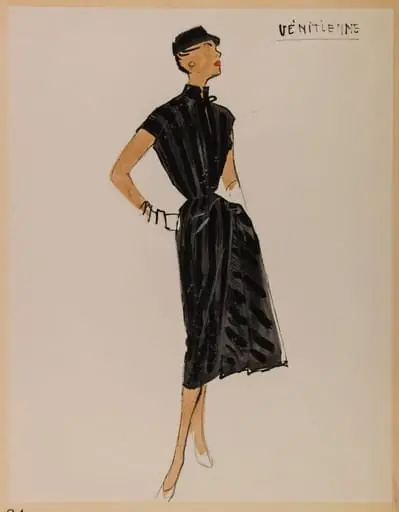
The subject is a woman posed with quiet authority, hands on hips, exuding composure rather than theatricality. Her black dress, marked by small white dots and a deep neckline, reflects Carven’s preference for subtle ornamentation. The gray gloves and white heels reinforce a sense of polished restraint. The red lipstick and short, sleek hair suggest a deliberate modernity, aligning the figure with postwar ideals of feminine independence—confident, composed, and unadorned by excess.
Technique & Style
The painting employs flat, even planes of color with sharp outlines, avoiding chiaroscuro or textural complexity. The beige background isolates the figure, directing focus to the dress’s geometric pattern and the precision of her silhouette. The white circles on the dress are rendered with deliberate regularity, suggesting a textile motif translated into paint. Brushwork is controlled and smooth, mirroring the clean lines of Carven’s garment designs and emphasizing structure over emotional expression.
History & Provenance
Created circa 1953, Eivire emerged during Carven’s active years as a couturier and early pioneer of ready-to-wear fashion. While her clothing was widely distributed, this painting appears to be a personal or promotional artifact, possibly used to visualize her design ethos. It entered the Museum of Ethnography’s collection at an unspecified date, likely through donation or acquisition tied to mid-century interest in fashion as cultural expression.
Context
In postwar France, fashion was redefining identity, and Carven’s work stood apart by prioritizing accessibility and proportion for smaller frames. Eivire reflects this ethos—not as a garment, but as its visual manifesto. The figure’s demeanor aligns with contemporary ideals of urban femininity, while the painting’s simplicity echoes broader trends in mid-century design that favored clarity over ornament. It bridges haute couture and emerging mass-market aesthetics.
Legacy
Eivire endures as a rare visual record of Carven’s artistic vision beyond textiles. It illustrates how her design principles—elegance through restraint, structure through proportion—extended into other media. While not widely exhibited, its presence in a museum of ethnography signals recognition of fashion as a cultural artifact. The painting remains a quiet testament to a designer who reshaped women’s wardrobes through understated innovation.
Artist & collection
Artist
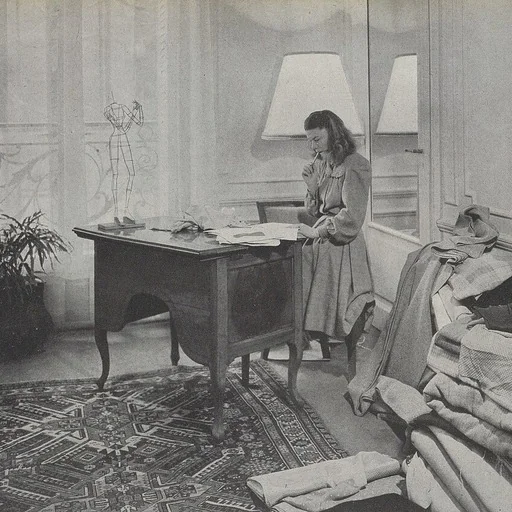
Marie-Louise Carven (31 August 1909 – 8 June 2015), born Carmen de Tommaso, was a French fashion designer who founded the house of Carven in 1945.
Museum
Palais Galliera - Musée de la Mode de la Ville de Paris
Continue through works from the same source collection.
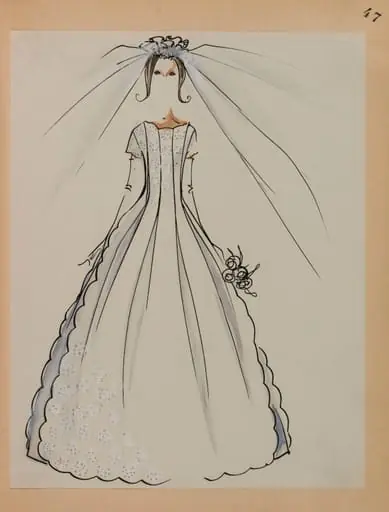 Robe de mariée festonnée et son voile
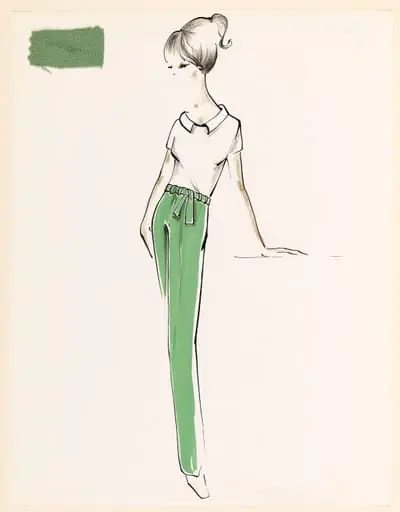 Haut blanc à manches courtes et pantalon vert à ceinture nouée
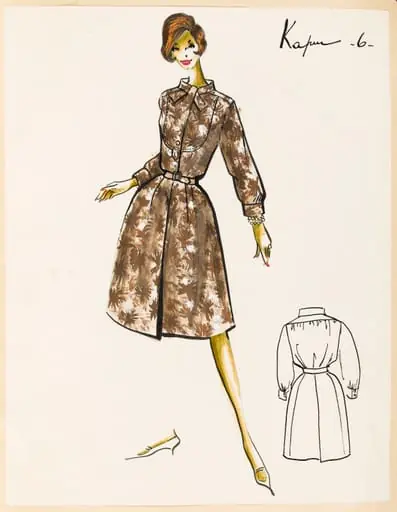 Kapur
Kapur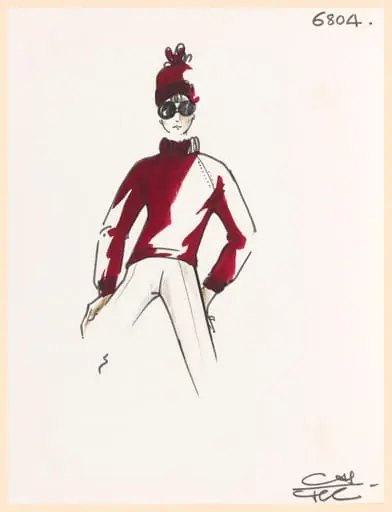 Pull-over à manches longues pourpre, bonnet assorti, pantalon et lunettes de soleil
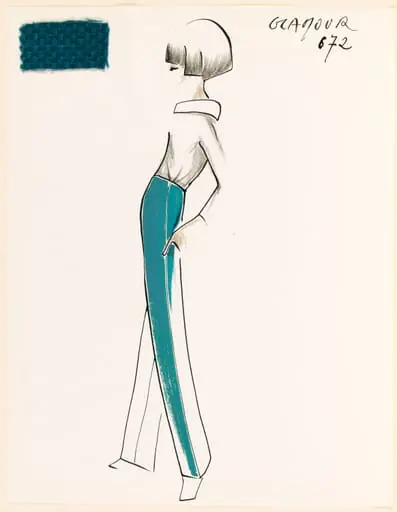 GLAMOUR
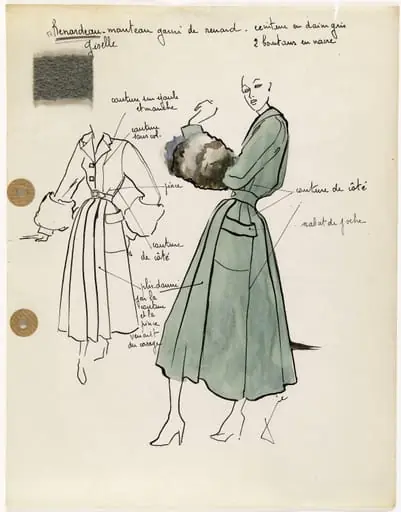 'Renardeau'
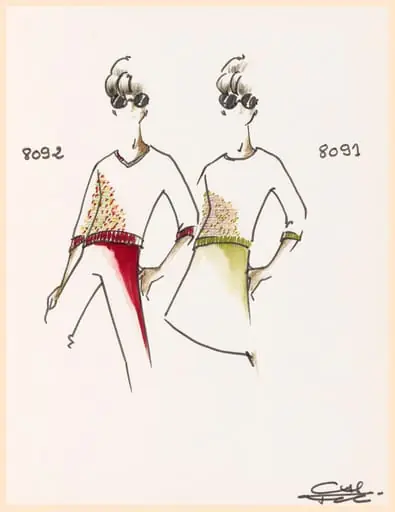 Pull-over à manches trois quarts et à encolure V à motifs multicolores, pantalon cerise et lunettes de soleil
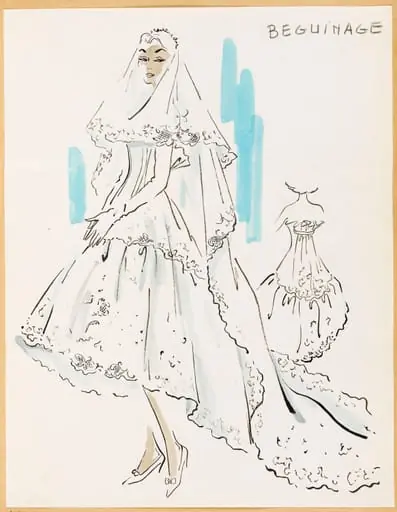 Béguinage