Artwork
Péra
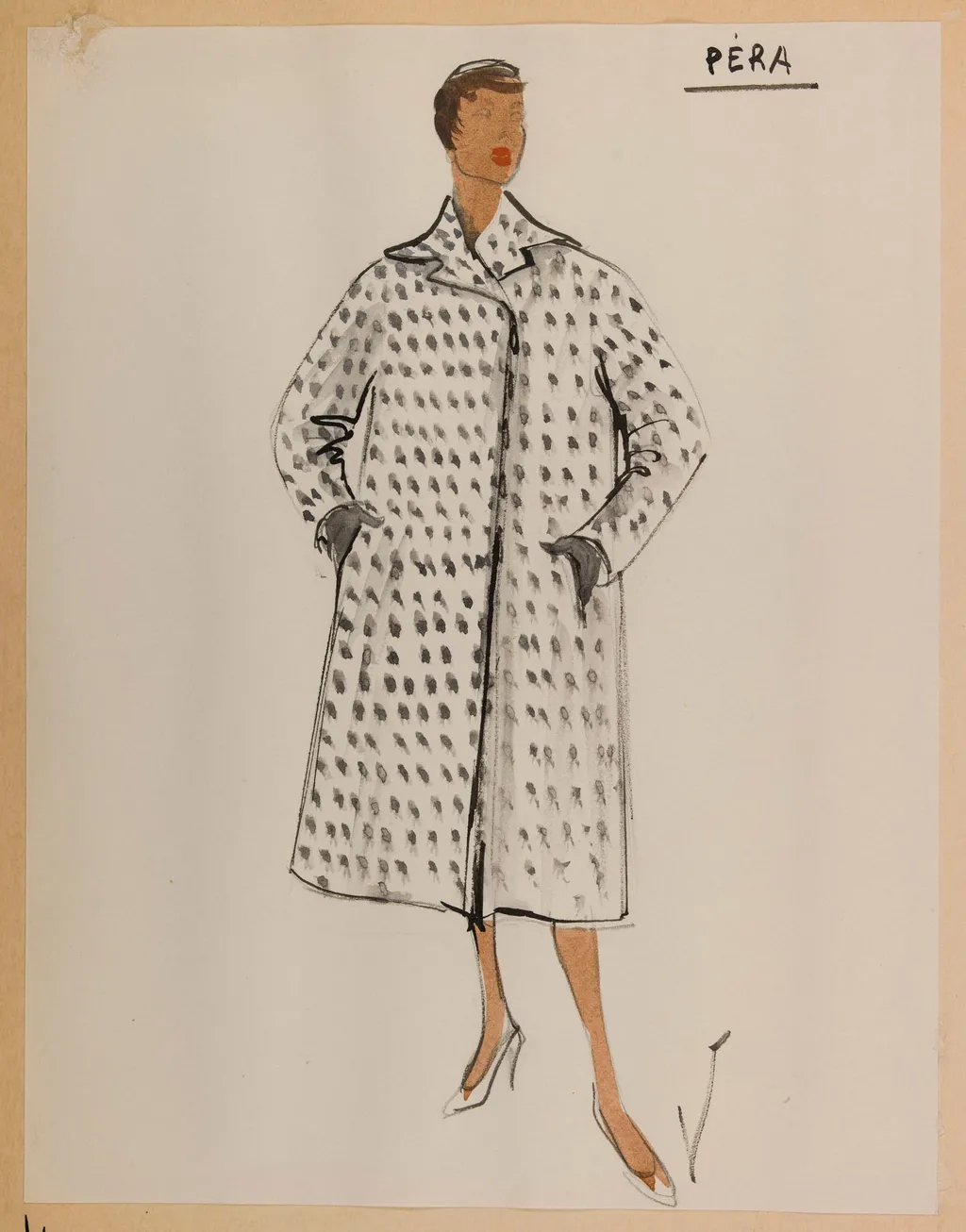
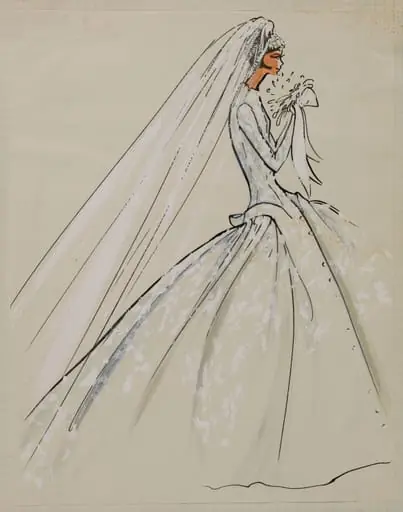
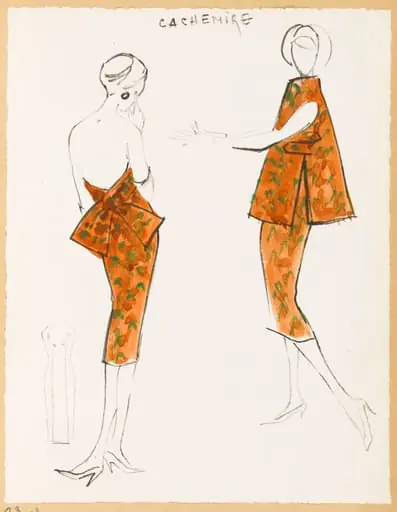
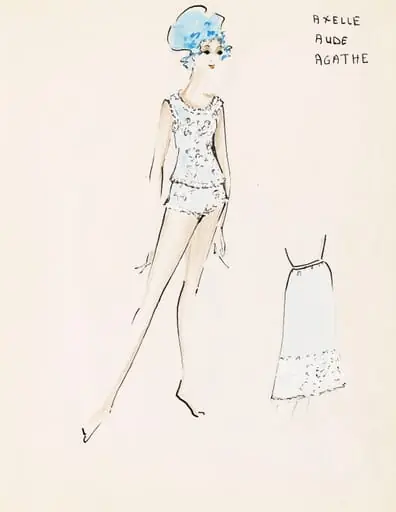
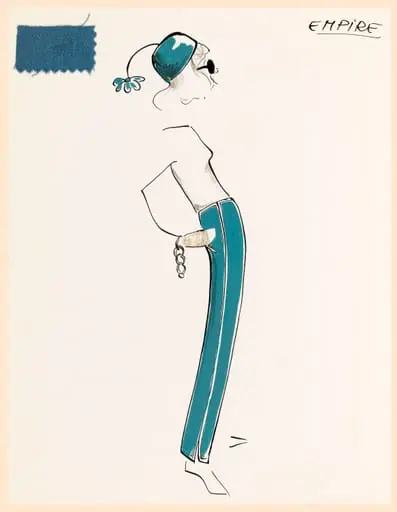
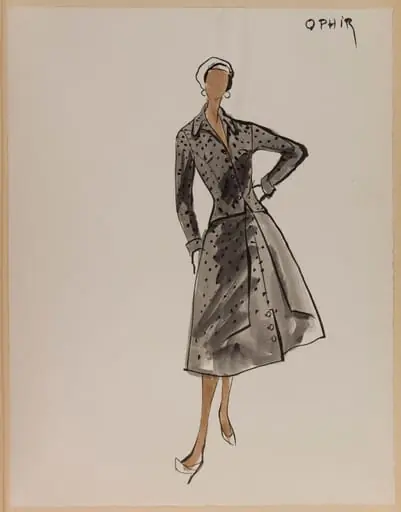
Péra is a drawing by Carven. It dates from 1953 and is held in the collection of the Palais Galliera - Musée de la Mode de la Ville de Paris.
About this work
Overview
The drawing captures a woman in a modest, everyday pose, rendered with fluid, unrefined lines that suggest spontaneity rather than formal portraiture.
Péra is a pencil sketch dated around 1953, attributed to the French fashion designer Carven. It resides in the collection of the Museum of Ethnography. The drawing captures a woman in a modest, everyday pose, rendered with fluid, unrefined lines that suggest spontaneity rather than formal portraiture. Its modest scale and informal technique distinguish it from high fashion illustrations of the period.
Subject & Meaning
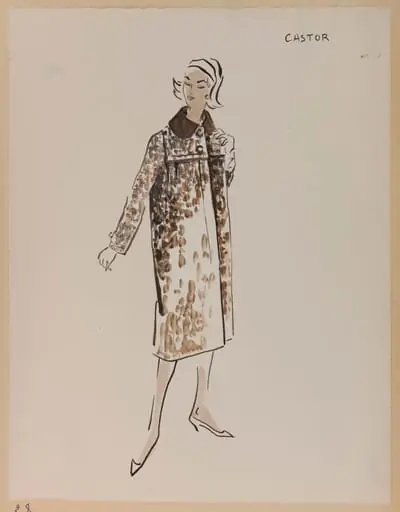
The figure is a woman dressed in a long, dot-patterned coat, hands tucked into her pockets, heels visible beneath the hem. The posture conveys quiet composure, perhaps a moment of pause in urban life. The absence of facial detail universalizes the subject, shifting focus to clothing as a marker of personal and cultural identity rather than individual likeness.
Technique & Style
Carven employed loose, rapid pencil strokes to suggest the drape and texture of fabric. The polka dots are not uniform but vary in pressure and density, implying soft folds and movement. The lines are economical, avoiding shading or detail, yet effectively communicate volume and materiality. This approach reflects a designer’s instinct for form over finish.
History & Provenance
The drawing entered the Museum of Ethnography’s collection as part of a broader acquisition of fashion-related materials from mid-20th century French designers. Its origin as a personal sketch, rather than a commercial design, suggests it was used for reference or private study. No documentation confirms its exact creation context, but it aligns with Carven’s known practice of sketching daily wear.
Context
Created in postwar Paris, Péra reflects the era’s shift toward accessible, wearable fashion. While haute couture dominated public discourse, designers like Carven focused on practical elegance for middle-class women. The sketch’s simplicity and attention to everyday details mirror this ethos, positioning clothing as part of lived experience rather than spectacle.
Legacy
Péra endures as a quiet testament to Carven’s design philosophy—attentive to the body in motion, unpretentious in form. Though not widely exhibited, it contributes to scholarly understanding of how fashion designers documented daily life. Its presence in an ethnographic museum underscores the cultural significance of ordinary dress in shaping identity.
Artist & collection
Artist
These delicate ink-on-paper drawings capture the quiet poetry of everyday things: pinecones, reeds, apples.
Museum
Palais Galliera - Musée de la Mode de la Ville de Paris
Continue through works from the same source collection.