Artwork
Ophir
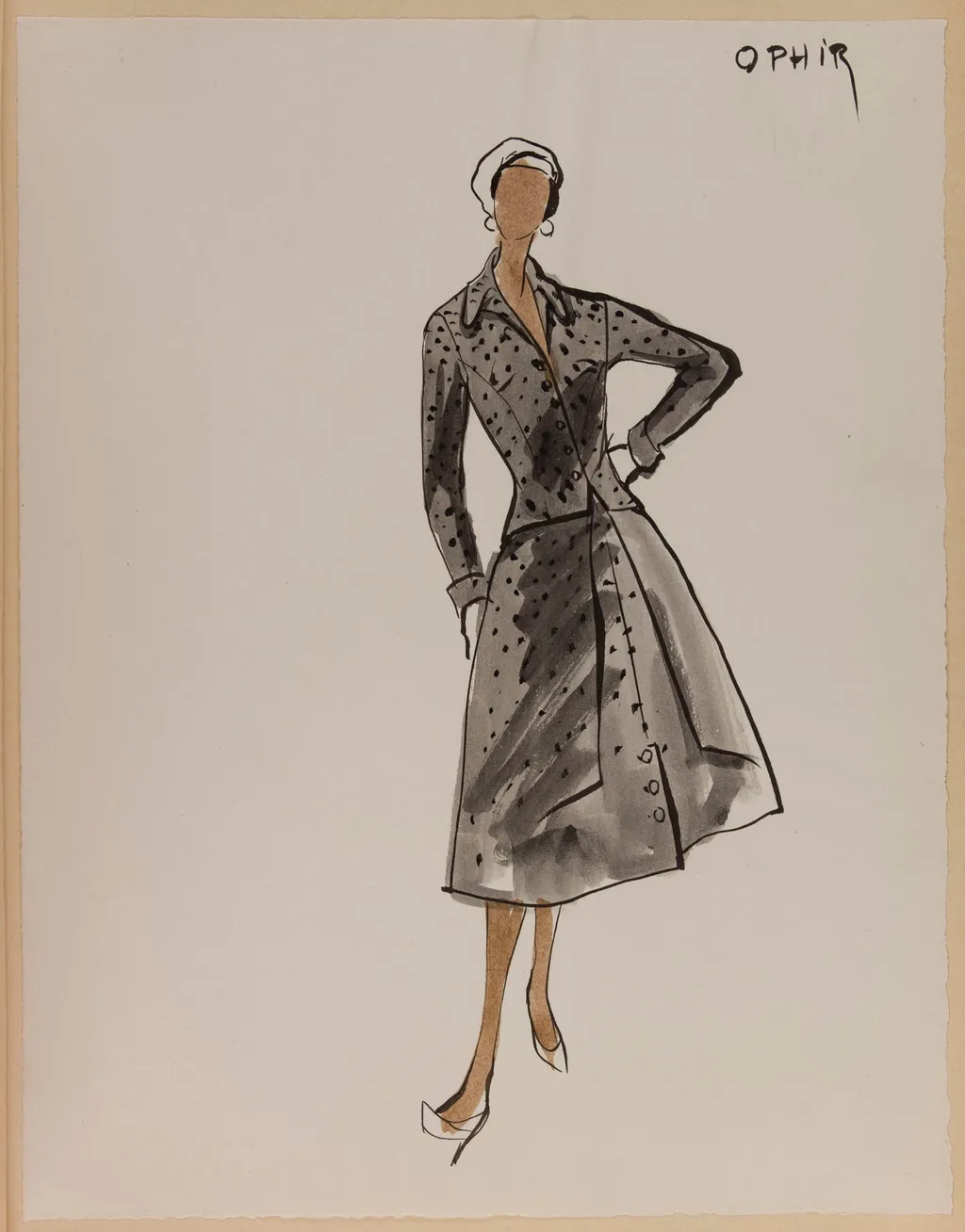
Ophir is a drawing by Marie-Louise Carven. It dates from 1956 and is held in the collection of the Palais Galliera - Musée de la Mode de la Ville de Paris.
About this work
Overview
Created around 1956, *Ophir* is a fashion sketch by Marie-Louise Carven, founder of the Parisian fashion house Carven established in 1945.
Created around 1956, *Ophir* is a fashion sketch by Marie-Louise Carven, founder of the Parisian fashion house Carven established in 1945. The work reflects her focus on wearable, feminine silhouettes tailored for smaller frames. Executed in watercolor and ink, the drawing captures a moment of poised elegance, blending artistic spontaneity with functional design. It resides in the collection of the Museum of Ethnography, where it serves as a record of mid-century French fashion practice.
Subject & Meaning
The figure in *Ophir* is depicted with quiet confidence, one hand on her hip and the other resting along her thigh, suggesting ease and self-possession. The dress, knee-length with a fitted waist and flared hem, embodies Carven’s signature balance of structure and fluidity. The title, inscribed in the upper right, may reference the biblical land of Ophir, evoking exoticism without literal illustration. The pose and cut together convey a modern, independent femininity aligned with postwar societal shifts.
Technique & Style
Carven rendered *Ophir* with loose, rapid brushwork and translucent watercolor washes, creating a sense of movement and lightness. The dark polka dots on the jacket and skirt are defined with minimal ink outlines, allowing the fabric’s texture to suggest rather than detail. The sketch’s spontaneity reflects its function as a design tool rather than a finished artwork. The absence of background or elaborate detail focuses attention entirely on the garment’s form and the figure’s posture.
History & Provenance
Carven, one of the first French couturiers to launch a prêt-à-porter line, produced *Ophir* during a period of transition in fashion toward accessible design. The sketch likely served as a prototype for a garment intended for production. It entered the Museum of Ethnography’s collection as part of a broader effort to document everyday fashion as cultural artifact, distinguishing it from elite haute couture holdings.
Context
In the mid-1950s, Parisian fashion was redefining itself after wartime austerity. Carven’s designs catered to women seeking practical elegance, and *Ophir* reflects this ethos. Its modest scale and casual posture contrast with the grandeur of haute couture presentations, aligning instead with the rise of ready-to-wear and the growing autonomy of the modern woman. The sketch situates Carven within a quieter, yet influential, stream of postwar design innovation.
Legacy
Though not widely exhibited, *Ophir* remains a representative example of Carven’s contribution to democratizing fashion. Its preservation in an ethnographic museum underscores its value as a cultural document rather than a celebrity object. The sketch illustrates how design thinking in mid-century France moved beyond spectacle toward usability, influencing later generations of designers who prioritized wearability and individual expression over ornamentation.
Artist & collection
Artist
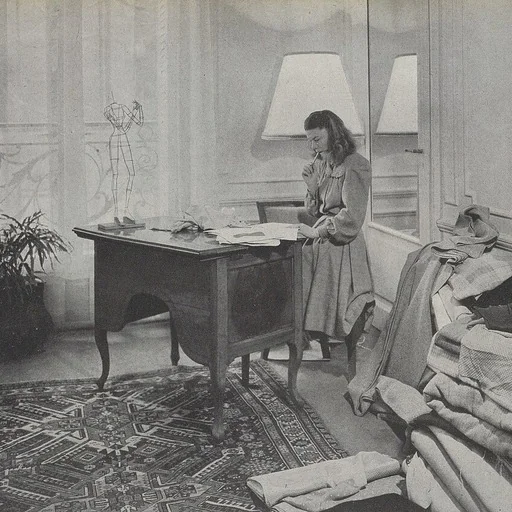
Marie-Louise Carven (31 August 1909 – 8 June 2015), born Carmen de Tommaso, was a French fashion designer who founded the house of Carven in 1945.
Museum
Palais Galliera - Musée de la Mode de la Ville de Paris
Continue through works from the same source collection.
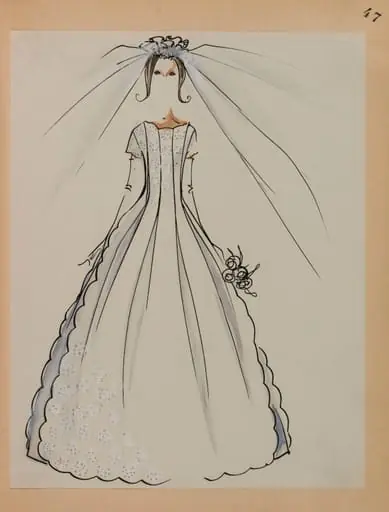 Robe de mariée festonnée et son voile
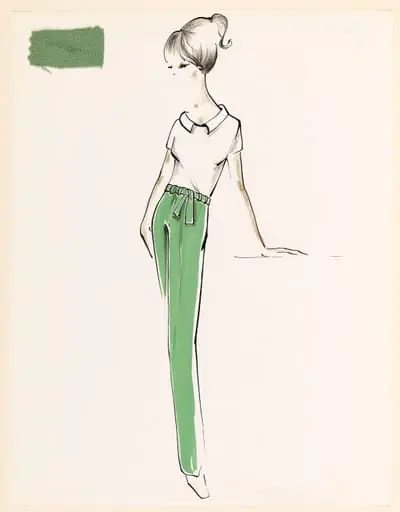 Haut blanc à manches courtes et pantalon vert à ceinture nouée
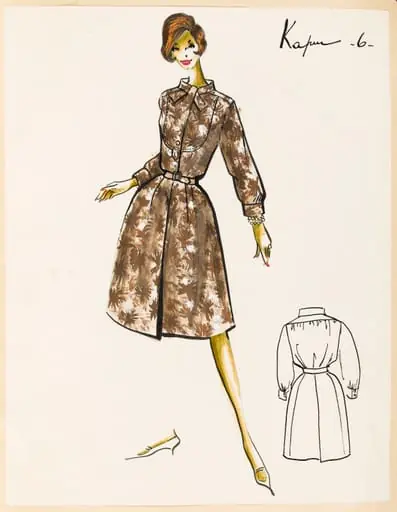 Kapur
Kapur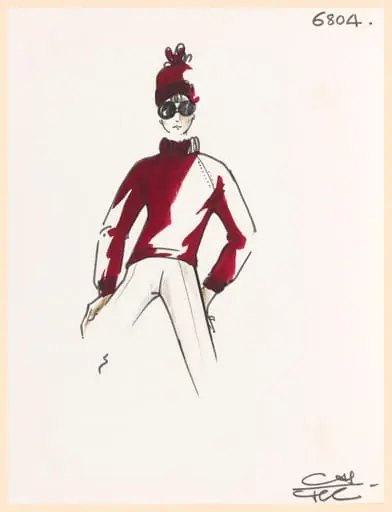 Pull-over à manches longues pourpre, bonnet assorti, pantalon et lunettes de soleil
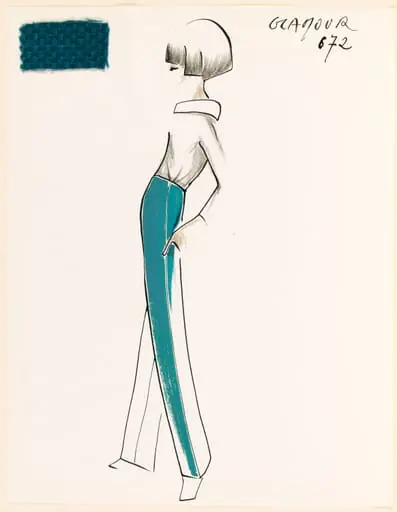 GLAMOUR
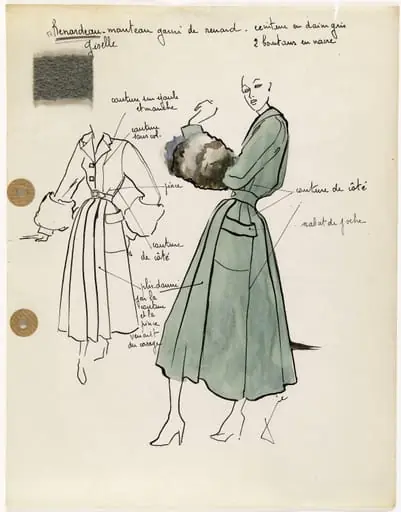 'Renardeau'
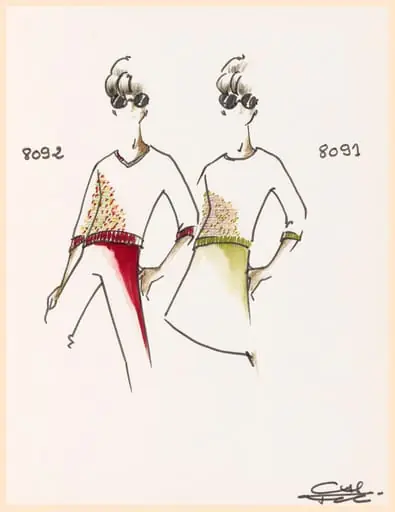 Pull-over à manches trois quarts et à encolure V à motifs multicolores, pantalon cerise et lunettes de soleil
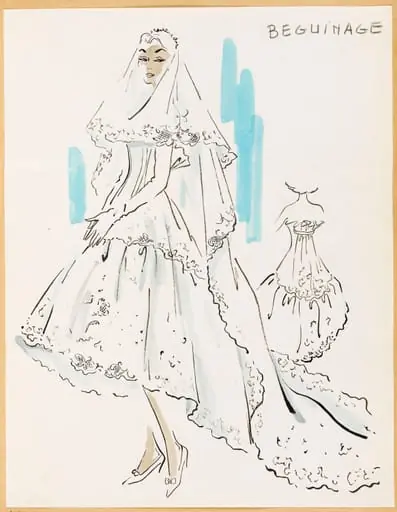 Béguinage