Artwork
Ali baba
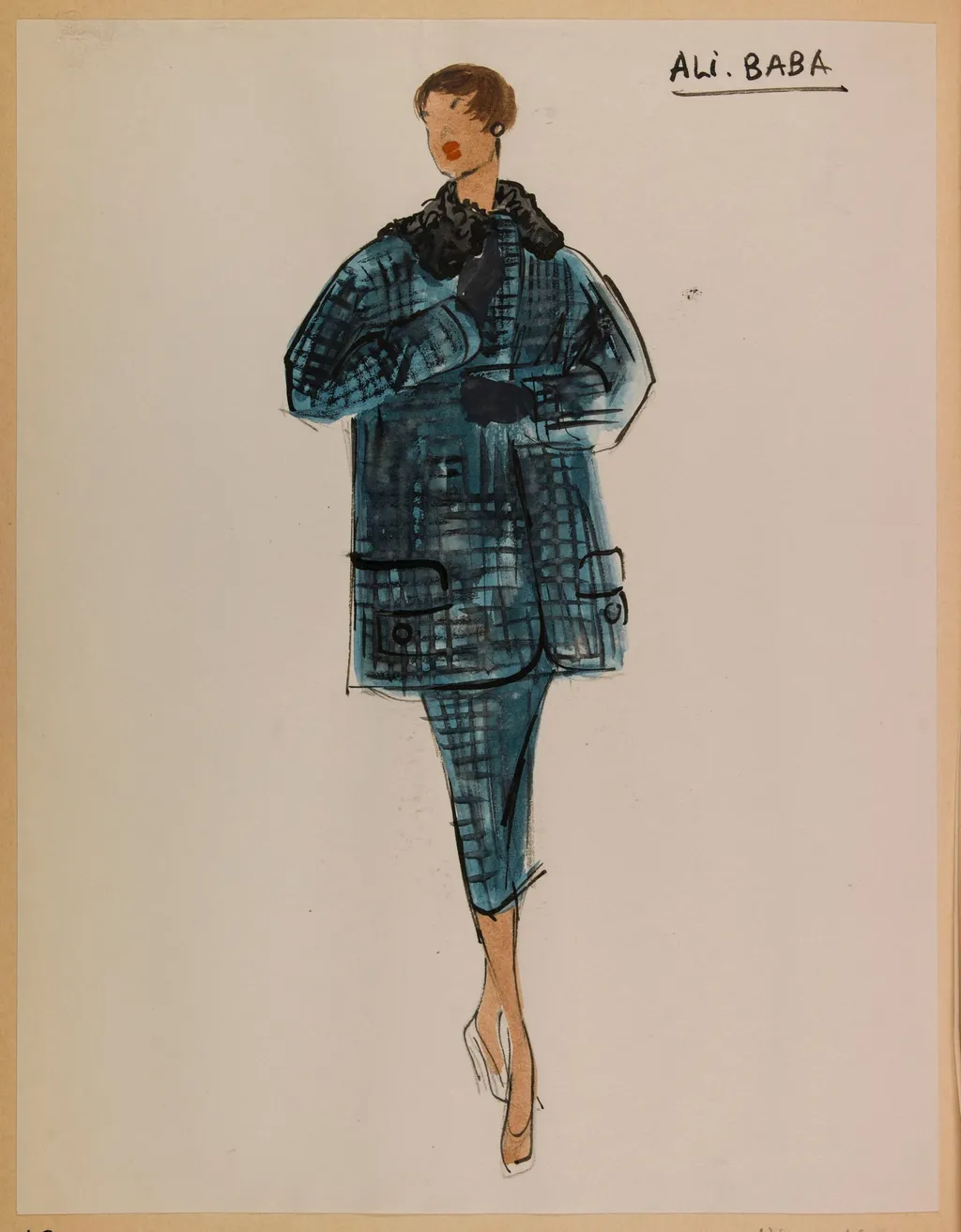
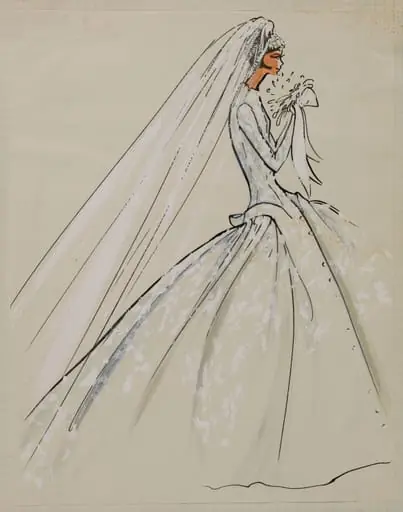
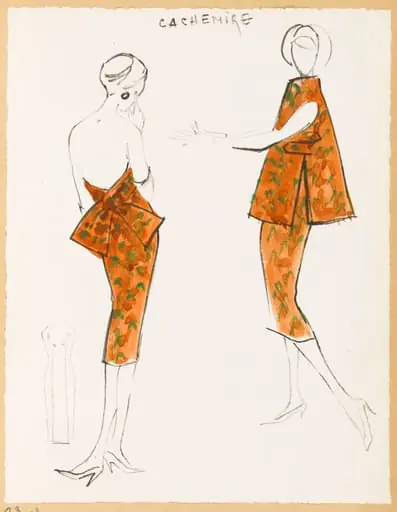
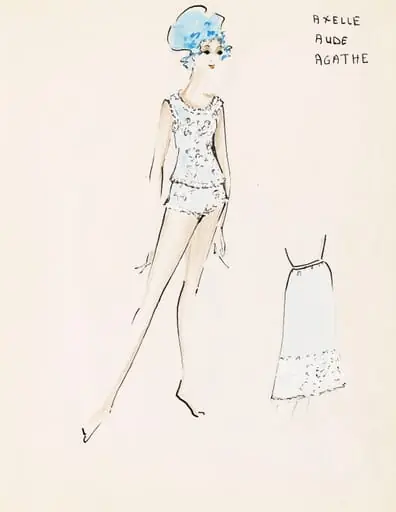
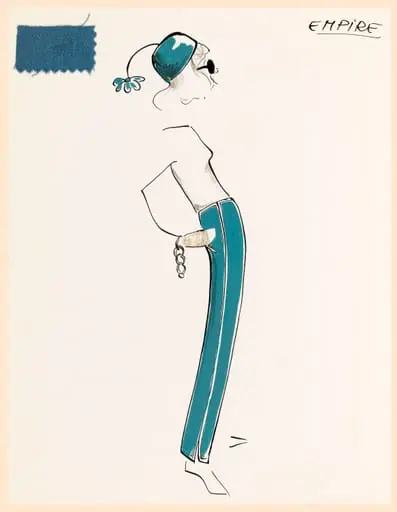
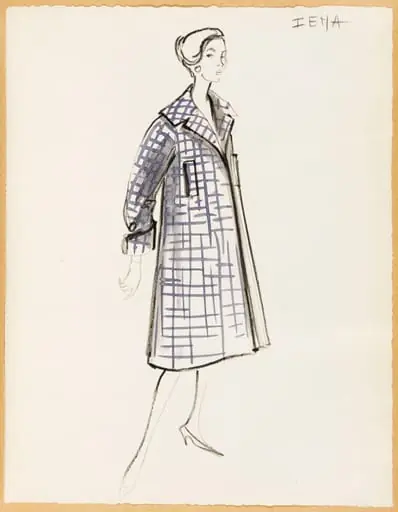
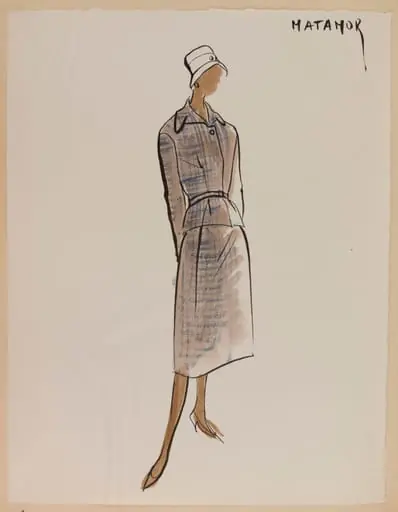
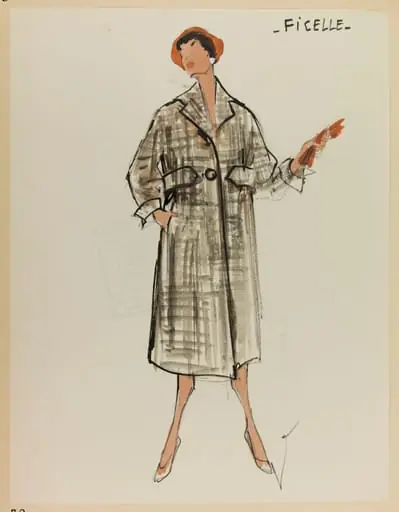
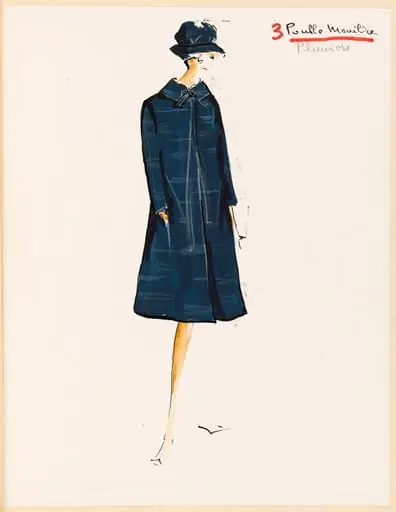
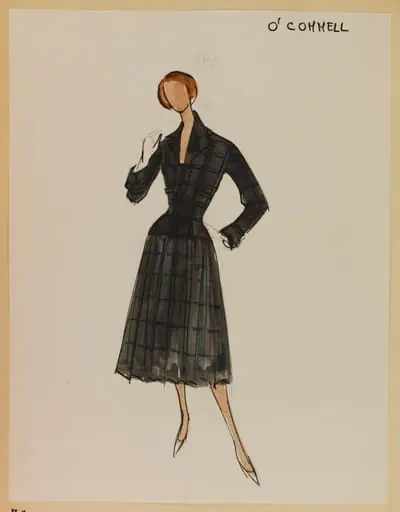
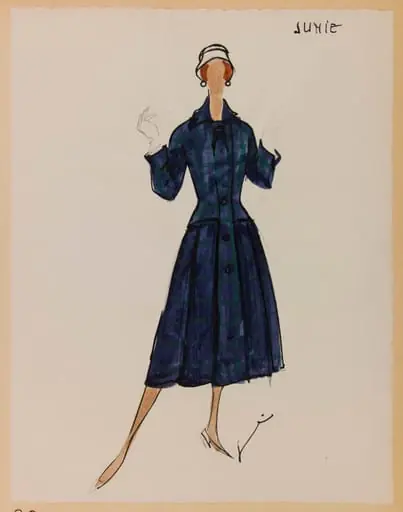
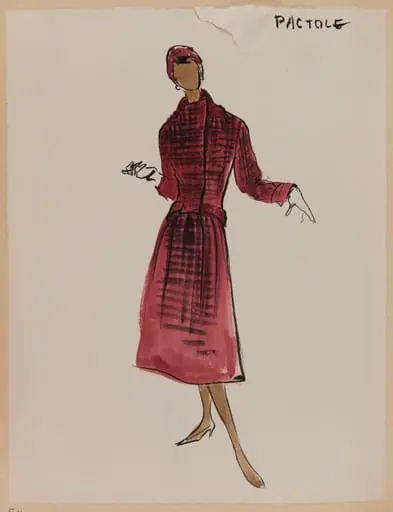
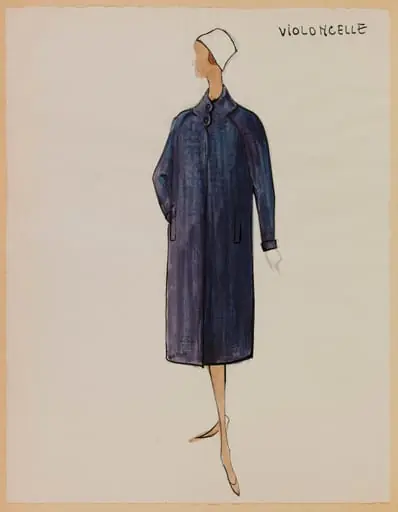
Ali baba is a drawing by Carven. It dates from 1953 and is held in the collection of the Palais Galliera - Musée de la Mode de la Ville de Paris.
About this work
Overview
Created around 1953 by the French fashion designer Carven, this drawing is part of the Museum of Ethnography’s collection.
Created around 1953 by the French fashion designer Carven, this drawing is part of the Museum of Ethnography’s collection. Though labeled as an image, it functions as a fashion illustration, capturing a stylized figure in contemporary attire. The work reflects Carven’s engagement with visual representation beyond garment design, offering insight into mid-century fashion aesthetics through a graphic medium.
Subject & Meaning
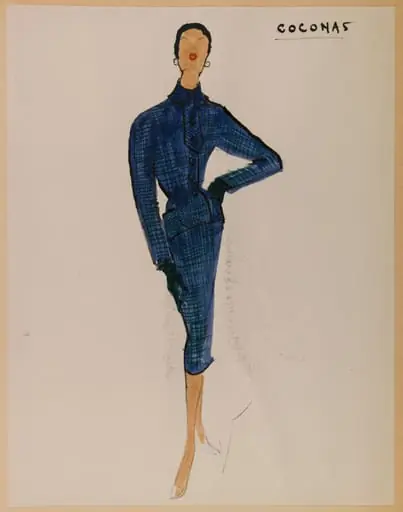
The subject is a woman dressed in a coordinated blue plaid suit, with a jacket featuring a black ruffled collar, black gloves, white high heels, and earrings. Her hands are crossed neatly before her, suggesting poise and restraint. The attire and posture convey an idealized vision of urban femininity in the early 1950s, emphasizing refinement and controlled elegance rather than narrative or symbolic content.
Technique & Style
Rendered with loose, confident lines and saturated hues, the drawing employs expressive brushwork and flat areas of color. The bold contours define the figure and clothing without detailed modeling, prioritizing silhouette and rhythm over realism. The stylistic choices align with fashion illustration traditions of the period, where clarity and flair took precedence over naturalism.
History & Provenance
The drawing entered the Museum of Ethnography’s holdings as part of a collection documenting 20th-century dress and cultural expression. Its origin as a design study or promotional piece by Carven’s studio is unconfirmed, but its preservation suggests recognition of its value as a cultural artifact reflecting postwar French fashion sensibilities.
Context
In the early 1950s, Paris remained a center of haute couture, and designers like Carven often produced illustrations to communicate their aesthetic. This piece reflects a moment when fashion houses blurred the lines between design, advertising, and fine art. The emphasis on tailored elegance and feminine grace aligns with prevailing ideals of the era, even as postwar society began shifting toward more casual norms.
Legacy
Though not widely exhibited, the work contributes to scholarly understanding of how fashion designers visually articulated their visions beyond textiles. It stands as a quiet example of how couture culture was documented and preserved through illustration, offering a glimpse into the visual language of mid-century French fashion beyond runway presentations.
Artist & collection
Artist
These delicate ink-on-paper drawings capture the quiet poetry of everyday things: pinecones, reeds, apples.

Museum
Palais Galliera - Musée de la Mode de la Ville de Paris
Continue through works from the same source collection.