Artwork
Polka
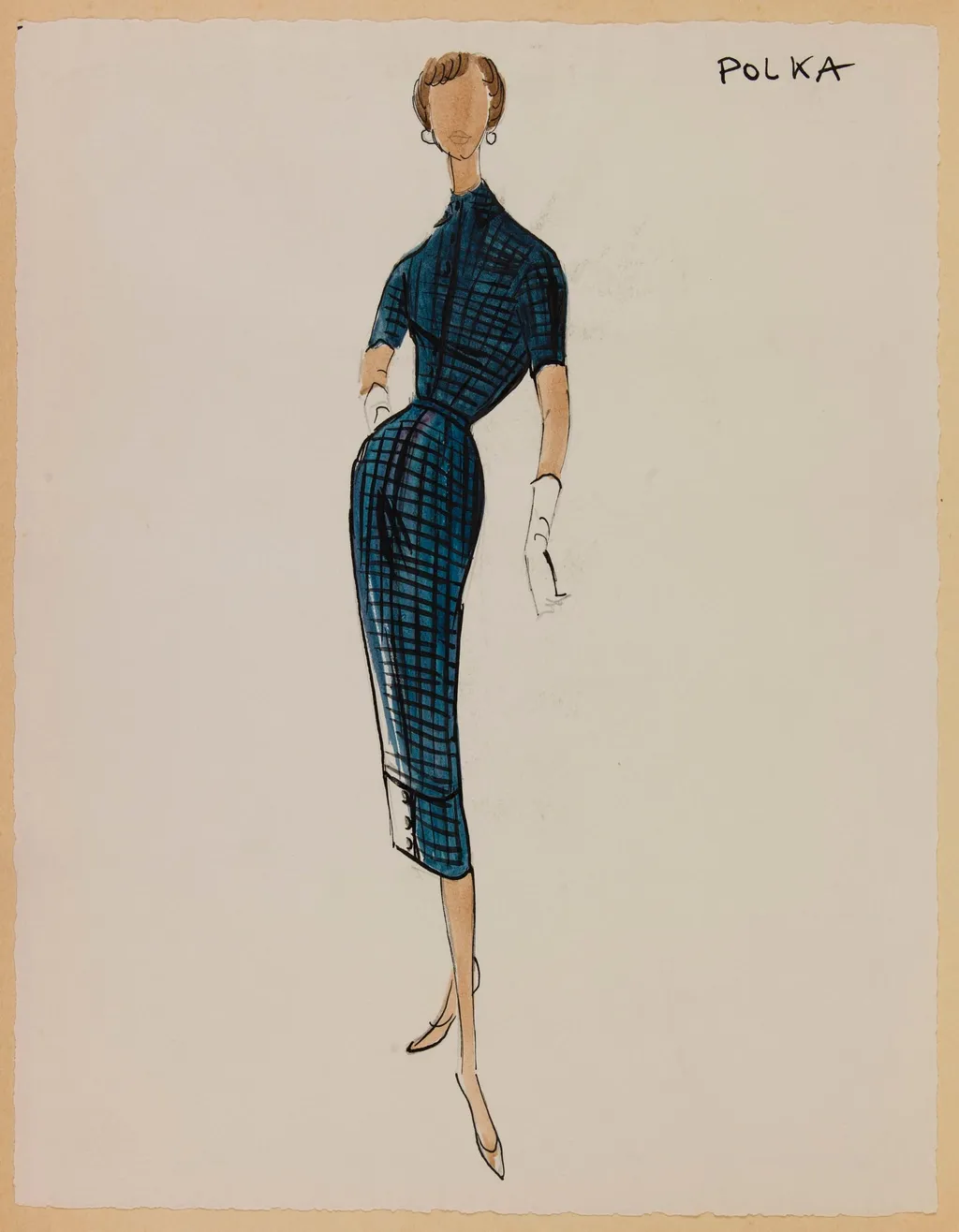
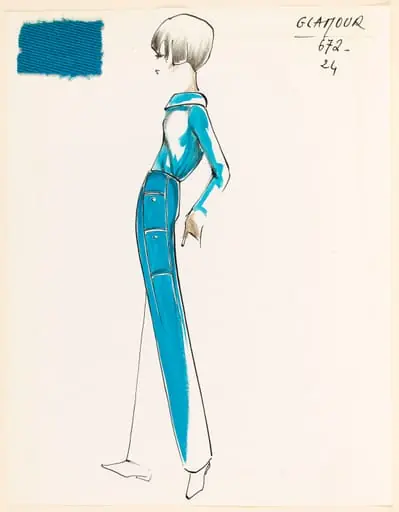
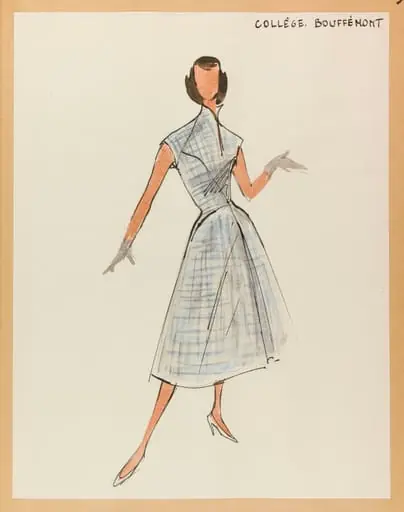
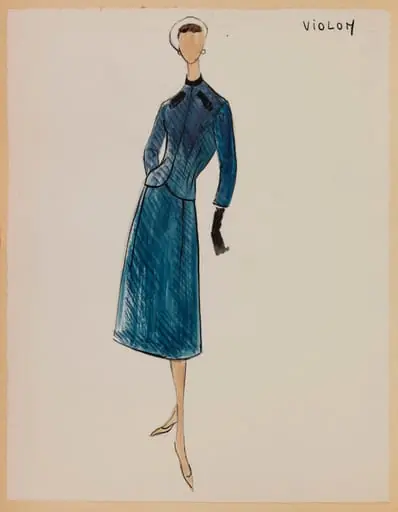
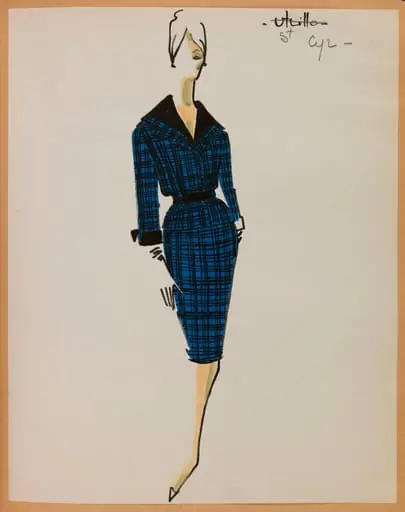
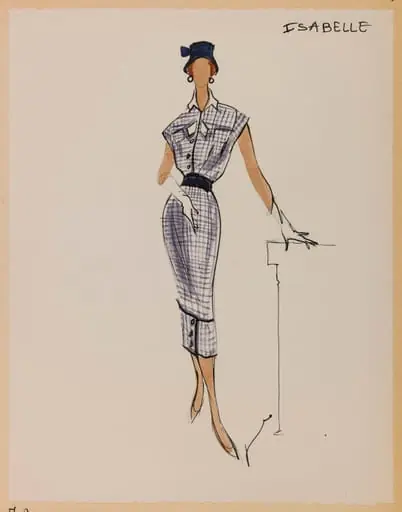
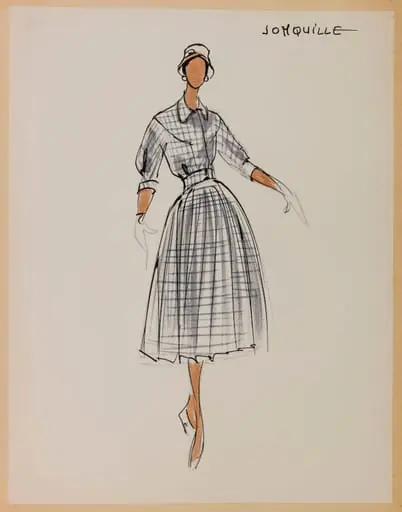
Polka is a drawing by Carven. It dates from 1956 and is held in the collection of the Palais Galliera - Musée de la Mode de la Ville de Paris.
About this work
Overview
Polka is a pencil drawing attributed to the designer Carven, dated around 1956. It is part of the collection at the Museum of Ethnography. The work captures a single figure in a restrained, linear style, emphasizing form and garment over individual expression. Its modest scale and quiet composition reflect a focus on everyday elegance rather than theatrical display.
Subject & Meaning
The drawing avoids sentimentality, presenting clothing as a neutral vessel of personal and cultural identity.
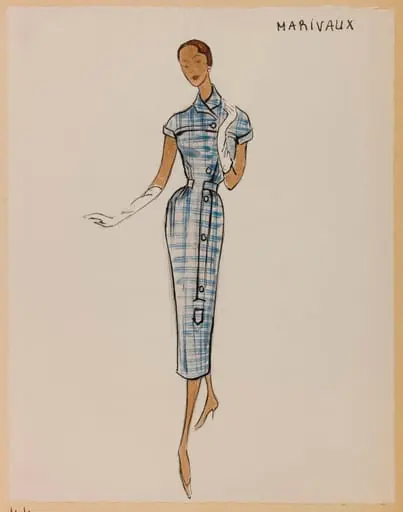
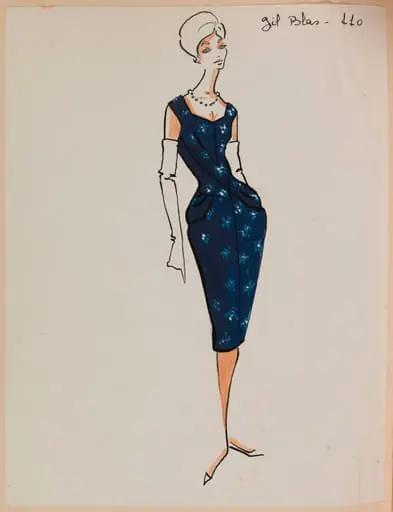
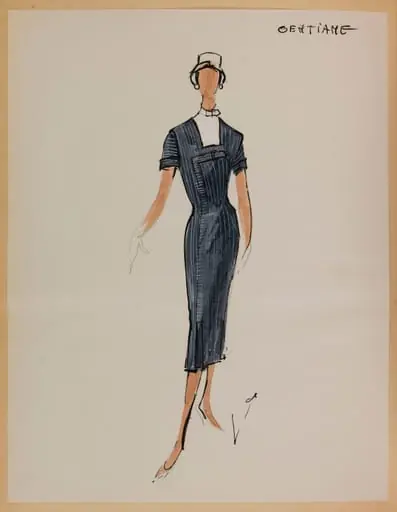
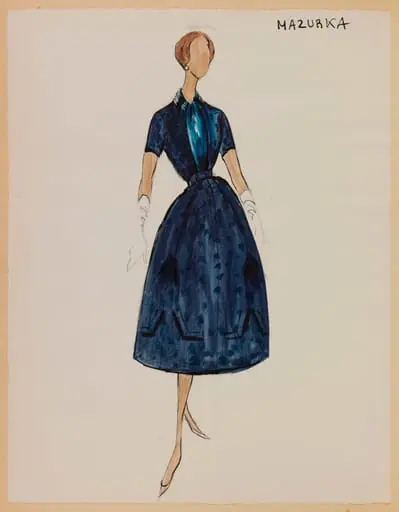
The subject is a woman wearing a blue plaid dress with a fitted waist, high neckline, and short sleeves. Her hands are tucked into her pockets, suggesting a moment of stillness or introspection. The attire, neither ornate nor avant-garde, represents mid-century civilian fashion as lived experience. The drawing avoids sentimentality, presenting clothing as a neutral vessel of personal and cultural identity.
Technique & Style
Rendered in fine, unbroken lines with minimal shading, the drawing favors clarity over texture. Contours define the dress and posture without embellishment, creating a sense of order and precision. The absence of facial detail shifts attention entirely to the silhouette and fabric, reinforcing a design-oriented approach that aligns with fashion illustration traditions of the period.
History & Provenance
The work entered the Museum of Ethnography’s collection in the late 20th century, likely as part of a broader acquisition of mid-century fashion sketches. Its attribution to Carven is based on stylistic parallels with known design studies, though no definitive documentation of its creation survives. It has remained in institutional custody since acquisition, with no record of prior private ownership.
Context
Created in the mid-1950s, Polka reflects a postwar emphasis on practical, well-tailored clothing for women. The bobbed hairstyle and knee-length dress align with prevailing norms of modesty and functionality in European urban fashion. Unlike haute couture renderings, this sketch captures the ordinary, suggesting an interest in how design permeated daily life beyond the runway.
Legacy
Polka endures as a quiet record of everyday style in mid-century Europe. It contributes to scholarly understanding of how fashion was documented outside commercial contexts. Its preservation in an ethnographic museum underscores its value as cultural artifact rather than fine art, offering insight into the aesthetics of ordinary dress during a period of social change.
Artist & collection
Artist
These delicate ink-on-paper drawings capture the quiet poetry of everyday things: pinecones, reeds, apples.
Museum
Palais Galliera - Musée de la Mode de la Ville de Paris
Continue through works from the same source collection.