Artwork
Port Said
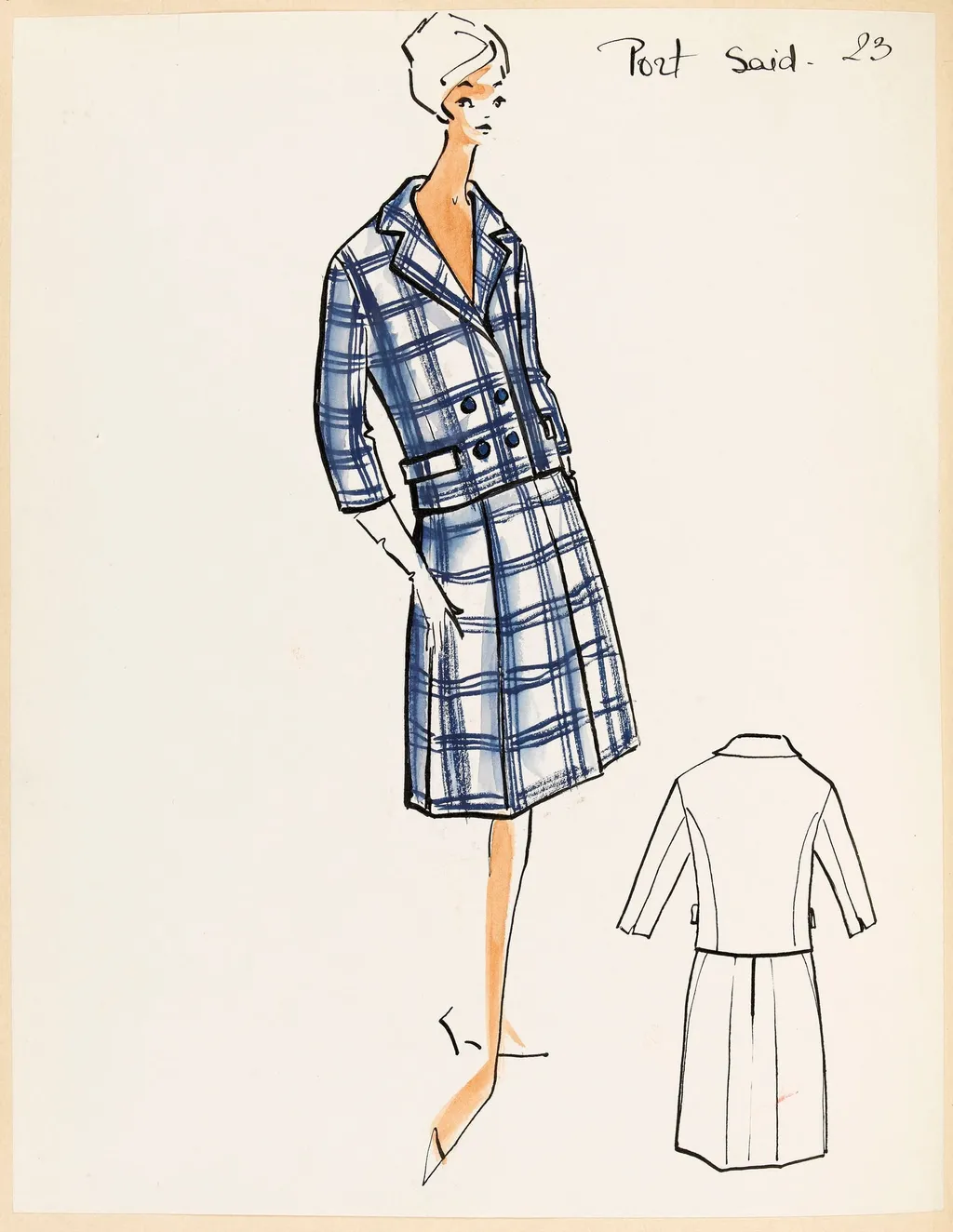
Port Said is a drawing by Carven. It dates from 1959 and is held in the collection of the Palais Galliera - Musée de la Mode de la Ville de Paris.
About this work
Overview
Created around 1959, Port Said is a pencil and ink sketch by the designer Carven, currently held in the collection of the Museum of Ethnography.
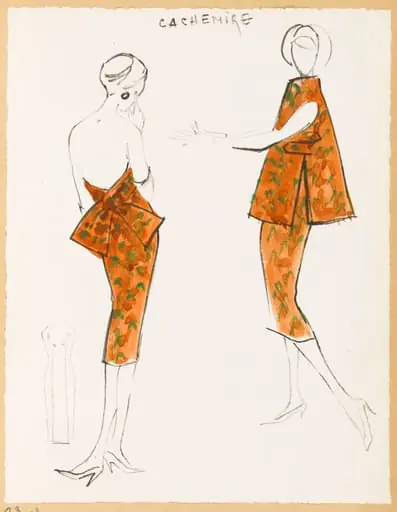
Created around 1959, Port Said is a pencil and ink sketch by the designer Carven, currently held in the collection of the Museum of Ethnography. The work captures a single figure in motion, rendered with minimal detail and fluid lines. Its title, inscribed in the upper corner, suggests a geographic or atmospheric reference, though no explicit narrative is provided. The piece functions as a fashion study, emphasizing silhouette over ornamentation.
Subject & Meaning
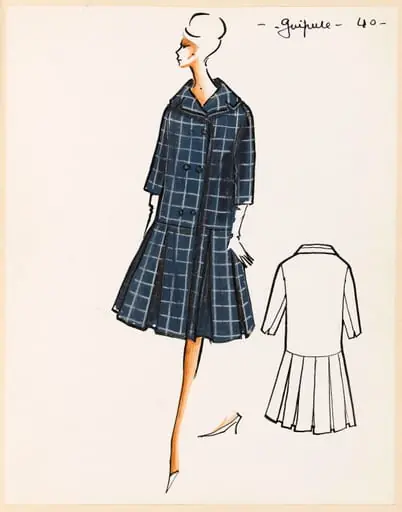
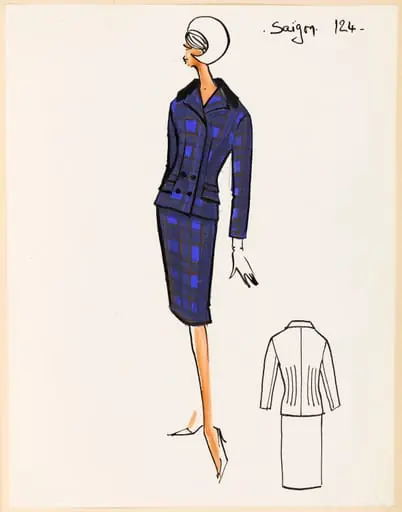
The subject is a woman wearing a long, blue-plaid coat and skirt, depicted from the front and subtly echoed in a faint rear outline beside her. The outfit, with its belted waist and gently puffed sleeves, reflects mid-century European fashion sensibilities. The dual views imply an interest in spatial form and movement, possibly intended as a garment study rather than a portrait. The title, Port Said, may allude to a place of transit, evoking themes of travel or cultural exchange.
Technique & Style
Carven employed loose, rapid brushwork to render the plaid pattern, suggesting texture through suggestion rather than precision. The primary figure is drawn in darker lines, while the secondary outline is rendered in faint brown strokes, creating depth without clutter. The absence of facial features or background elements focuses attention on the garment’s structure. The style is economical, prioritizing form and rhythm over detail, typical of fashion sketches meant for design development.
History & Provenance
The sketch entered the Museum of Ethnography’s collection as part of a broader acquisition of mid-century fashion drawings. Its origin lies within Carven’s personal archive of preparatory studies, likely made during the late 1950s when the designer was refining ready-to-wear lines. No exhibition history is documented prior to its institutional acquisition, and its provenance remains tied to the designer’s studio practices rather than public display.
Context
In the late 1950s, Parisian fashion houses increasingly emphasized streamlined, wearable designs for a growing middle class. Carven, known for practical elegance, produced numerous such sketches to guide tailors and pattern-makers. Port Said reflects this shift—its focus on silhouette and fabric movement aligns with industry trends favoring functionality and subtle detail over elaborate decoration.
Legacy
Port Said remains a representative example of fashion design documentation from the postwar era. It illustrates how designers used quick studies to explore form and movement before production. While not widely exhibited, it contributes to scholarly understanding of how fashion was conceptualized in studios. Its preservation in an ethnographic context underscores its value as a cultural artifact of everyday dress.
Artist & collection
Artist
These delicate ink-on-paper drawings capture the quiet poetry of everyday things: pinecones, reeds, apples.
Museum
Palais Galliera - Musée de la Mode de la Ville de Paris
Continue through works from the same source collection.