Artwork
Poussin
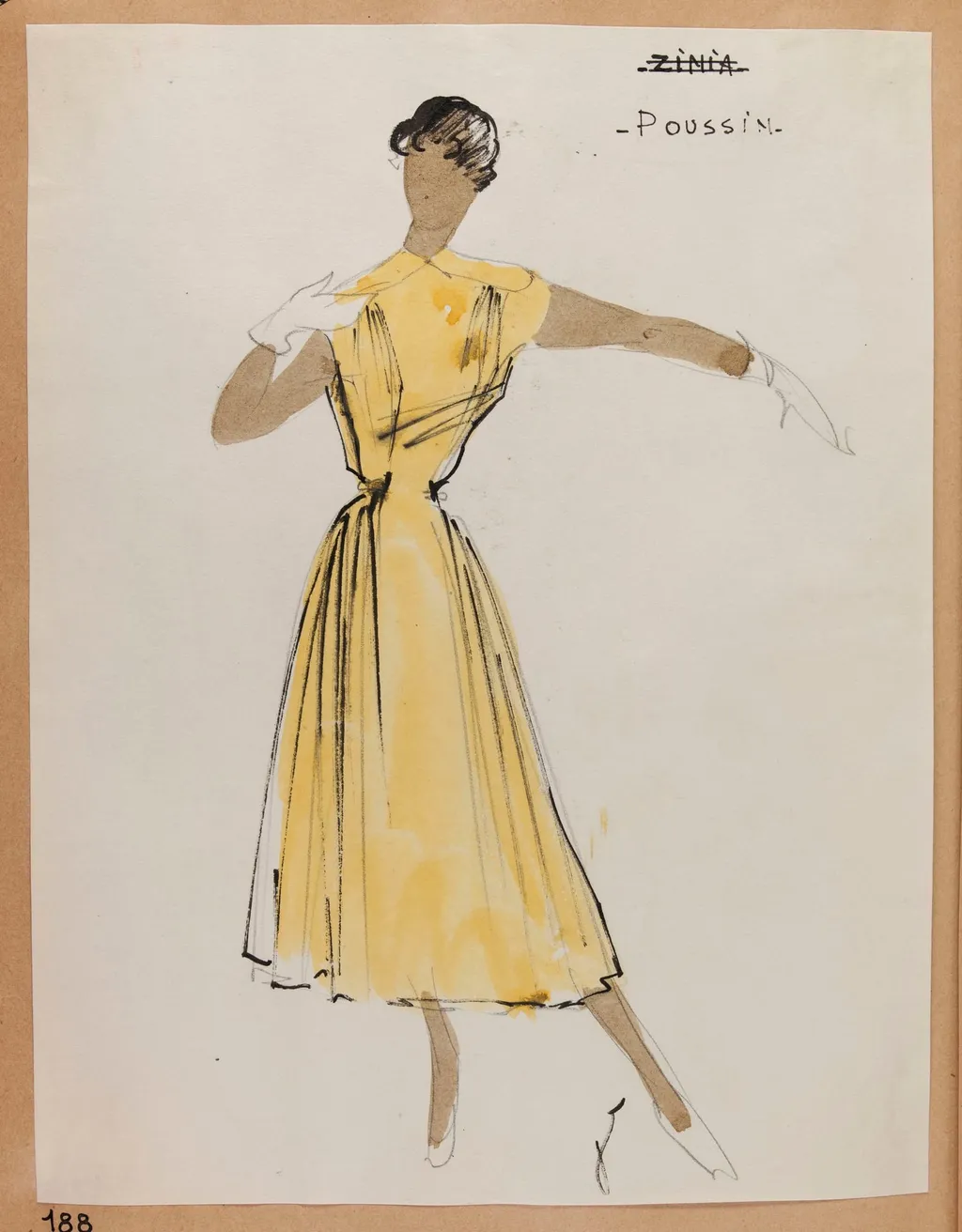
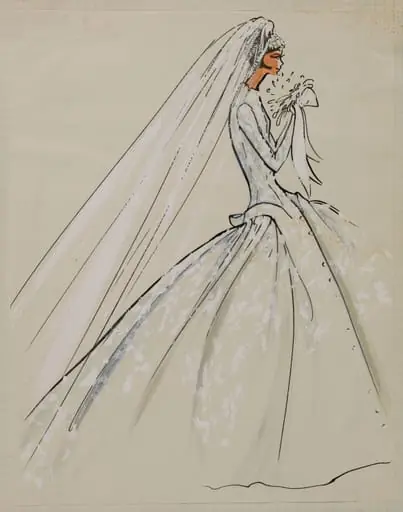
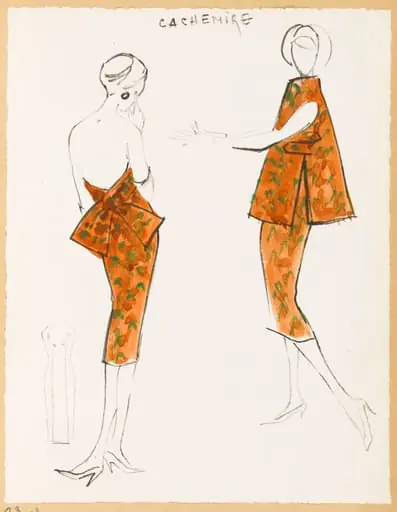
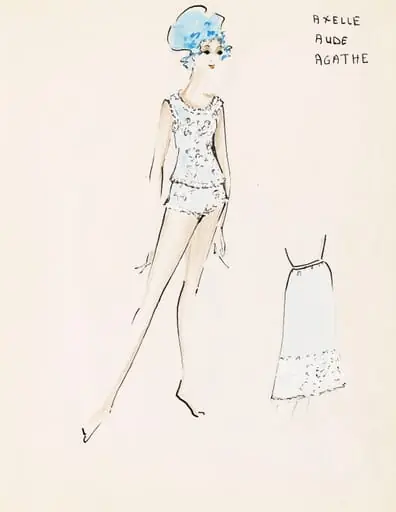
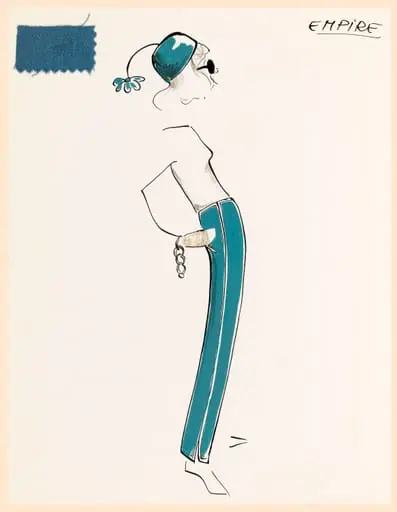
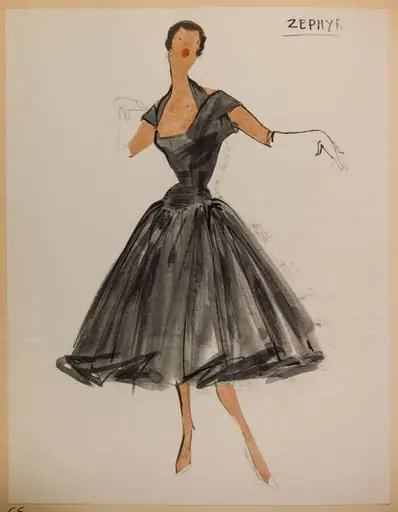
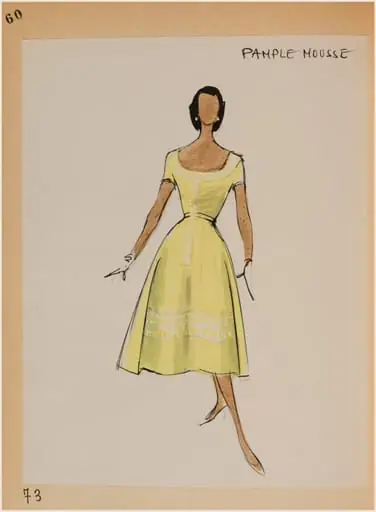
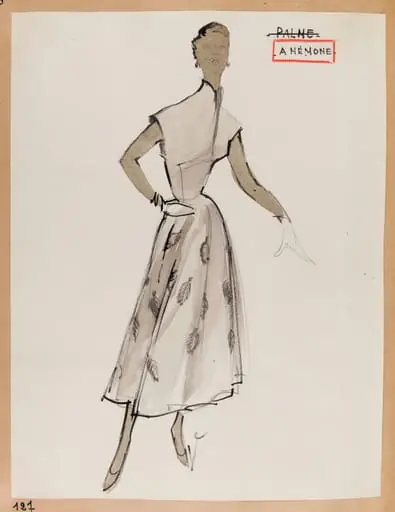
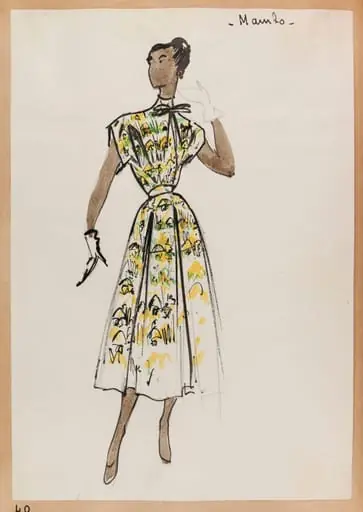
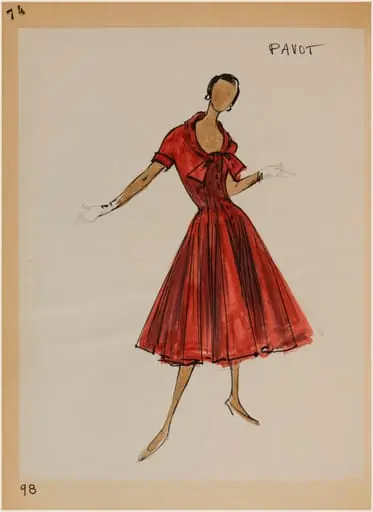
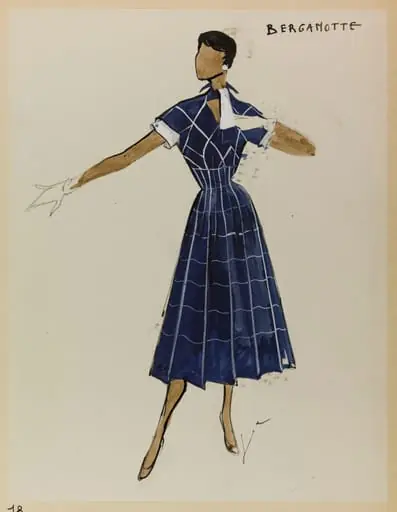
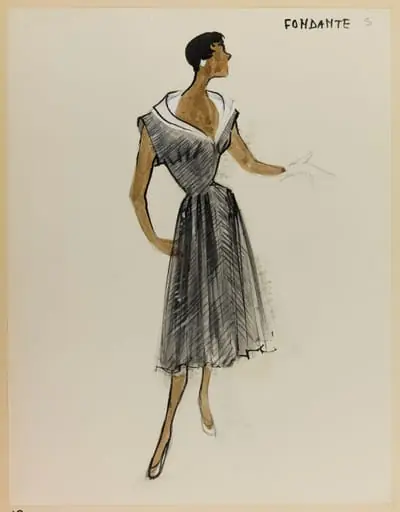
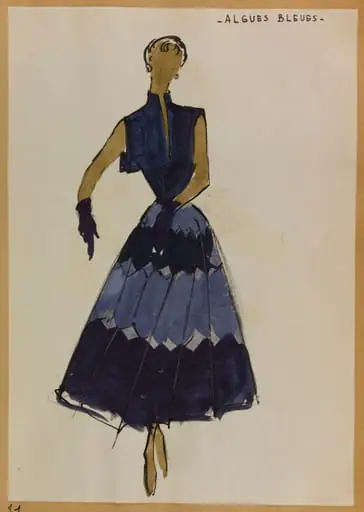
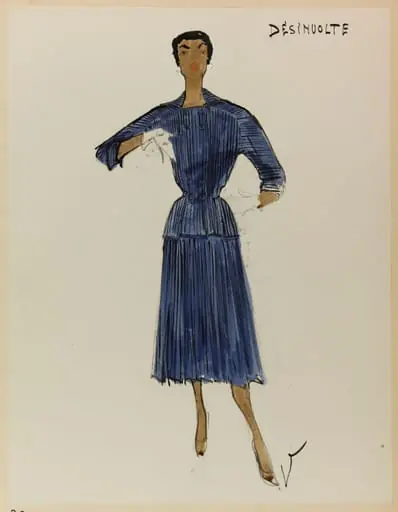
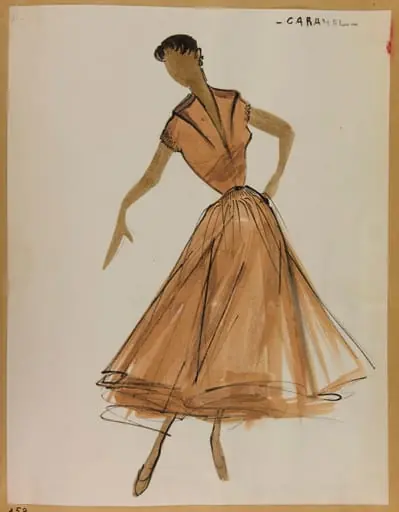
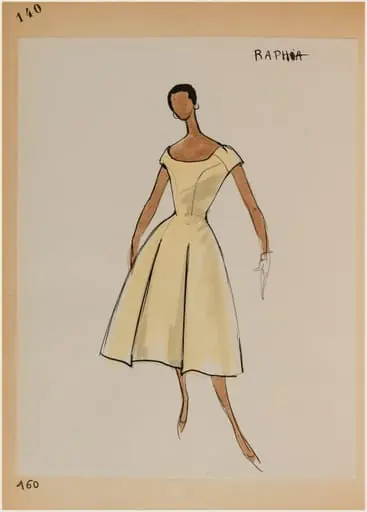
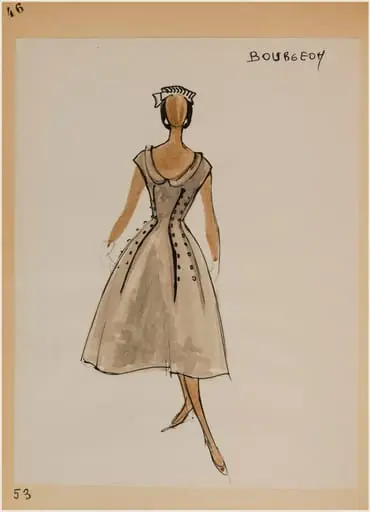
Poussin is a drawing by Carven. It dates from 1951 and is held in the collection of the Palais Galliera - Musée de la Mode de la Ville de Paris.
About this work
Overview
The subject is centered against a neutral beige background, with no additional elements to distract from her posture and attire.
The drawing, attributed to Carven and dated around 1951, is part of the Museum of Ethnography’s collection. It depicts a solitary female figure in a minimalist composition, rendered in pencil or ink on paper. The subject is centered against a neutral beige background, with no additional elements to distract from her posture and attire. The work is cataloged as a study in form and gesture, reflecting the artist’s interest in quiet, contained movement.
Subject & Meaning
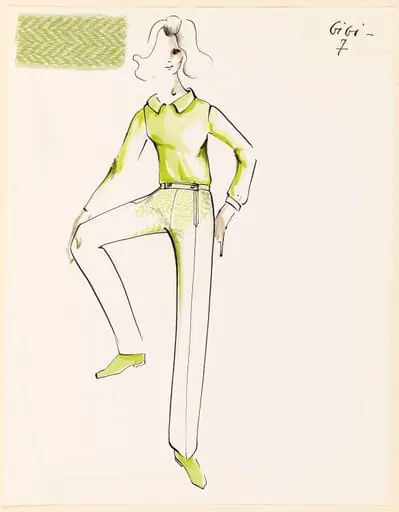
The figure, a woman with dark hair and white gloves, stands with arms extended sideways, elbows bent, hands open. Her sleeveless yellow dress, high-necked and unadorned, suggests a ritual or ceremonial context, though no specific cultural reference is documented. The pose evokes stillness and balance, possibly symbolizing offering, reception, or introspection. The absence of facial detail invites interpretation without narrative constraint.
Technique & Style
Carven employs fine, controlled lines to define the figure’s contours and the folds of the dress. The yellow garment is rendered with subtle tonal variations, avoiding heavy shading to maintain a sense of lightness. The gloves and hair are indicated with delicate strokes, emphasizing texture without detail. The background remains unmodulated, reinforcing the figure’s isolation and the drawing’s focus on silhouette and posture.
History & Provenance
The drawing entered the Museum of Ethnography’s collection in the mid-20th century, with no documented prior ownership or exhibition history. It is listed among works by Carven, a lesser-known artist whose output appears limited to private studies and sketches. No correspondence or annotations accompany the piece, leaving its original purpose—whether artistic exercise, costume study, or cultural documentation—uncertain.
Context
Created in the early 1950s, the work aligns with postwar European interest in simplified figuration and psychological stillness. While Carven was not associated with major movements, the drawing reflects broader trends in mid-century draftsmanship that favored restraint over expressionism. Its placement in an ethnographic museum suggests an interest in the figure as a universal or archetypal form, rather than a specific cultural portrait.
Legacy
The drawing remains a quiet example of Carven’s draftsmanship, preserved for its formal qualities rather than its historical prominence. It has not been widely reproduced or studied, and no critical literature directly addresses it. Its presence in the Museum of Ethnography underscores an institutional effort to document diverse artistic practices, even those outside the mainstream canon.
Artist & collection
Artist
These delicate ink-on-paper drawings capture the quiet poetry of everyday things: pinecones, reeds, apples.
Museum
Palais Galliera - Musée de la Mode de la Ville de Paris
Continue through works from the same source collection.