Artwork
Pavot
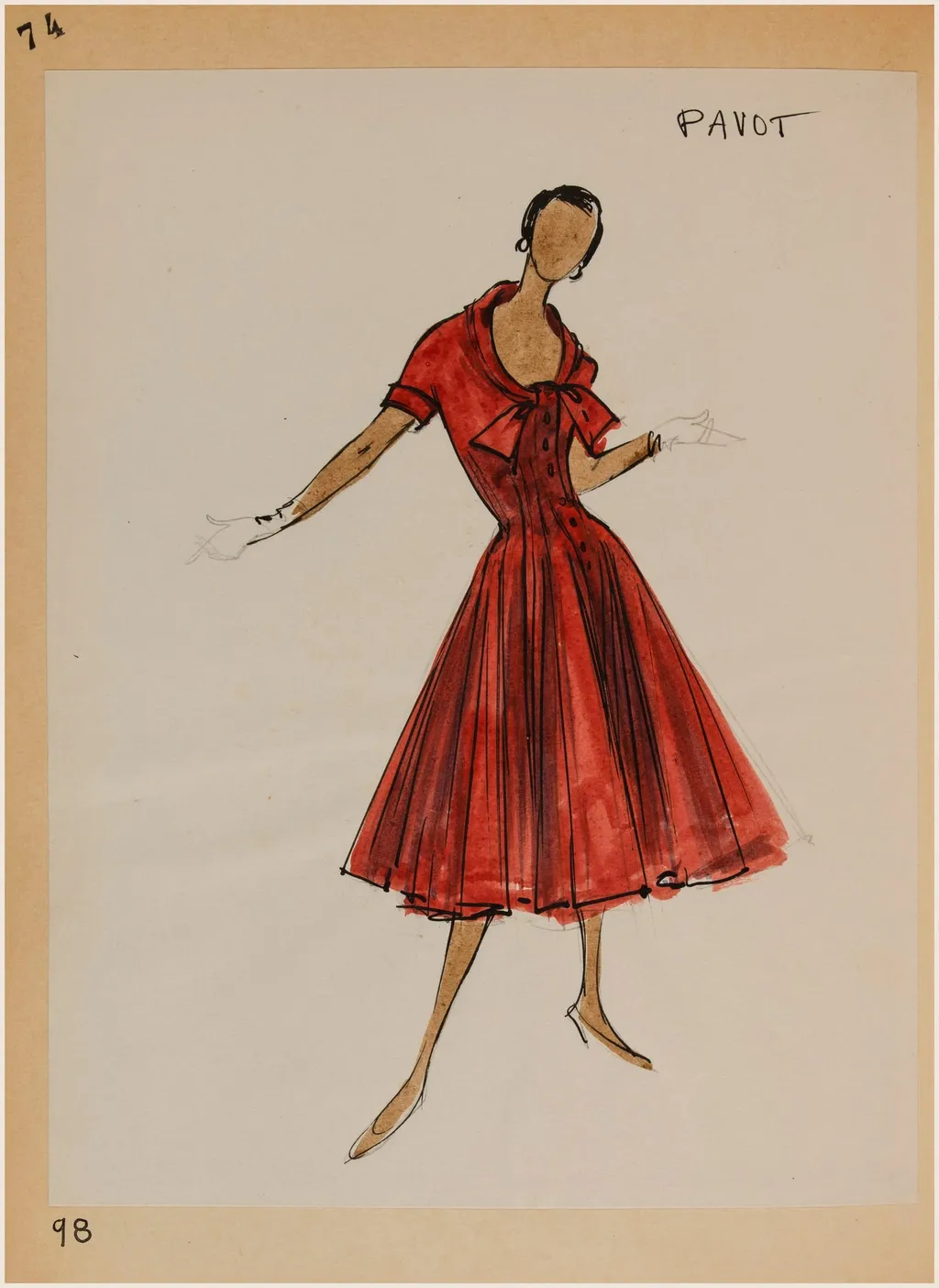
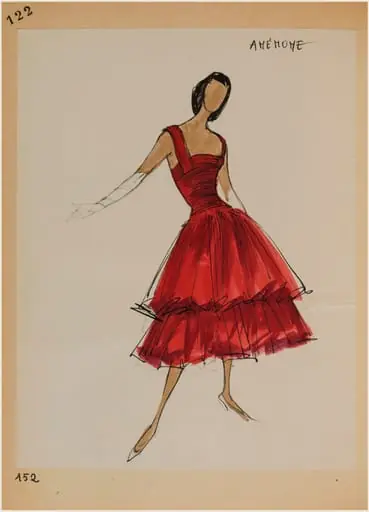
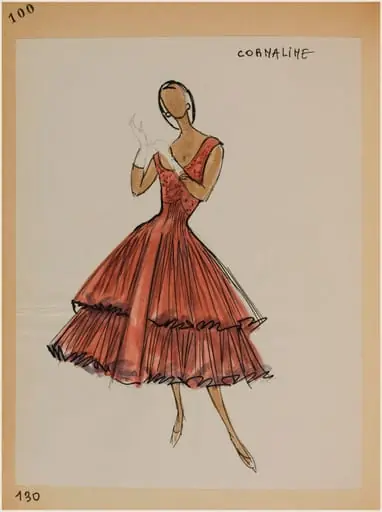
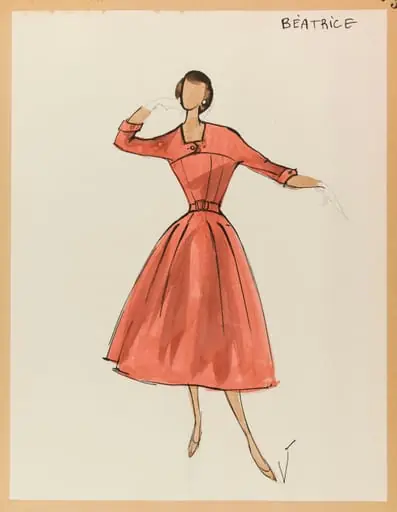
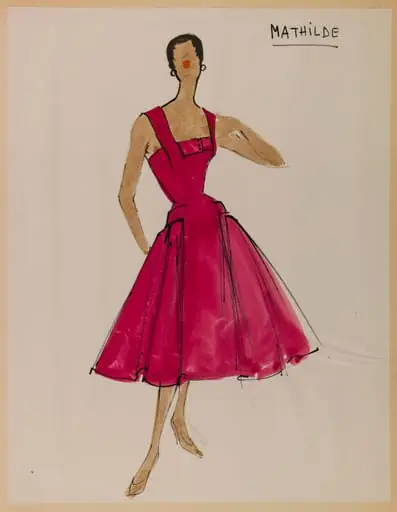
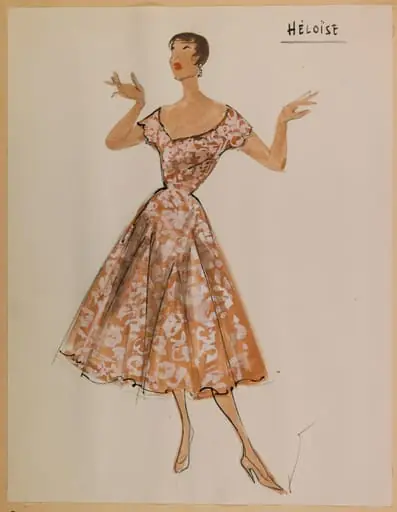
Pavot is a drawing by Carven. It dates from 1956 and is held in the collection of the Palais Galliera - Musée de la Mode de la Ville de Paris.
About this work
Overview
The work is part of the collection at the Museum of Ethnography, where it is preserved as an artifact of mid-century fashion design rather than fine art.
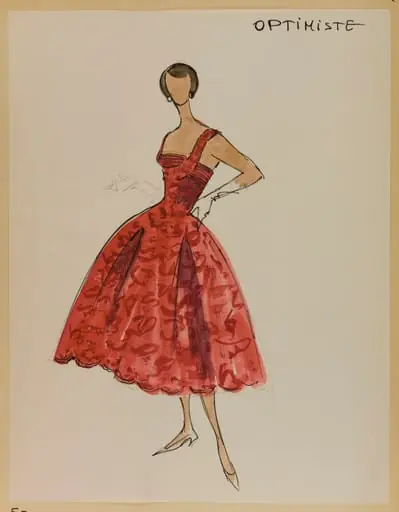
Pavot is a 1956 ink drawing by the French fashion designer Carven, executed in a precise, linear style. It depicts a female figure in a red dress, posed as if presenting the garment. The work is part of the collection at the Museum of Ethnography, where it is preserved as an artifact of mid-century fashion design rather than fine art. Its simplicity and focus on attire reflect its function as a design record.
Subject & Meaning
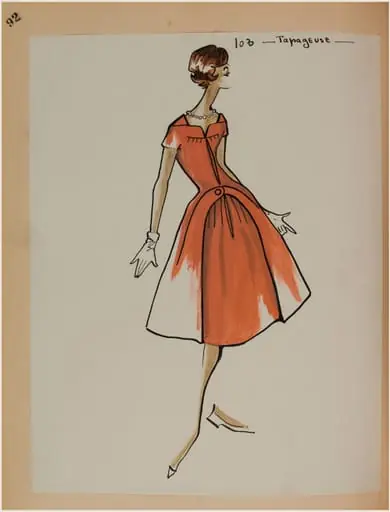
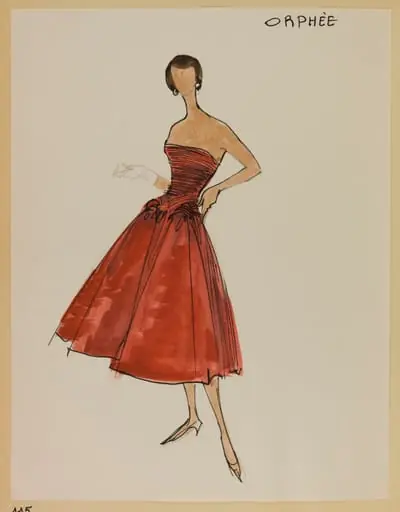
The figure in Pavot stands with arms extended, a conventional pose in fashion illustration meant to display the silhouette and movement of clothing. The red dress, with its structured collar and bow, suggests formal daytime wear. White gloves and high heels reinforce an air of polished etiquette. The drawing does not convey narrative or emotion; instead, it serves as a neutral documentation of a garment’s form and intended presentation.
Technique & Style
Carven rendered the dress with careful attention to fabric folds, using fine, controlled lines to suggest weight and drape. The background is left plain in light beige, directing focus entirely to the garment. The figure is minimally detailed—facial features are absent, limbs simplified—emphasizing the clothing over the wearer. This restrained approach aligns with the conventions of commercial fashion drawing of the period.
History & Provenance
Created in 1956 during Carven’s active years as a couturier, Pavot likely served as a design reference or presentation piece for clients or ateliers. It entered the Museum of Ethnography’s collection as part of a broader effort to document fashion as cultural expression. Its preservation there reflects institutional interest in clothing as material culture, rather than as fine art.
Context
In the mid-1950s, fashion houses relied on illustrators to communicate designs before photography became dominant. Carven, known for refined, feminine silhouettes, used such drawings to convey elegance without excess. Pavot exemplifies this era’s aesthetic: understated, structured, and focused on craftsmanship. It aligns with Parisian couture traditions that prioritized tailoring and proportion over ornamentation.
Legacy
Pavot remains a quiet testament to the role of illustration in fashion’s pre-photographic documentation. While Carven’s name is less prominent today than contemporaries like Dior or Balenciaga, works like this illustrate the precision and discipline embedded in mid-century design practice. Its presence in an ethnographic museum underscores fashion’s place within broader cultural histories.
Artist & collection
Artist
These delicate ink-on-paper drawings capture the quiet poetry of everyday things: pinecones, reeds, apples.
Museum
Palais Galliera - Musée de la Mode de la Ville de Paris
Continue through works from the same source collection.