Artwork
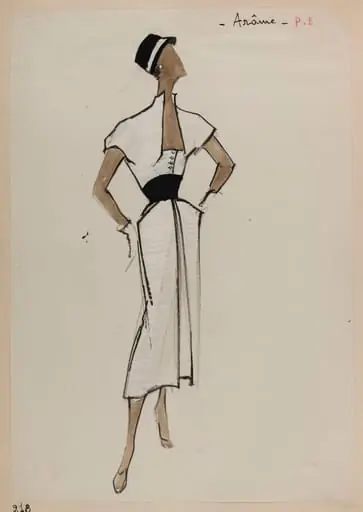
Robe blanche à manches courtes
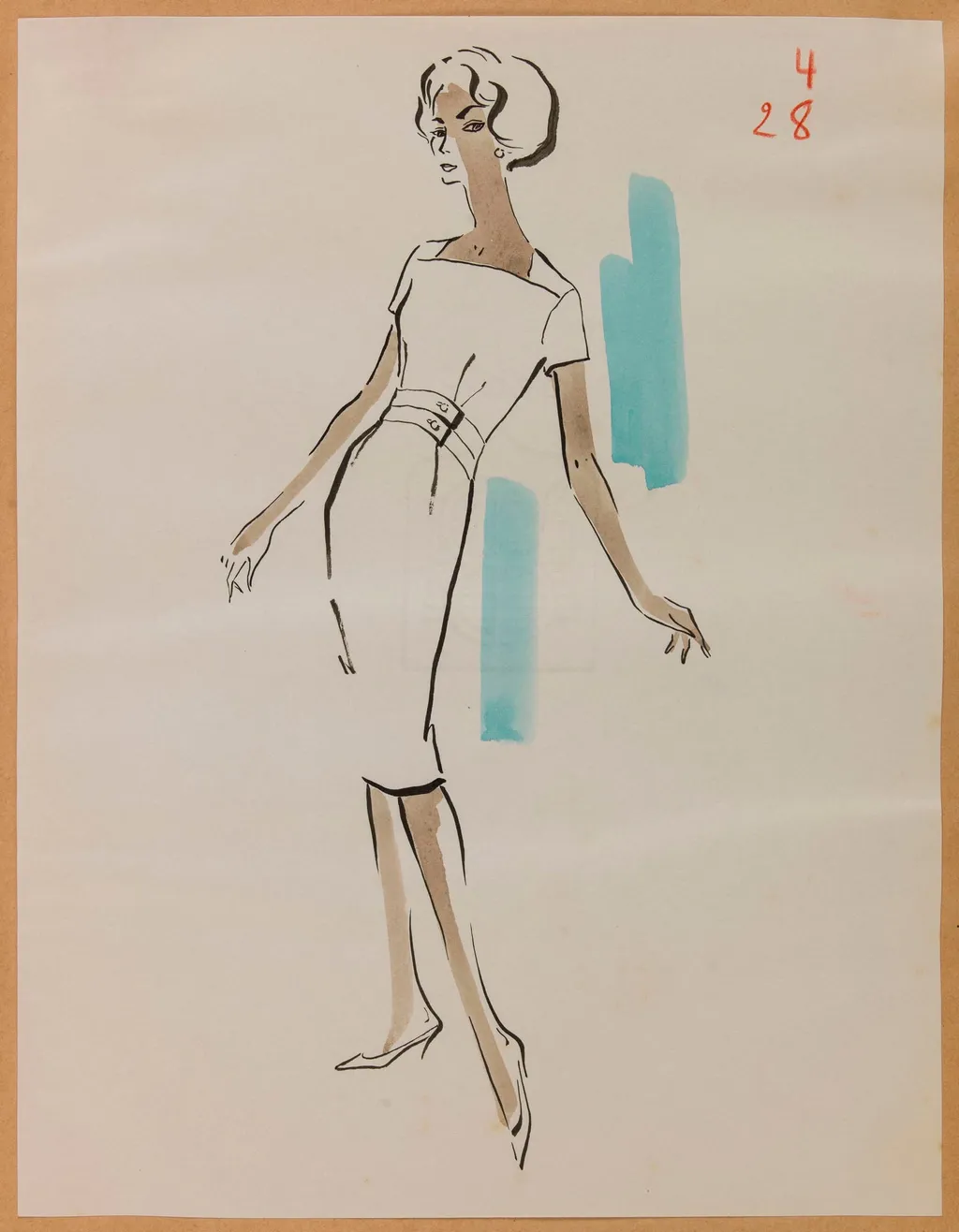
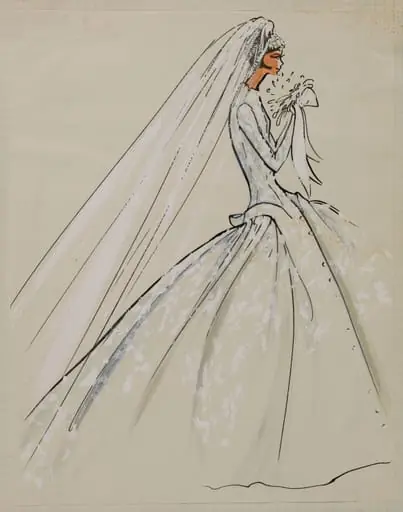
Robe blanche à manches courtes is a drawing by Carven. It dates from 1957 and is held in the collection of the Palais Galliera - Musée de la Mode de la Ville de Paris.
About this work
Overview
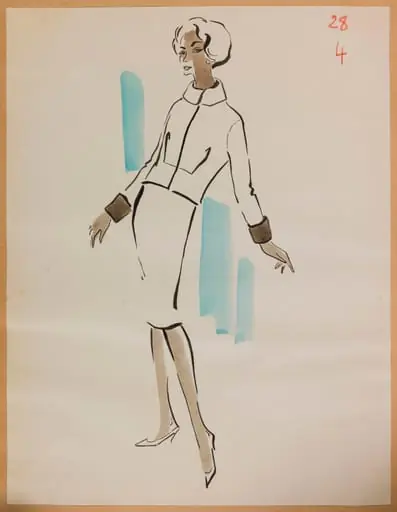
Created around 1957, this ink drawing by Carven depicts a woman in motion wearing a short-sleeved white dress.
Created around 1957, this ink drawing by Carven depicts a woman in motion wearing a short-sleeved white dress. Rendered with minimal, fluid lines, the work captures a fleeting moment rather than a posed portrait. The background is reduced to a few sparse blue marks, directing attention entirely to the figure and garment. Its sketch-like quality suggests it was made rapidly, possibly as a study or personal observation.
Subject & Meaning
The subject is a woman walking casually, her posture relaxed and natural. The focus is not on identity or narrative but on the interaction between the body and the garment. The dress, simple and unadorned, becomes the central element—its movement and drape are studied as expressions of form and function. The absence of context or detail emphasizes the clothing’s autonomy in defining the figure’s presence.
Technique & Style
The drawing employs swift, economical linework with light washes of blue to imply space. Fabric folds are suggested through subtle shading rather than detailed rendering, conveying texture through implication. The artist avoids contour precision, favoring gestural marks that echo the rhythm of motion. This approach reflects a design practice rooted in observing real movement, prioritizing fluidity over finish.
History & Provenance
The work is part of the collection at the Museum of Ethnography, where it is preserved as an example of mid-20th-century fashion documentation. Though not widely exhibited, its inclusion suggests recognition of its value in illustrating how designers engaged with the physicality of clothing. Its origins as a personal sketch transitioned into an archival artifact over time.
Context
In the 1950s, fashion houses like Carven emphasized wearable elegance and subtle innovation. This sketch aligns with a broader trend among designers to document garment behavior through quick drawings, often made during fittings or while observing wearers. Unlike commercial illustrations, such studies prioritized movement and fit over idealized presentation, serving internal design processes.
Legacy
The drawing stands as a quiet testament to the observational rigor behind fashion design. Its unembellished style influenced later approaches to fashion illustration that valued authenticity over ornamentation. As a preserved study, it offers insight into how designers translated the lived experience of clothing into visual form, bridging art and utility without pretense.
Artist & collection
Artist
These delicate ink-on-paper drawings capture the quiet poetry of everyday things: pinecones, reeds, apples.
Museum
Palais Galliera - Musée de la Mode de la Ville de Paris
Continue through works from the same source collection.