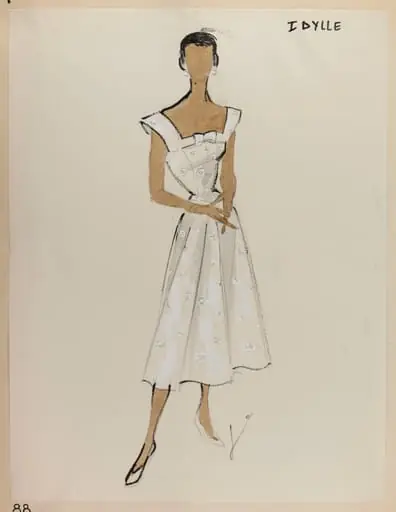
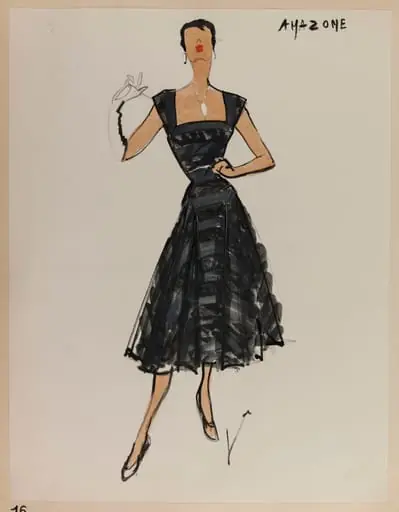
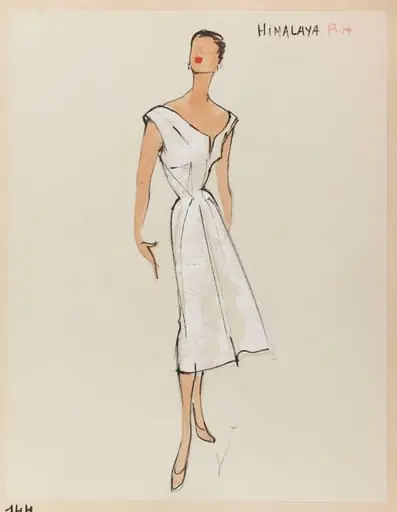
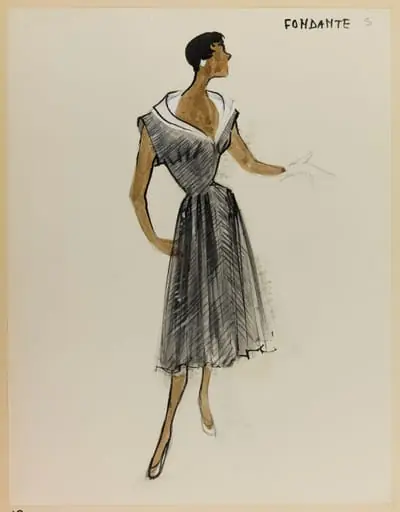
Artwork
Cléopâtre
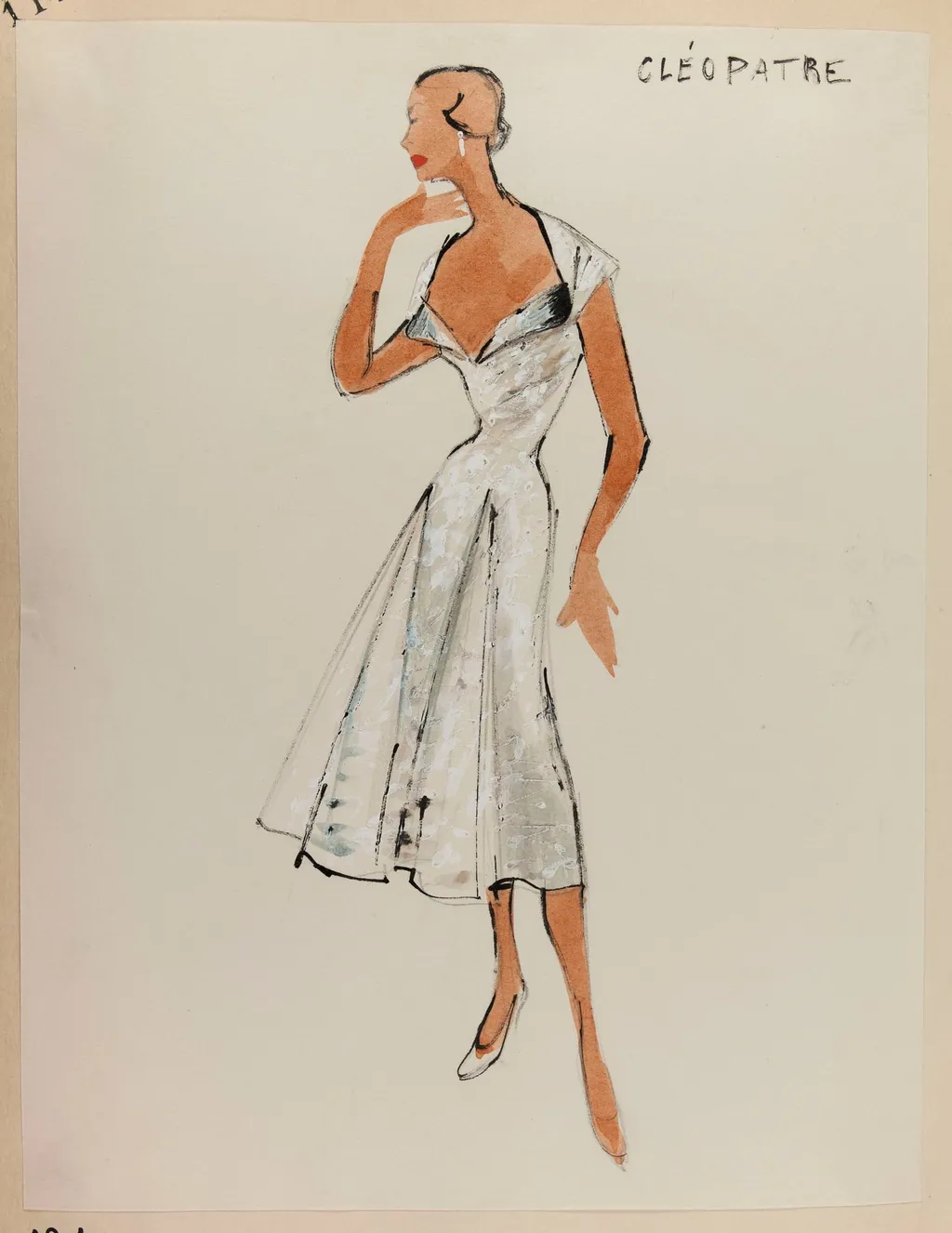
Cléopâtre is a drawing by Marie-Louise Carven. It dates from 1952 and is held in the collection of the Palais Galliera - Musée de la Mode de la Ville de Paris.
About this work
Overview
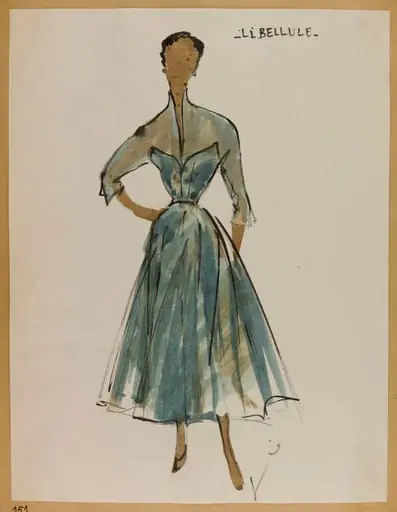
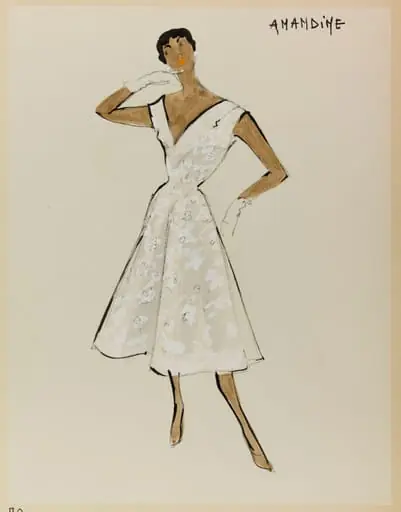
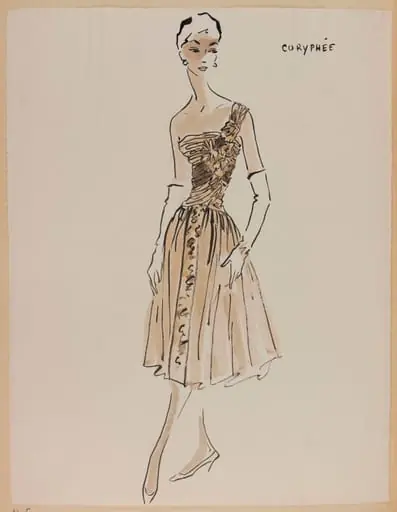
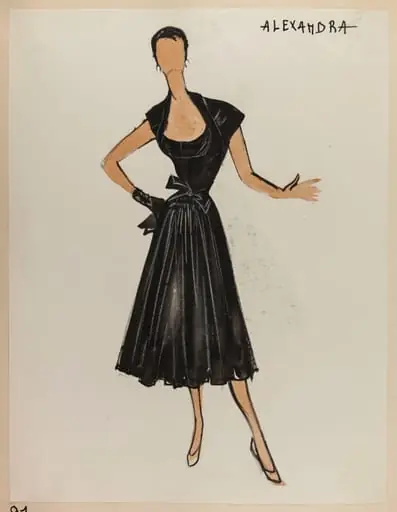
Marie-Louise Carven’s 1952 pencil sketch titled *Cléopâtre* captures a design for a long, flowing white dress.
Marie-Louise Carven’s 1952 pencil sketch titled *Cléopâtre* captures a design for a long, flowing white dress. Executed with swift, expressive strokes, the drawing conveys movement and volume despite its minimal medium. The figure stands in profile, one hand gently touching her chin, suggesting contemplation. The label *Cléopâtre* identifies the garment’s thematic name, not the model’s identity, aligning with Carven’s practice of evoking poetic imagery in her designs.
Subject & Meaning
The dress, named after Cleopatra, evokes ancient elegance through its silhouette rather than literal historicism. Carven’s choice of name suggests a fusion of mythic grace with modern femininity—fluid, self-possessed, and subtly theatrical. The figure’s poised posture and distant gaze imply quiet confidence, reinforcing the design’s emphasis on understated allure rather than overt ornamentation, characteristic of Carven’s approach to feminine identity in postwar fashion.
Technique & Style
Rendered in loose pencil lines, the sketch prioritizes rhythm over precision. The flared hem and fitted waist are suggested through fluid, uneven strokes that mimic the drape of fabric, while the V-neck is indicated by a single decisive line. The absence of shading or detail invites the viewer to imagine texture and movement. This spontaneous technique reflects Carven’s belief in design as an intuitive process, where gesture conveys more than draftsmanship.
History & Provenance
Created around 1952, the sketch originates from Carven’s personal archive during the early years of her Parisian maison, founded in 1945. As one of the first French designers to embrace prêt-à-porter, she produced both haute couture and accessible designs, often sketching ideas by hand before production. This drawing likely served as a working concept for a garment intended for her clientele, who valued refined simplicity and tailored fit.
Context
In postwar Paris, fashion was redefining femininity amid economic recovery and shifting social roles. Carven’s designs stood apart by focusing on petite proportions and lightweight materials like gingham and lace, rejecting the volume of Dior’s New Look. *Cléopâtre* reflects this ethos—light, uncluttered, and intimate—offering an alternative vision of elegance rooted in ease and personal expression rather than grandeur.
Legacy
Carven’s sketches, including *Cléopâtre*, illustrate her influence on modern ready-to-wear through their emphasis on liveliness, proportion, and emotional resonance. Though not widely exhibited, such drawings reveal the quiet innovation behind her commercial success. Her approach—prioritizing the wearer’s comfort and individuality—helped shape the trajectory of 20th-century fashion design beyond the atelier’s exclusivity.
Artist & collection
Artist
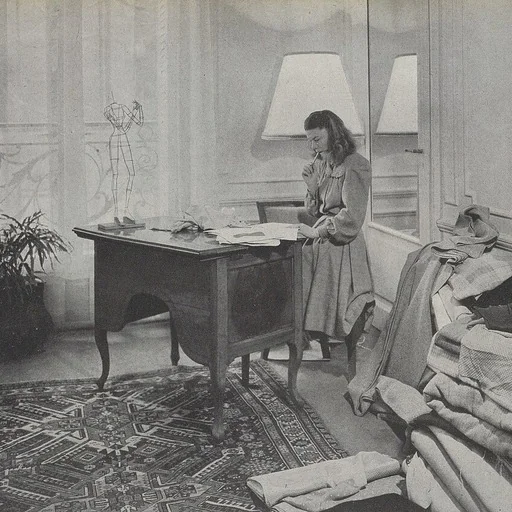
Marie-Louise Carven (31 August 1909 – 8 June 2015), born Carmen de Tommaso, was a French fashion designer who founded the house of Carven in 1945.
Museum
Palais Galliera - Musée de la Mode de la Ville de Paris
Continue through works from the same source collection.
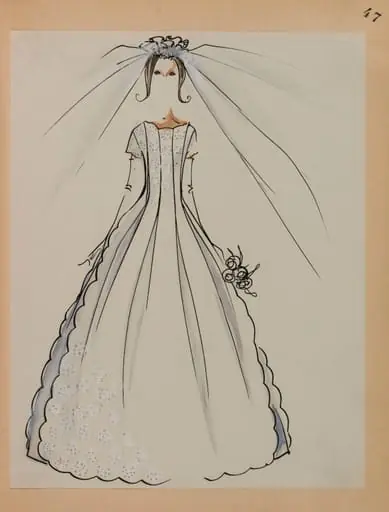 Robe de mariée festonnée et son voile
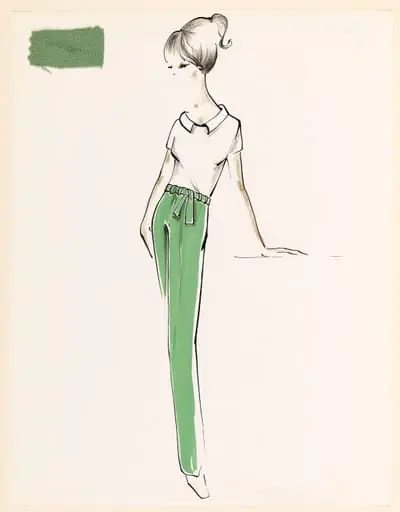 Haut blanc à manches courtes et pantalon vert à ceinture nouée
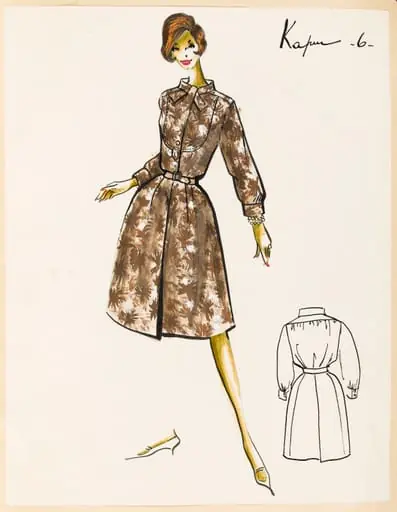 Kapur
Kapur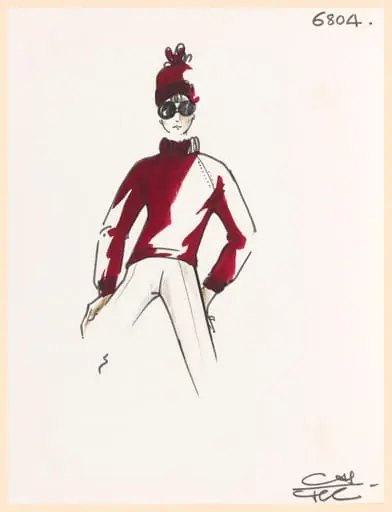 Pull-over à manches longues pourpre, bonnet assorti, pantalon et lunettes de soleil
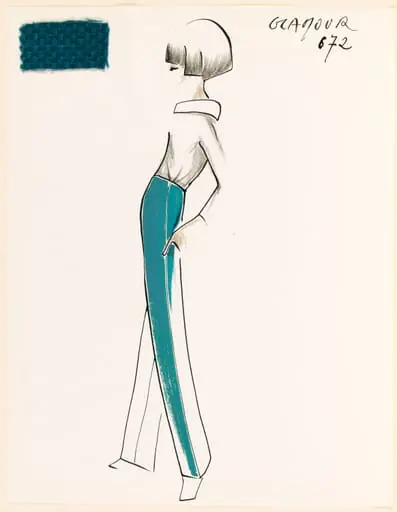 GLAMOUR
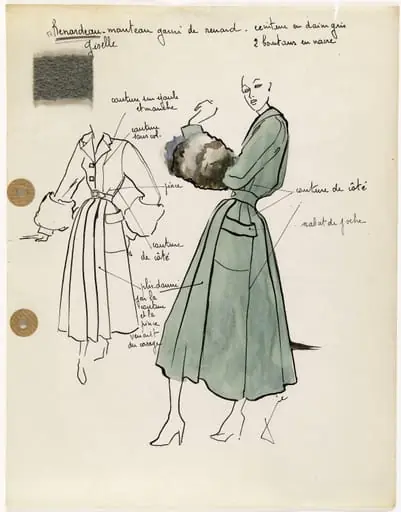 'Renardeau'
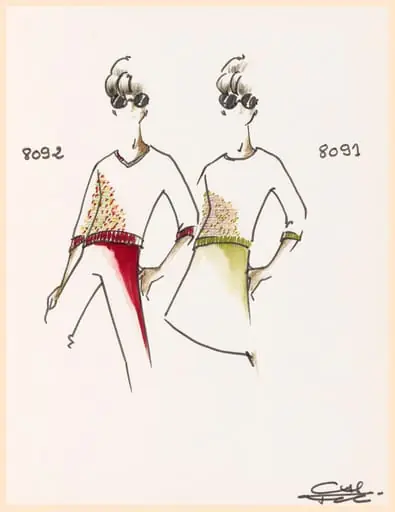 Pull-over à manches trois quarts et à encolure V à motifs multicolores, pantalon cerise et lunettes de soleil
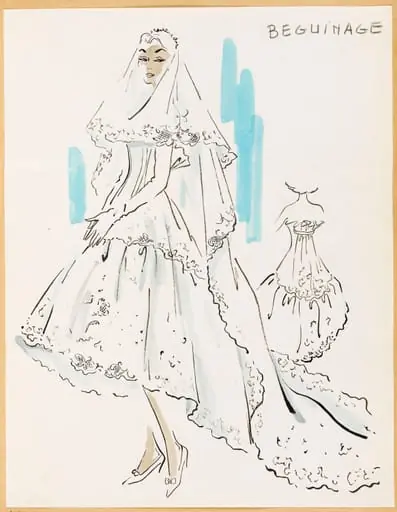 Béguinage