Artwork
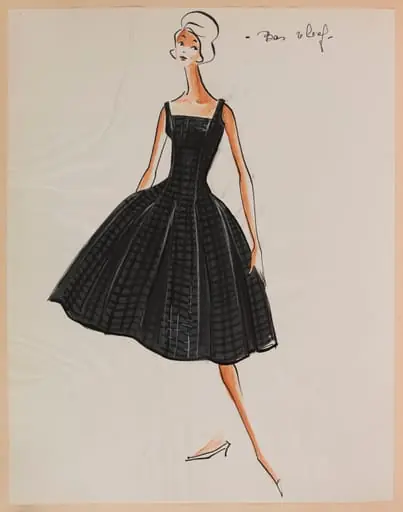
Robe noire à carreaux à bretelles et jupe évasée à plis creux
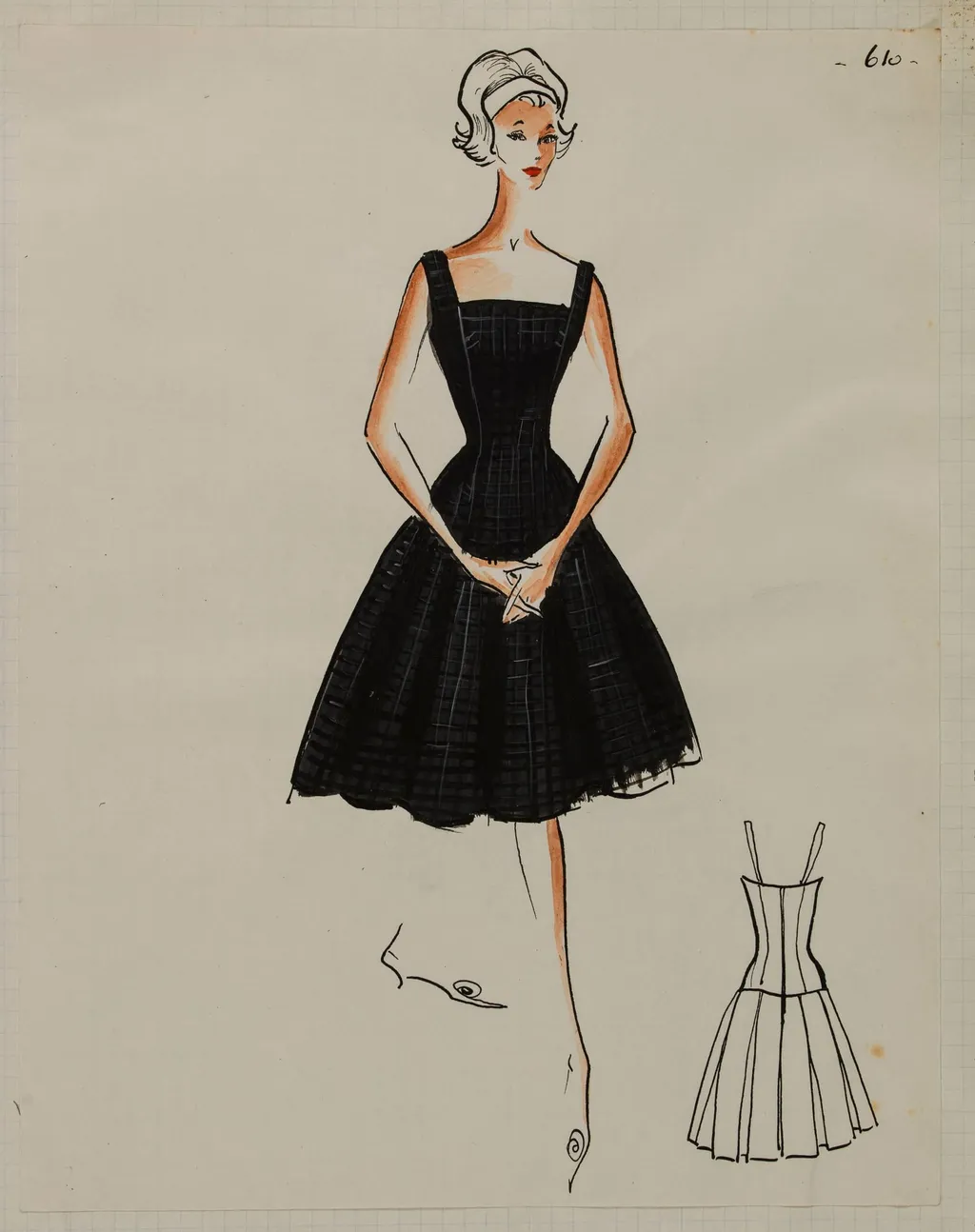
Robe noire à carreaux à bretelles et jupe évasée à plis creux is a drawing by Marie-Louise Carven. It dates from 1958 and is held in the collection of the Palais Galliera - Musée de la Mode de la Ville de Paris.
About this work
Overview
This fashion illustration depicts a black checkered dress with shoulder straps and a flared, deeply pleated skirt, designed by Marie-Louise Carven circa 1958.
This fashion illustration depicts a black checkered dress with shoulder straps and a flared, deeply pleated skirt, designed by Marie-Louise Carven circa 1958. Rendered in clean, minimalist lines, the image shows a woman wearing the garment alongside a separate, scaled-down technical sketch of the dress. The style reflects Carven’s focus on wearable, structured designs for smaller frames, emphasizing precision over ornamentation.
Subject & Meaning
The figure, with short wavy hair and red lipstick, embodies a poised, modern woman of the late 1950s. Her clasped hands and upright posture suggest quiet confidence, aligning with Carven’s vision of understated elegance. The dress, neither ornate nor restrictive, conveys practicality and refinement — a quiet rebellion against the volume and formality of postwar haute couture.
Technique & Style
The illustration uses precise, unshaded contours to define the dress’s silhouette, highlighting its geometric structure: the fitted bodice, thin straps, and cascading pleats. The accompanying flat sketch isolates the garment’s form, serving as a design blueprint. The restrained line work and absence of color emphasize clarity, typical of fashion drafting used in atelier production.
History & Provenance
Marie-Louise Carven established her Parisian house in 1945, distinguishing herself by catering to petite clients and favoring lightweight textiles like gingham and lace. This design, created around 1958, emerged during her push to expand ready-to-wear fashion in a city dominated by couture. The illustration likely originated in her studio as a working document for production or client presentation.
Context
In the late 1950s, Parisian fashion was still largely centered on bespoke tailoring, but Carven championed accessible, well-constructed garments for everyday life. Her use of checkered patterns and structured yet fluid silhouettes reflected a growing demand for youthful, functional clothing. This illustration captures a moment when fashion design began shifting from exclusivity toward broader commercial viability.
Legacy
Carven’s emphasis on proportion, light fabrics, and ready-to-wear principles influenced later designers who prioritized wearability over spectacle. This illustration, as both artistic record and technical guide, exemplifies her quiet revolution: elevating simplicity into a deliberate aesthetic, and laying groundwork for modern sportswear traditions in French fashion.
Artist & collection
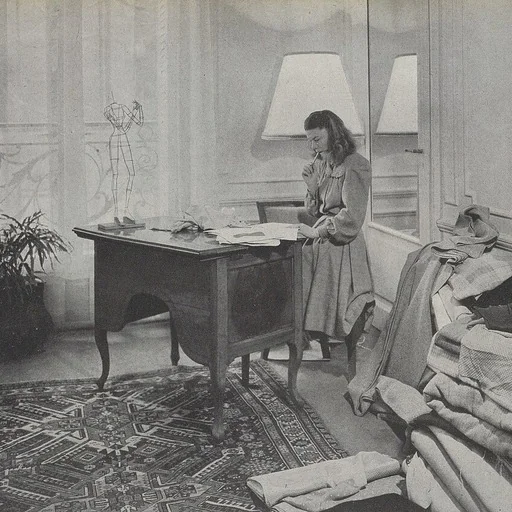
Artist
Marie-Louise Carven (31 August 1909 – 8 June 2015), born Carmen de Tommaso, was a French fashion designer who founded the house of Carven in 1945.
Museum
Palais Galliera - Musée de la Mode de la Ville de Paris
Continue through works from the same source collection.
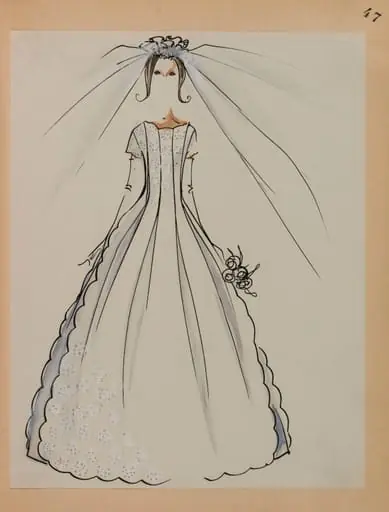 Robe de mariée festonnée et son voile
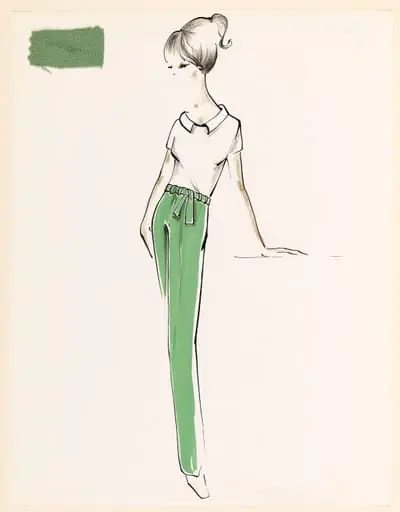 Haut blanc à manches courtes et pantalon vert à ceinture nouée
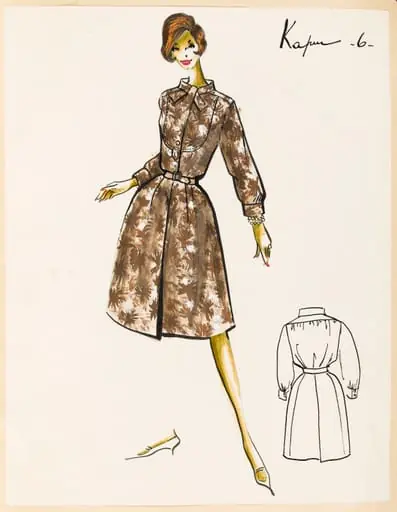 Kapur
Kapur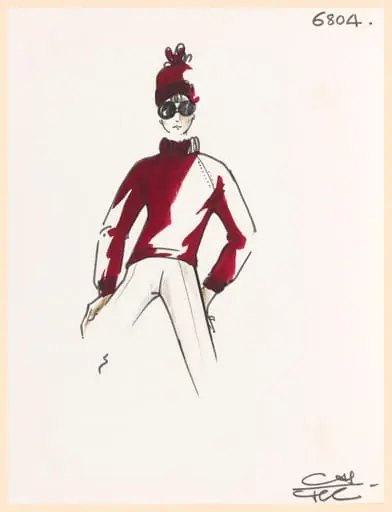 Pull-over à manches longues pourpre, bonnet assorti, pantalon et lunettes de soleil
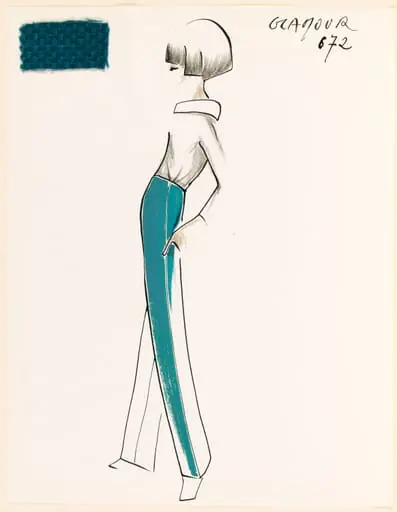 GLAMOUR
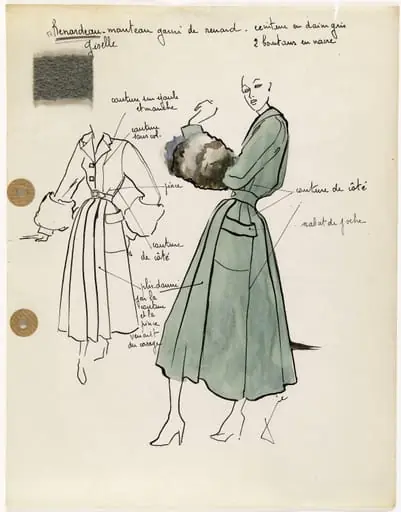 'Renardeau'
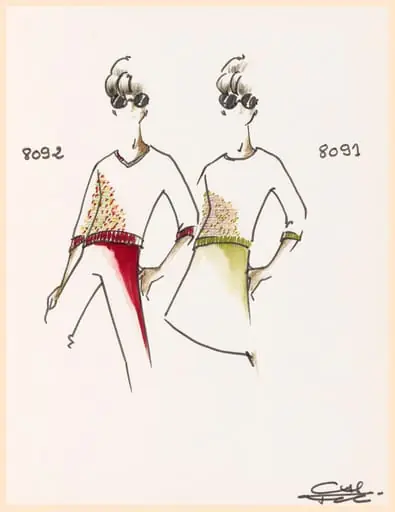 Pull-over à manches trois quarts et à encolure V à motifs multicolores, pantalon cerise et lunettes de soleil
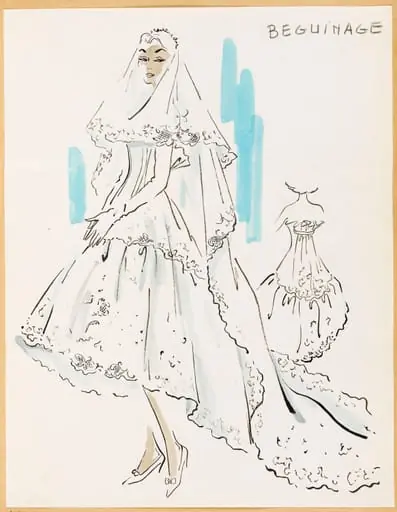 Béguinage