Artwork
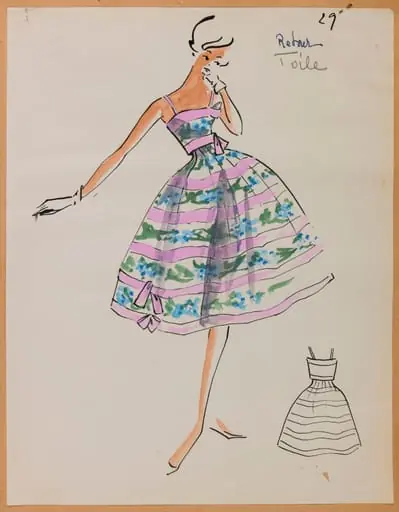
Robe à fines bretelles à motif rose
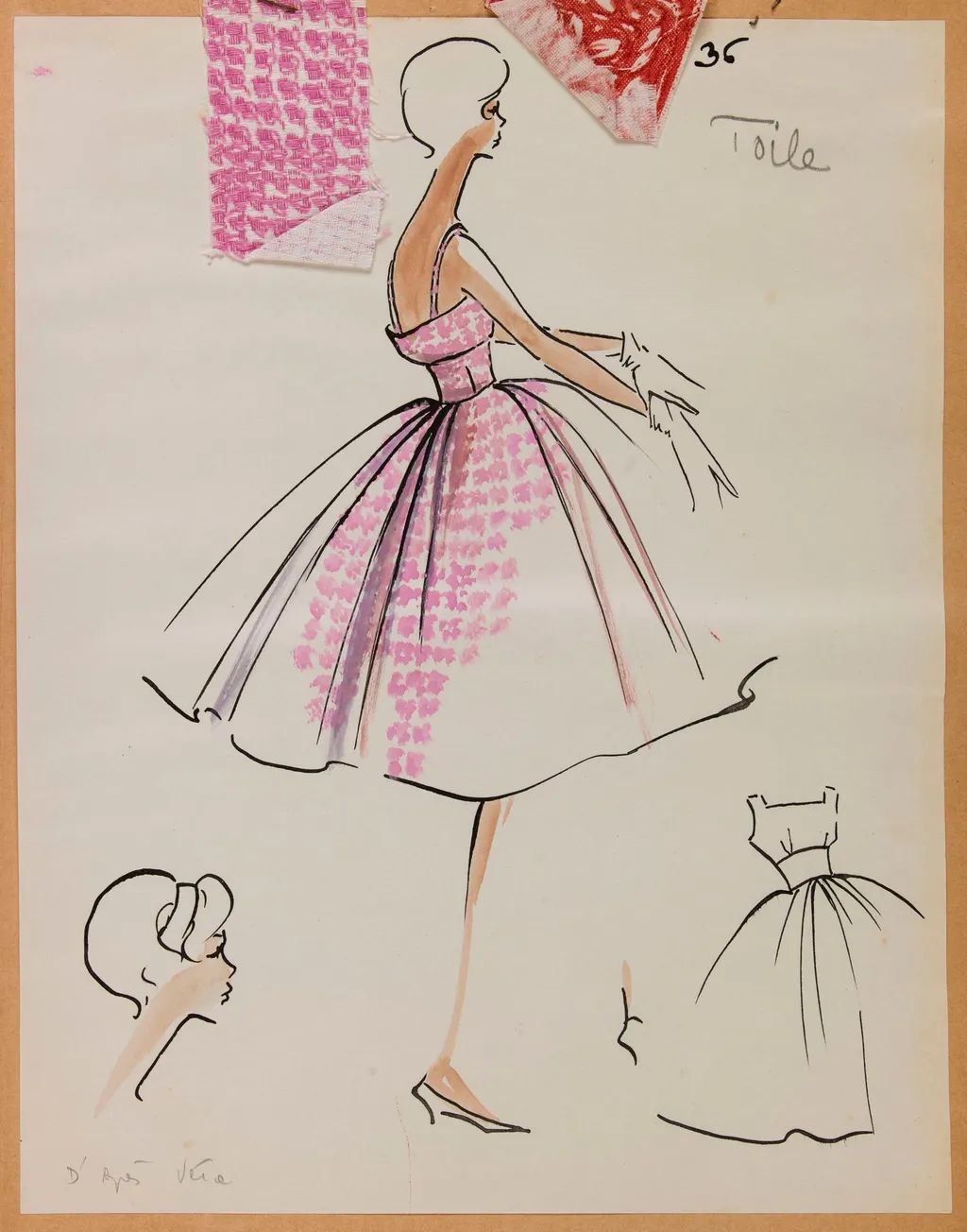
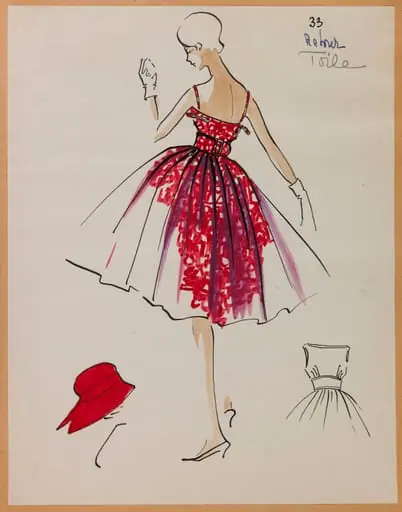
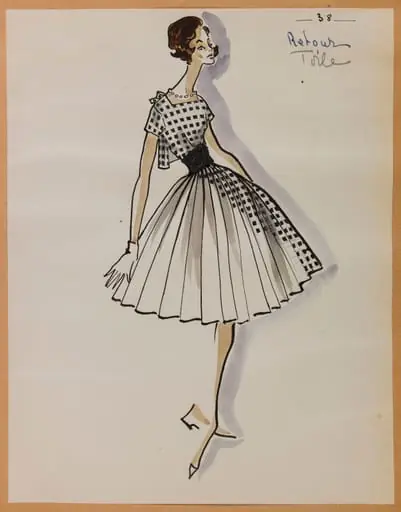
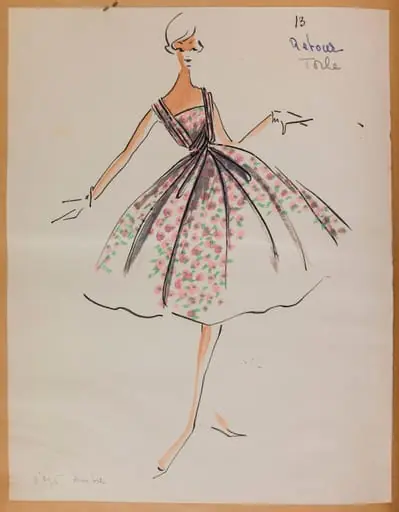
Robe à fines bretelles à motif rose is a drawing by Carven. It dates from 1957 and is held in the collection of the Palais Galliera - Musée de la Mode de la Ville de Paris.
About this work
The level of detail and the style of the drawing suggest that it may have been created in the mid-20th century.
This image showcases a drawing of a woman wearing a pink dress with a floral pattern. The dress features thin straps and a full skirt, and the woman is depicted in profile, facing right. Her hair is styled in a bob, and she wears heels.
In the foreground, there are two small sketches of dresses, one on either side of the main figure. The background is a plain beige color, providing a clean and simple backdrop for the drawing.
The image appears to be a fashion illustration, possibly from a magazine or catalog. The level of detail and the style of the drawing suggest that it may have been created in the mid-20th century. To learn more about the artist's style and technique, explore the works of Carven.
Overview
This image is a fashion illustration from around 1957, depicting a dress designed by the French label Carven. Rendered in pencil or ink, it presents a stylized female figure in profile, wearing a pink dress with thin straps and a full skirt. Two smaller dress sketches flank the central figure, suggesting a design presentation format. The plain beige background focuses attention on the garments and figure, typical of mid-century fashion editorial work.
Subject & Meaning
The illustration centers on a woman in a floral-patterned dress, embodying the feminine silhouette favored in late 1950s Parisian fashion. Her bobbed hair and heeled shoes reflect contemporary urban style, while the inclusion of supplementary sketches implies a design process—perhaps for a catalog or magazine spread. The image communicates elegance and refinement without narrative, serving as a visual catalog of seasonal trends.
Technique & Style
The drawing employs clean, precise lines and minimal shading, characteristic of fashion illustration of the period. The floral motif is suggested through delicate, flowing strokes rather than detailed rendering. The figure is elongated and stylized, emphasizing grace and movement. The use of negative space and the restrained palette enhance clarity, aligning with the functional purpose of the image as a design reference.
History & Provenance
Created circa 1957, the illustration was likely produced for Carven’s promotional materials or a fashion publication. It entered the collection of the Museum of Ethnography, where it is preserved as an artifact of mid-century fashion design. Its presence in an ethnographic context suggests an interest in documenting everyday cultural expression through clothing, rather than fine art.
Context
In the late 1950s, Paris remained a global center for fashion, with designers like Carven producing wearable, feminine silhouettes for a growing middle-class market. Fashion illustrations like this one bridged the gap between haute couture and mass media, appearing in magazines and client portfolios. The format—central figure with auxiliary sketches—was standard for presenting design variations to buyers or editors.
Legacy
This illustration contributes to the historical record of postwar French fashion, illustrating how design ideas were visually communicated before digital tools. Its preservation in an ethnographic museum underscores its value as a cultural artifact, reflecting societal ideals of femininity and taste in the mid-20th century. It remains a quiet but clear example of fashion’s role in daily life.
Artist & collection
Artist
These delicate ink-on-paper drawings capture the quiet poetry of everyday things: pinecones, reeds, apples.
Museum
Palais Galliera - Musée de la Mode de la Ville de Paris
Continue through works from the same source collection.