Artwork
Robe plissée blanche à motif de carré noir
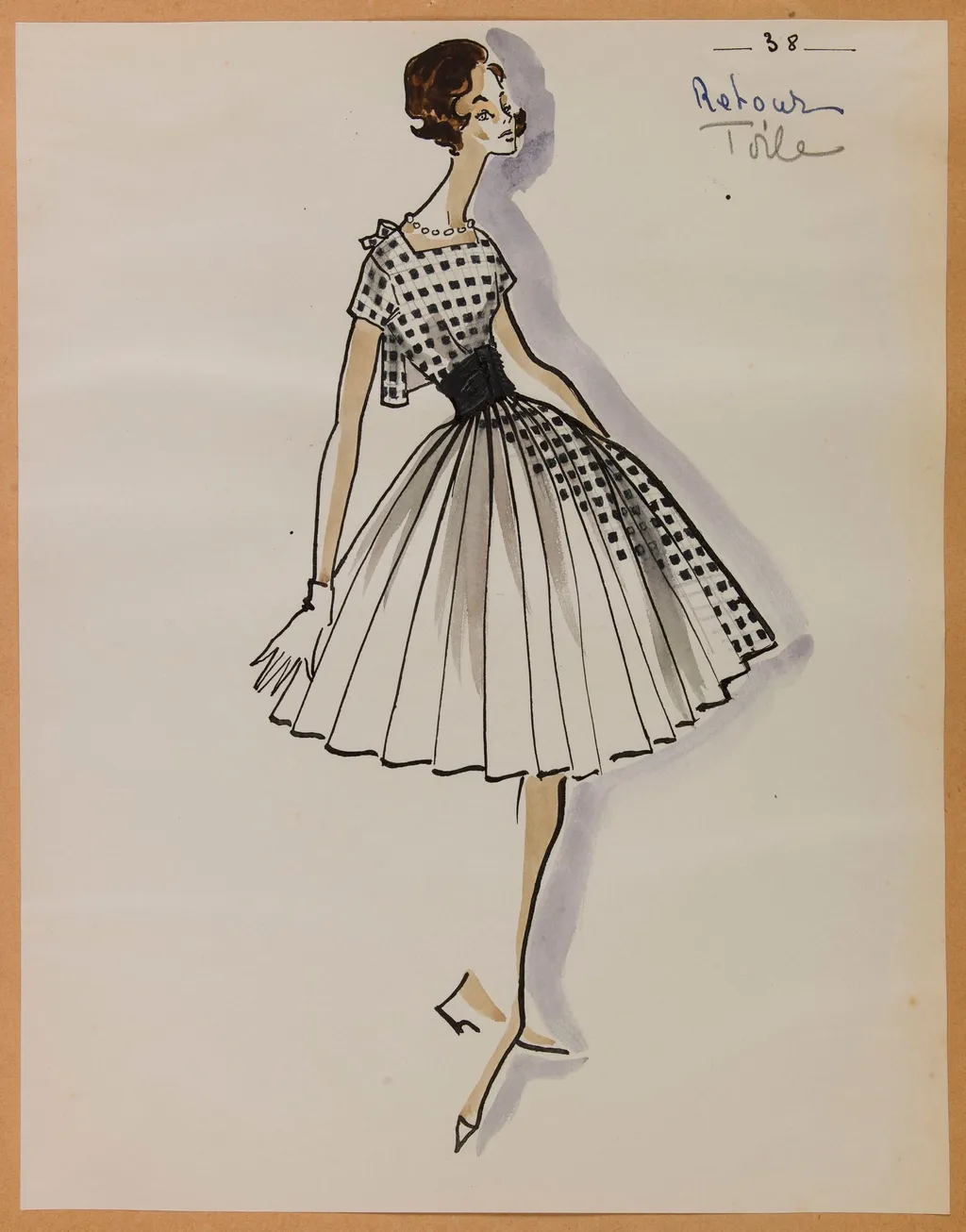
Robe plissée blanche à motif de carré noir is a drawing by Marie-Louise Carven. It dates from 1957 and is held in the collection of the Palais Galliera - Musée de la Mode de la Ville de Paris.
About this work
Overview
Created circa 1957 by French couturier Marie‑Louise Carven, the drawing depicts a white, pleated dress distinguished by a black checkered motif. The composition presents a woman in a fitted jacket and a long, flowing skirt, her posture simple and poised. The sketch is annotated in French, identifying the garment as a "robe plissée blanche à motif de carré noir."
Technique & Style
The garment combines a crisp white base with a subtle black square pattern that appears on both the jacket and the pleated skirt. The skirt is rendered in soft, layered folds that expand outward, while the jacket’s structure is tighter, emphasizing a tailored silhouette. The contrast of monochrome geometry with fluid drapery underscores Carven’s interest in balancing structure and movement.
Context
By the late 1950s Carven had already introduced a ready‑to‑wear line, positioning herself among the early Parisian designers to bridge haute couture and mass market. This sketch illustrates her approach to designing for petite women with lightweight materials, embodying the post‑war shift toward accessible elegance and streamlined, modern aesthetics.
Artist & collection
Artist
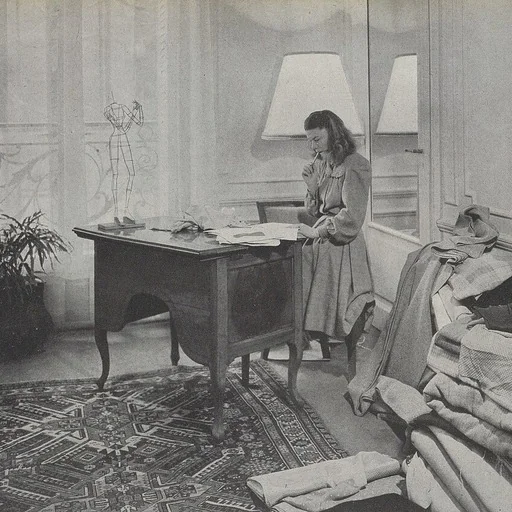
Marie-Louise Carven (31 August 1909 – 8 June 2015), born Carmen de Tommaso, was a French fashion designer who founded the house of Carven in 1945.
Museum
Palais Galliera - Musée de la Mode de la Ville de Paris
Continue through works from the same source collection.
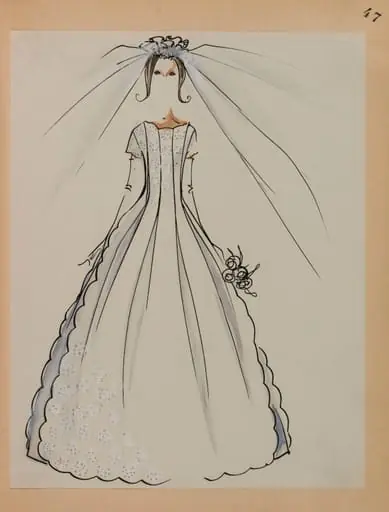 Robe de mariée festonnée et son voile
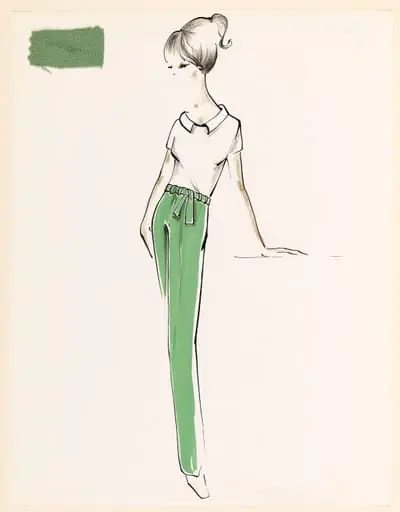 Haut blanc à manches courtes et pantalon vert à ceinture nouée
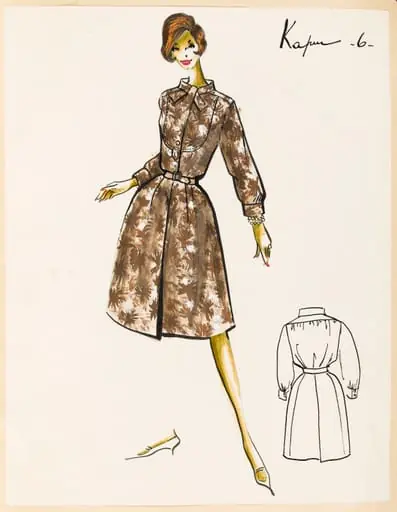 Kapur
Kapur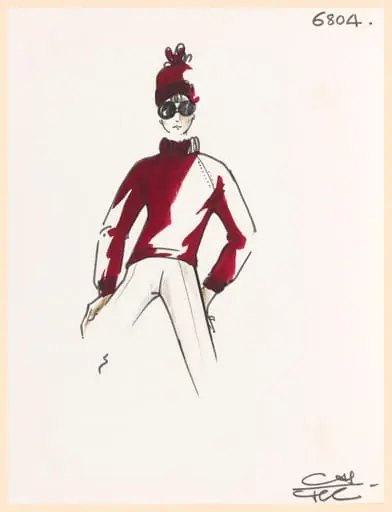 Pull-over à manches longues pourpre, bonnet assorti, pantalon et lunettes de soleil
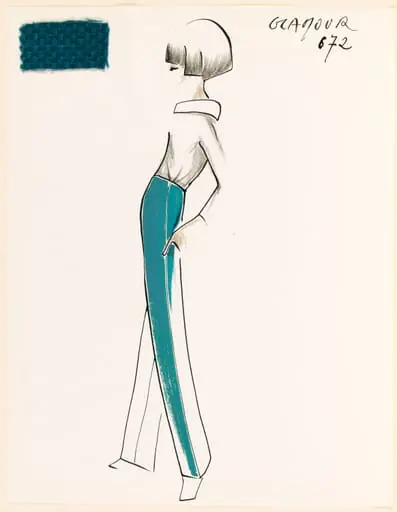 GLAMOUR
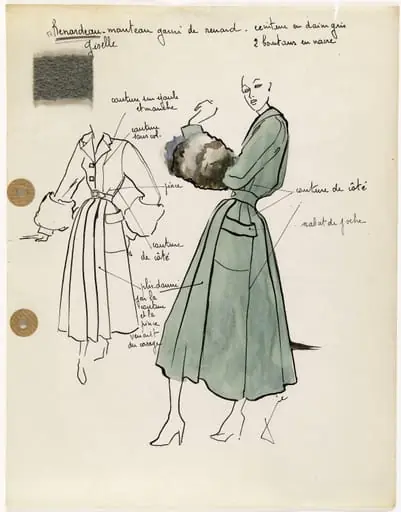 'Renardeau'
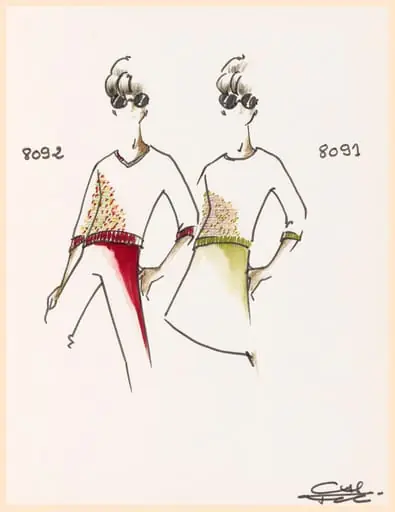 Pull-over à manches trois quarts et à encolure V à motifs multicolores, pantalon cerise et lunettes de soleil
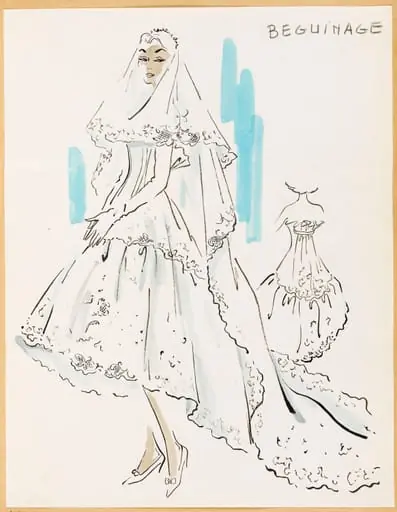 Béguinage
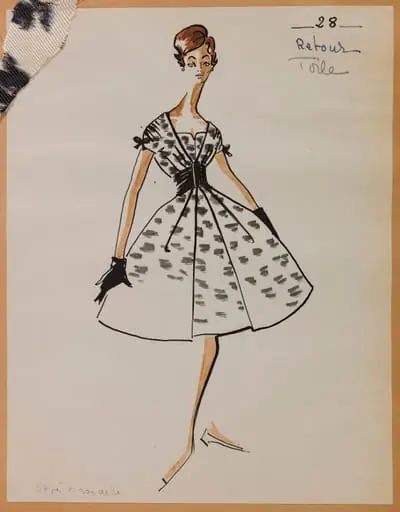 Robe blanche à motif noir avec large ceinture et noeuds aux épaules
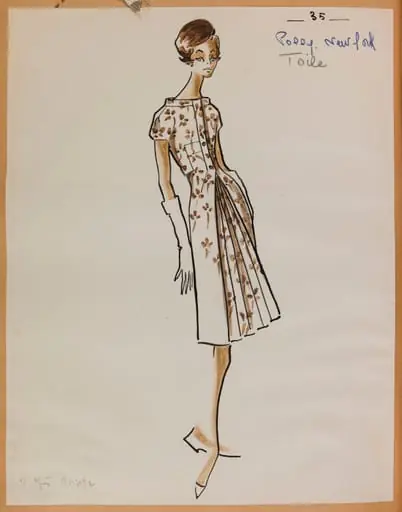 Robe blanche à motif marron plissée sur le devant
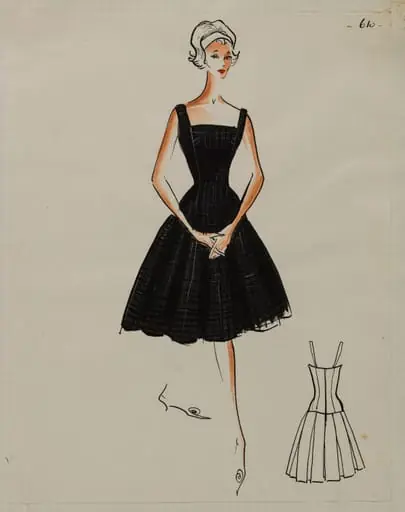 Robe noire à carreaux à bretelles et jupe évasée à plis creux
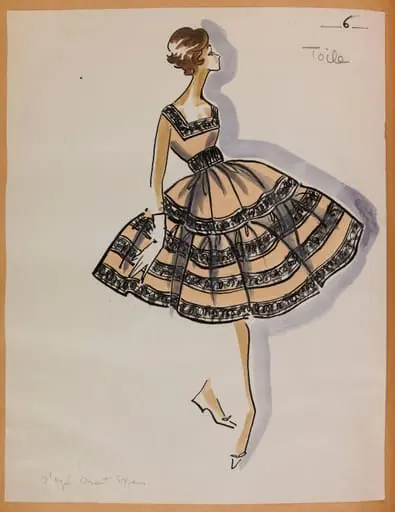 Robe pêche rehaussée de bandes de dentelle noire
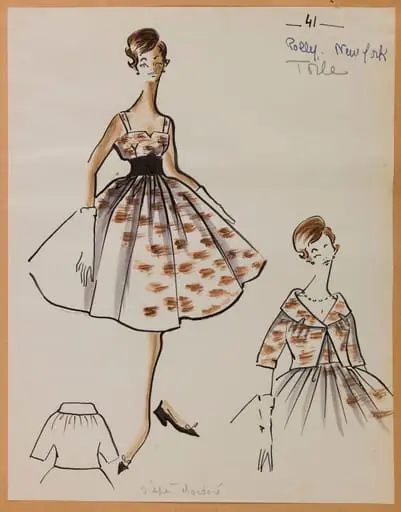 Robe à fines bretelles blanche à motif marron
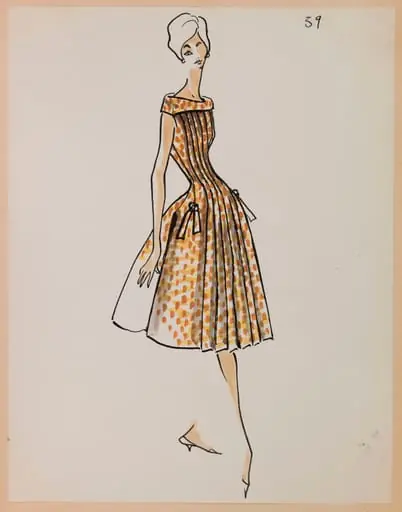 Robe à motif marron plissée sur le devant
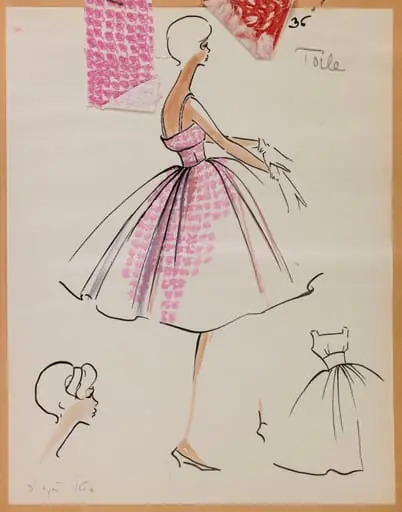 Robe à fines bretelles à motif rose