Artwork
Mirage
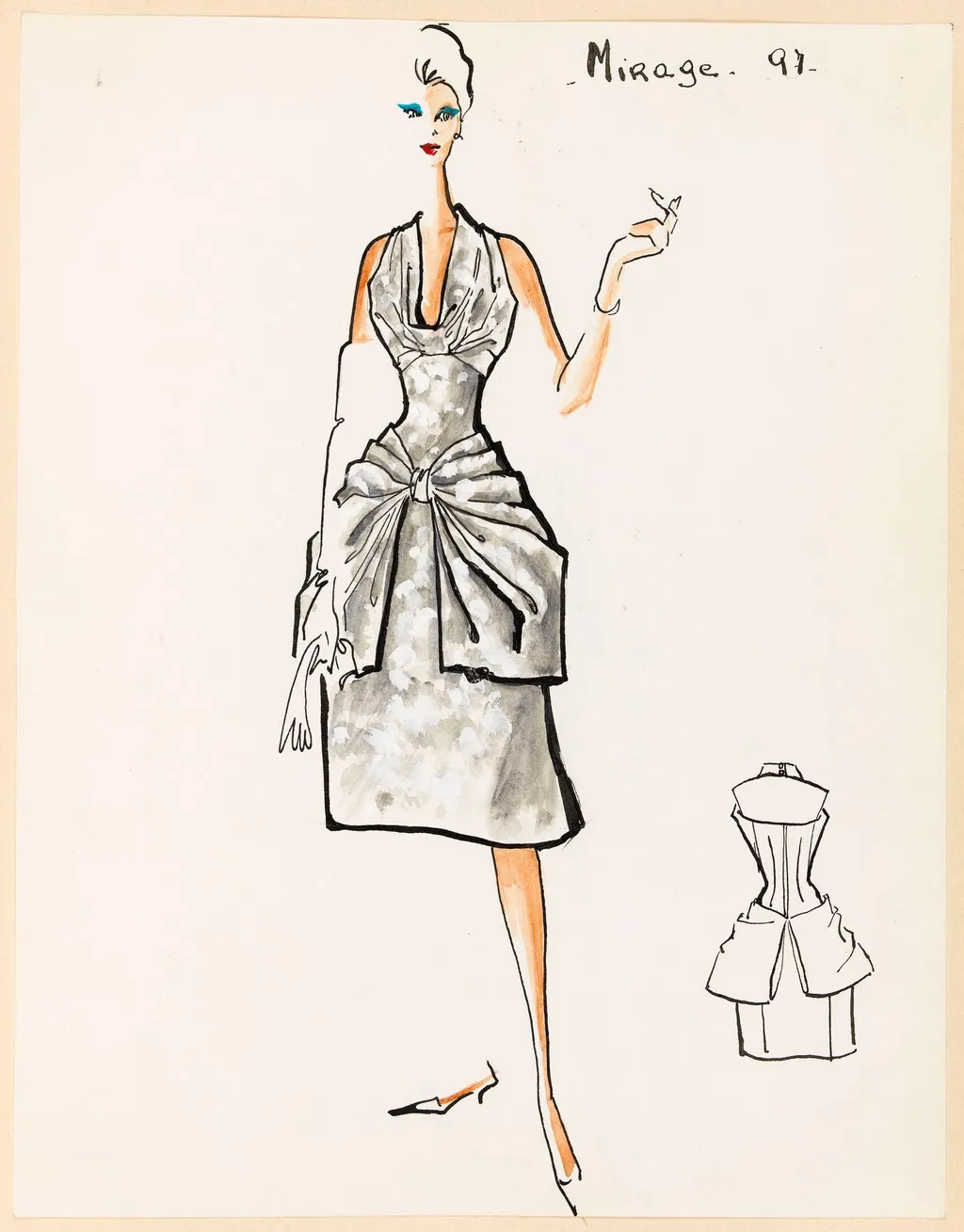
Mirage is a drawing by Marie-Louise Carven. It dates from 1959 and is held in the collection of the Palais Galliera - Musée de la Mode de la Ville de Paris.
About this work
Overview
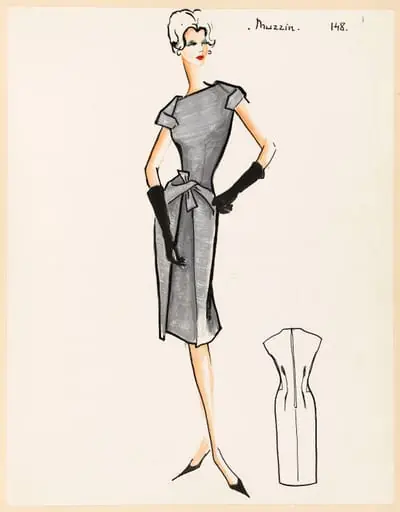
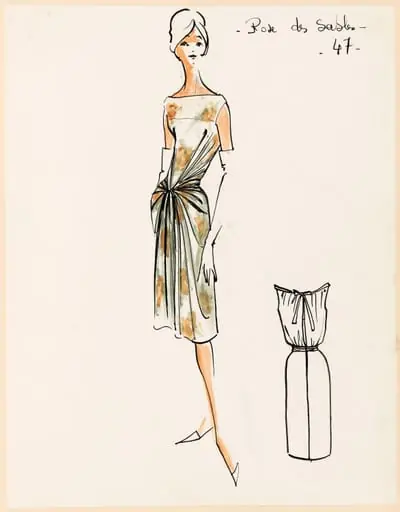
The drawing captures a sleeveless dress with a prominent waist bow, rendered in fluid lines that suggest movement and ease.
Created circa 1959, Mirage is a fashion sketch by Marie-Louise Carven, founder of the Parisian label Carven. The drawing captures a sleeveless dress with a prominent waist bow, rendered in fluid lines that suggest movement and ease. Accompanying the figure is a flat pattern outline, revealing Carven’s methodical approach to design. The work exemplifies her commitment to wearable, feminine silhouettes suited to the modern woman.
Subject & Meaning
The figure in Mirage wears a high-necked, loose-fitting dress paired with long gloves, evoking a quiet elegance. Her poised posture and cigarette suggest a relaxed sophistication, characteristic of postwar Parisian style. The design prioritizes comfort and proportion, reflecting Carven’s focus on dressing petite frames without sacrificing refinement. The sketch conveys an ideal of effortless grace rather than overt glamour.
Technique & Style
Carven’s sketch employs loose, confident linework to suggest fabric drape and texture, avoiding rigid detail. Cross-hatching subtly models the dress’s soft folds, while the flat mannequin beneath provides structural clarity. The contrast between the fluid figure and precise pattern drawing reveals her dual focus on aesthetic appeal and technical execution. The minimal background keeps attention on form and silhouette.
History & Provenance
Mirage originates from Carven’s personal archive during the height of her design career, shortly after her label’s establishment in 1945. As one of the first French designers to champion ready-to-wear, her sketches like this one were instrumental in translating ideas into producible garments. The drawing likely served as a working template for her atelier, bridging concept and production in the emerging prêt-à-porter market.
Context
In late 1950s Paris, fashion was shifting from haute couture exclusivity toward accessible design. Carven’s work stood apart by emphasizing light fabrics—such as lace and gingham—and proportions that flattered smaller statures. Mirage reflects this movement, aligning with broader societal changes that valued practicality and individual expression over rigid formality in women’s clothing.
Legacy
Mirage illustrates Carven’s lasting influence on the democratization of fashion. Her integration of pattern drafting with expressive illustration became a model for future designers in ready-to-wear. The sketch endures as a document of how feminine aesthetics were redefined through functional design, influencing how modern fashion balances creativity with wearability.
Artist & collection
Artist
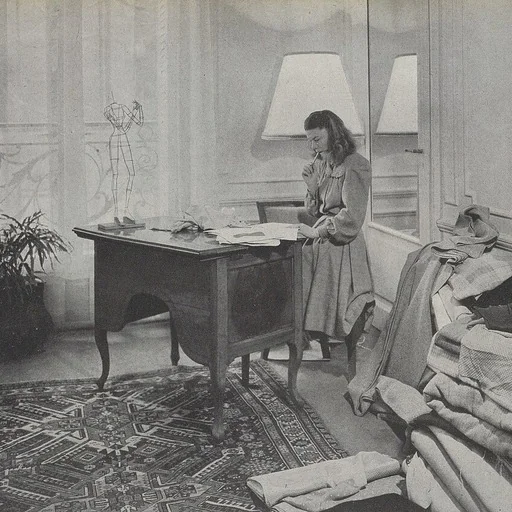
Marie-Louise Carven (31 August 1909 – 8 June 2015), born Carmen de Tommaso, was a French fashion designer who founded the house of Carven in 1945.
Museum
Palais Galliera - Musée de la Mode de la Ville de Paris
Continue through works from the same source collection.
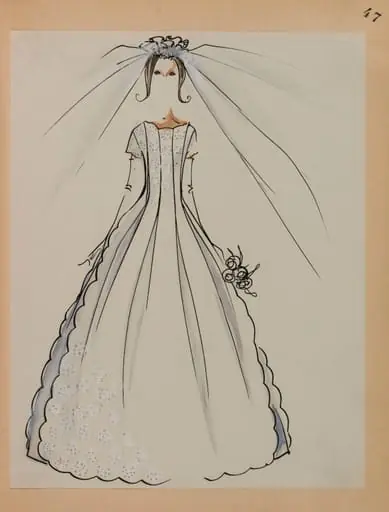 Robe de mariée festonnée et son voile
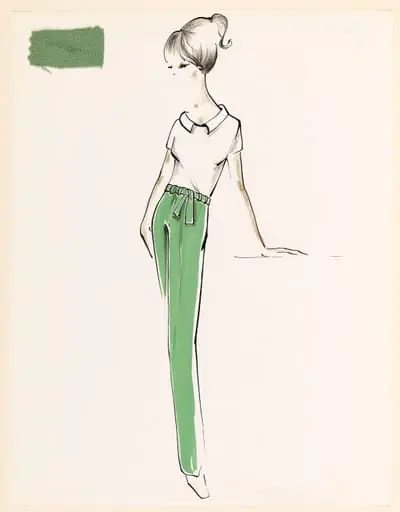 Haut blanc à manches courtes et pantalon vert à ceinture nouée
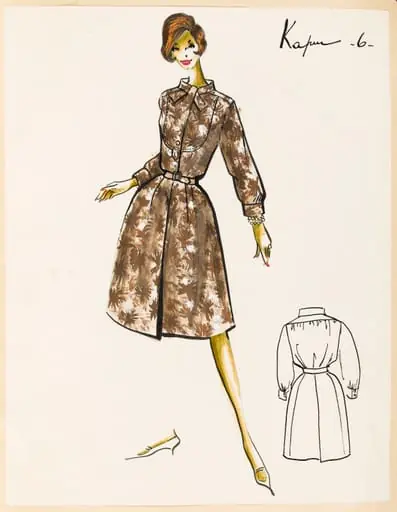 Kapur
Kapur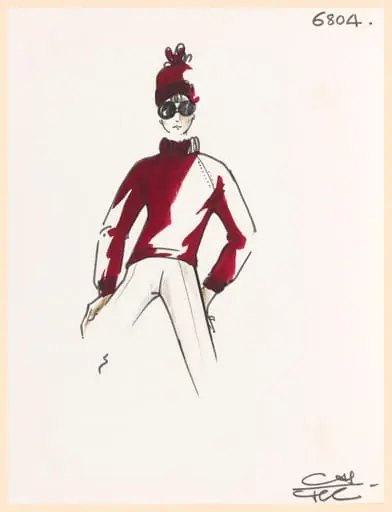 Pull-over à manches longues pourpre, bonnet assorti, pantalon et lunettes de soleil
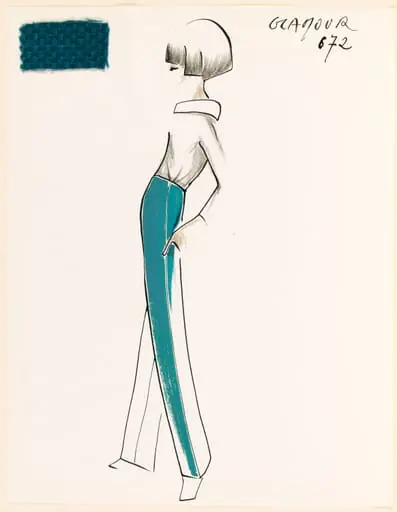 GLAMOUR
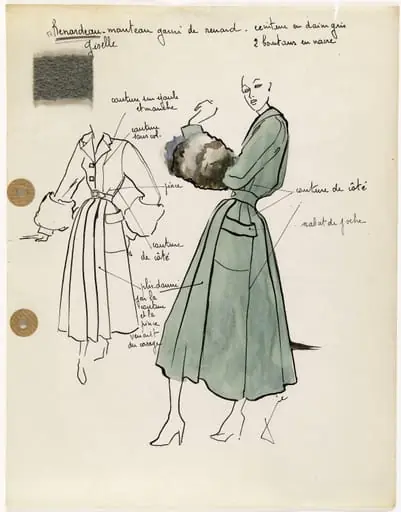 'Renardeau'
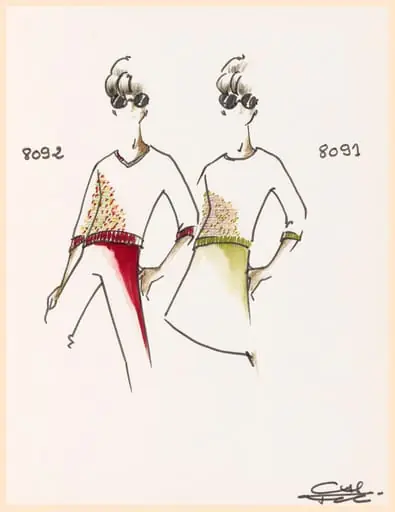 Pull-over à manches trois quarts et à encolure V à motifs multicolores, pantalon cerise et lunettes de soleil
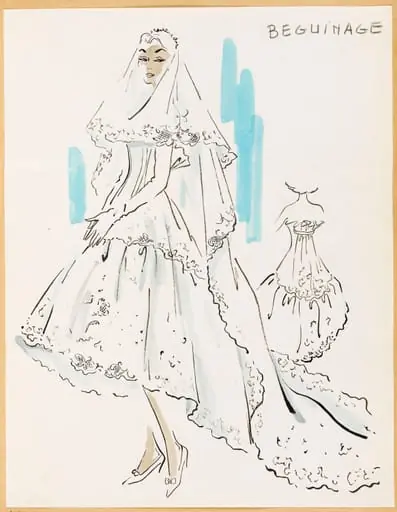 Béguinage