Artwork
'Saïb'
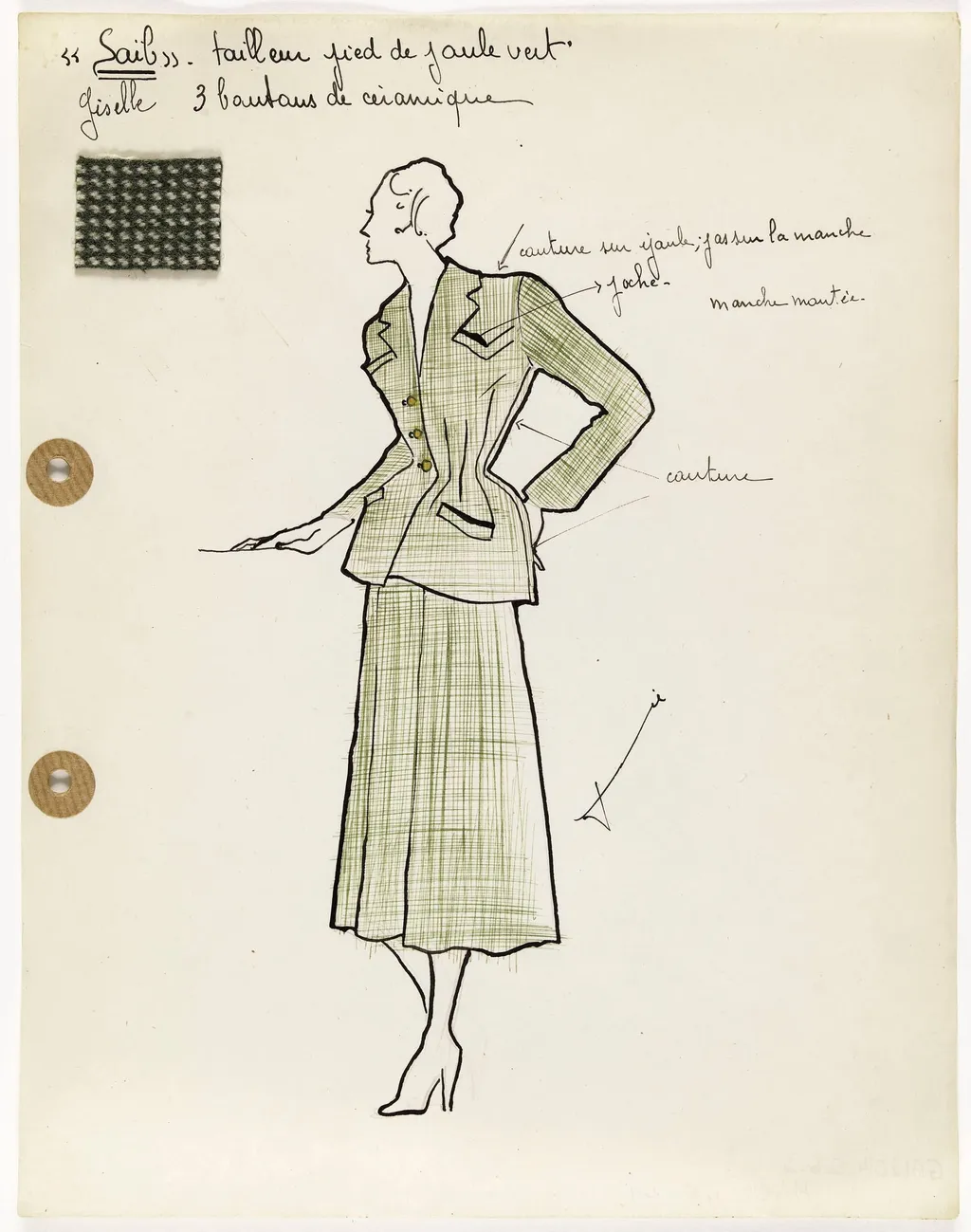
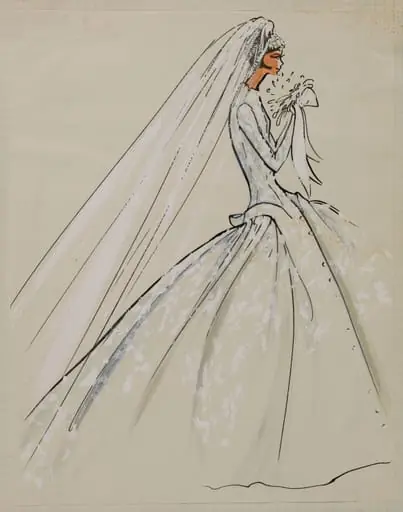
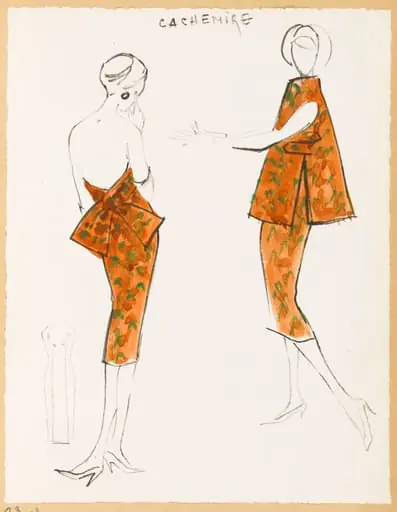
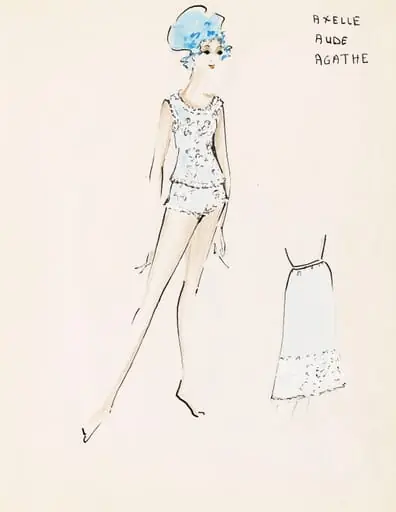
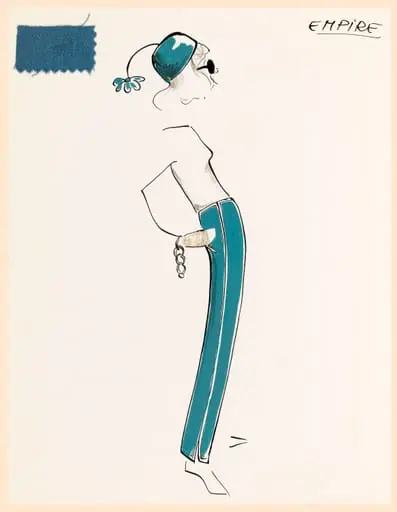
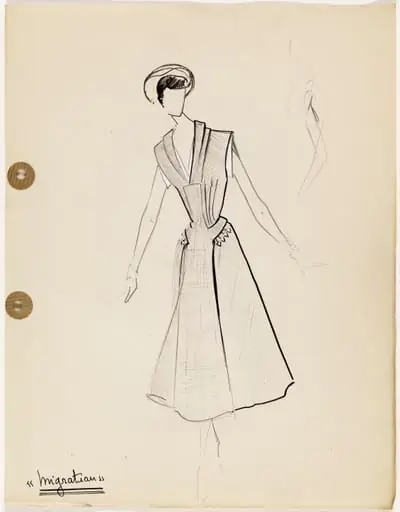
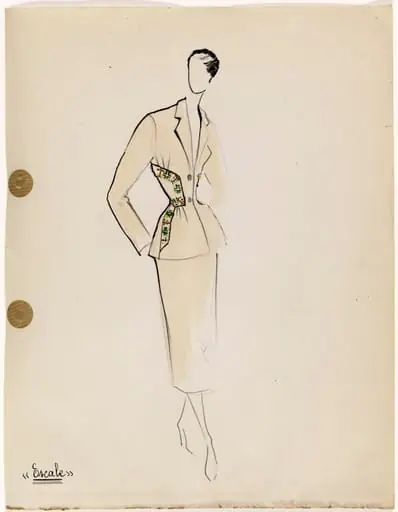
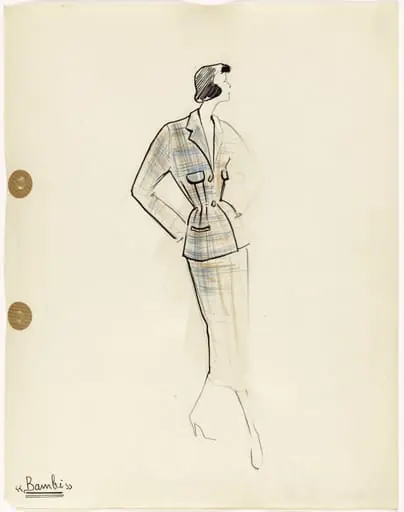
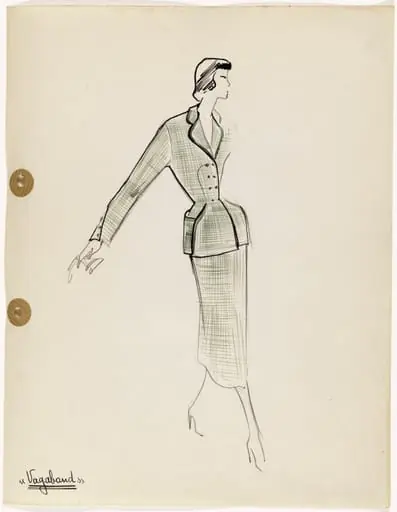
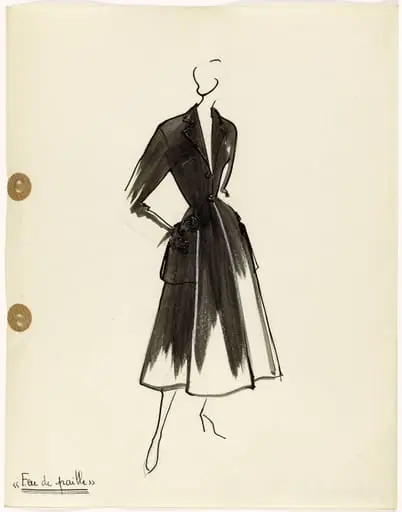
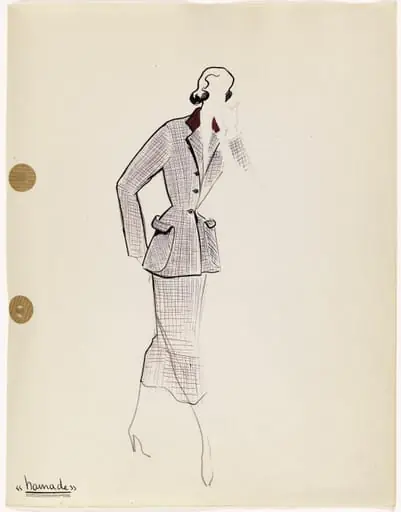
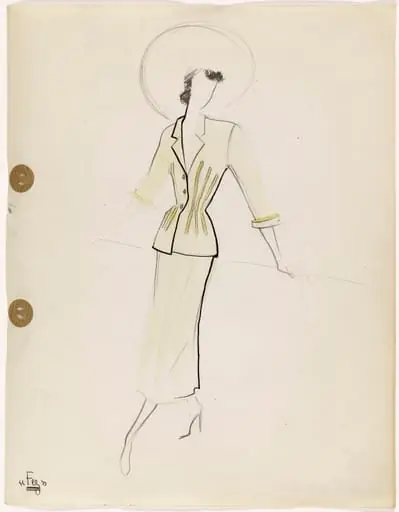
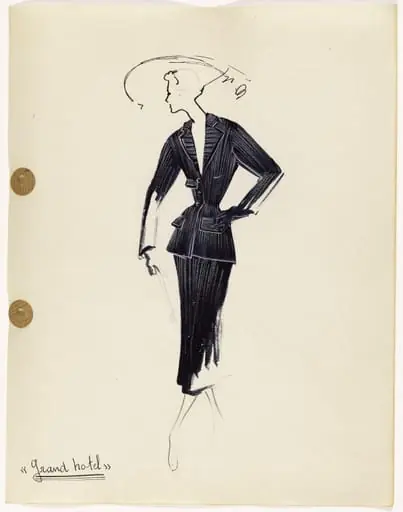
'Saïb' is a drawing by Carven. It dates from 1949 and is held in the collection of the Palais Galliera - Musée de la Mode de la Ville de Paris.
About this work
Overview
Rendered with restrained linework and no background elements, it presents a figure in static pose, emphasizing form over narrative detail.
Created around 1949 by the artist Carven, 'Saïb' is a pencil drawing depicting a solitary female figure. The work is part of the collection at the Museum of Ethnography. Rendered with restrained linework and no background elements, it presents a figure in static pose, emphasizing form over narrative detail. The simplicity of the composition suggests a focus on costume and posture rather than individual identity.
Subject & Meaning
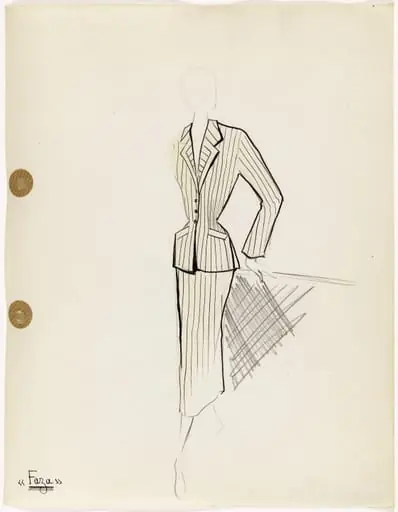
The figure is dressed in a long, straight skirt and a fitted jacket with three buttons and two pockets, suggesting a specific regional or cultural attire. Her stance—one hand on the hip, the other extended—conveys a sense of composure or readiness. The lack of facial detail and contextual elements implies the drawing may serve as a typological record, documenting dress and posture rather than portraying a specific person.
Technique & Style
Carven employed clean, unadorned lines with minimal shading to define the figure’s form. The absence of texture, depth, or background creates a flat, almost schematic quality. Facial features are suggested rather than rendered, and clothing details are indicated with precise contours. This restrained approach aligns with ethnographic documentation practices of the mid-20th century, prioritizing clarity over artistic embellishment.
History & Provenance
The drawing entered the collection of the Museum of Ethnography shortly after its creation, likely as part of a broader effort to record material culture. No documentation exists regarding the sitter or the circumstances of its making. Its preservation suggests it was considered representative of a cultural type, though the artist’s intent and the subject’s origin remain unrecorded.
Context
In the postwar period, ethnographic institutions increasingly collected visual records of dress and gesture as cultural artifacts. Carven’s work reflects this trend, aligning with field studies that sought to catalog regional attire before perceived homogenization. The drawing’s lack of context is typical of such efforts, where the object of study was often stripped of personal or narrative detail to serve comparative analysis.
Legacy
Today, 'Saïb' functions as a quiet artifact of mid-century ethnographic practice. Its value lies not in artistic innovation but in its role as a record of visual documentation methods and cultural observation. The work invites reflection on how identity and dress were interpreted—and sometimes simplified—by external observers during a time of global cultural reclassification.
Artist & collection
Artist
These delicate ink-on-paper drawings capture the quiet poetry of everyday things: pinecones, reeds, apples.
Museum
Palais Galliera - Musée de la Mode de la Ville de Paris
Continue through works from the same source collection.