Artwork
Sablé
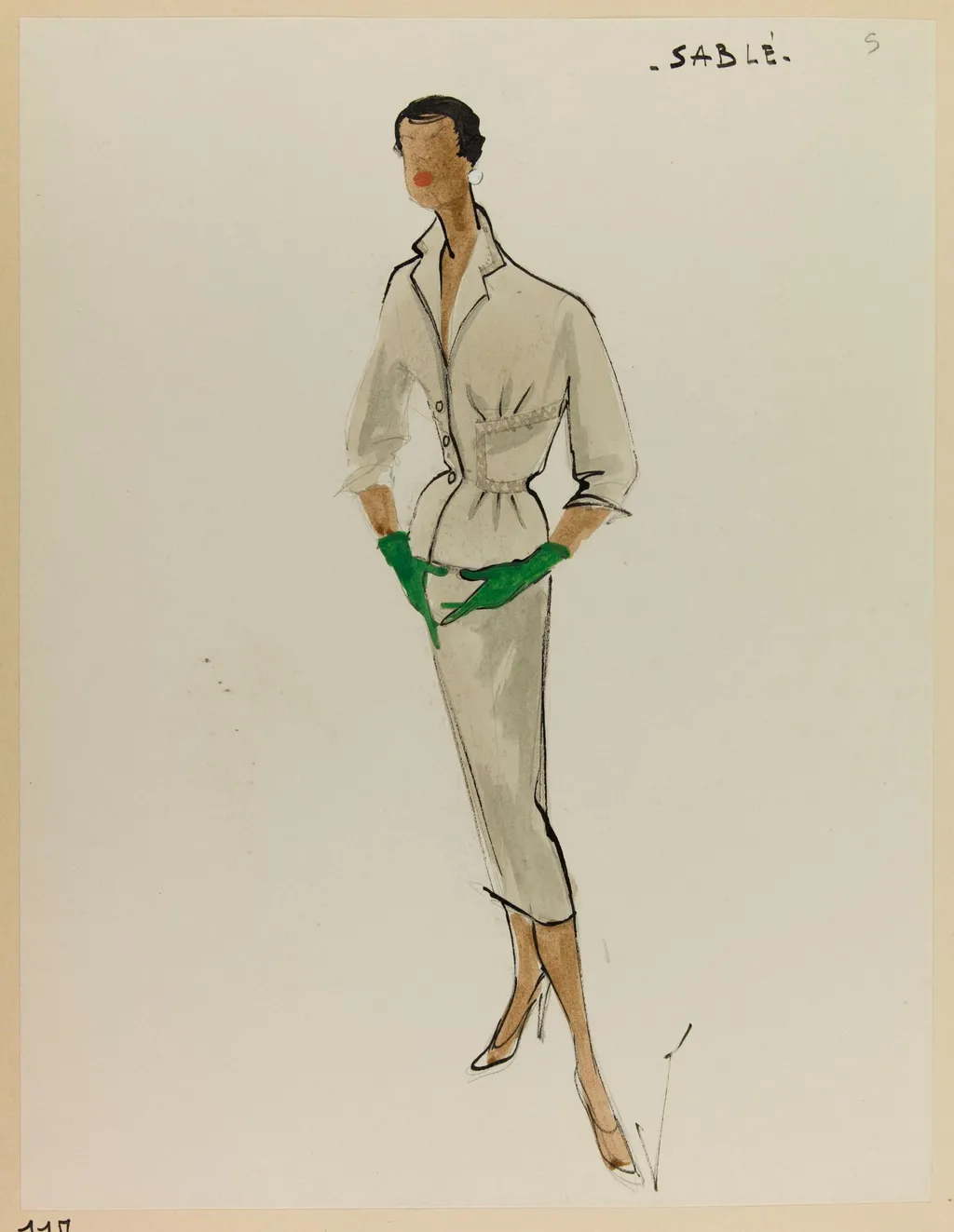
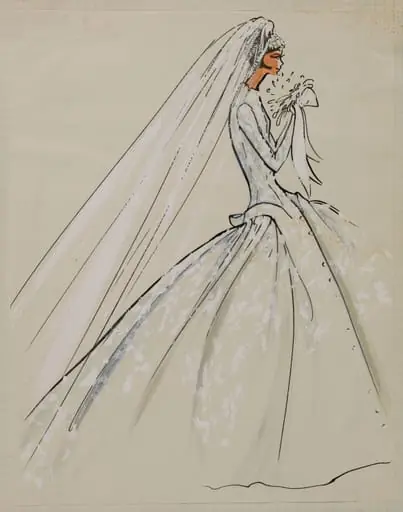
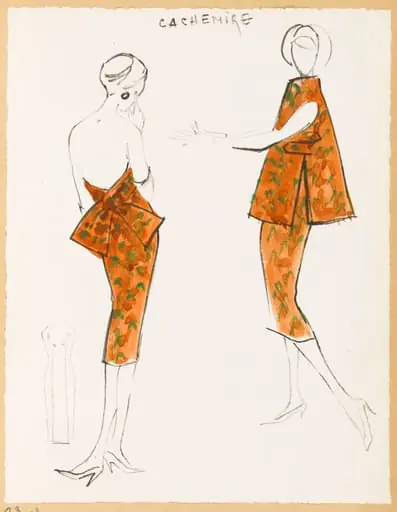
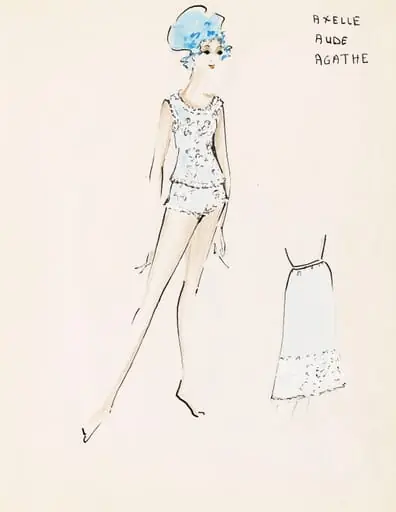
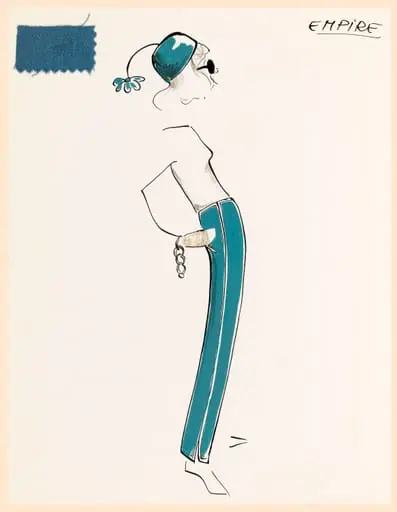
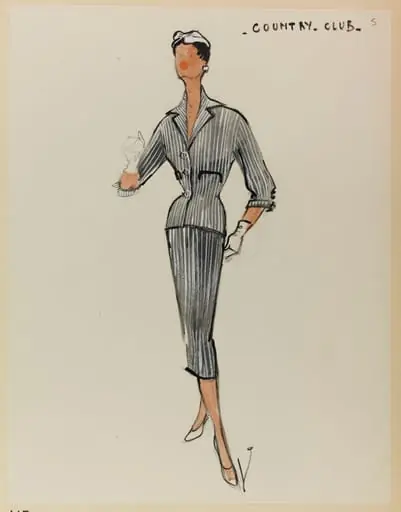
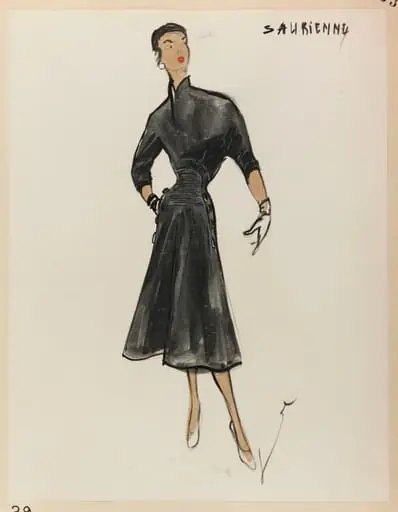
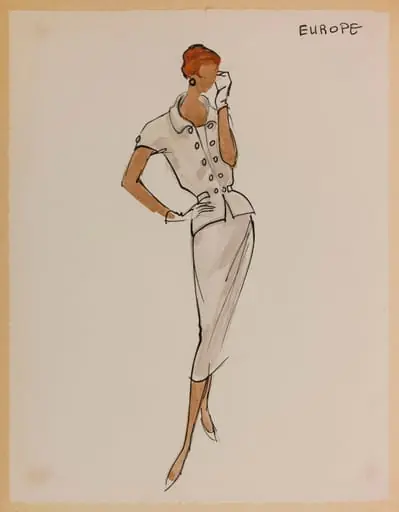
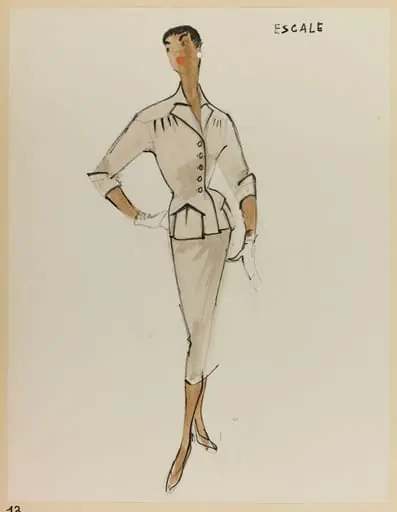
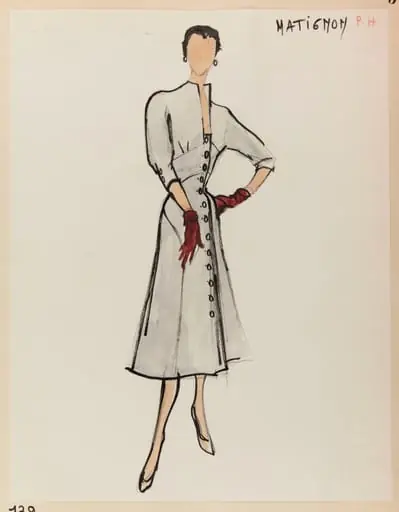
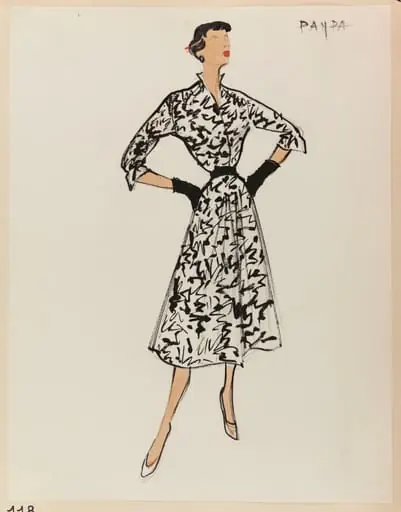
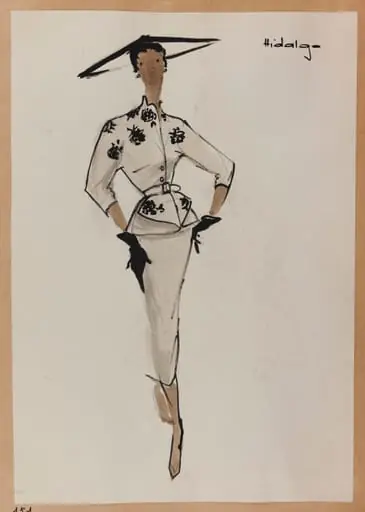
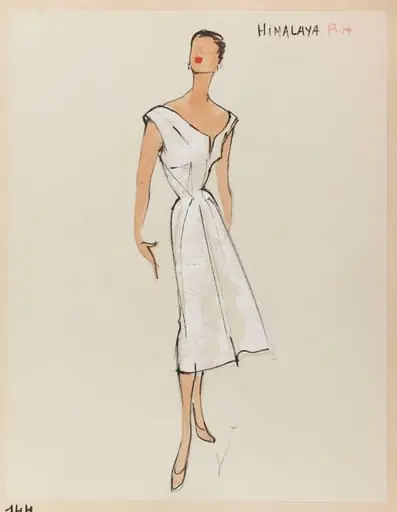
Sablé is a drawing by Carven. It dates from 1953 and is held in the collection of the Palais Galliera - Musée de la Mode de la Ville de Paris.
About this work
Overview
Sablé is a circa 1953 drawing by the French designer Carven, currently in the collection of the Museum of Ethnography. The work presents a stylised figure dressed in a light‑gray suit with wide lapels, a belted waist, and simple flat shoes. The figure’s hands are placed in the pockets, and a single red dot denotes the mouth, while the title appears in the corner of the sheet.
Subject & Meaning
The composition functions as a fashion illustration rather than a portrait, focusing on the silhouette and details of a particular outfit. The bright green belt contrasts with the muted suit, drawing attention to the waistline. The minimal facial features and the solitary red mouth suggest a schematic approach, emphasizing clothing over individual identity.
Technique & Style
Executed with quick, loose lines, the drawing reflects the informal sketching methods typical of mid‑century fashion studios. The use of a limited palette—primarily gray, green, and a red accent—creates a clear hierarchy of visual information. The overall aesthetic is economical, capturing the garment’s structure with minimal gestural strokes.
History & Provenance
Created around 1953, Sablé entered the Museum of Ethnography’s holdings as part of its broader acquisition of fashion‑related artifacts. The piece exemplifies Carven’s practice of producing on‑the‑spot design notes, offering insight into the designer’s creative process during the post‑war era.
Artist & collection
Artist
These delicate ink-on-paper drawings capture the quiet poetry of everyday things: pinecones, reeds, apples.
Museum
Palais Galliera - Musée de la Mode de la Ville de Paris
Continue through works from the same source collection.