Artwork
Sacré Coeur
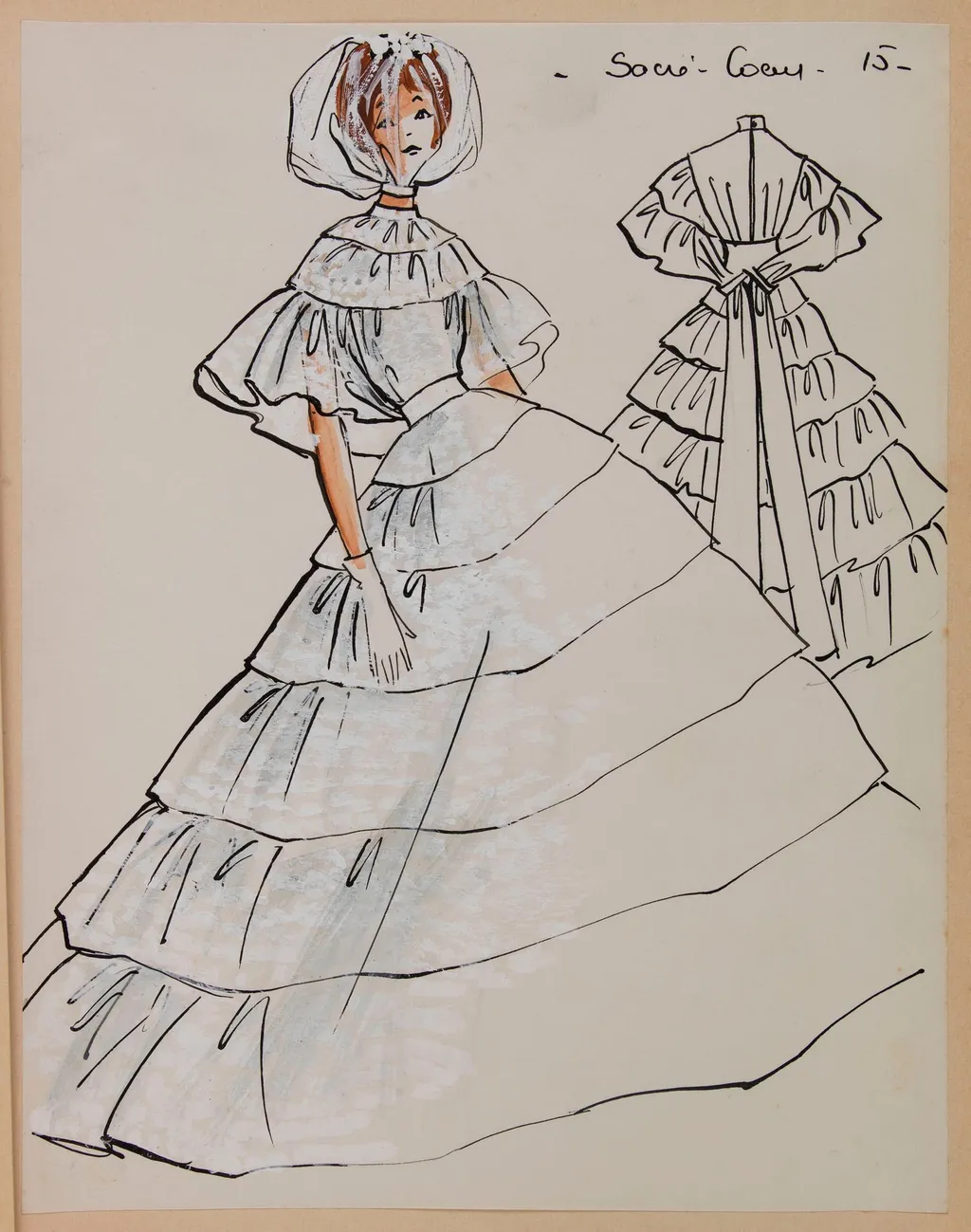
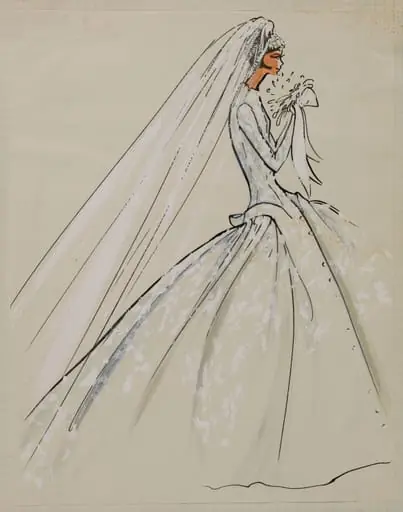
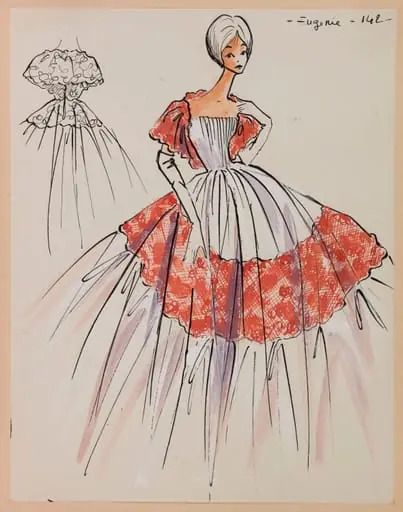
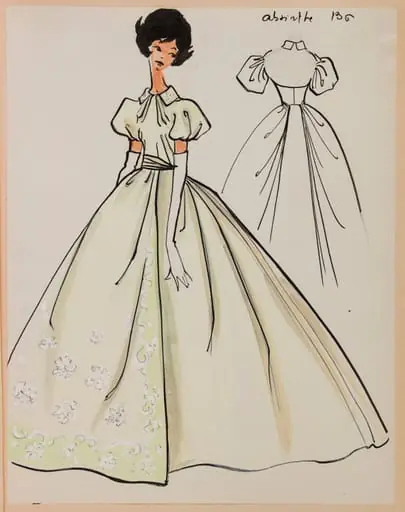
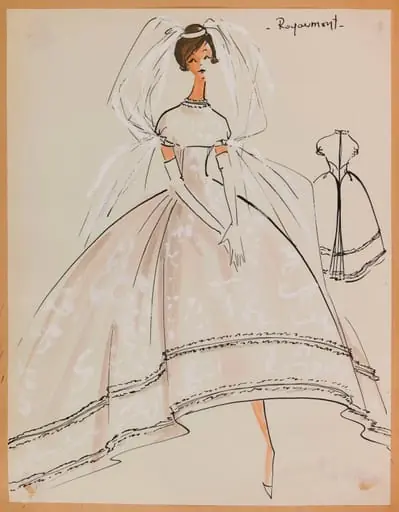
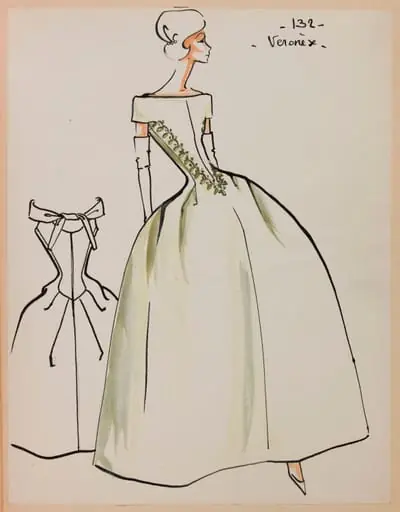
Sacré Coeur is a drawing by Carven. It dates from 1958 and is held in the collection of the Palais Galliera - Musée de la Mode de la Ville de Paris.
About this work
Overview
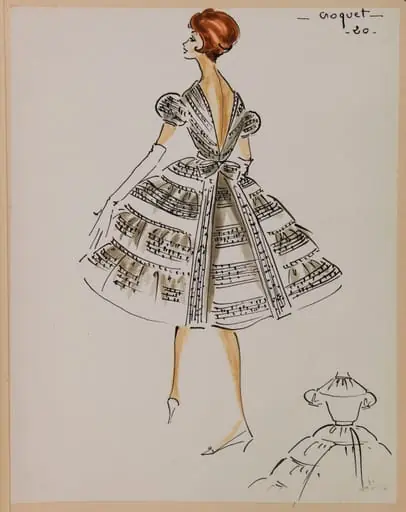
It depicts a woman viewed from behind, rendered with minimal detail and a restrained palette of pale gray and brown.
Created around 1958 by the designer Carven, this drawing is part of the Museum of Ethnography’s collection. It depicts a woman viewed from behind, rendered with minimal detail and a restrained palette of pale gray and brown. The composition emphasizes the silhouette of an elaborate dress rather than facial features or environment, suggesting a focus on fashion as cultural form rather than individual identity.
Subject & Meaning
The figure, seen from behind, is defined entirely by her clothing—a high-collared, puffed-sleeved gown with a dramatically flared skirt. The act of lifting the hem slightly introduces a subtle gesture of movement or modesty. The absence of facial features and context shifts attention to the garment as a symbol of mid-century feminine dress codes, possibly reflecting societal norms around posture, decorum, and appearance.
Technique & Style
The drawing employs bold, simplified lines and flat tonal areas to construct form without modeling or shading. Cross-hatching is absent; instead, volume is suggested through contour and mass. The hand holding the skirt, though small, is precisely rendered, creating a quiet contrast between the garment’s expansiveness and the delicacy of human action. The style prioritizes structure over realism.
History & Provenance
The work was produced during Carven’s active years as a fashion designer, likely as a study or archival sketch. It entered the Museum of Ethnography’s collection as part of a broader effort to document fashion as cultural artifact. Its preservation reflects institutional interest in mid-20th-century dress design beyond haute couture, capturing everyday aesthetic values of the era.
Context
In the late 1950s, fashion emphasized structured silhouettes and exaggerated volumes, particularly in women’s wear. This drawing aligns with postwar ideals of femininity that celebrated elegance through form rather than ornament. Unlike editorial illustrations, this piece lacks narrative or setting, suggesting it was intended as a formal study of garment construction rather than a commercial image.
Legacy
The drawing contributes to scholarly understanding of how fashion designers documented their work outside of runway presentations. Its inclusion in an ethnographic museum signals a shift toward recognizing clothing as a cultural expression. Though not widely known, it remains a quiet example of how design intent can be conveyed through restraint and silhouette alone.
Artist & collection
Artist
These delicate ink-on-paper drawings capture the quiet poetry of everyday things: pinecones, reeds, apples.
Museum
Palais Galliera - Musée de la Mode de la Ville de Paris
Continue through works from the same source collection.