Artwork
Smake
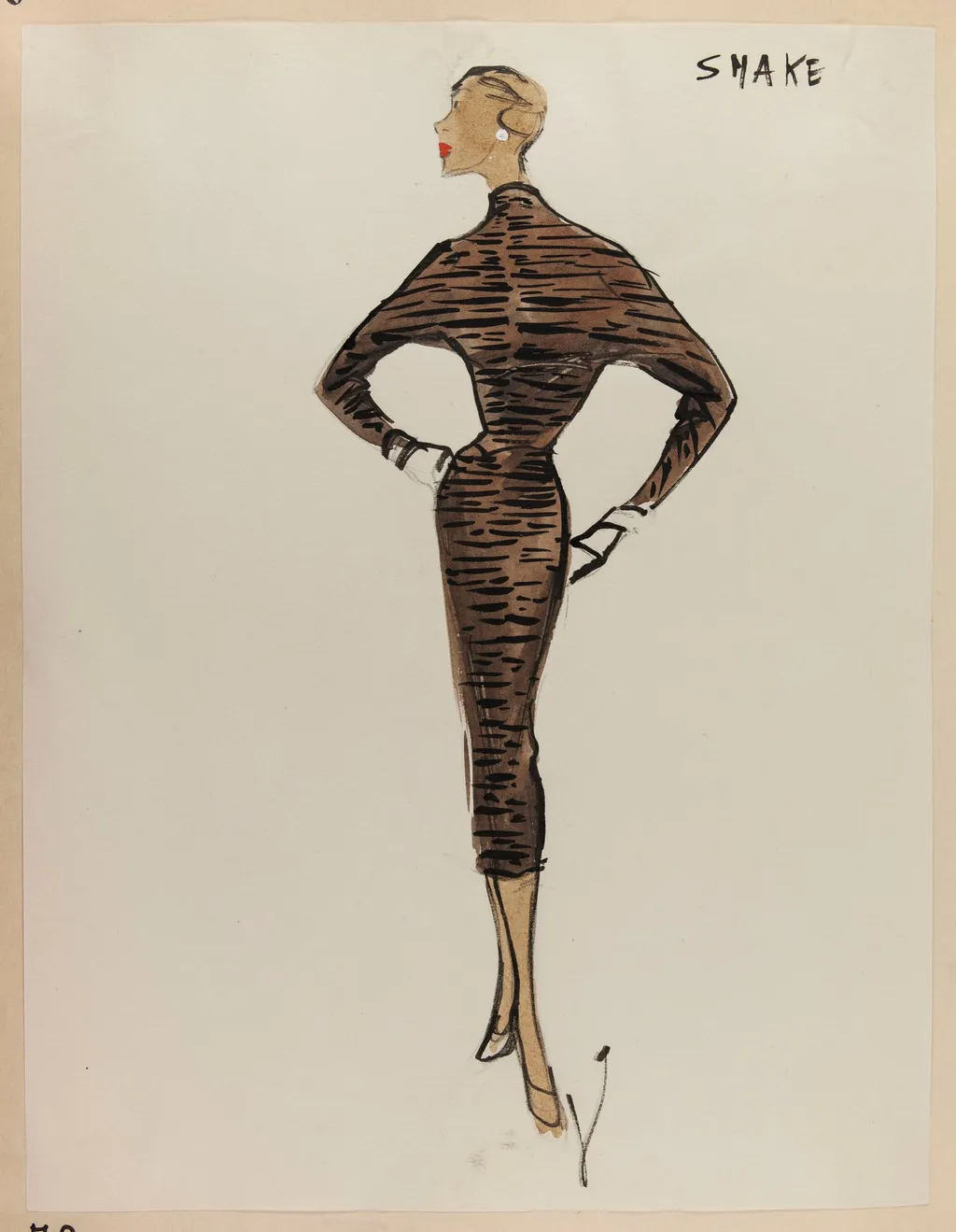
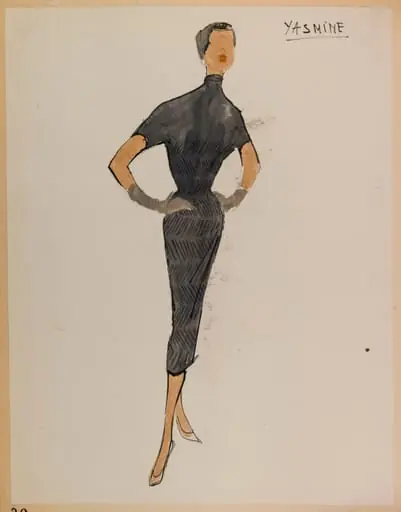
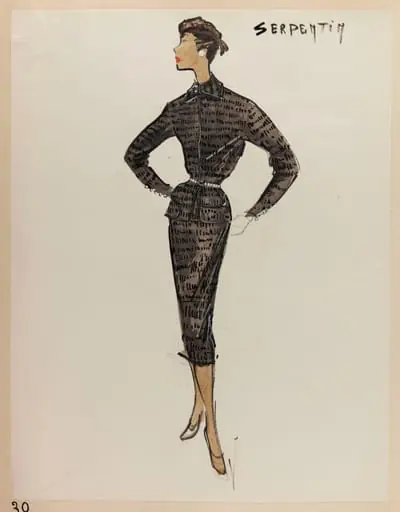
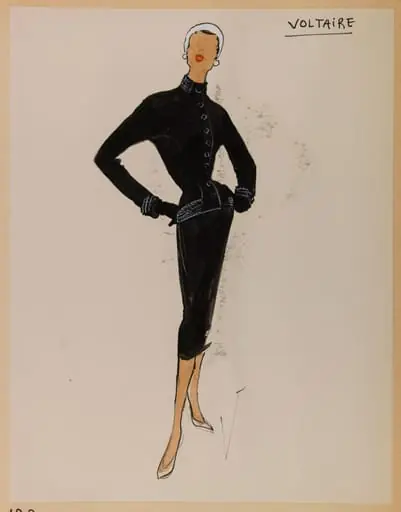
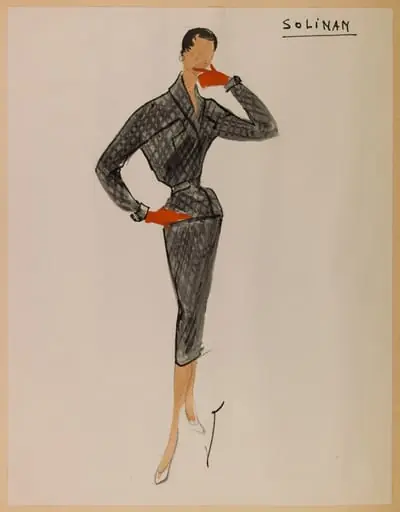
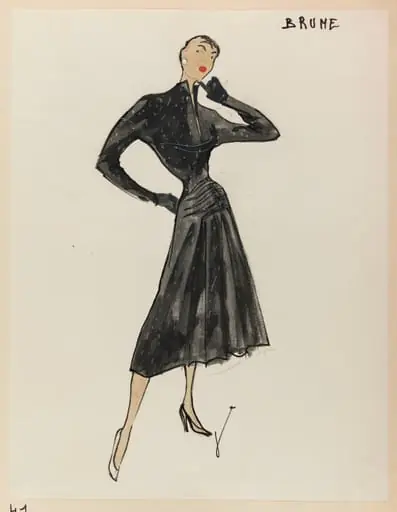
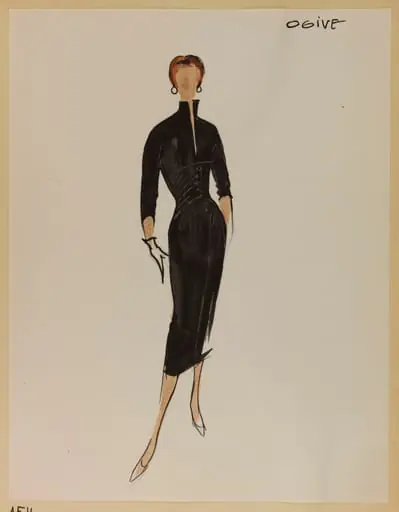
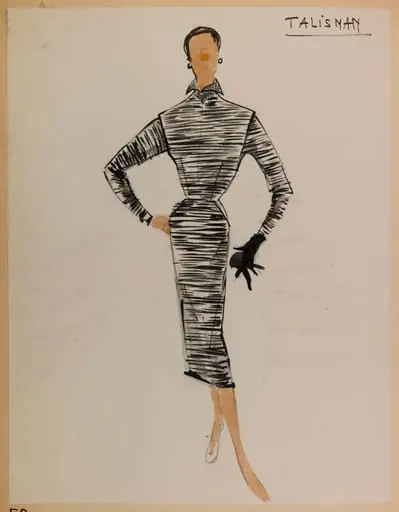
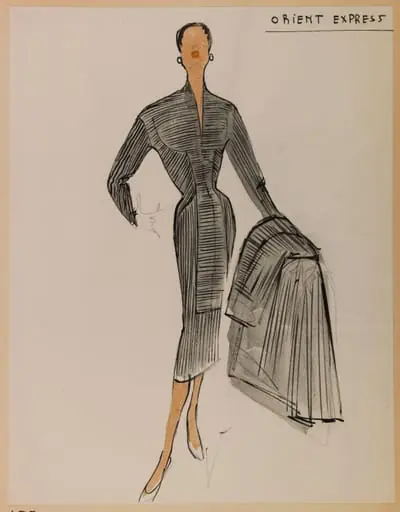
Smake is a drawing by Carven. It dates from 1952 and is held in the collection of the Palais Galliera - Musée de la Mode de la Ville de Paris.
About this work
Overview
The title 'Smake,' scrawled in the corner, suggests an informal or experimental label, possibly a personal annotation or misspelling.
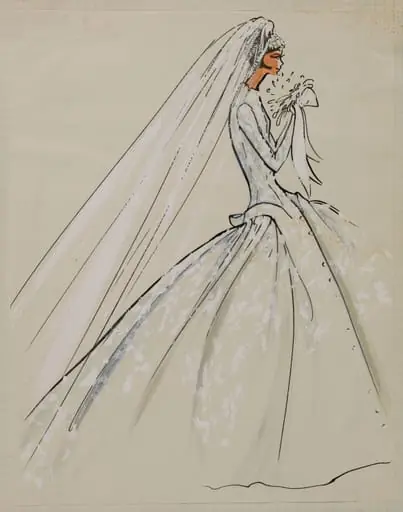
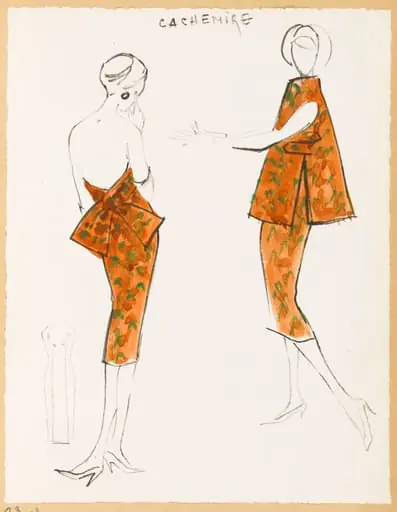
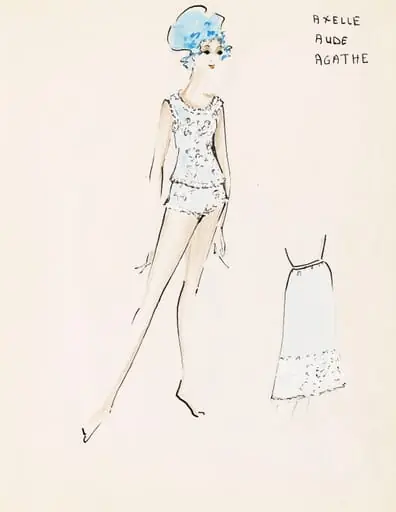
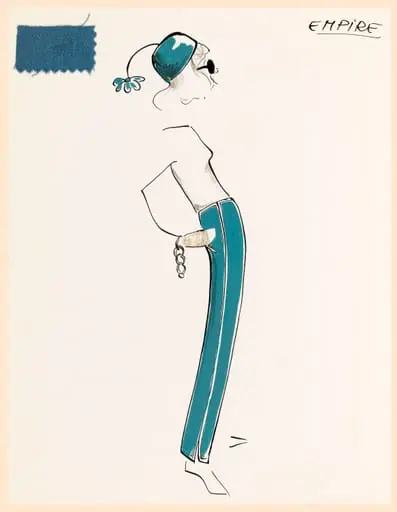
Created around 1952 by the designer Carven, this ink sketch is part of the Museum of Ethnography’s collection. It depicts a standing female figure viewed from behind, rendered with swift, assured strokes. The figure wears a long, striped dress, and the composition emphasizes movement and form over detail. The title 'Smake,' scrawled in the corner, suggests an informal or experimental label, possibly a personal annotation or misspelling.
Subject & Meaning
The figure represents a woman in everyday attire, her posture calm and grounded. One foot is slightly advanced, suggesting a moment of pause or transition. The lack of facial features or contextual details shifts focus to the garment and silhouette, implying an interest in clothing as a cultural or aesthetic object rather than a portrait. The title 'Smake' may hint at a playful or provisional designation for the design.
Technique & Style
The artist employed loose, overlapping ink lines to suggest texture and volume, particularly in the dress. Rather than shading with tone, the form is built through rhythmic cross-hatching and varied line weight. The strokes are economical yet deliberate, conveying fabric drape and pattern without literal replication. This approach reflects a designer’s quick study, prioritizing gesture and structure over finish.
History & Provenance
The sketch entered the Museum of Ethnography’s holdings as part of a broader collection of fashion-related materials. Its origin as a working drawing by Carven suggests it was made during the design process, possibly for a garment line or editorial project. While its exact provenance before museum acquisition remains undocumented, its preservation indicates recognition of its value as a record of mid-century design practice.
Context
In the early 1950s, fashion illustration often blended artistic expression with technical documentation. Carven, known for tailored yet fluid designs, used sketches to explore form and movement. This drawing aligns with contemporaneous practices where designers captured garments in motion, emphasizing silhouette over ornament. The sketch’s informal quality reflects a studio environment where ideas were tested rapidly, not polished for public display.
Legacy
Though not a finished garment, the sketch preserves a moment in Carven’s design process, offering insight into how form was conceived before construction. Its preservation in an ethnographic museum underscores the cultural significance of fashion as material culture. The work continues to serve as a reference for understanding mid-century design methodology and the role of drawing in fashion innovation.
Artist & collection
Artist
These delicate ink-on-paper drawings capture the quiet poetry of everyday things: pinecones, reeds, apples.
Museum
Palais Galliera - Musée de la Mode de la Ville de Paris
Continue through works from the same source collection.