Artwork
'Sidi-Bau-Saïd'
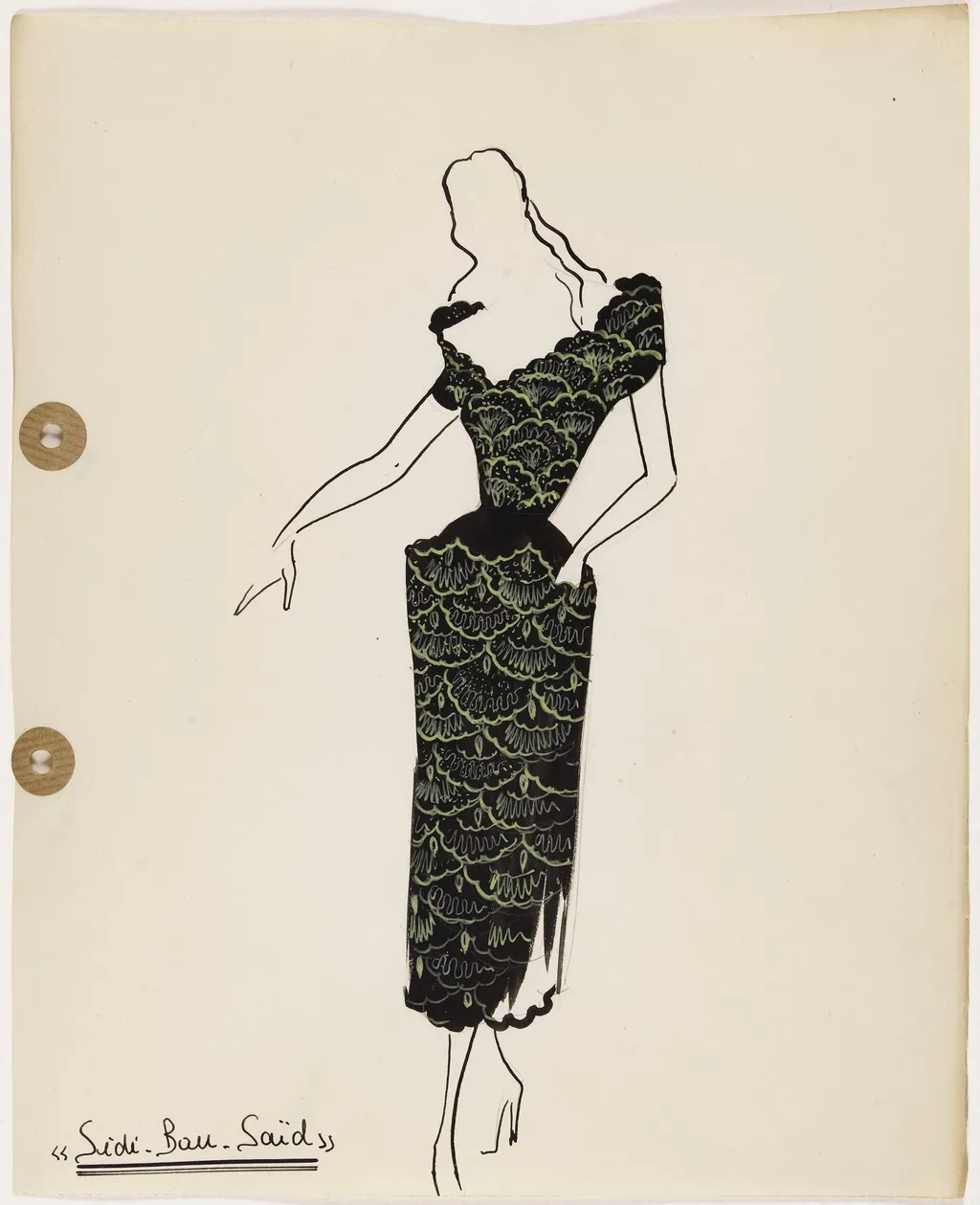
'Sidi-Bau-Saïd' is a drawing by Carven. It dates from 1949 and is held in the collection of the Palais Galliera - Musée de la Mode de la Ville de Paris.
About this work
Overview
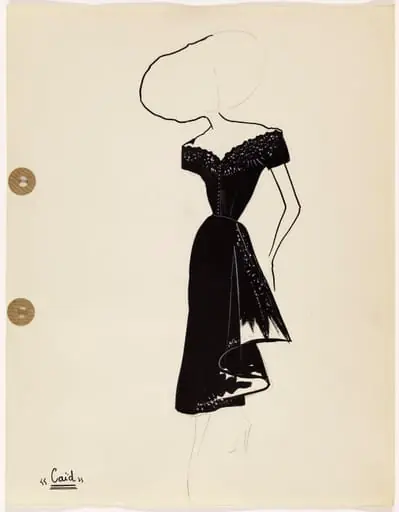
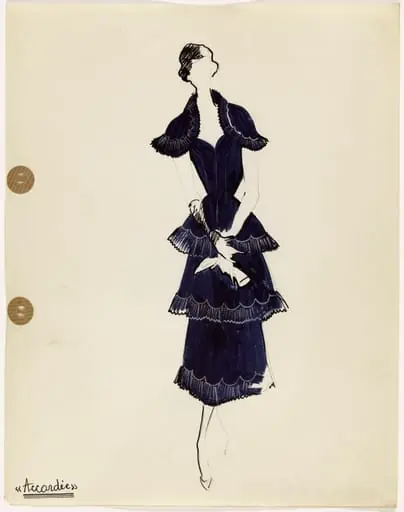
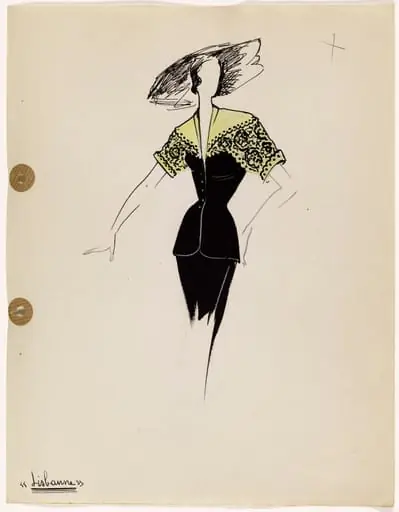
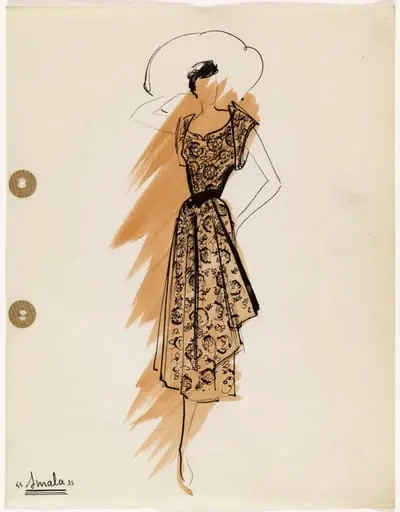
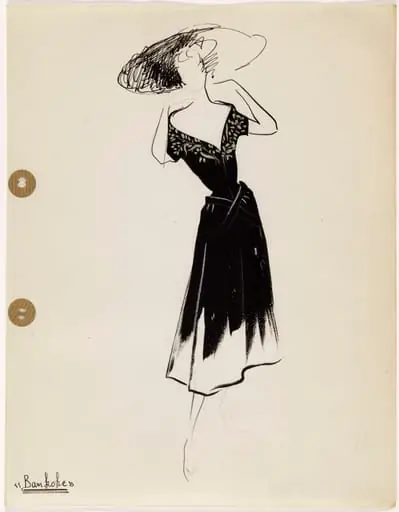
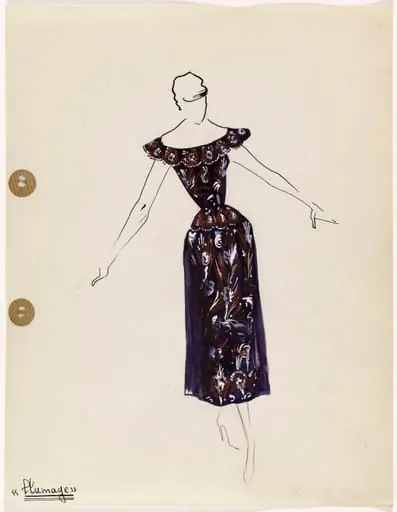
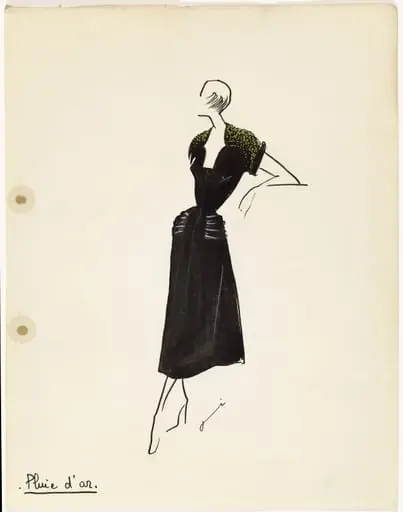
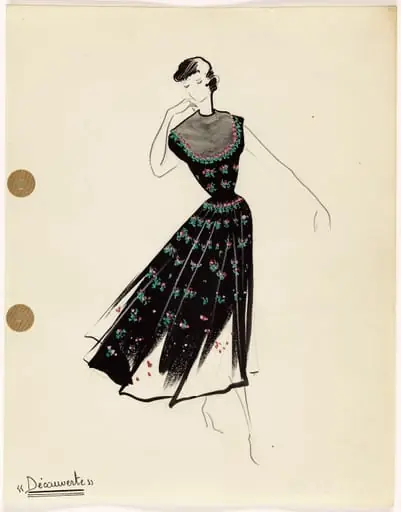
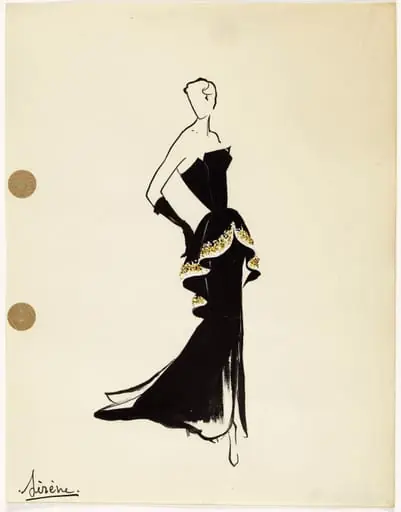
Created in 1949, “Sidi‑Bau‑Saïd” is a black‑ink drawing by the French fashion house Carven, now part of the Museum of Ethnography’s collection. The composition depicts a solitary female figure turned away from the viewer, her posture and attire suggesting a quiet, cultivated presence.
Subject & Meaning
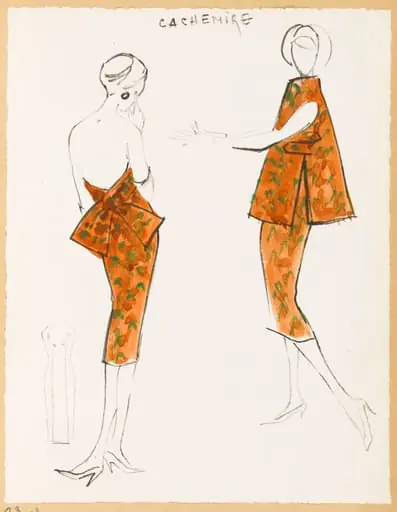
The work portrays a woman in a flowing dress, her back to the audience, with the right arm bent at the elbow and hand placed on the hip, while the left arm hangs loosely. The pose, together with the modest visibility of her legs from the knees down, conveys a restrained elegance and hints at a moment of private contemplation.
Technique & Style
Rendered in fine black ink on a light‑beige ground, the drawing relies on delicate line work to define the garment’s patterned surface and the figure’s silhouette. Small circular marks on the left side add a subtle decorative element, while the overall linear economy emphasizes the garment’s green‑toned pattern through suggestion rather than color.
History & Provenance
The piece was produced by Carven in the immediate post‑war period and entered the Museum of Ethnography’s holdings at an unspecified date. Its presence in an ethnographic context reflects the institution’s interest in fashion as a cultural artifact, linking the drawing to broader studies of mid‑20th‑century dress.
Context
Carven, known primarily for its ready‑to‑wear fashion, occasionally produced illustrative works that documented contemporary styles. “Sidi‑Bau‑Saïd” exemplifies this practice, offering a visual record of a specific silhouette and decorative motif that were fashionable in the late 1940s, situating the drawing within the era’s evolving aesthetic of refined femininity.
Artist & collection
Artist
These delicate ink-on-paper drawings capture the quiet poetry of everyday things: pinecones, reeds, apples.
Museum
Palais Galliera - Musée de la Mode de la Ville de Paris
Continue through works from the same source collection.