Artwork
St Pierre
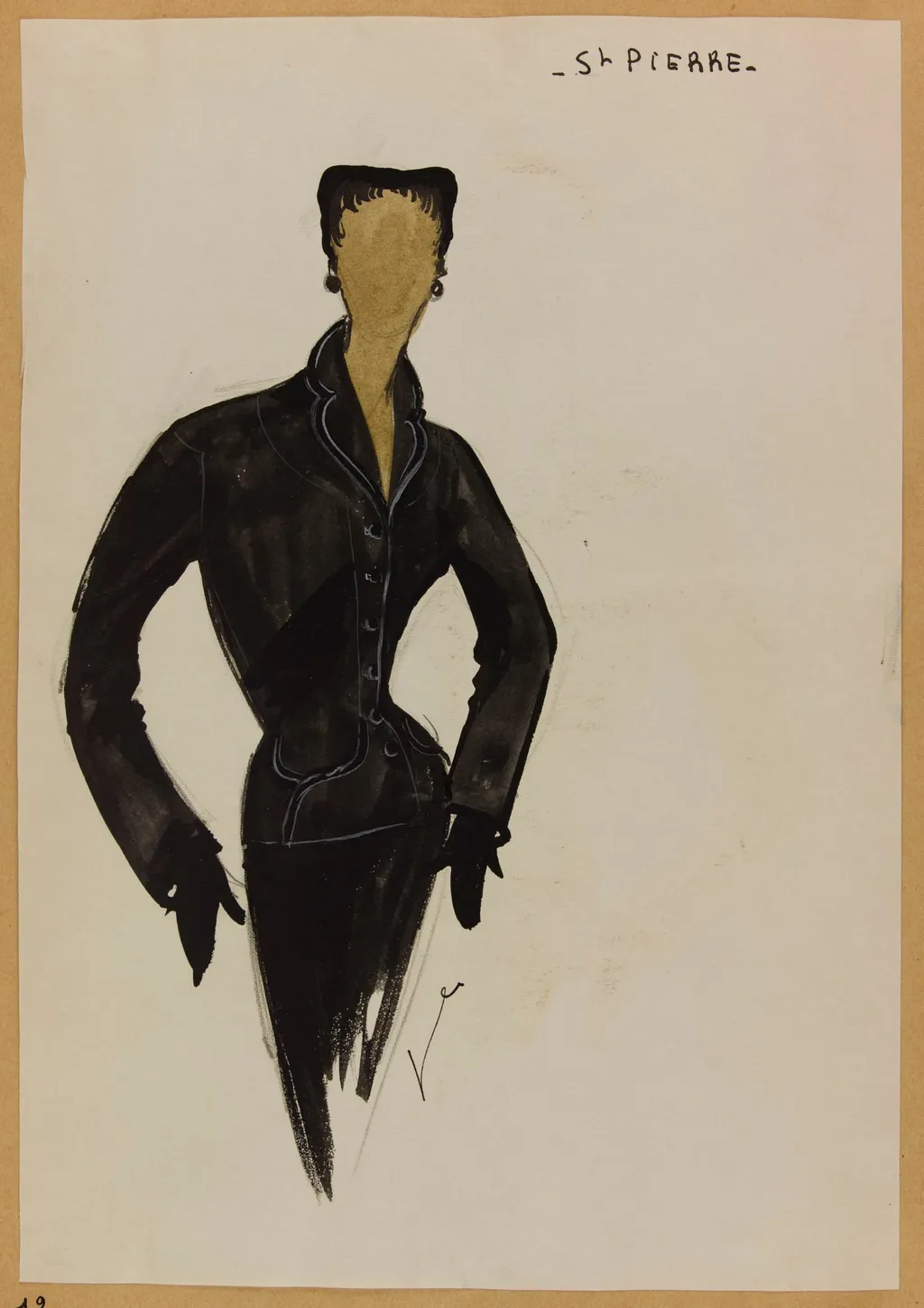
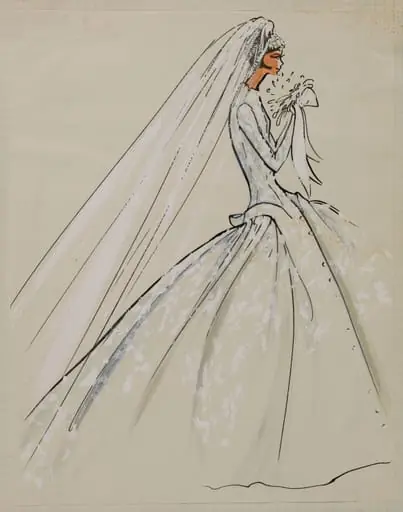
St Pierre is a drawing by Carven. It dates from 1952 and is held in the collection of the Palais Galliera - Musée de la Mode de la Ville de Paris.
About this work
Overview
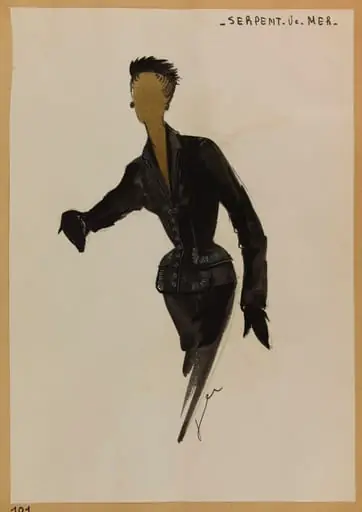
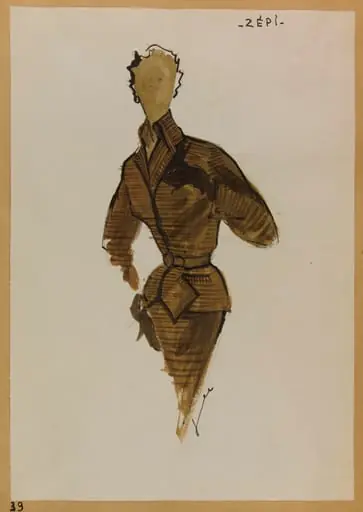
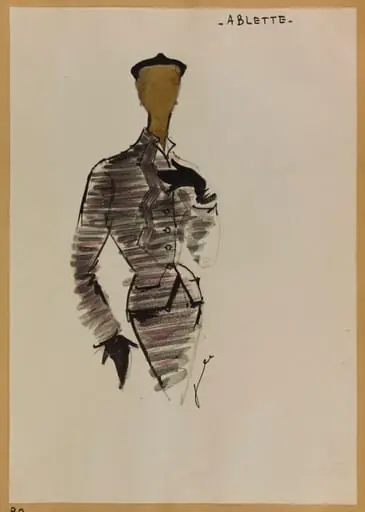
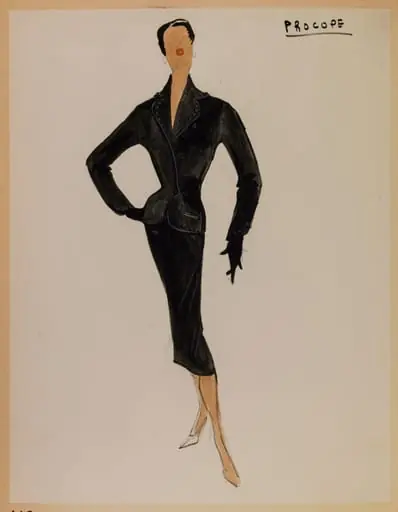
Created in 1952 by the French designer Carven, this ink drawing portrays a woman in formal mid-century attire. The work is part of the Museum of Ethnography’s collection, where it is cataloged as a visual record of postwar fashion. Rendered with restrained precision, the image captures a moment of poised stillness, emphasizing silhouette over facial expression.
Subject & Meaning
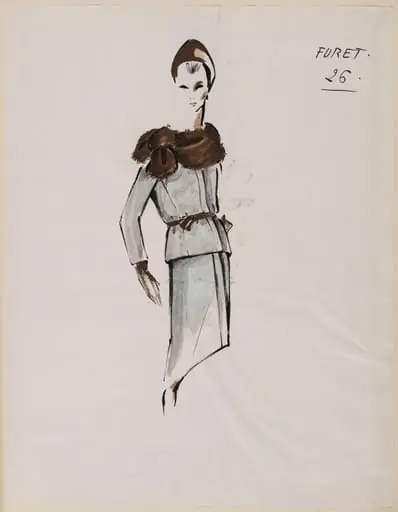
Her tailored jacket with a high collar, flared skirt, gloves, and earrings reflect a deliberate adherence to contemporary elegance.
The figure, anonymous and faceless, embodies an idealized urban woman of the early 1950s. Her tailored jacket with a high collar, flared skirt, gloves, and earrings reflect a deliberate adherence to contemporary elegance. Hands on hips suggest quiet confidence, not defiance. The absence of a face universalizes the subject, turning her into a symbol of refined femininity rather than a specific individual.
Technique & Style
Executed in clean, flowing lines with minimal shading, the drawing avoids ornamental detail in favor of structural clarity. The artist uses negative space to define form, allowing the contours of the garment to speak for themselves. This restrained approach aligns with mid-century design principles, prioritizing grace and proportion over realism or emotional intensity.
History & Provenance
The drawing entered the Museum of Ethnography’s collection shortly after its creation, likely acquired as part of a broader effort to document fashion as cultural artifact. Carven, known primarily for textile and garment design, occasionally produced illustrative works to accompany her collections. This piece remains one of the few surviving drawings from this phase of her practice.
Context
In postwar France, fashion was both a personal expression and a national symbol of renewal. Carven’s designs, including this drawing, responded to a demand for structured yet feminine silhouettes after wartime austerity. The image reflects a broader cultural shift toward curated self-presentation, where clothing signaled social belonging and personal dignity.
Legacy
Though Carven is better known for her couture, this drawing endures as a quiet testament to the intersection of fashion and visual culture. It offers insight into how design ideals were communicated beyond the runway, through illustration. The work continues to be referenced in studies of mid-century women’s fashion and the role of anonymity in representing social archetypes.
Artist & collection
Artist
These delicate ink-on-paper drawings capture the quiet poetry of everyday things: pinecones, reeds, apples.
Museum
Palais Galliera - Musée de la Mode de la Ville de Paris
Continue through works from the same source collection.