Artwork
Poisson scie
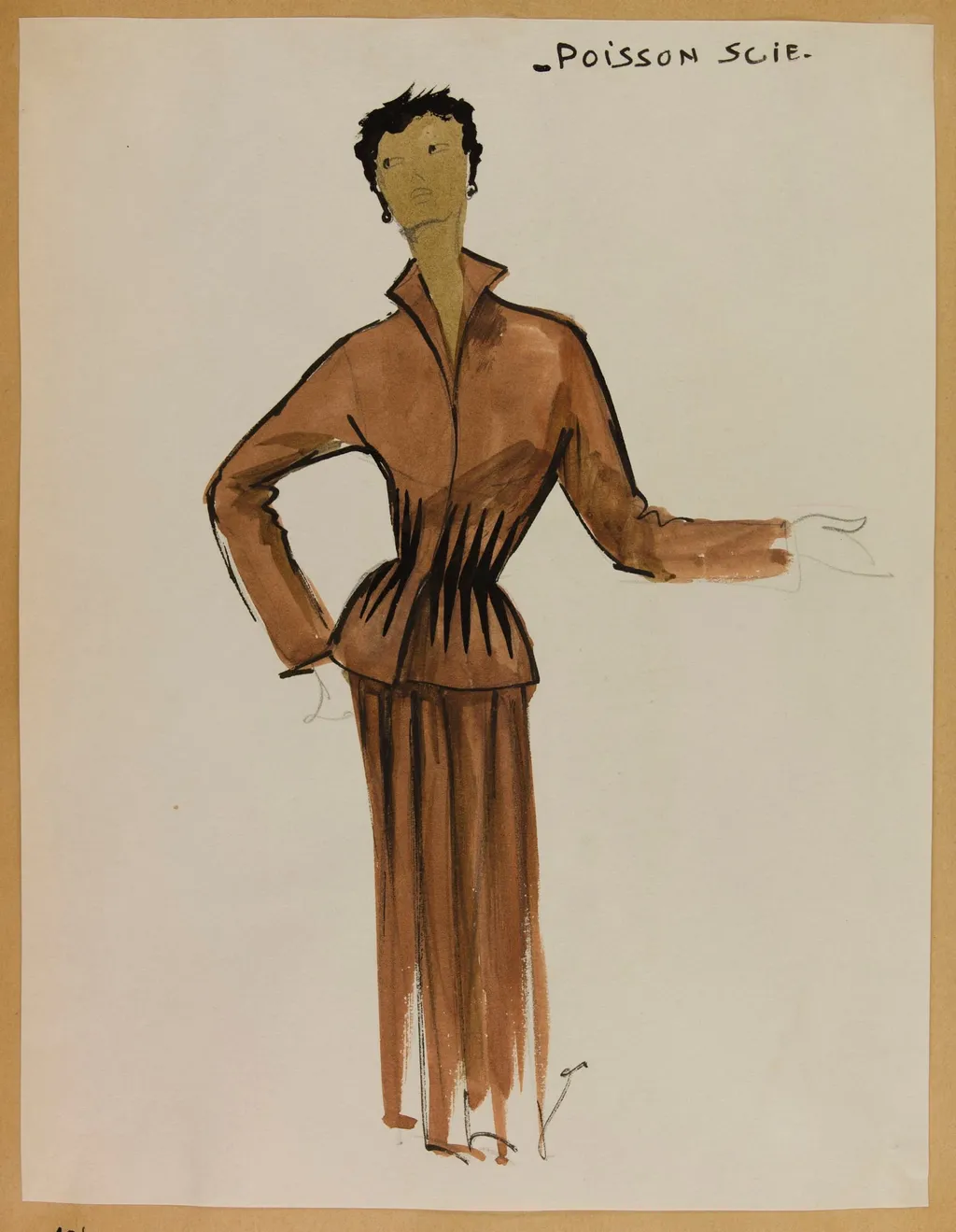
Poisson scie is a drawing by Marie-Louise Carven. It dates from 1952 and is held in the collection of the Palais Galliera - Musée de la Mode de la Ville de Paris.
About this work
Overview
Though labeled as an image, it functions as a design study, reflecting Carven’s approach to wearable elegance for the modern woman.
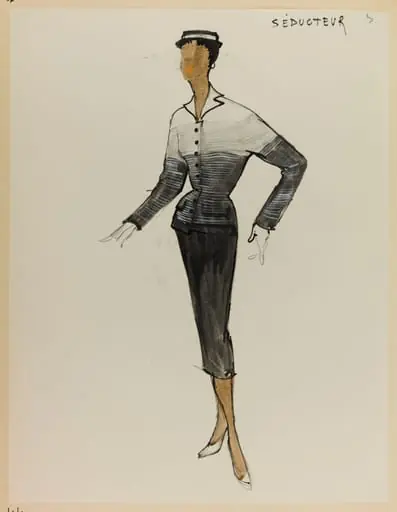
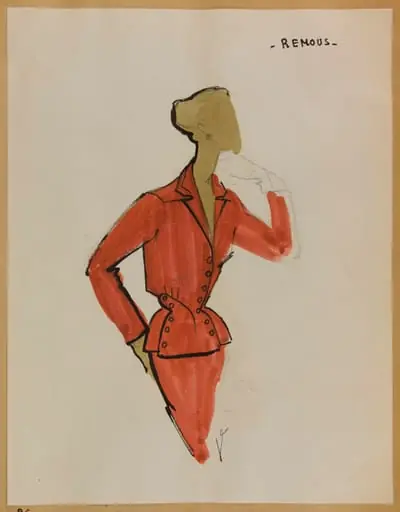
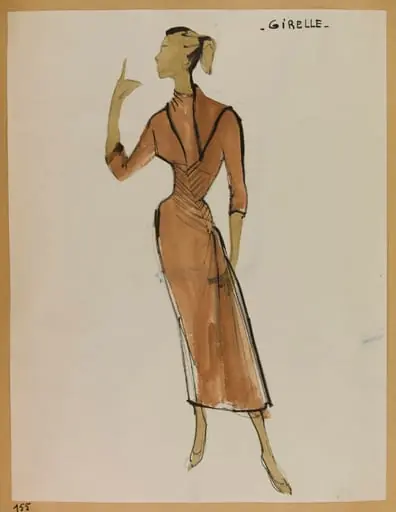
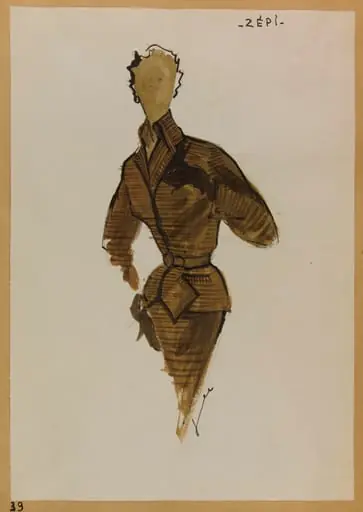
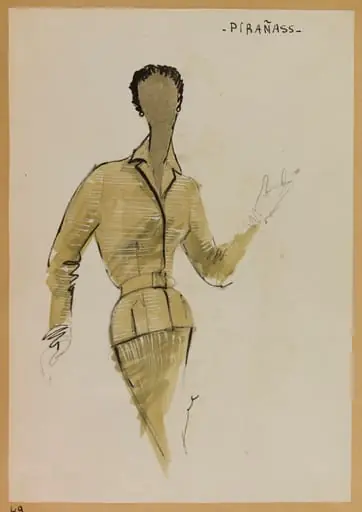
Created in 1952, *Poisson scie* is a drawn fashion illustration by Marie-Louise Carven, founder of the Parisian label Carven. It depicts a woman in a tailored brown ensemble of jacket and straight-leg trousers. Rendered in monochrome brown and black ink, the work captures movement and proportion with restrained precision. Though labeled as an image, it functions as a design study, reflecting Carven’s approach to wearable elegance for the modern woman.
Subject & Meaning
The figure stands in a poised, natural stance—one hand on the hip, the other extended—suggesting ease and quiet confidence. The outfit, with its peplum jacket and fitted trousers, reflects Carven’s focus on flattering silhouettes for smaller frames. The title, meaning 'sawfish,' may allude to the angular lines of the garment’s hem or the sharpness of the posture, though no literal fish is depicted. The work conveys a sense of refined practicality, aligning with postwar ideals of functional chic.
Technique & Style
Carven rendered the figure using fine black outlines to define form and subtle brown washes to suggest fabric weight and shadow. The lines are deliberate but not rigid, allowing the folds of the jacket and the drape of the trousers to appear fluid. The absence of color beyond brown tones emphasizes structure and silhouette over ornamentation. This restrained technique mirrors the clarity and discipline characteristic of her design philosophy.
History & Provenance
The illustration was produced during Carven’s early years as a couturier, shortly after she launched her house in 1945. It entered the collection of the Museum of Ethnography, likely as part of a broader effort to document mid-century fashion as cultural artifact. Unlike many couture sketches, this piece was not intended for client presentation but as a personal study, underscoring Carven’s interest in documenting design principles beyond commercial use.
Context
In the early 1950s, Parisian fashion was dominated by elaborate haute couture, yet Carven pioneered accessible, ready-to-wear designs for everyday women. *Poisson scie* reflects this shift: its clean lines and practical cut anticipate the rise of prêt-à-porter. The illustration’s modest scale and monochromatic palette distinguish it from the theatricality of contemporaneous fashion plates, aligning instead with emerging postwar aesthetics of understated modernity.
Legacy
Though not widely exhibited, *Poisson scie* remains a quiet testament to Carven’s influence on democratizing fashion. Her emphasis on proportion, comfort, and simplicity for petite figures paved the way for later ready-to-wear designers. The drawing’s preservation in an ethnographic museum signals its recognition as a cultural document—not merely as fashion, but as an expression of changing social norms around women’s dress in mid-century Europe.
Artist & collection
Artist
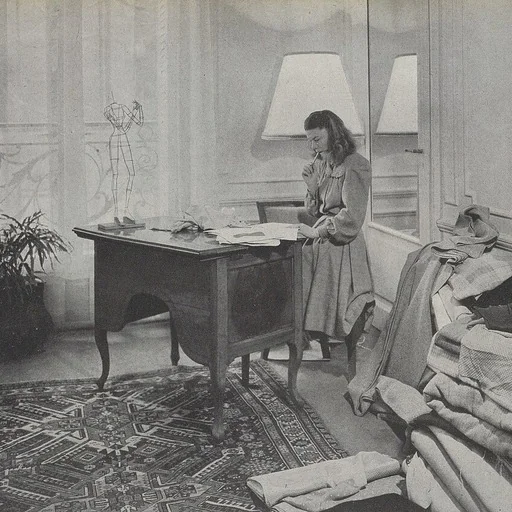
Marie-Louise Carven (31 August 1909 – 8 June 2015), born Carmen de Tommaso, was a French fashion designer who founded the house of Carven in 1945.
Museum
Palais Galliera - Musée de la Mode de la Ville de Paris
Continue through works from the same source collection.
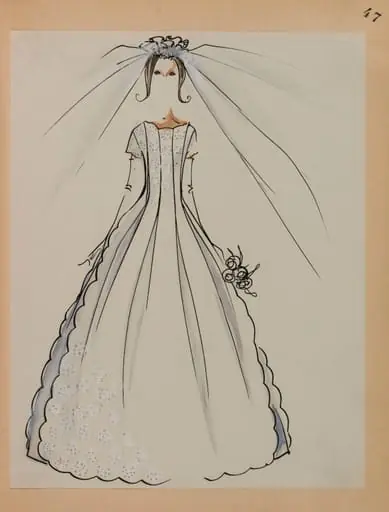 Robe de mariée festonnée et son voile
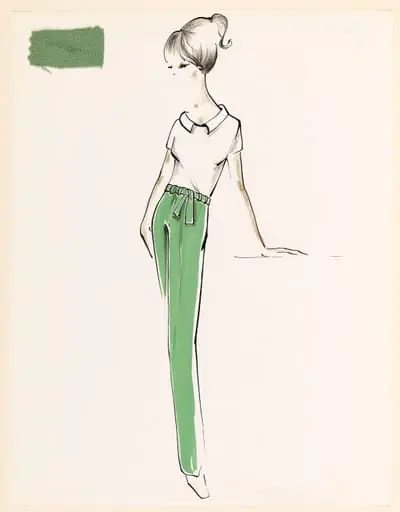 Haut blanc à manches courtes et pantalon vert à ceinture nouée
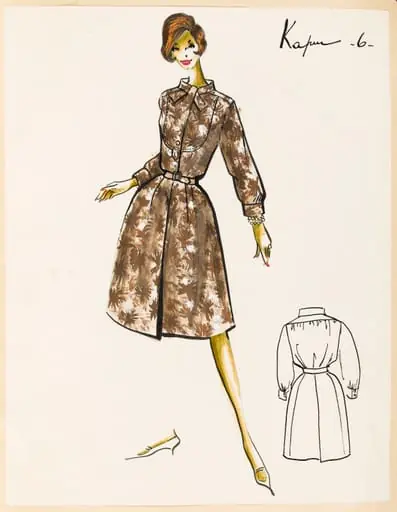 Kapur
Kapur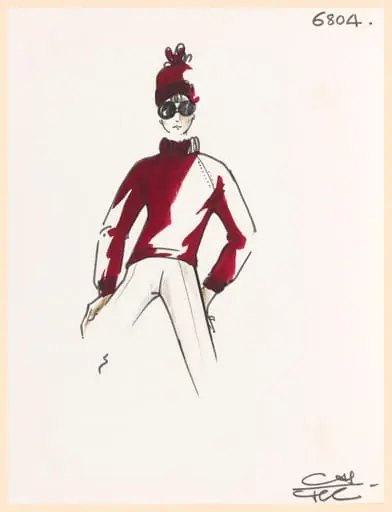 Pull-over à manches longues pourpre, bonnet assorti, pantalon et lunettes de soleil
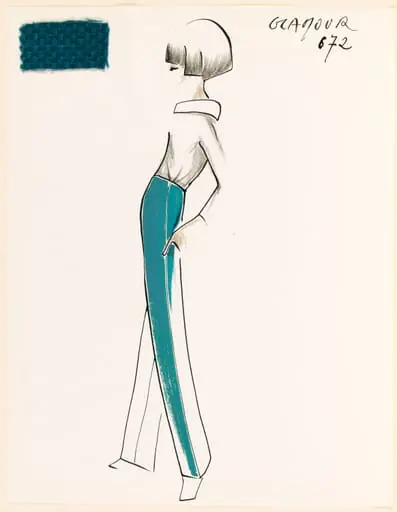 GLAMOUR
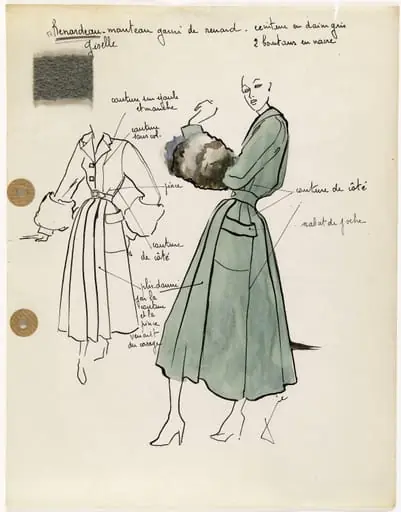 'Renardeau'
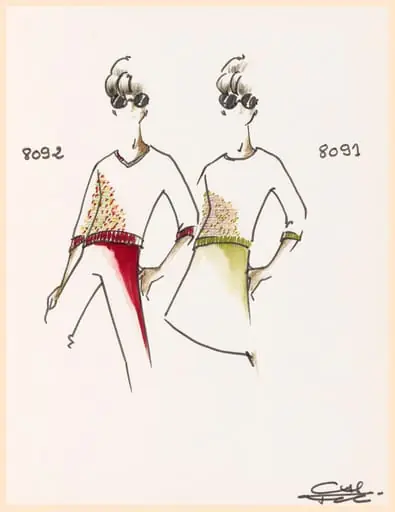 Pull-over à manches trois quarts et à encolure V à motifs multicolores, pantalon cerise et lunettes de soleil
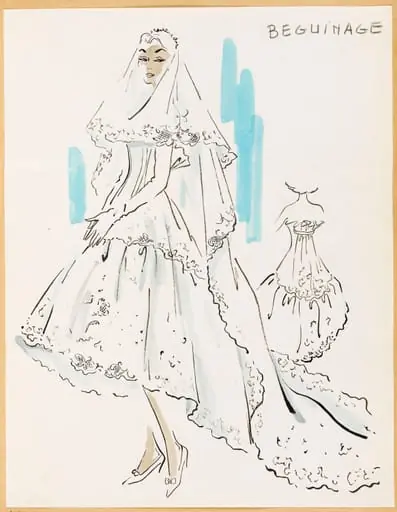 Béguinage