Artwork
Mimosa
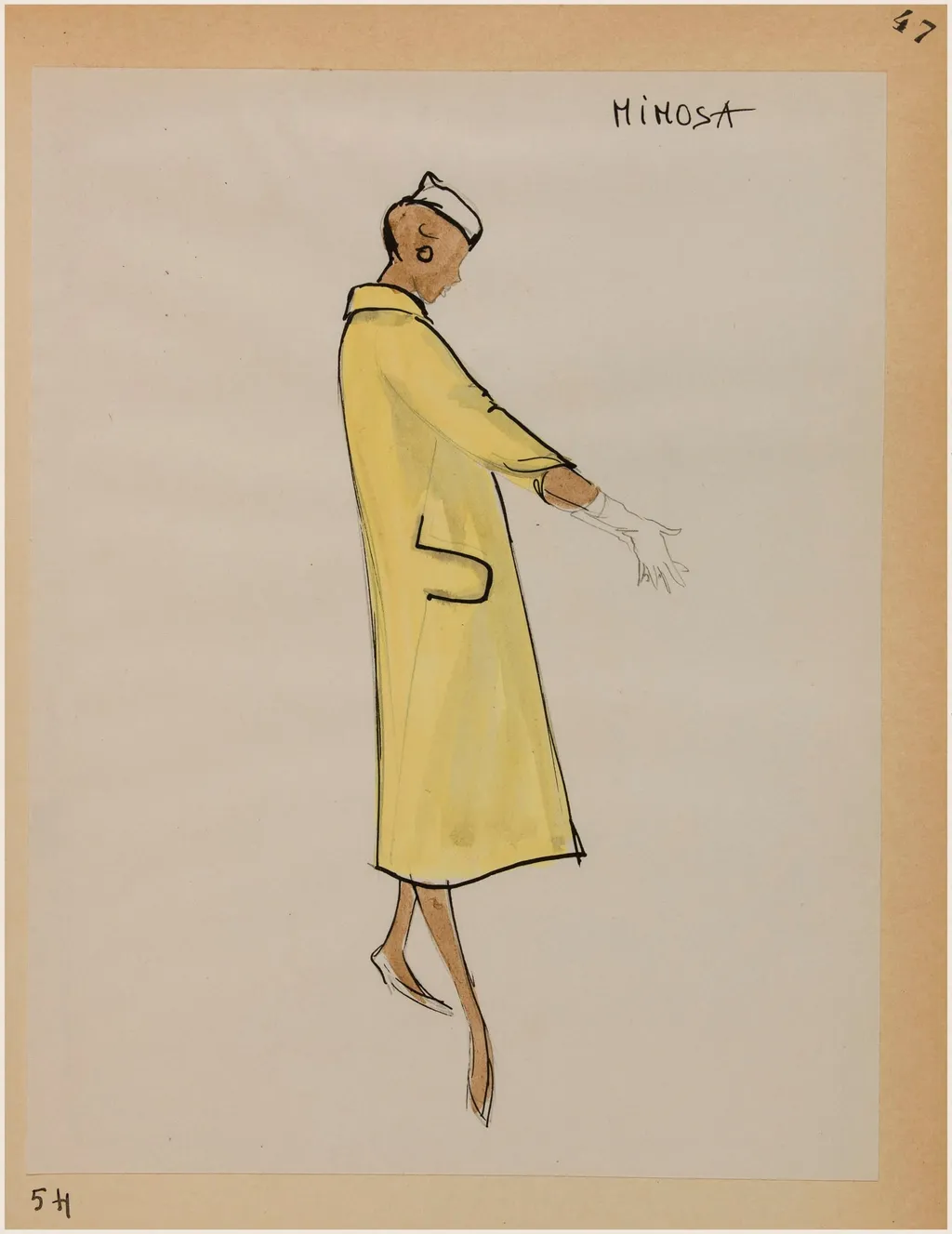
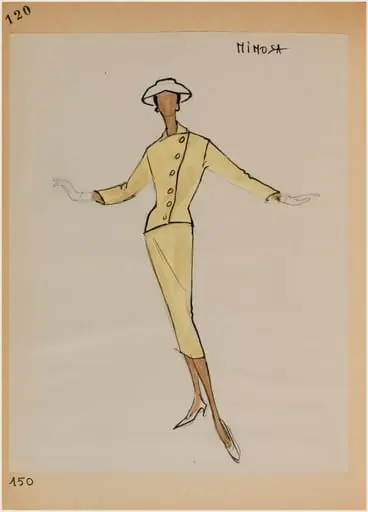
Mimosa is a drawing by Marie-Louise Carven. It dates from 1956 and is held in the collection of the Palais Galliera - Musée de la Mode de la Ville de Paris.
About this work
Overview
The sketch is part of the Museum of Ethnography’s collection, highlighting its significance in the history of 20th-century fashion design.
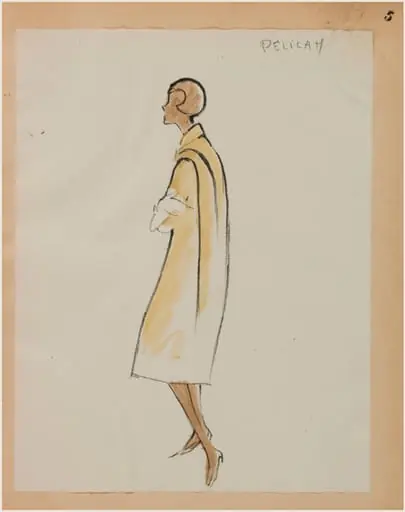
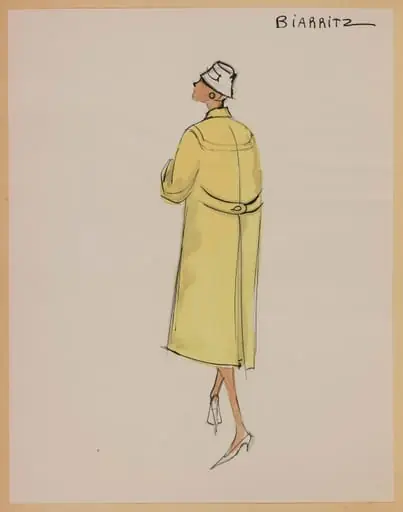
Created in 1956, *Mimosa* is a fashion sketch by French designer Marie-Louise Carven, founder of her eponymous label established in 1945. The work captures a slender female figure in a long yellow coat with minimal black detailing, rendered in clean, precise lines. Designed as a preparatory study, it reflects Carven’s focus on wearable, understated elegance. The sketch is part of the Museum of Ethnography’s collection, highlighting its significance in the history of 20th-century fashion design.
Subject & Meaning
The figure in *Mimosa* walks with one arm extended, suggesting movement and quiet intention. Her posture, paired with the flowing coat, conveys a sense of ease and autonomy. The title references the mimosa flower, known for its bright yellow blooms and delicate structure, mirroring the garment’s lightness and vibrancy. The absence of ornamentation and the plain background direct attention to the silhouette, reinforcing Carven’s philosophy of form over decoration.
Technique & Style
Carven rendered *Mimosa* with restrained linework and minimal shading, emphasizing clarity over detail. The use of a single hue for the coat, accented only by black trim, reflects her preference for monochromatic simplicity. The figure’s hair is drawn tightly back, and the posture is unadorned, aligning with her design ethos: functional beauty suited to everyday life. This approach anticipated the rise of ready-to-wear fashion by prioritizing practicality without sacrificing grace.
History & Provenance
The sketch entered the Museum of Ethnography’s collection as part of a broader effort to document modern fashion as cultural artifact. While Carven’s garments were widely worn in postwar France, her sketches remained largely private until later archival efforts. *Mimosa* survives as one of the few surviving preparatory drawings from her mid-1950s output, offering insight into her design process during a period when ready-to-wear was gaining institutional recognition.
Context
In the mid-1950s, Parisian fashion was dominated by haute couture, yet Carven distinguished herself by catering to smaller frames and promoting accessible clothing. Her designs rejected excess, favoring lightweight textiles like gingham and lace. *Mimosa* embodies this philosophy, emerging alongside broader societal shifts toward casual, individualized dress. The sketch reflects a quiet revolution in fashion—where utility and aesthetics converged for the modern woman.
Legacy
Though Carven’s label declined after her retirement, her influence endured in the emphasis on proportion, comfort, and restraint that later defined minimalist fashion. *Mimosa* stands as a testament to her belief that elegance need not be elaborate. The sketch remains a reference point for scholars studying the transition from couture to ready-to-wear, illustrating how subtle design choices could redefine women’s everyday attire in postwar Europe.
Artist & collection
Artist
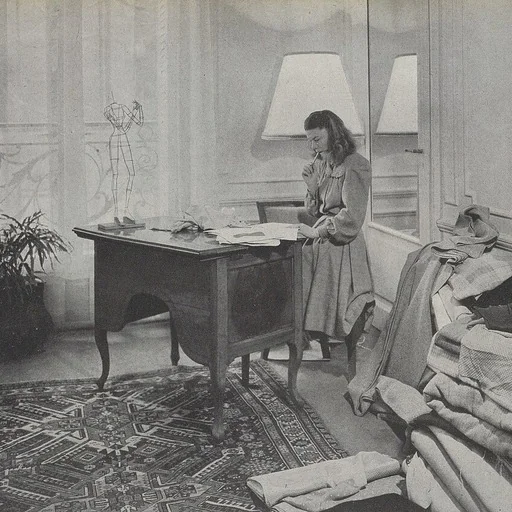
Marie-Louise Carven (31 August 1909 – 8 June 2015), born Carmen de Tommaso, was a French fashion designer who founded the house of Carven in 1945.
Museum
Palais Galliera - Musée de la Mode de la Ville de Paris
Continue through works from the same source collection.
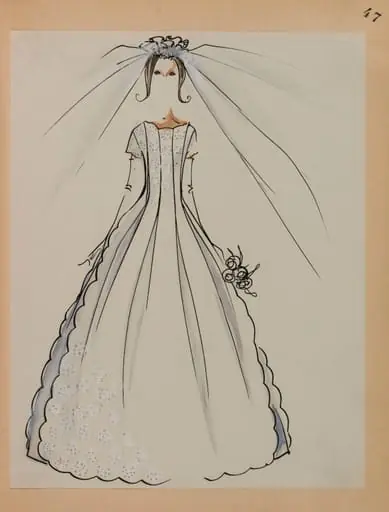 Robe de mariée festonnée et son voile
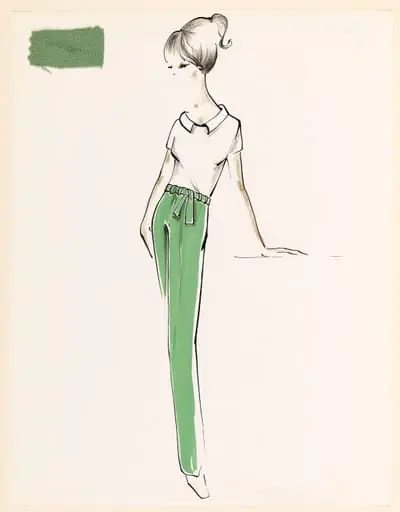 Haut blanc à manches courtes et pantalon vert à ceinture nouée
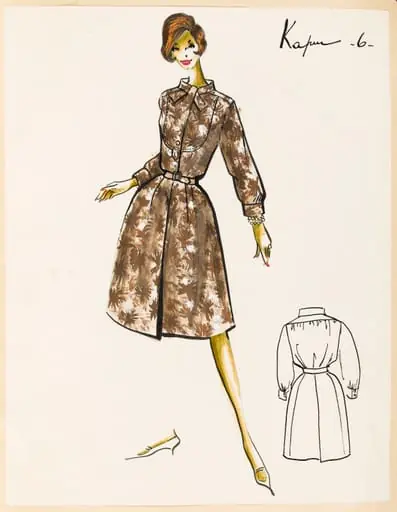 Kapur
Kapur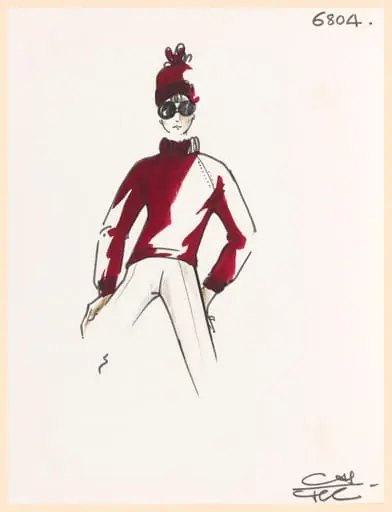 Pull-over à manches longues pourpre, bonnet assorti, pantalon et lunettes de soleil
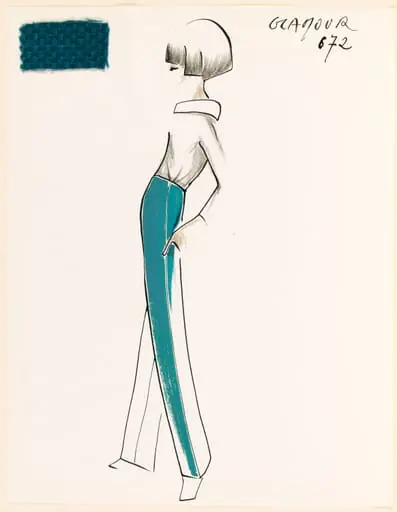 GLAMOUR
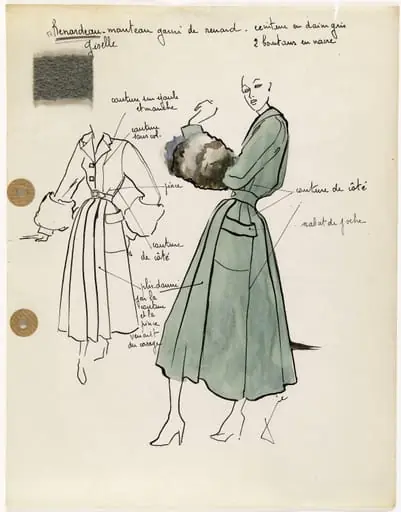 'Renardeau'
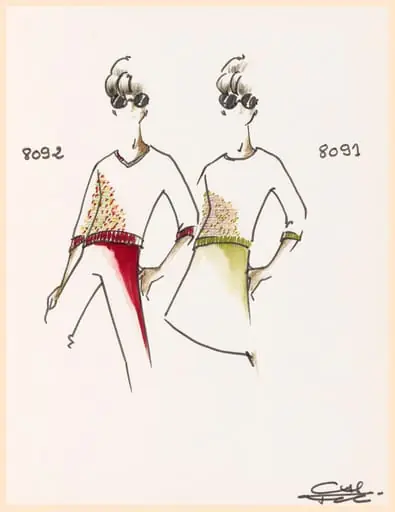 Pull-over à manches trois quarts et à encolure V à motifs multicolores, pantalon cerise et lunettes de soleil
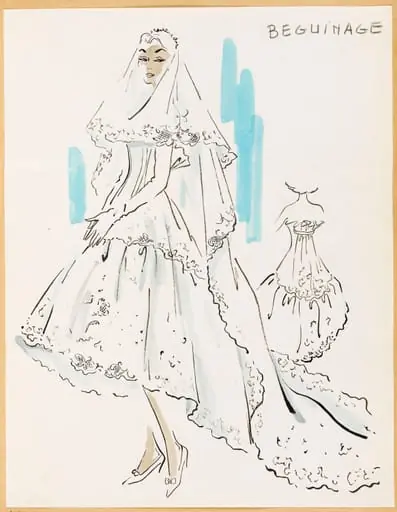 Béguinage