Artwork
Marco Polo
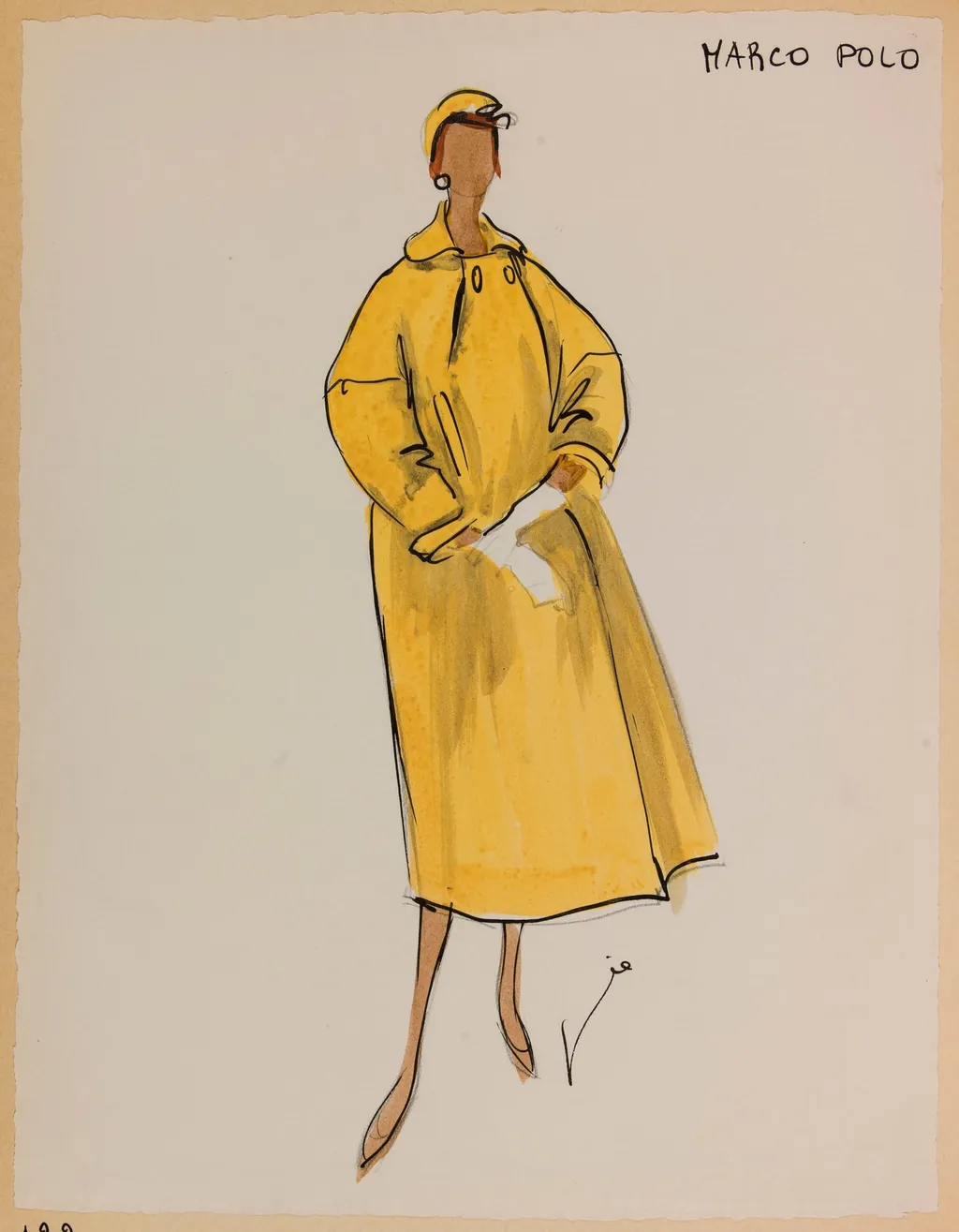
Marco Polo is a drawing by Marie-Louise Carven. It dates from 1956 and is held in the collection of the Palais Galliera - Musée de la Mode de la Ville de Paris.
About this work
Overview
Carven, who founded her fashion house in 1945, was among the early couturiers to transition from bespoke tailoring to accessible ready-to-wear.
Created around 1956 by French designer Marie-Louise Carven, this image captures a modeled ensemble from her prêt-à-porter collection. Carven, who founded her fashion house in 1945, was among the early couturiers to transition from bespoke tailoring to accessible ready-to-wear. The photograph, now in the Museum of Ethnography, documents a single outfit as a representative artifact of mid-century French fashion design.
Subject & Meaning
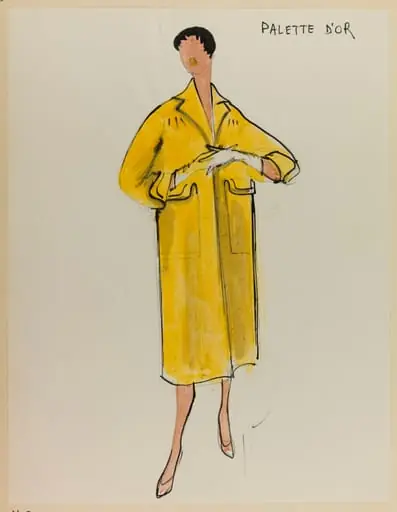
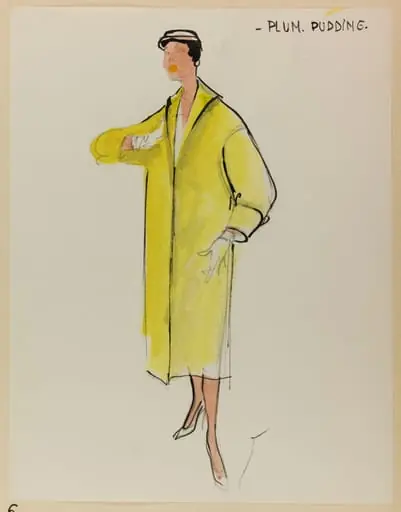
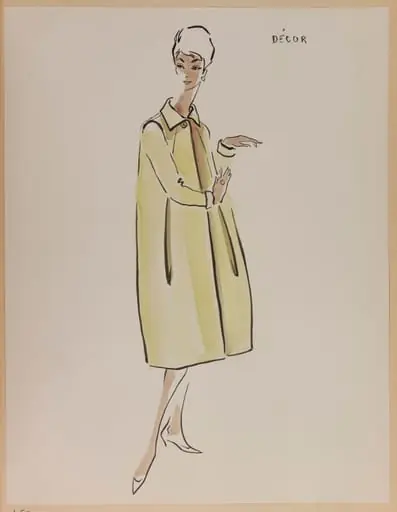
The subject is a woman dressed in a coordinated yellow coat and hat, white gloves, earrings, and high heels. The posture—hands clasped, ankles crossed—conveys quiet composure. The outfit reflects postwar ideals of refined femininity, blending practicality with elegance. The ensemble was designed for the petite figure, aligning with Carven’s focus on tailoring for smaller frames and everyday wear rather than theatrical display.
Technique & Style
The photograph presents the garment in a neutral beige setting, isolating the attire from contextual distraction. Lighting is even, emphasizing fabric texture and silhouette. The yellow coat’s cut and the hat’s shape suggest a streamlined, modernist approach, typical of Carven’s aesthetic. White gloves and minimal jewelry serve as deliberate accents, reinforcing restraint and polish without ornamentation.
History & Provenance
The image entered the collection of the Museum of Ethnography as part of a broader effort to document 20th-century dress as cultural material. Carven’s shift toward prêt-à-porter in the 1950s marked a significant moment in fashion history, and this photograph likely served as archival documentation of her commercial designs. Its preservation reflects institutional interest in everyday fashion as historical evidence.
Context
In mid-1950s France, fashion was redefining itself after wartime austerity. Carven’s ready-to-wear line offered women accessible, well-constructed clothing that retained couture sensibilities. This image reflects a cultural moment when middle-class women increasingly sought stylish, affordable garments. The portrait’s calm demeanor mirrors societal expectations of feminine decorum during the era.
Legacy
Carven’s integration of couture precision into mass-produced clothing influenced later designers who prioritized wearable elegance. This photograph preserves one of the earliest examples of a designer’s ready-to-wear vision captured as a static artifact. It contributes to the understanding of how fashion transitioned from elite craft to democratic practice in the postwar decades.
Artist & collection
Artist
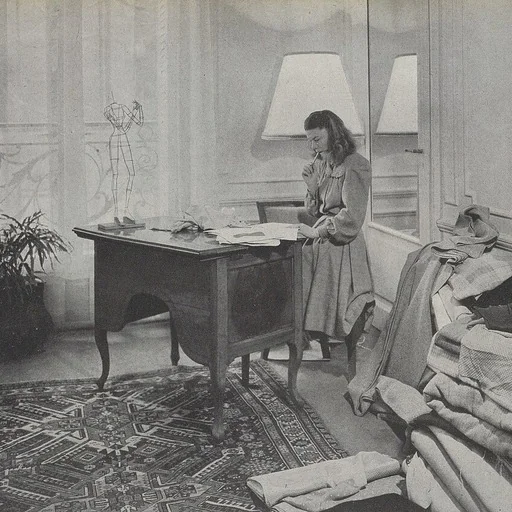
Marie-Louise Carven (31 August 1909 – 8 June 2015), born Carmen de Tommaso, was a French fashion designer who founded the house of Carven in 1945.
Museum
Palais Galliera - Musée de la Mode de la Ville de Paris
Continue through works from the same source collection.
 Robe de mariée festonnée et son voile
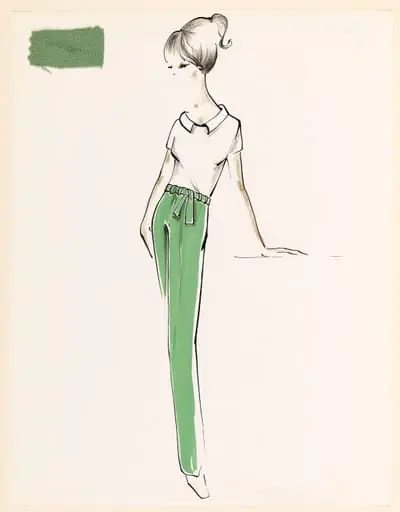 Haut blanc à manches courtes et pantalon vert à ceinture nouée
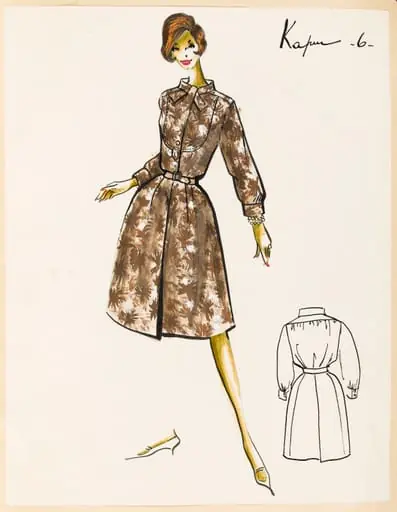 Kapur
Kapur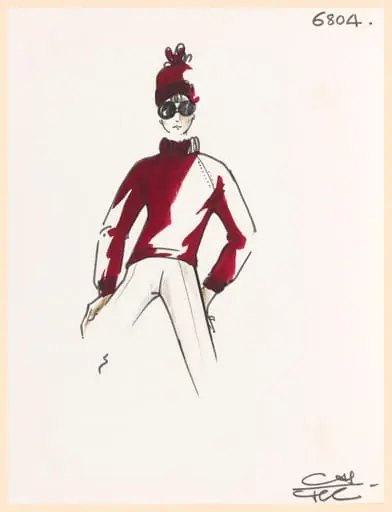 Pull-over à manches longues pourpre, bonnet assorti, pantalon et lunettes de soleil
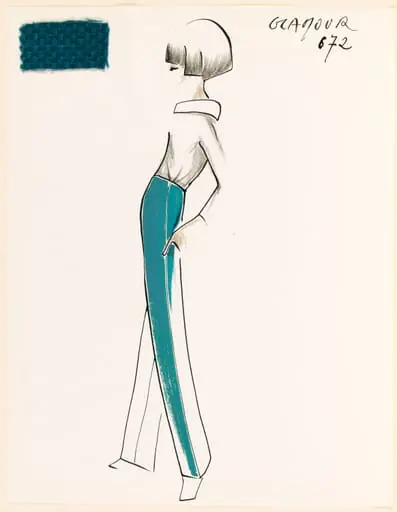 GLAMOUR
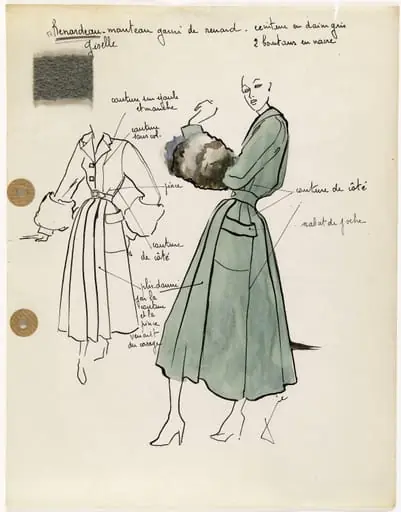 'Renardeau'
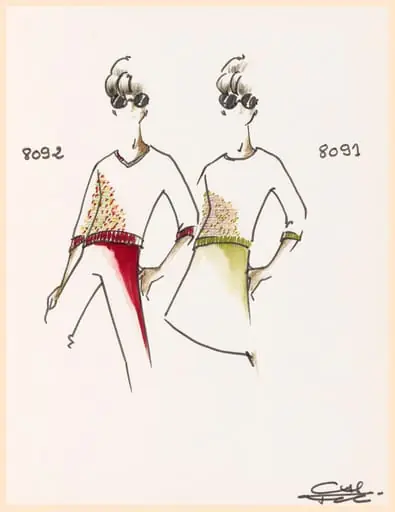 Pull-over à manches trois quarts et à encolure V à motifs multicolores, pantalon cerise et lunettes de soleil
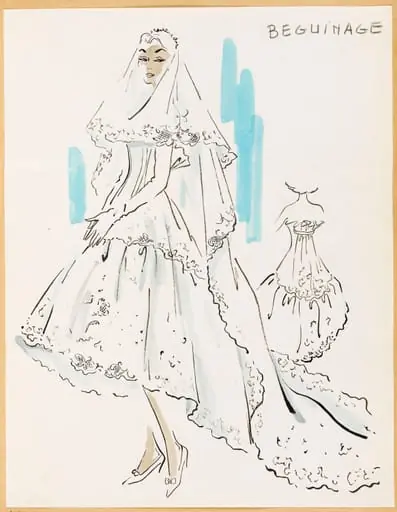 Béguinage