Artwork
Valse
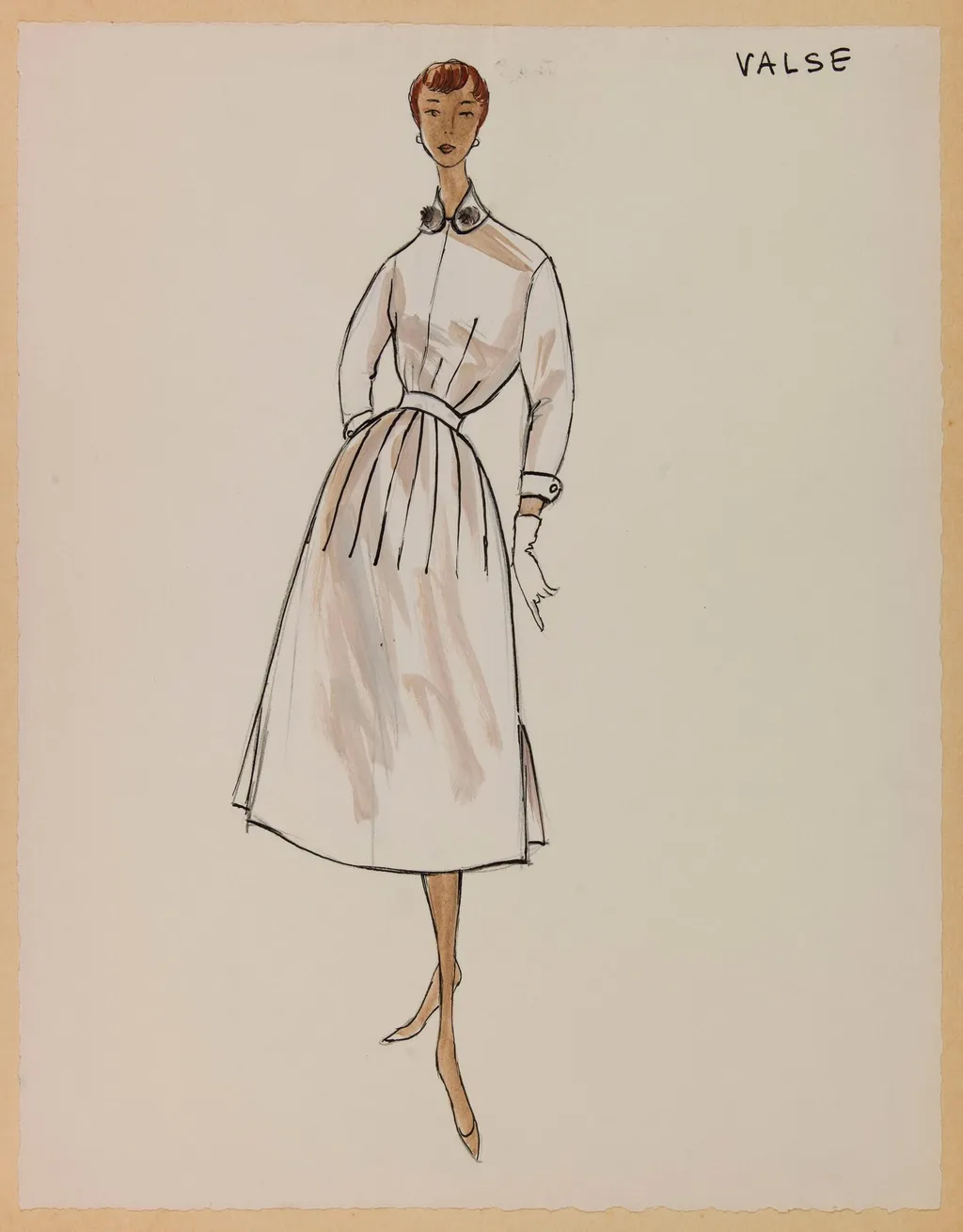
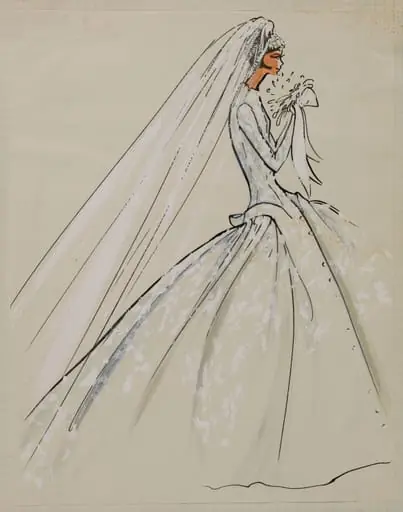
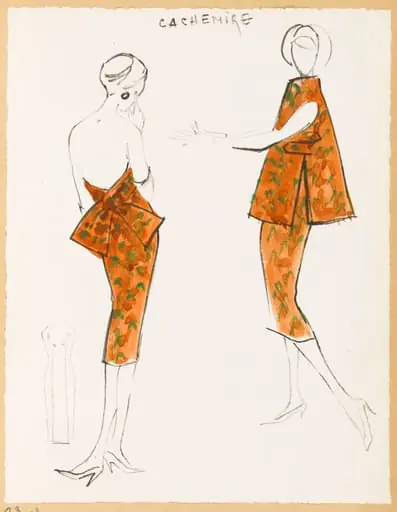
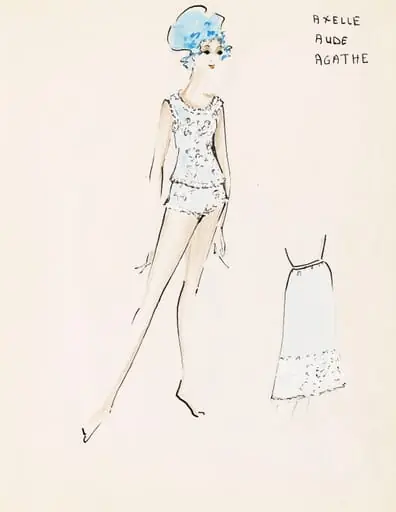
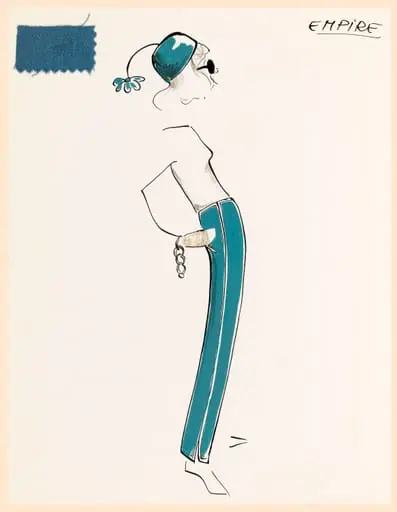
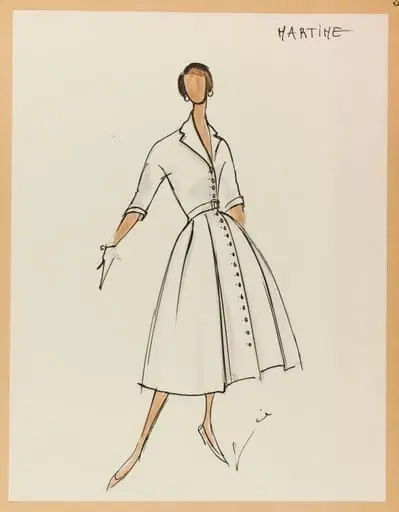
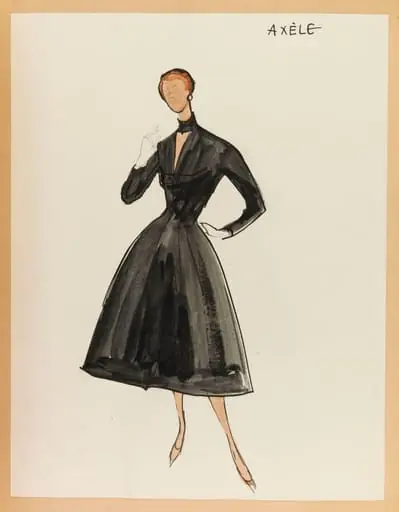
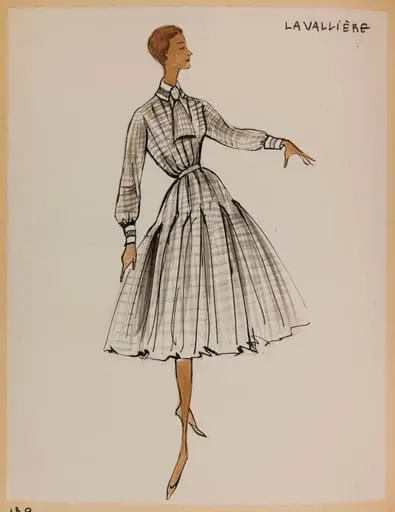
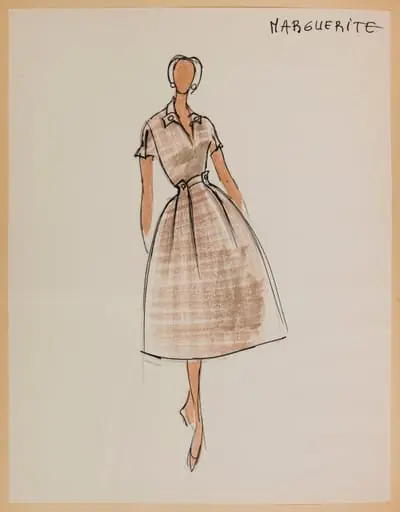
Valse is a drawing by Carven. It dates from 1956 and is held in the collection of the Palais Galliera - Musée de la Mode de la Ville de Paris.
About this work
Overview
Created around 1956, Valse is a pencil sketch by the French fashion designer Carven. It resides in the collection of the Museum of Ethnography, where it is preserved as part of a broader archive of mid-century fashion design. The work is not a finished garment but a rapid study, capturing a moment of posture and movement with minimal lines and subtle tonal shifts.
Subject & Meaning
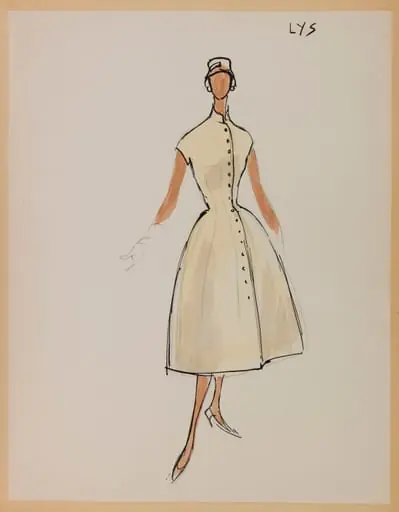
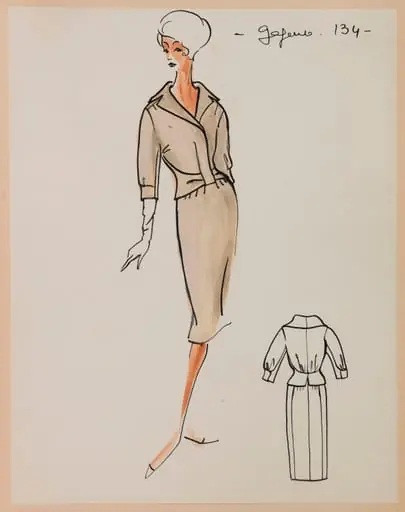
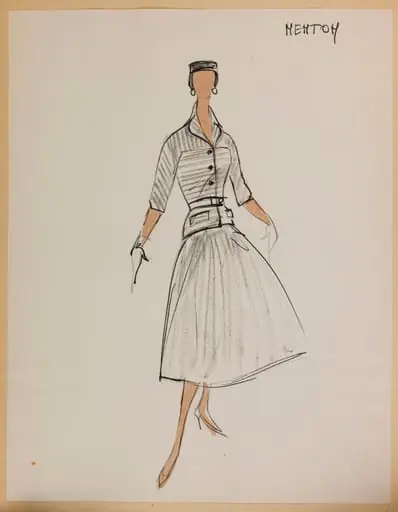
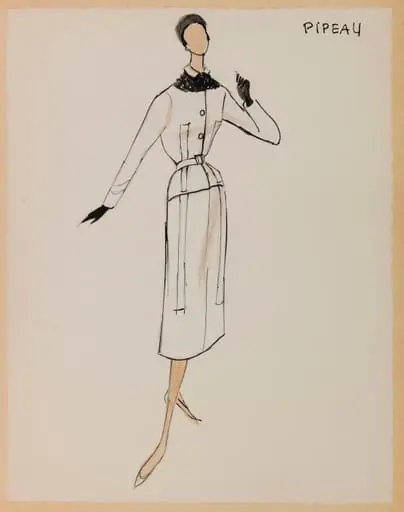
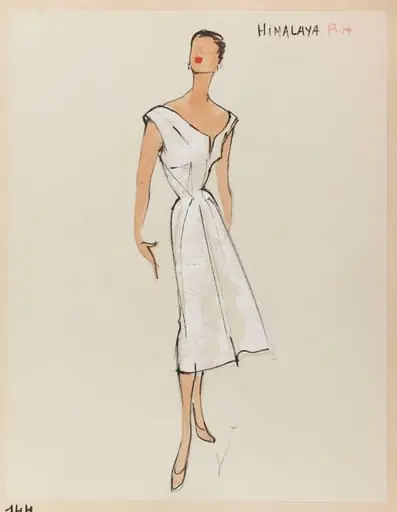
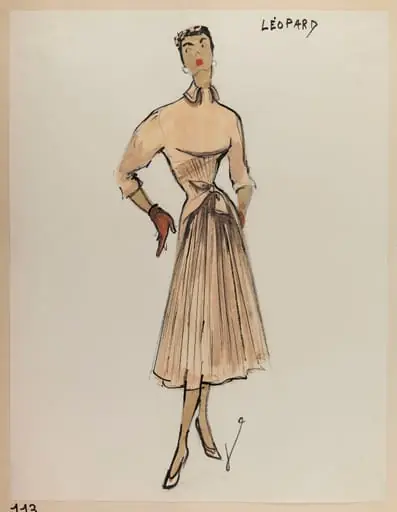
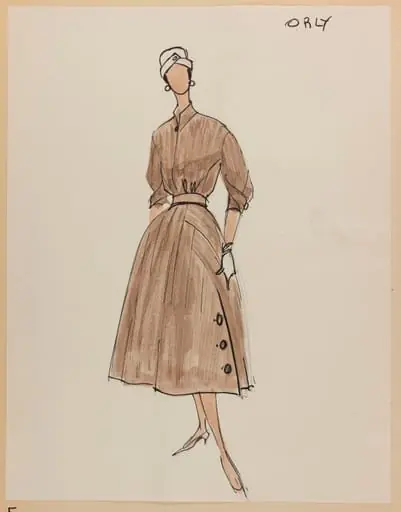
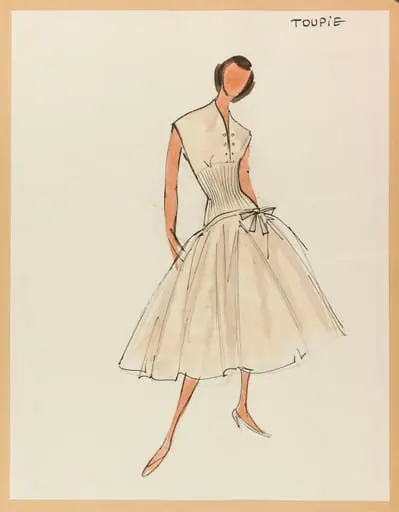
The figure depicts a woman in a modest, tailored ensemble: a light jacket with a collar and buttons, paired with a flowing, flared skirt. Her stance—one hand on her hip—suggests poise and readiness for motion. The title, Valse, implies a link to dance, possibly evoking the rhythm of a waltz or the fluidity of movement inherent in the garment’s design, rather than depicting an actual dancer.
Technique & Style
The drawing employs loose, fluid pencil strokes to suggest form without heavy definition. Soft shading conveys the weight and drape of fabric, particularly in the skirt’s folds, while the hair and jacket are rendered with restrained detail. The sketch’s immediacy reflects a designer’s quick study—intended to capture silhouette and gesture rather than precise anatomy or texture.
History & Provenance
The sketch entered the Museum of Ethnography’s collection as part of a donation or acquisition of Carven’s archival materials, likely during the late 20th century. Its preservation there signals an institutional interest in fashion as cultural artifact, situating design within broader social and aesthetic contexts rather than as mere commercial output.
Context
In the mid-1950s, Parisian fashion houses emphasized elegance and wearable artistry. Carven, known for refined, feminine silhouettes, often designed for active, modern women. This sketch reflects that ethos—clothing intended to move with the body, harmonizing structure with grace, aligning with postwar ideals of practical sophistication.
Legacy
Valse endures as a quiet example of fashion drawing’s role in design development. It illustrates how sketches functioned as both creative tools and records of aesthetic intent. Today, it contributes to scholarly understanding of mid-century French fashion, offering insight into the quiet, iterative process behind garments that shaped everyday style.
Artist & collection
Artist
These delicate ink-on-paper drawings capture the quiet poetry of everyday things: pinecones, reeds, apples.
Museum
Palais Galliera - Musée de la Mode de la Ville de Paris
Continue through works from the same source collection.