Artwork
Vautour
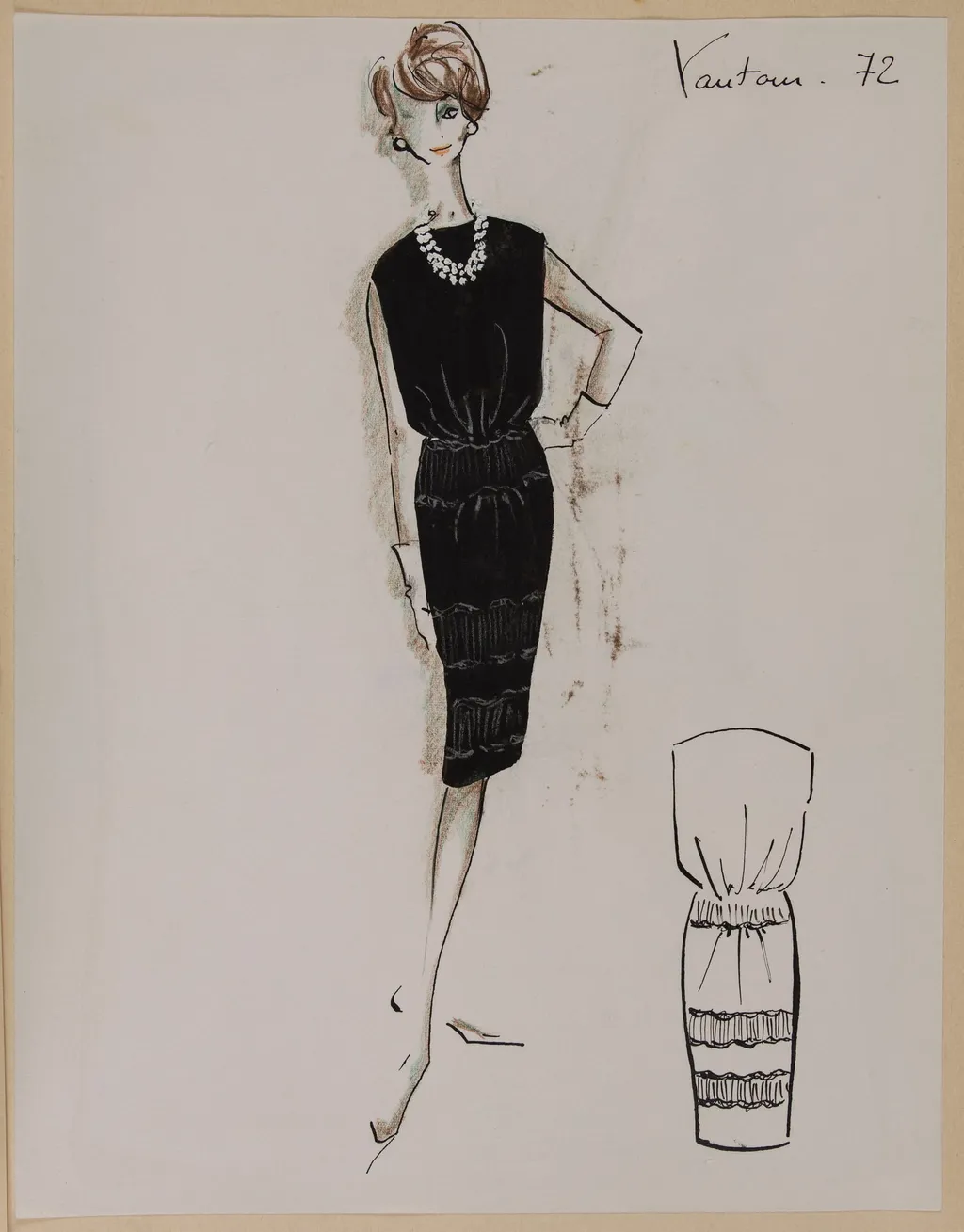
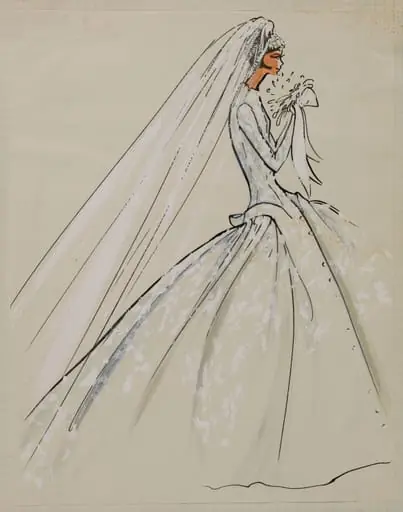
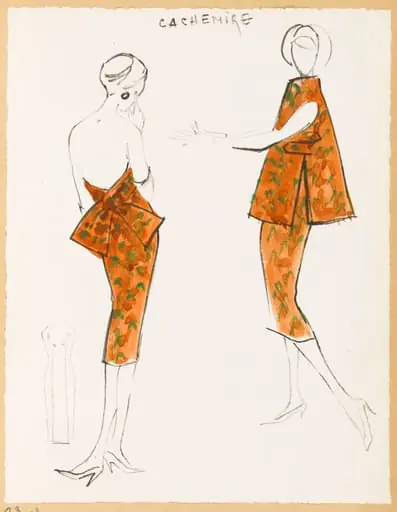
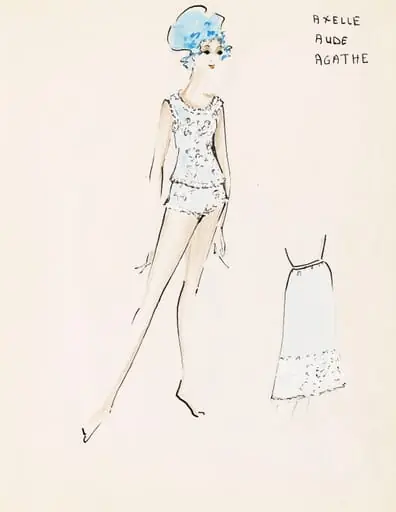
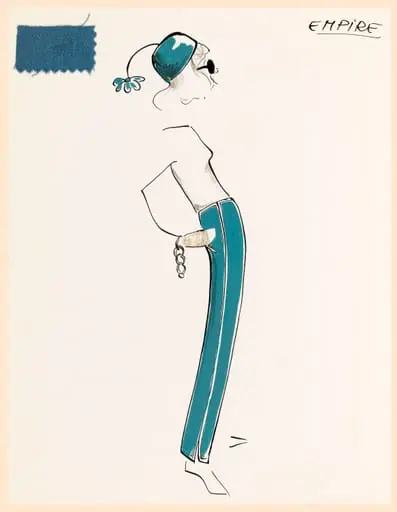
Vautour is a drawing by Carven. It dates from 1960 and is held in the collection of the Palais Galliera - Musée de la Mode de la Ville de Paris.
About this work
Overview
It functions as a fashion study rather than a finished portrait, emphasizing silhouette and construction over individual identity.
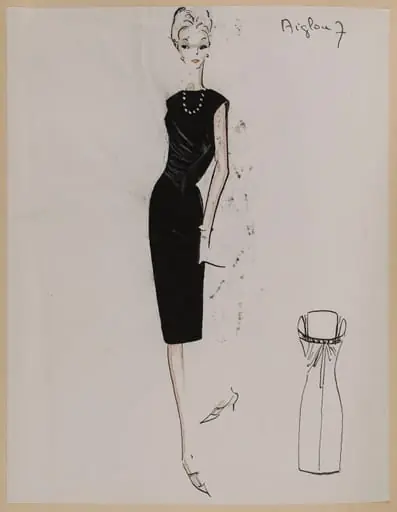
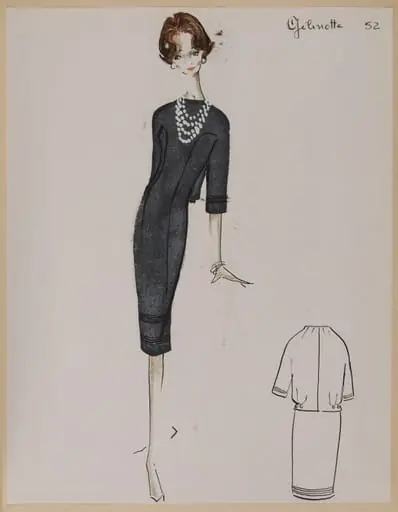
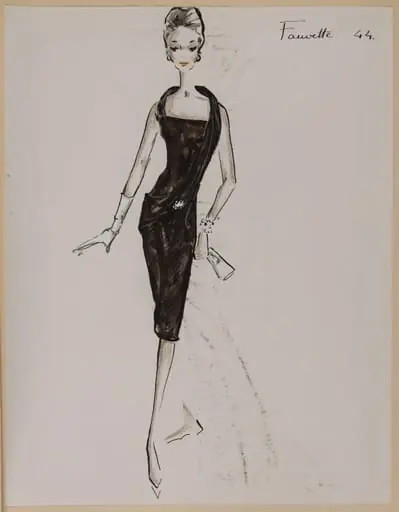
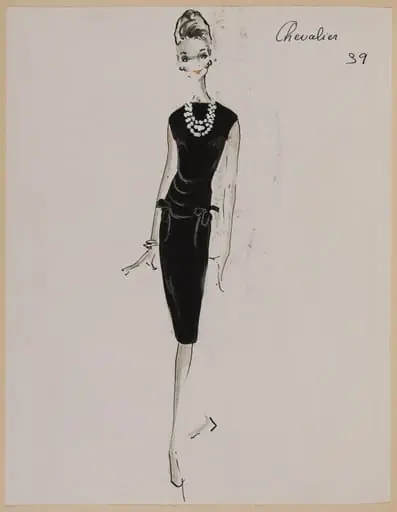
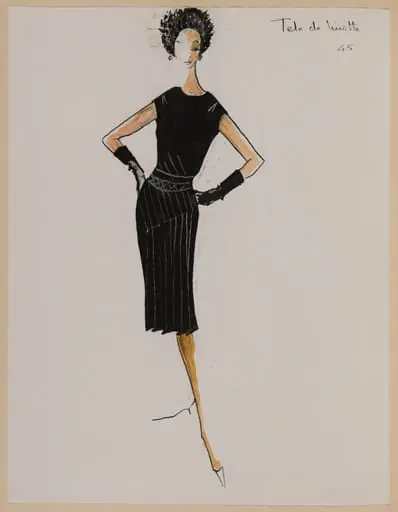
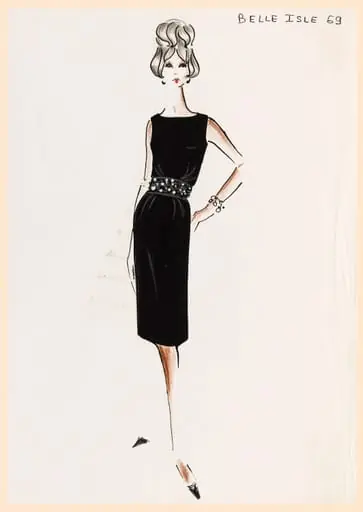
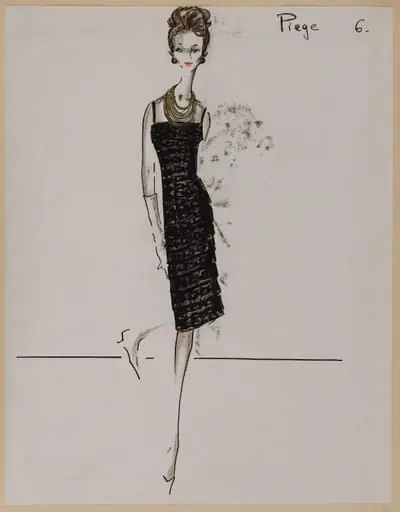
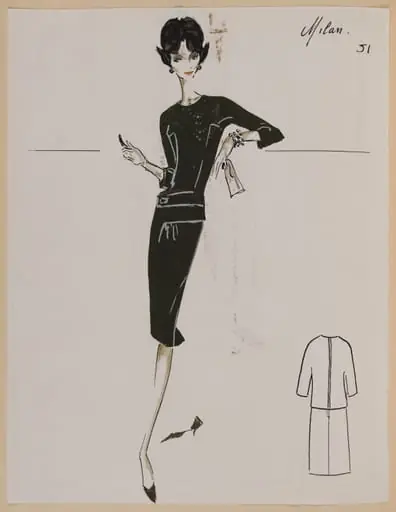
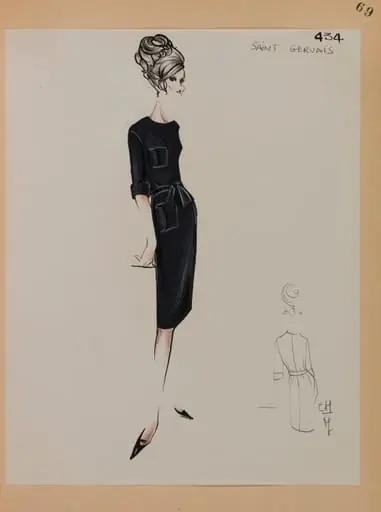
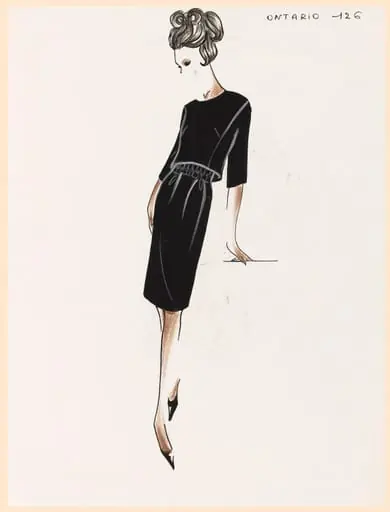
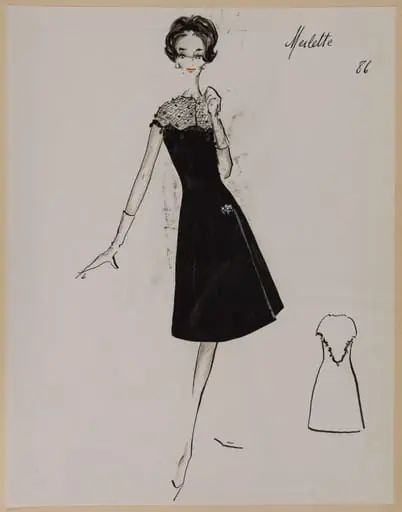
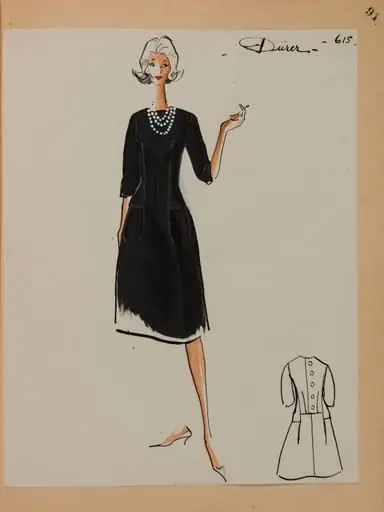
Vautour, dated around 1960, is a pencil sketch by designer Carven, currently in the collection of the Museum of Ethnography. The work captures a woman in a tailored black ensemble, rendered with swift, expressive strokes. It functions as a fashion study rather than a finished portrait, emphasizing silhouette and construction over individual identity. The drawing’s immediacy suggests it was made during the design process, possibly as a reference for garment development.
Subject & Meaning
The figure is anonymous, her identity subordinated to the clothing she wears. The sleek black dress and jacket, paired with minimal accessories—a pearl necklace and neatly pinned hair—convey a restrained modernity. The inclusion of a small rectangular object in her hand hints at functionality, perhaps a compact or case, grounding the design in everyday use. The sketch’s focus on the garment’s form suggests an interest in utility and elegance as intertwined values.
Technique & Style
Carven employed loose, confident lines to define the dress’s contours, using subtle shading to imply volume and texture. Cross-hatching and light tonal washes suggest the fall of fabric and the play of light, without over-rendering. The back view sketched beside the figure provides technical insight, revealing attention to closures and seams. The drawing’s spontaneity reflects a working method where speed and clarity serve design precision.
History & Provenance
The sketch entered the Museum of Ethnography’s collection as part of a broader acquisition of mid-century fashion materials. Its origin traces to Carven’s design studio in Paris during the early 1960s, a period when the house emphasized minimalist tailoring. Though not publicly exhibited for decades, it was preserved as an archival record of the brand’s design process, reflecting a shift toward understated elegance in postwar French fashion.
Context
Created during a time when Parisian fashion was moving away from overt ornamentation, Vautour aligns with the rise of clean-lined, wearable design. Carven’s work responded to a growing demand for practical yet refined clothing among urban women. The sketch’s focus on structure over decoration mirrors broader cultural trends favoring efficiency and modernity, paralleling developments in architecture and industrial design of the era.
Legacy
Vautour remains a quiet testament to the role of sketching in fashion design, preserving the transition from idea to garment. It illustrates how designers like Carven prioritized form and function, influencing later generations who valued restraint in clothing. Though not widely known outside archival circles, the work contributes to understanding the quiet discipline behind mid-century fashion innovation.
Artist & collection
Artist
These delicate ink-on-paper drawings capture the quiet poetry of everyday things: pinecones, reeds, apples.

Museum
Palais Galliera - Musée de la Mode de la Ville de Paris
Continue through works from the same source collection.