Artwork
Gélinotte
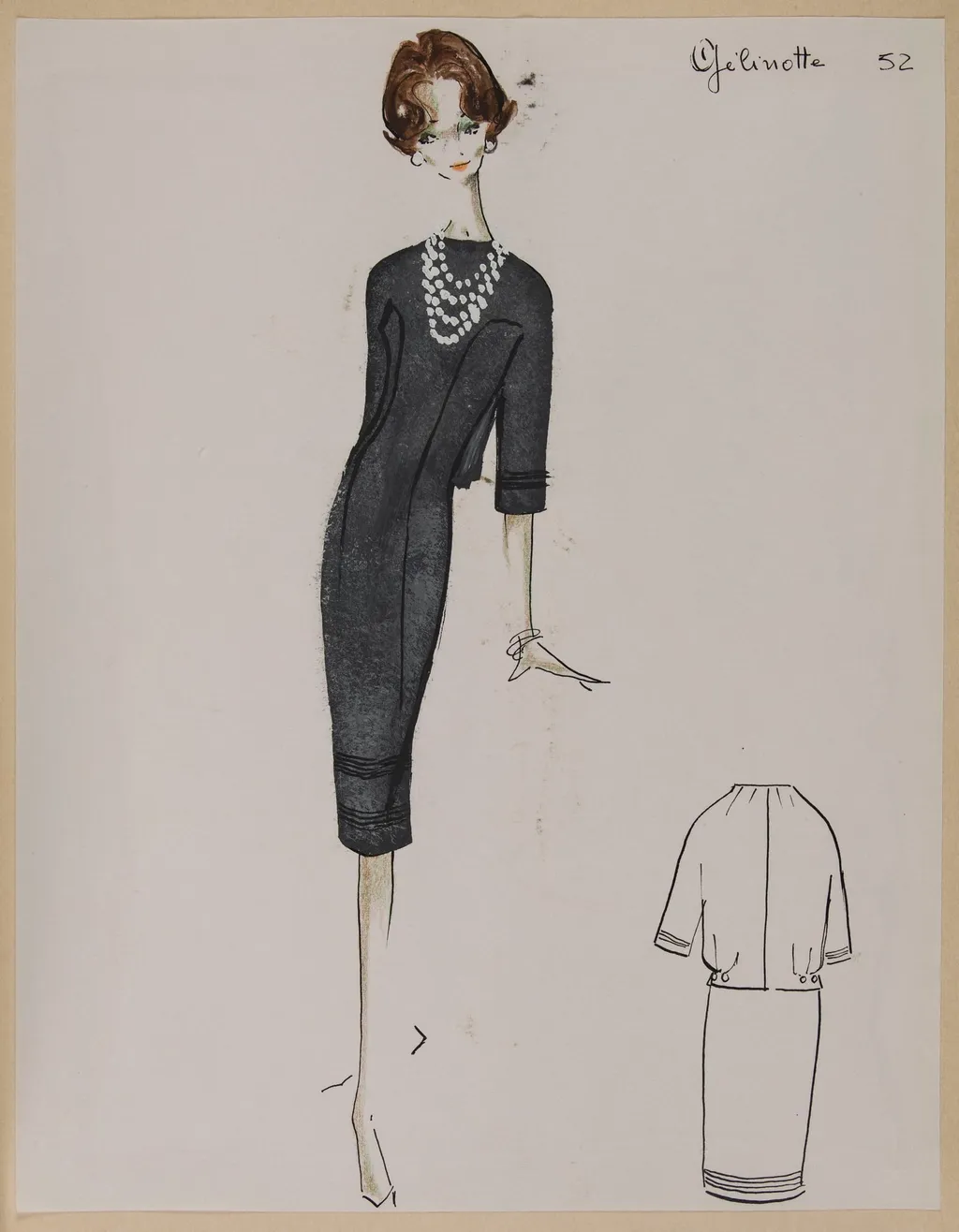
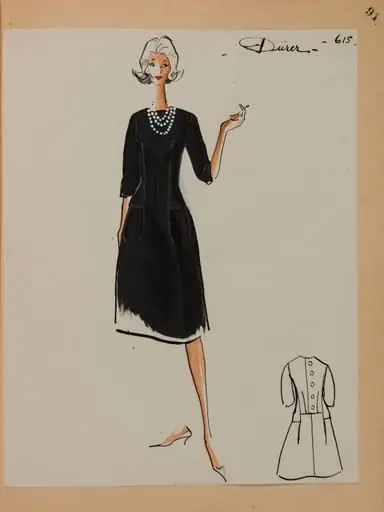
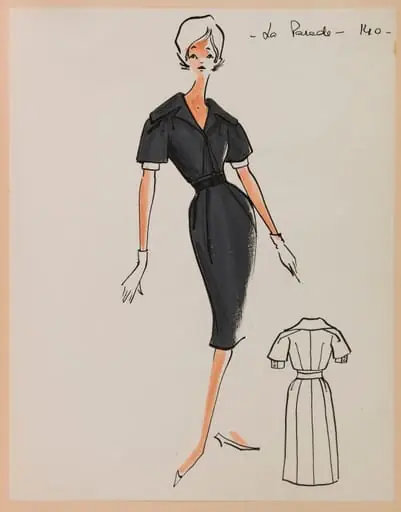
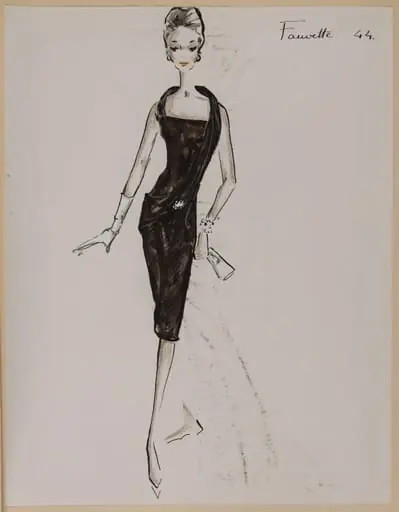
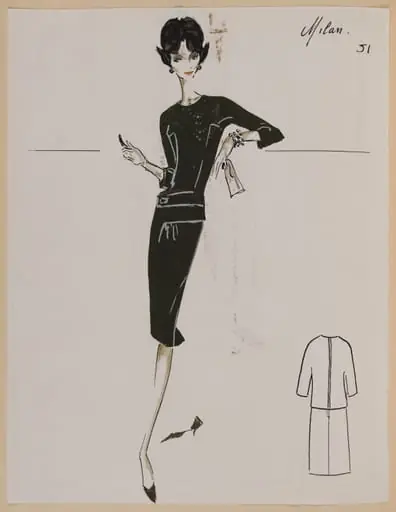
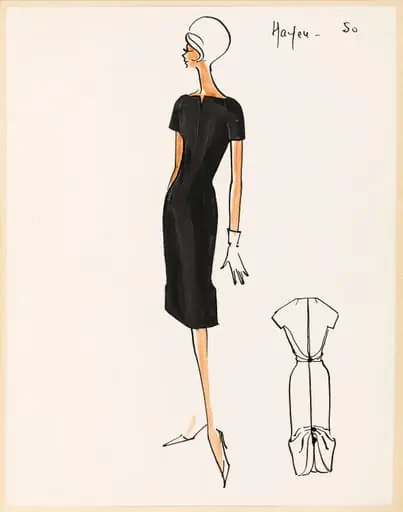
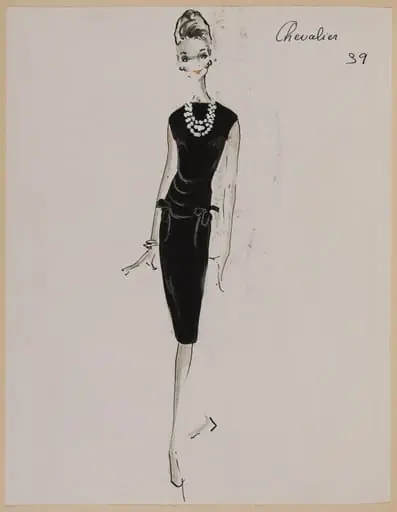
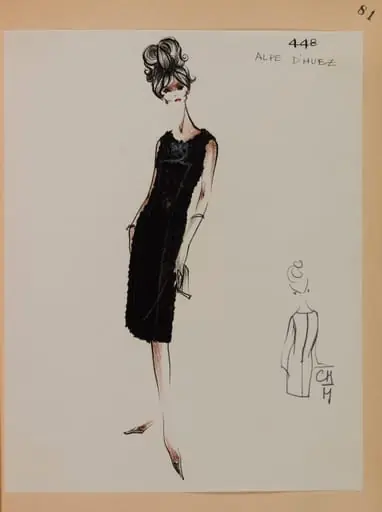
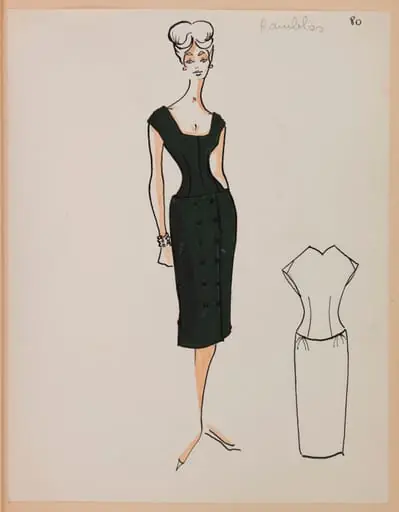
Gélinotte is a drawing by Marie-Louise Carven. It dates from 1960 and is held in the collection of the Palais Galliera - Musée de la Mode de la Ville de Paris.
About this work
Overview
The piece resides in the Museum of Ethnography’s collection, where it is contextualized within broader cultural expressions of mid-century dress.
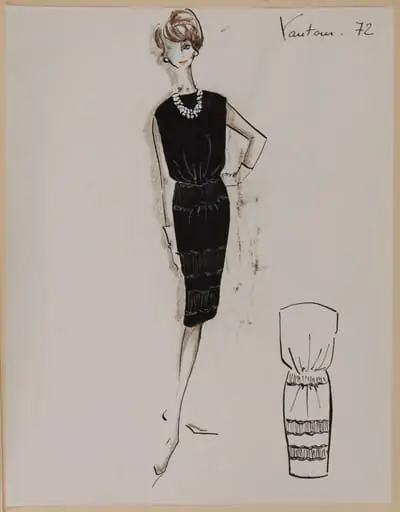
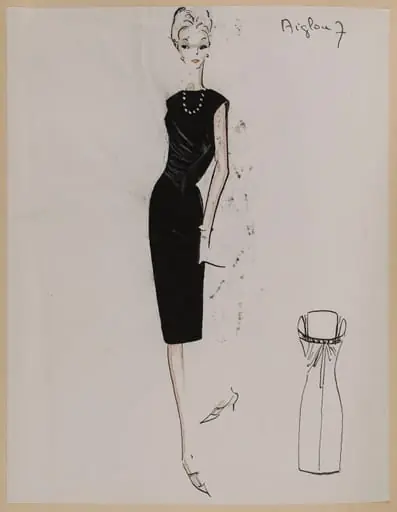
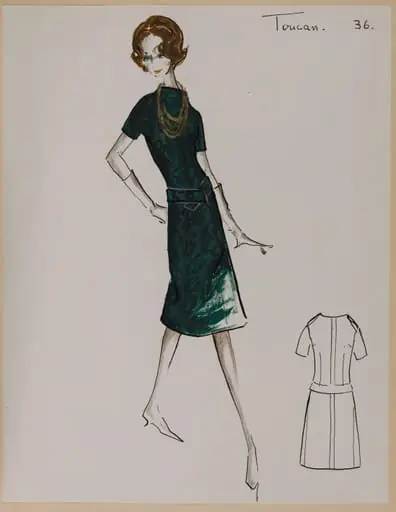
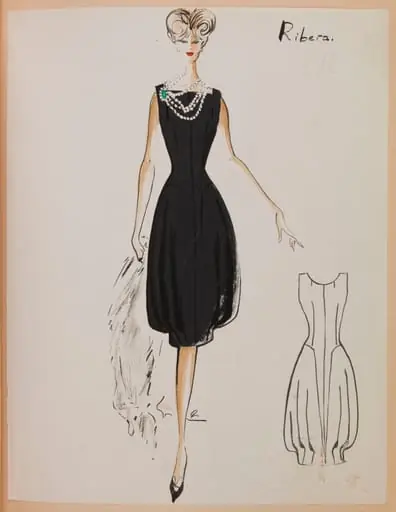
Created around 1960 by French designer Marie-Louise Carven, *Gélinotte* is a fashion sketch in ink on paper, capturing a minimalist black dress with subtle decorative detail. Though classified as an image, it functions as a design study from Carven’s atelier, reflecting her approach to elegant, wearable forms. The piece resides in the Museum of Ethnography’s collection, where it is contextualized within broader cultural expressions of mid-century dress.
Subject & Meaning
The drawing depicts a woman in a tailored, high-necked black dress, adorned with a vertical line of white dots along the front. Her poised stance—hand on hip—conveys quiet confidence. The simplicity of the figure and the dress suggests an ideal of understated femininity, aligned with Carven’s focus on practicality and refinement for petite frames. The white dots may reference embroidery or beading, hinting at ornamentation that enhances without overwhelming.
Technique & Style
Carven rendered the sketch with swift, fluid ink lines that convey movement and immediacy. The figure is rendered in profile, while a simplified rear view of the dress appears beside it, emphasizing the garment’s clean silhouette. The contrast between the dark fabric and the white dots creates visual rhythm. The loose, unpolished quality of the lines reflects the sketch’s function as a working document, not a finished illustration.
History & Provenance
Marie-Louise Carven founded her fashion house in 1945 and was among the first French couturiers to develop a ready-to-wear line, democratizing access to designer clothing. *Gélinotte* likely originated in her studio during the late 1950s or early 1960s, a period when she refined her signature aesthetic. The sketch entered the Museum of Ethnography’s holdings as part of a collection documenting everyday fashion practices and design processes.
Context
In postwar France, fashion design increasingly bridged haute couture and mass production. Carven’s work responded to changing lifestyles, favoring light fabrics and adaptable silhouettes. *Gélinotte* reflects this shift—its restrained elegance aligns with the era’s move away from wartime austerity toward quiet sophistication. The sketch’s presence in an ethnographic museum underscores how clothing design became a lens for understanding social norms and gendered expression.
Legacy
Carven’s innovations in prêt-à-porter and her focus on fit for smaller frames influenced later designers seeking accessibility without sacrificing style. *Gélinotte* endures as a quiet testament to her design philosophy: precision tempered with simplicity. Though not widely exhibited, its inclusion in an ethnographic collection affirms its value as a material record of mid-century fashion’s evolving relationship with everyday life.
Artist & collection
Artist
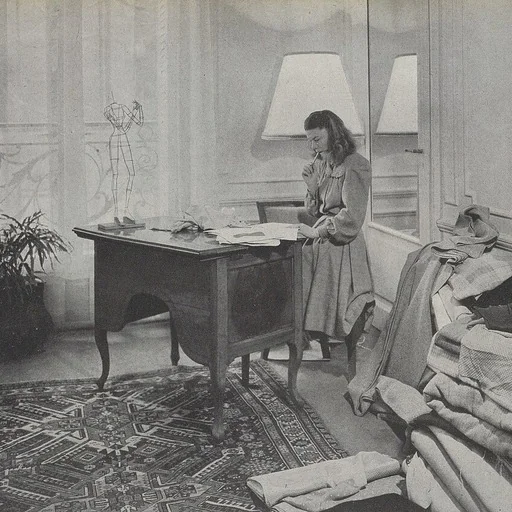
Marie-Louise Carven (31 August 1909 – 8 June 2015), born Carmen de Tommaso, was a French fashion designer who founded the house of Carven in 1945.
Museum
Palais Galliera - Musée de la Mode de la Ville de Paris
Continue through works from the same source collection.
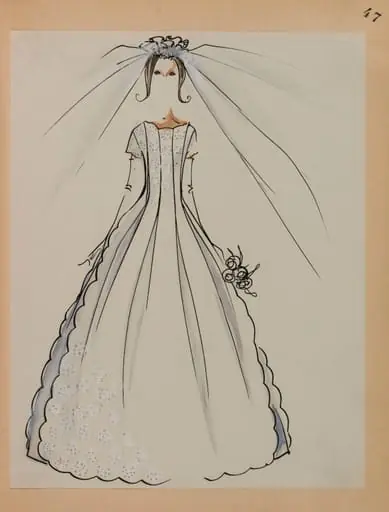 Robe de mariée festonnée et son voile
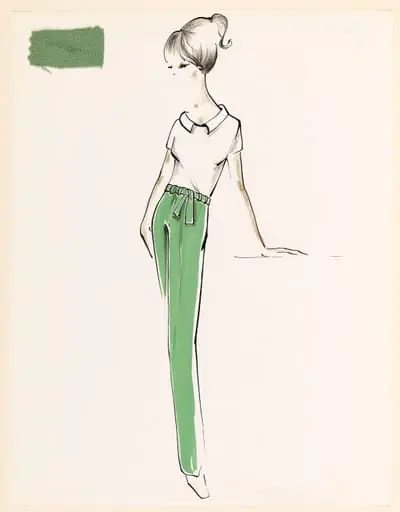 Haut blanc à manches courtes et pantalon vert à ceinture nouée
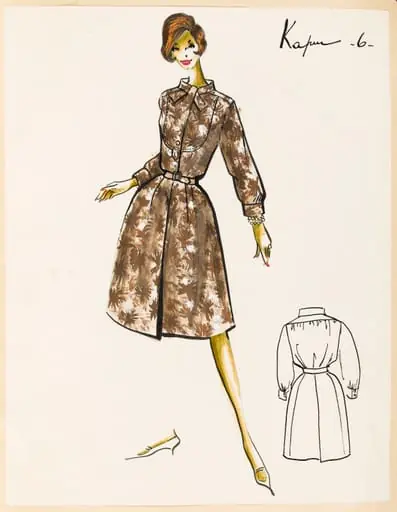 Kapur
Kapur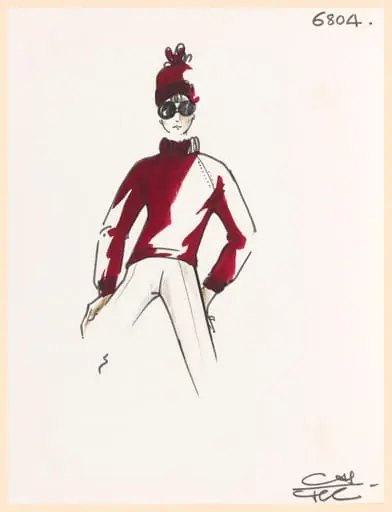 Pull-over à manches longues pourpre, bonnet assorti, pantalon et lunettes de soleil
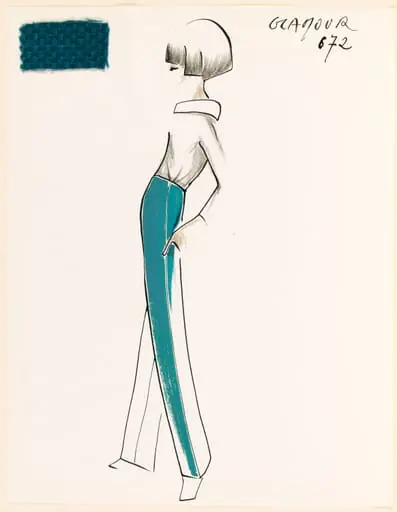 GLAMOUR
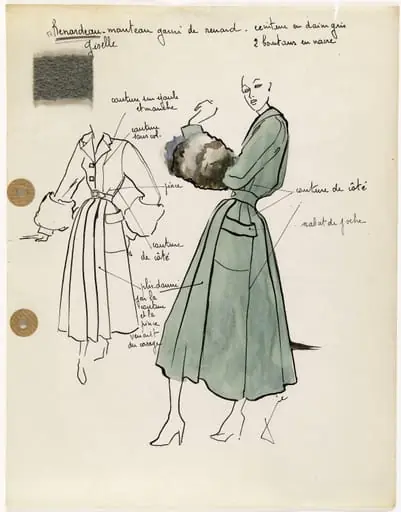 'Renardeau'
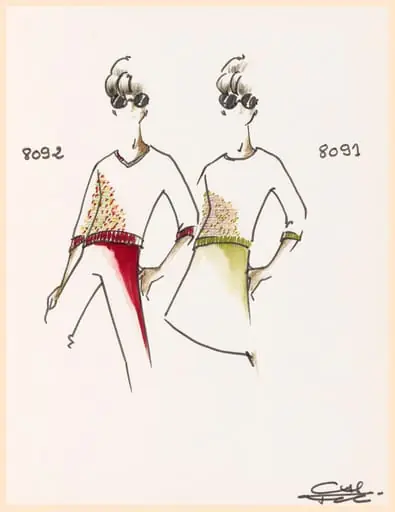 Pull-over à manches trois quarts et à encolure V à motifs multicolores, pantalon cerise et lunettes de soleil
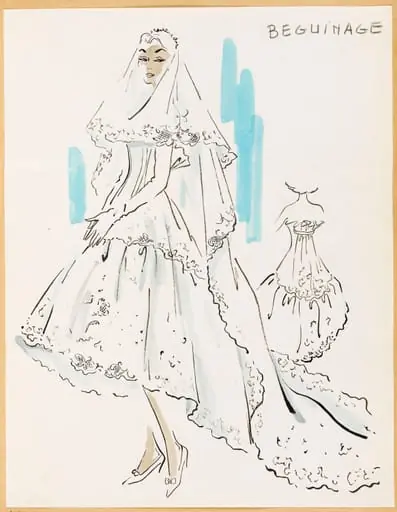 Béguinage