Artwork
Lake of Brienz
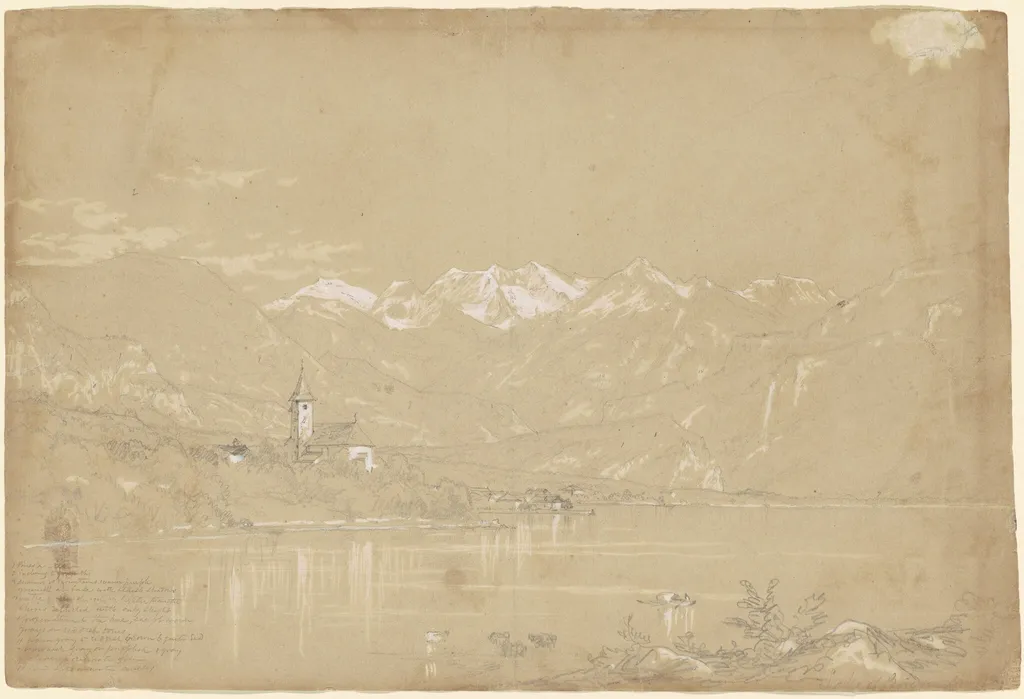
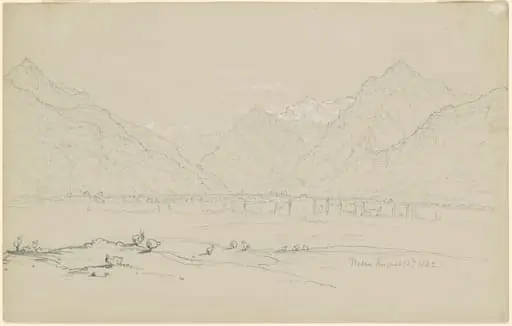
Lake of Brienz is a gouache drawing by the Impressionist artist John William Casilear. It dates from 1801 and is held in the collection of the National Gallery of Art.
About this work
Overview
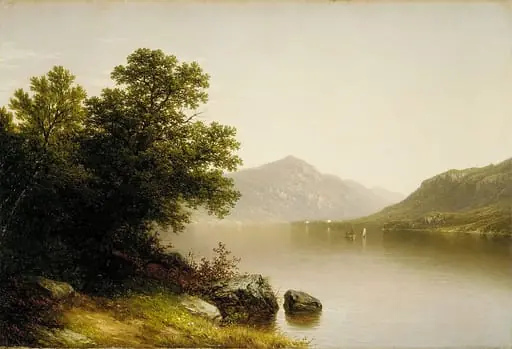
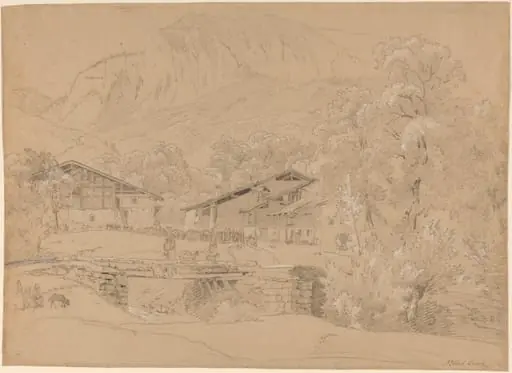
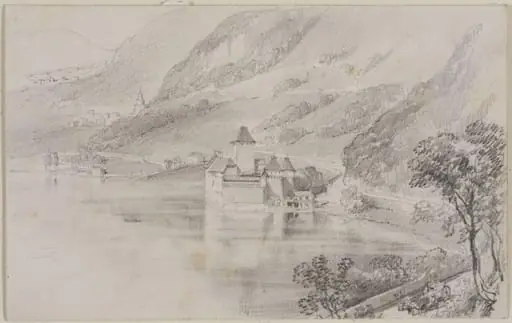
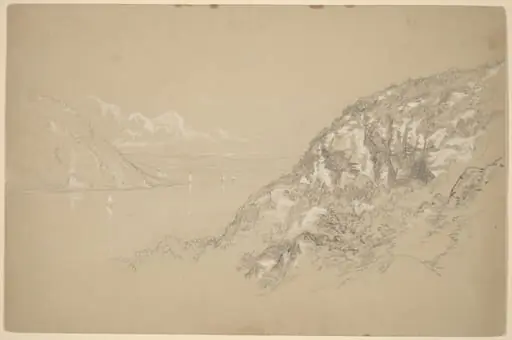
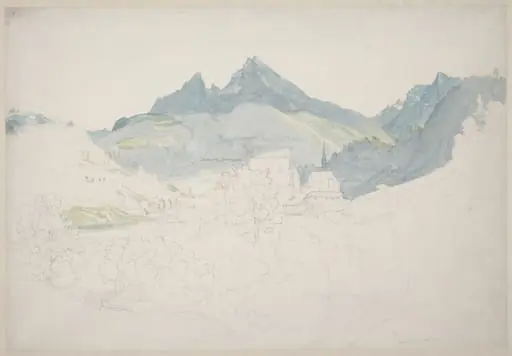
John William Casilear’s 1801 drawing, titled Lake of Brienz, presents a calm alpine scene rendered in graphite and gouache on wove paper. The composition balances foreground water, a modest settlement, and distant snow‑capped peaks, creating a sense of spaciousness within a modestly sized work.
Subject & Meaning
The image depicts the Swiss lake of Brienz, its placid surface reflecting surrounding foliage and the silhouette of a small village whose church steeple rises above the trees. The tranquil atmosphere suggests a contemplative appreciation of nature’s quiet grandeur.
Technique & Style
Casilear combines dry graphite line work with washes of opaque gouache, allowing fine architectural details to coexist with broader tonal fields. The wove paper surface supports subtle texture, while the limited palette emphasizes light and shadow rather than vivid coloration.
History & Provenance
Created in 1801, the drawing belongs to the early phase of Casilear’s career, when he was active in the United States after studying in Europe. Its subsequent ownership record is limited, but the work has been held in private collections before entering a public institution.
Context
Casilear, a member of the Hudson River School circle, often rendered European landscapes as studies for his American scenes. Lake of Brienz reflects the period’s fascination with picturesque travel sketches, serving both as a record of a specific locale and as a model for atmospheric landscape composition.
Artist & collection