Artwork
Berchtesgaden with the Watzmann Peak in the Distance
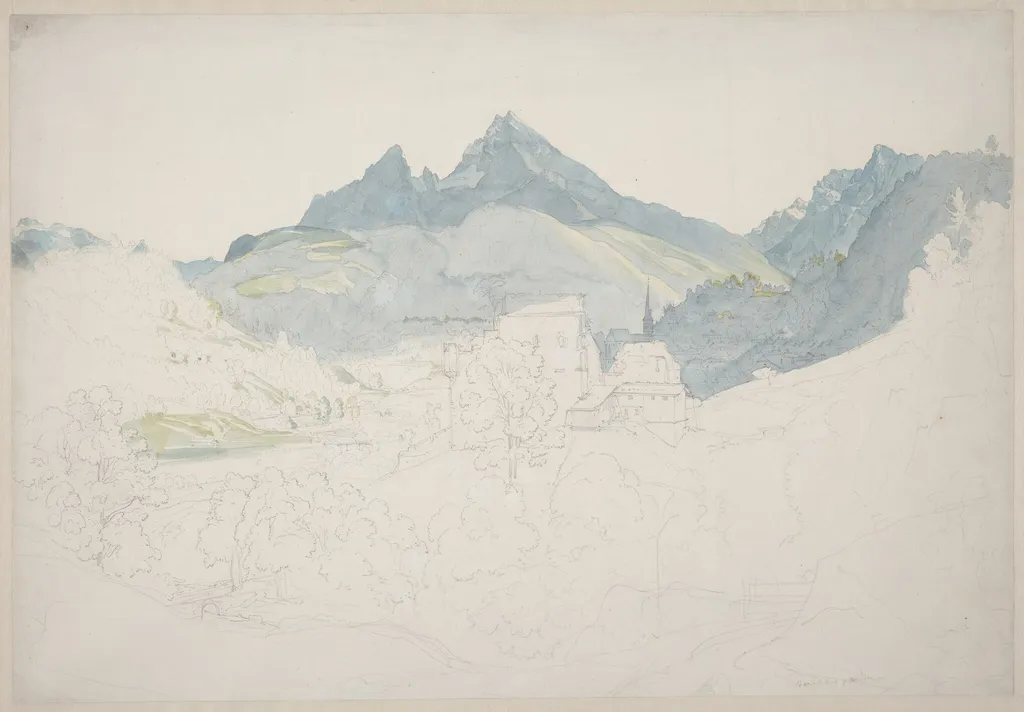
Berchtesgaden with the Watzmann Peak in the Distance is a graphite drawing by the Romanticist artist Ernst Fries. It dates from 1822 and is held in the collection of the National Gallery of Art.
About this work
The painting is called Berchtesgaden with the Watzmann Peak in the Distance.
It's from 1822 and was made by Ernst Fries.
The artist used watercolor over graphite on wove paper, which was a common technique back then.
This painting is a landscape, which was a popular genre during the Romanticism movement.
To learn more about this style, look into the movement: Romanticism.
Overview
Berchtesgaden with the Watzmann Peak in the Distance is a watercolor drawing on wove paper, created in 1822 by Ernst Fries, a German artist linked to the Heidelberg Romanticism movement.
Subject & Meaning
The work depicts a mountainous landscape near Berchtesgaden, with the prominent Watzmann Peak in the background, capturing a natural scene characteristic of Romantic-era landscape painting.
Technique & Style
Fries employed a common technique of his time: watercolor over graphite, combining precise underdrawings with expressive watercolor washes, reflecting the transitional stylistic period between Romanticism and emerging Realism.
History & Provenance
Created in 1822, the piece is attributed to Ernst Fries, part of a younger generation of artists including Karl Philipp Fohr and Carl Rottmann, active during a stylistic shift in early 19th-century German art.
Context
This landscape aligns with the popular Romanticism genre, emphasizing natural beauty and grandeur, though Fries's approach also hints at the forthcoming Realist movement's emphasis on detail and accuracy.
Artist & collection
Artist
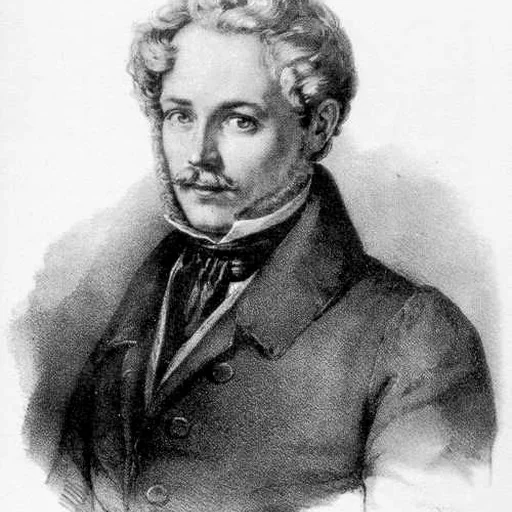
Ernst Fries (22 June 1801, Heidelberg – 11 October 1833, Karlsruhe) was a German painter, draftsman, watercolourist, etcher, printmaker, and lithograph.

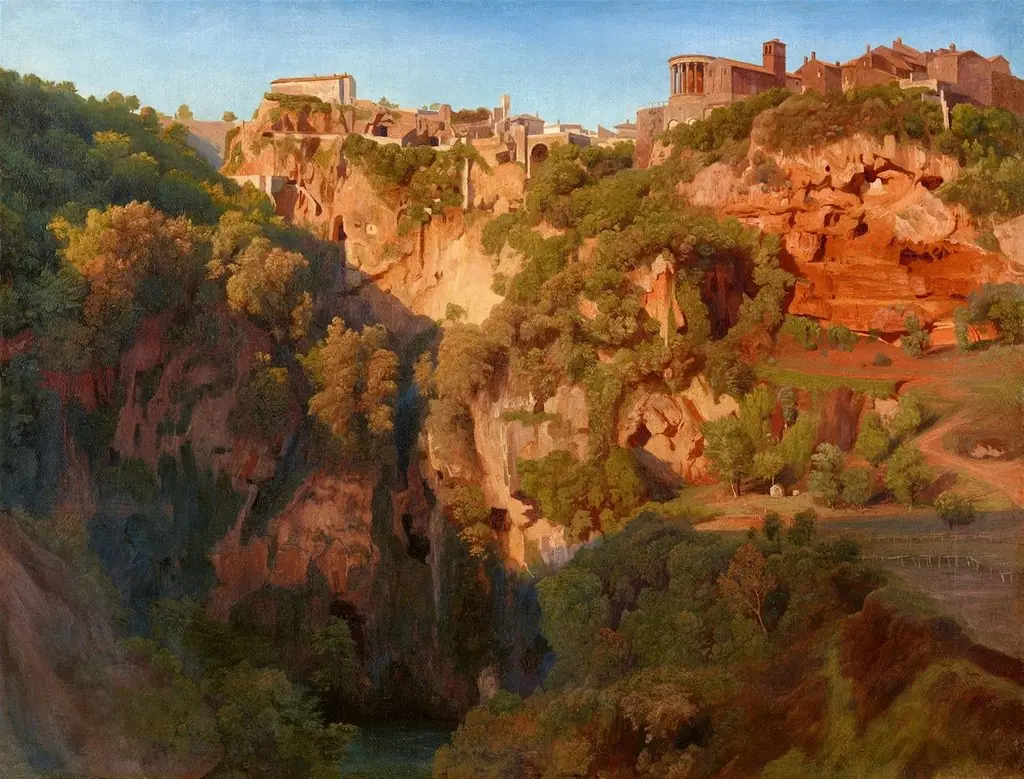 The Waterfalls at Tivoli with the Ponte Lupo, Temple of Vesta, and Temple of Sibyl The Waterfalls at Tivoli with the Ponte Lupo, Temple of Vesta, and Temple of Sibyl
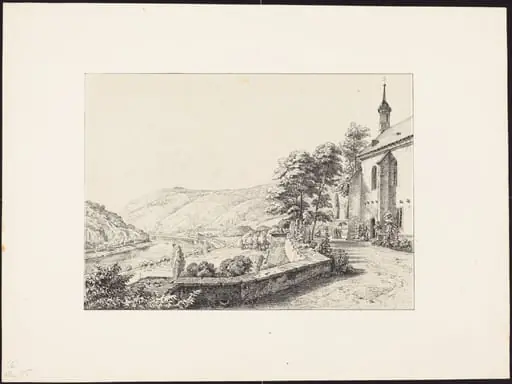 The Convent Terrace
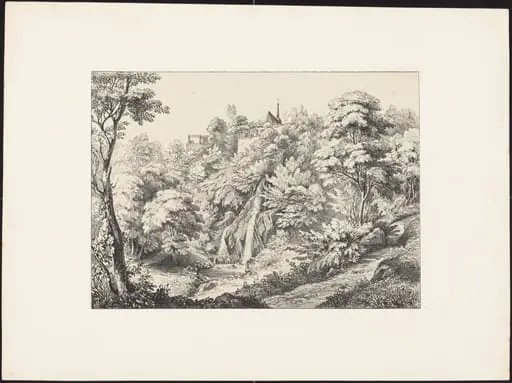 Rear View of the Convent with Waterfall
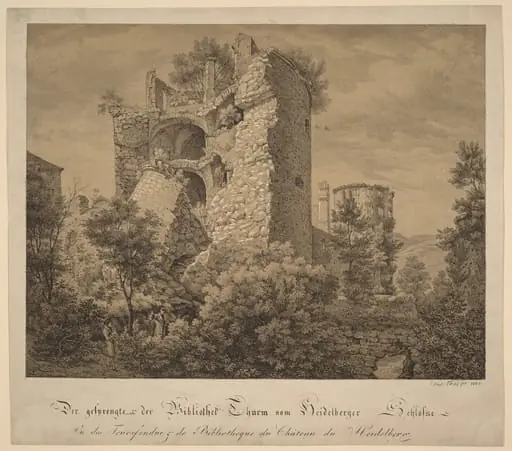 Der Gesprengte und der Bibliotheke Thurm von Heidelberger Schloß (The Exploded Tower and the Library of Heidelberg Castle)
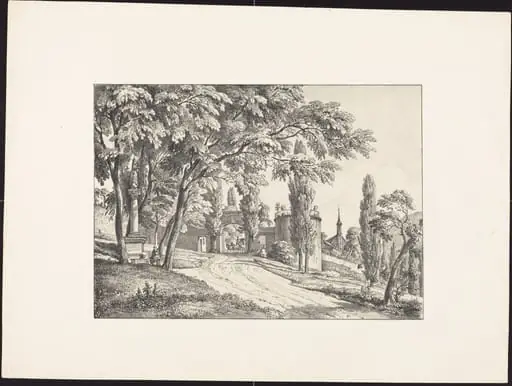 Entrance to the Convent Courtyard
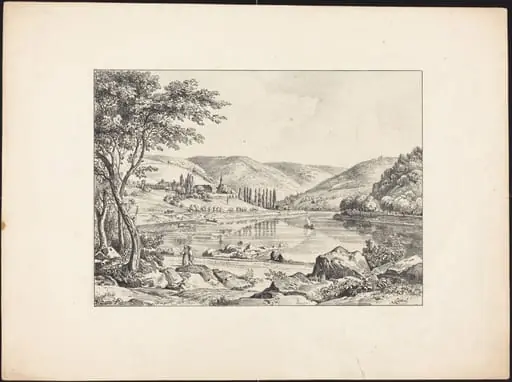 The Convent of Neuburg from Haarlass
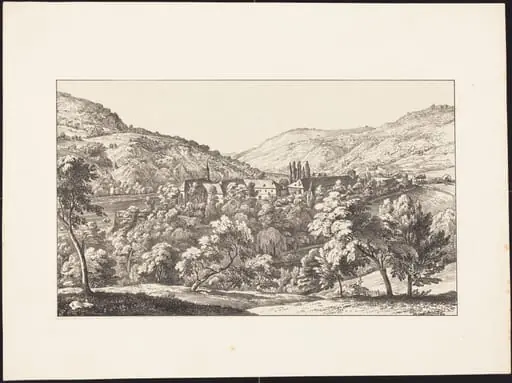 View of the Convent of Neuberg from the Summit
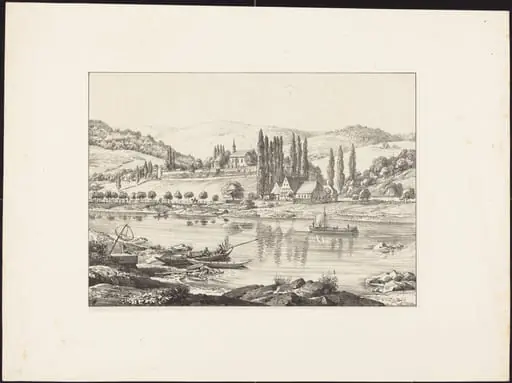 The Convent of Neuberg from Schlierbach
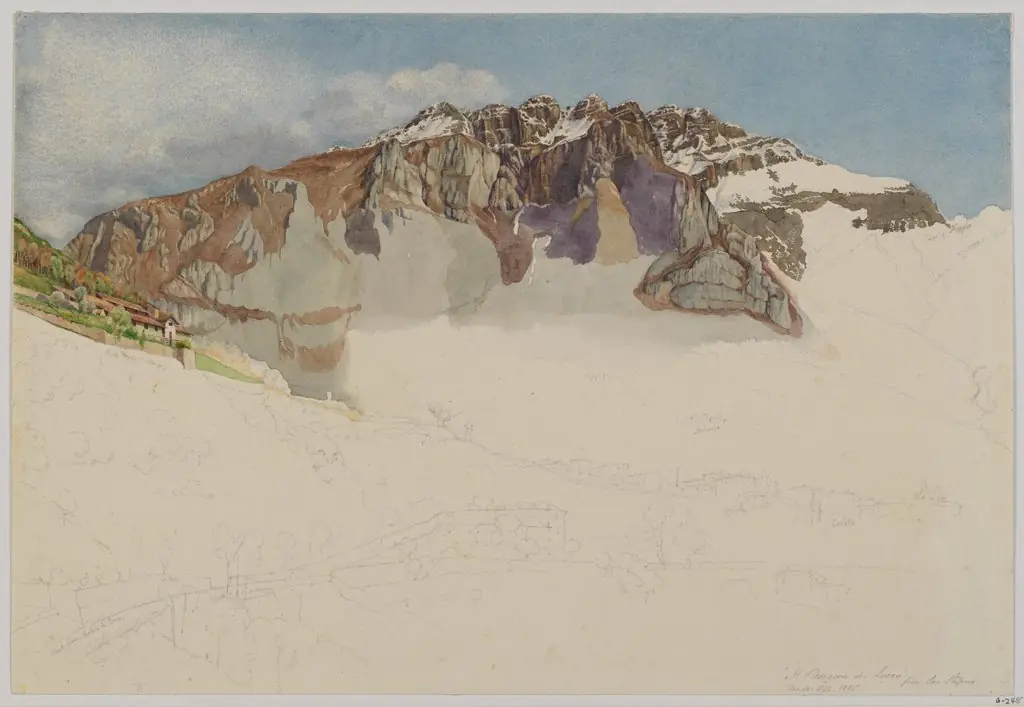 Mountainous Landscape in Italy : "Il Resegone"
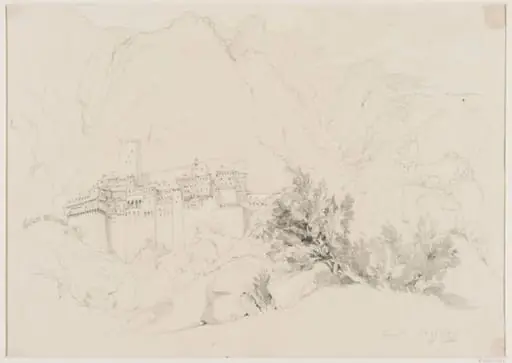 Convent F<sup>t</sup> of Paul, M<sup>t</sup> Athos
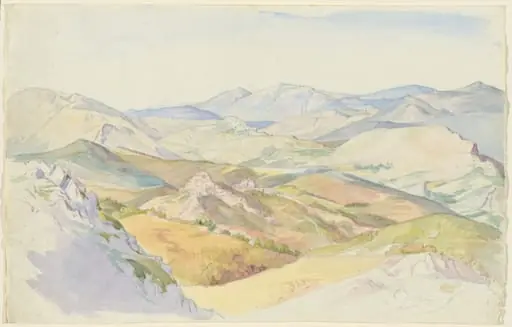 The Sabine Hills and Rocca Santo Stefano Seen from Civitella
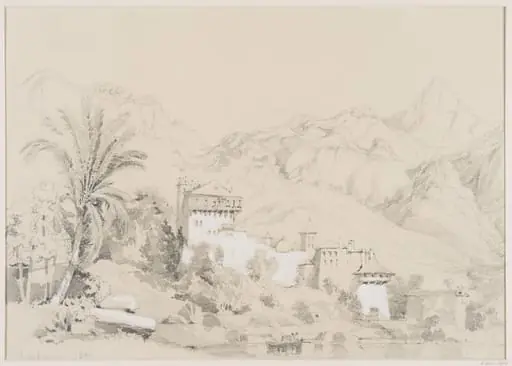 Russikon, 1843
 Untitled
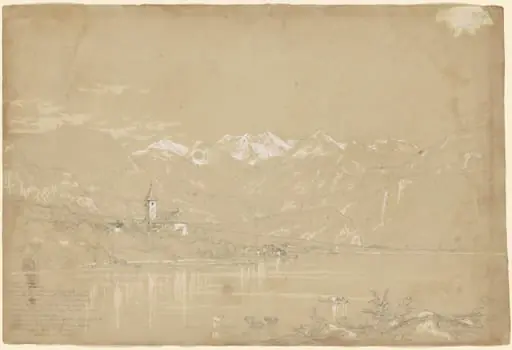 Lake of Brienz
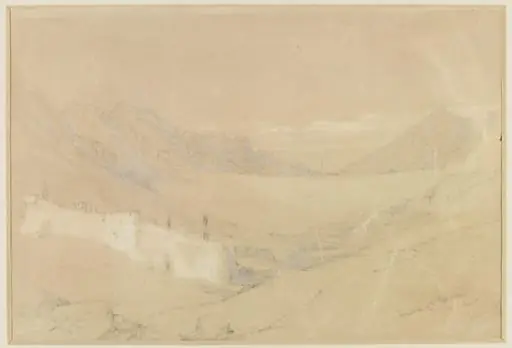 Convent of St. Katherine, Mount Sinai
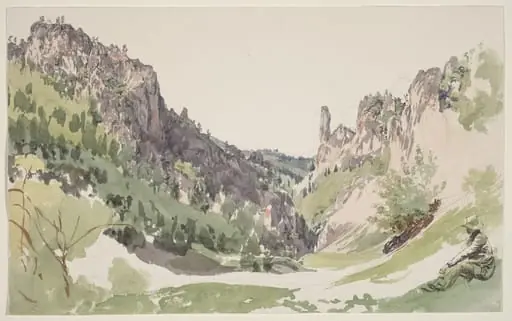 A Seated Man Contemplating a Sunlit Mountain Valley
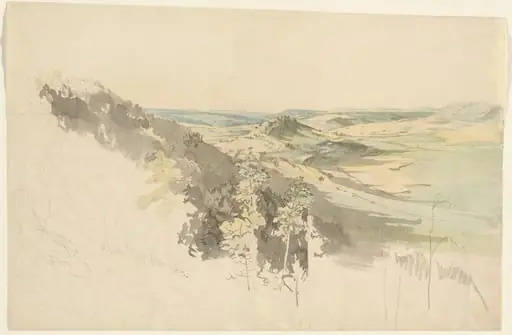 Hilly Landscape with Landsberg Castle
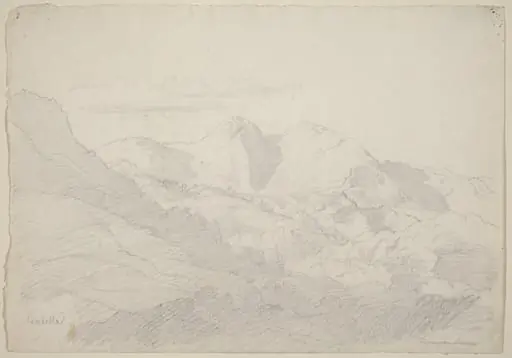 The Sabine Hills and Rocca Santo Stefano Seen from Civitella
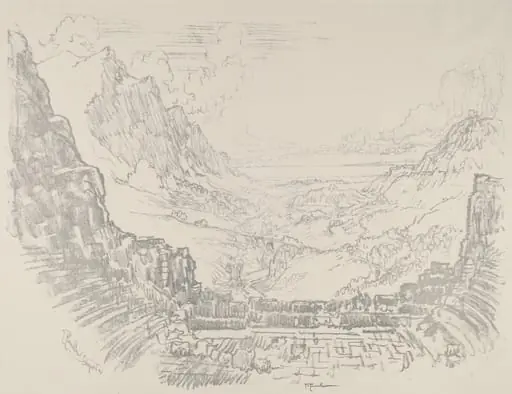 The Theatre, Segesta
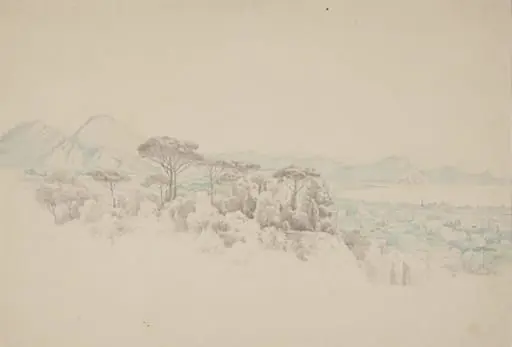 Udsigt fra Castel S. Eleno over Napoli