Artwork
Afternoon Tea Party
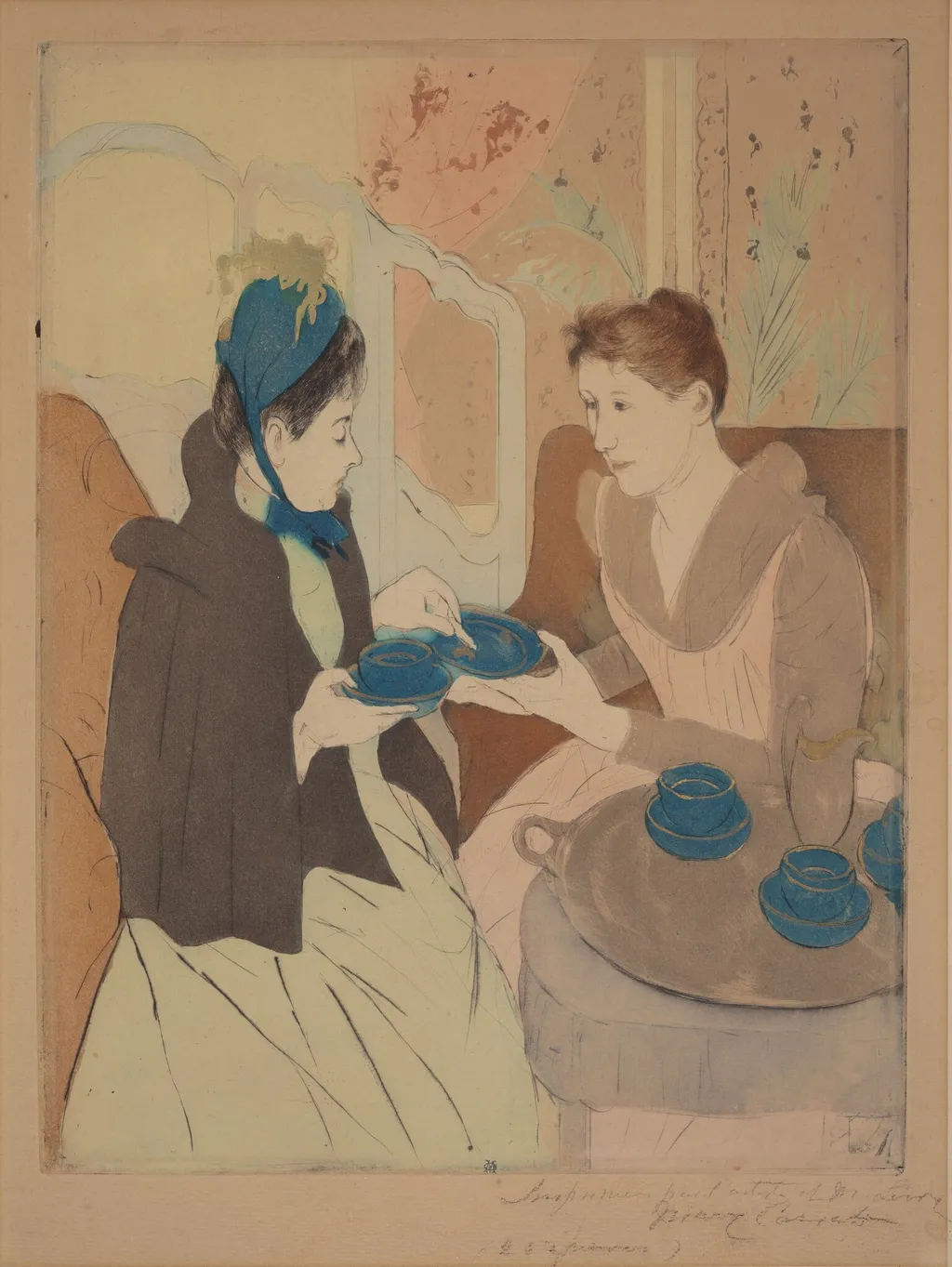
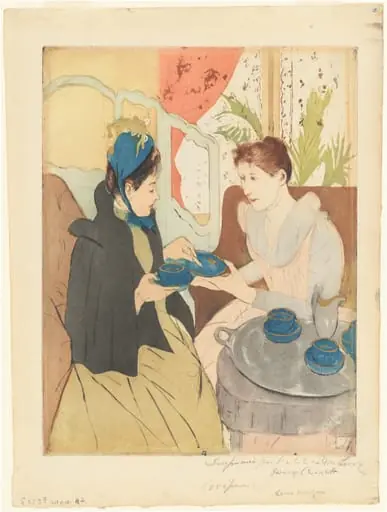
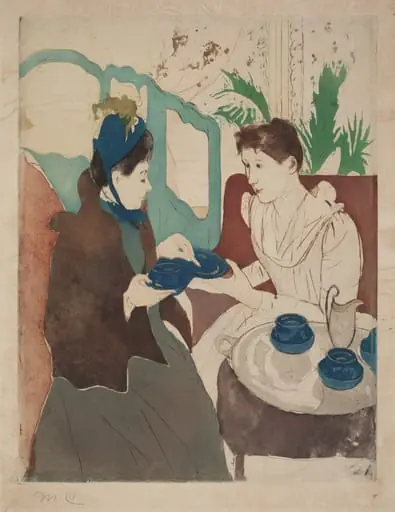
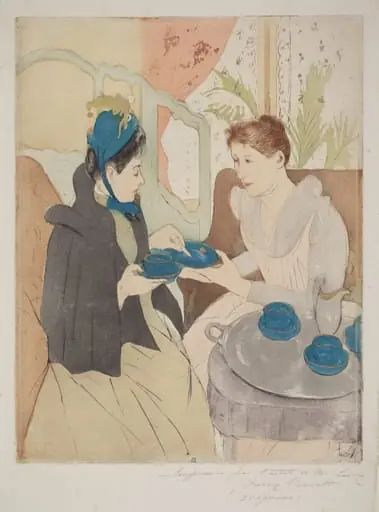
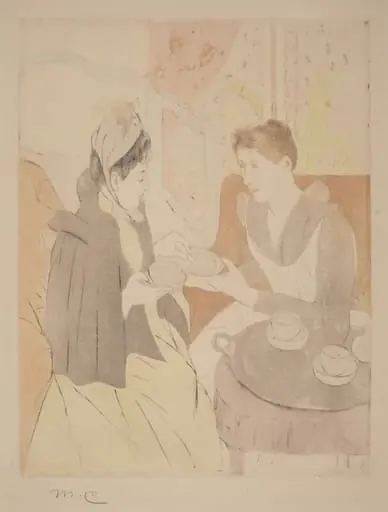
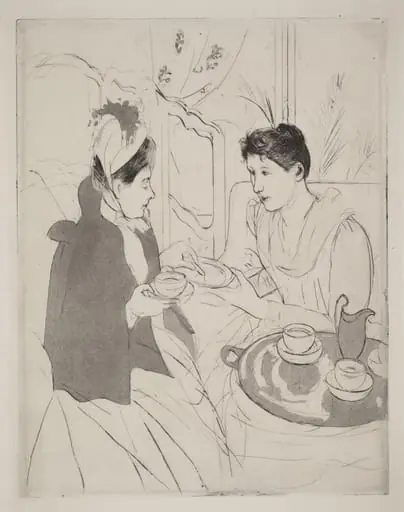
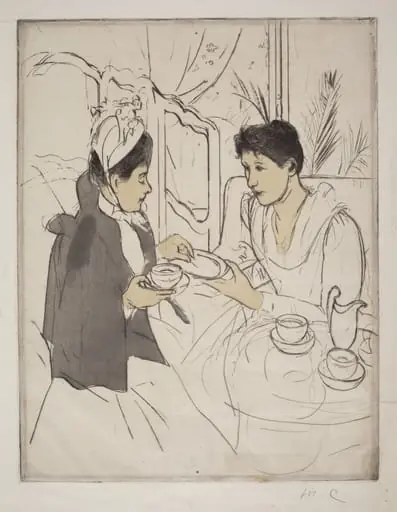
Afternoon Tea Party is an ink print by the Impressionist artist Mary Cassatt. It dates from 1890 and is held in the collection of the National Gallery of Art.
About this work
Overview
As an American artist living in France, Cassatt engaged deeply with the French printmaking tradition while aligning with the Impressionist circle.
Created in 1890, *Afternoon Tea Party* is a multilayered print by Mary Cassatt, combining color drypoint, softground etching, and aquatint with subtle gold paint accents on wove paper. As an American artist living in France, Cassatt engaged deeply with the French printmaking tradition while aligning with the Impressionist circle. This work exemplifies her commitment to capturing quiet domestic moments through the nuanced possibilities of print media.
Subject & Meaning
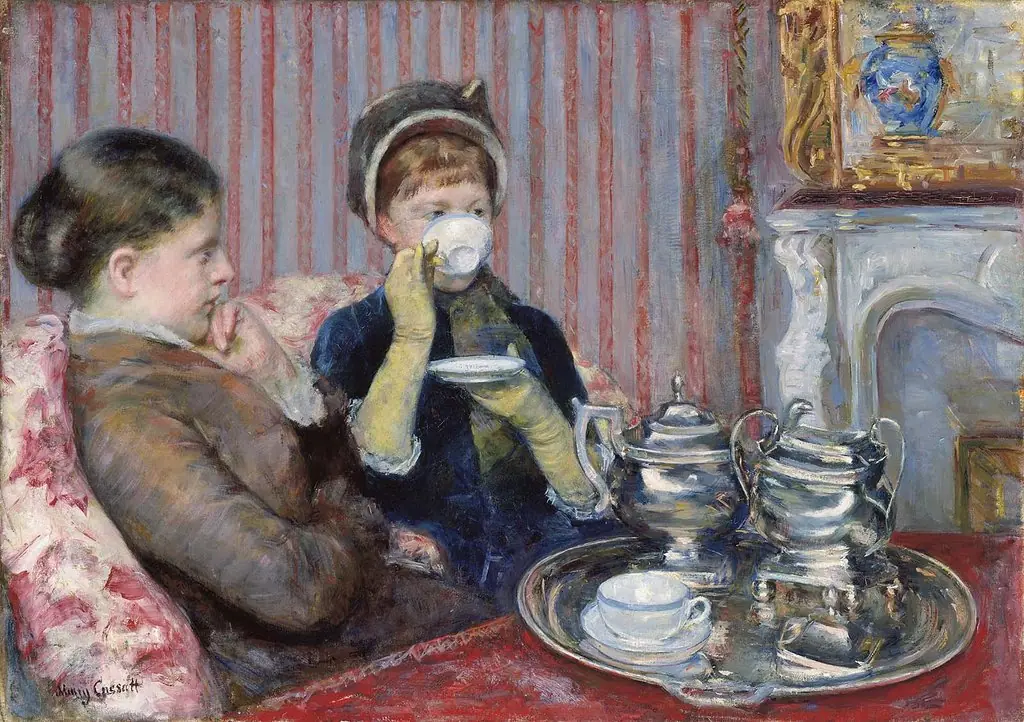
The scene depicts two women engaged in the ritual of afternoon tea, one holding a cup, the other observing with quiet attention. No grand narrative is present—only the stillness of shared time. Cassatt elevates this ordinary interaction, emphasizing the dignity and intimacy of women’s daily lives. The absence of men and the focus on private space reflect her interest in the interior world of women, free from public spectacle.
Technique & Style
Cassatt employed a combination of printmaking methods to achieve soft tonal transitions and delicate textures. Drypoint provided fine, expressive lines, while aquatint created subtle gradations of color. Softground allowed for the impression of fabric and surface detail. Touches of gold paint add a restrained luminosity, enhancing the quiet elegance of the scene without overwhelming its intimacy. The overall effect is tender and atmospheric.
History & Provenance
The print was made during Cassatt’s most active period in printmaking, following her participation in Impressionist exhibitions. It was likely produced in a small edition for private collectors and art societies rather than mass distribution. While its early ownership is not fully documented, it entered major museum collections in the 20th century, recognized for its technical innovation and quiet emotional resonance.
Context
In late 19th-century France, printmaking experienced a revival among artists seeking alternatives to oil painting. Cassatt, influenced by Japanese woodblock prints and her friendship with Degas, embraced etching as a means to explore composition and color in new ways. Her focus on domestic interiors aligned with broader cultural shifts that valued private, personal experience over historical or mythological themes.
Legacy
Cassatt’s *Afternoon Tea Party* contributed to the redefinition of printmaking as a serious artistic medium, not merely reproductive. Her integration of color, texture, and intimate subject matter influenced later generations of women artists exploring domestic life. The work remains a quiet testament to the artistic potential of everyday moments, grounded in technical mastery and empathetic observation.
Artist & collection
Artist
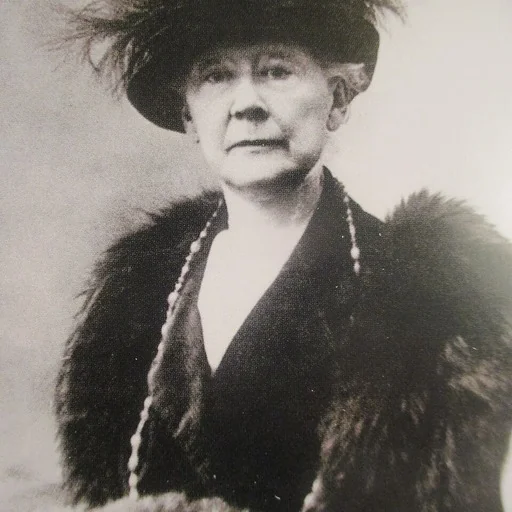
Mary Stevenson Cassatt (; May 22, 1844 – June 14, 1926) was an American painter and printmaker.