Artwork
Afternoon Tea Party
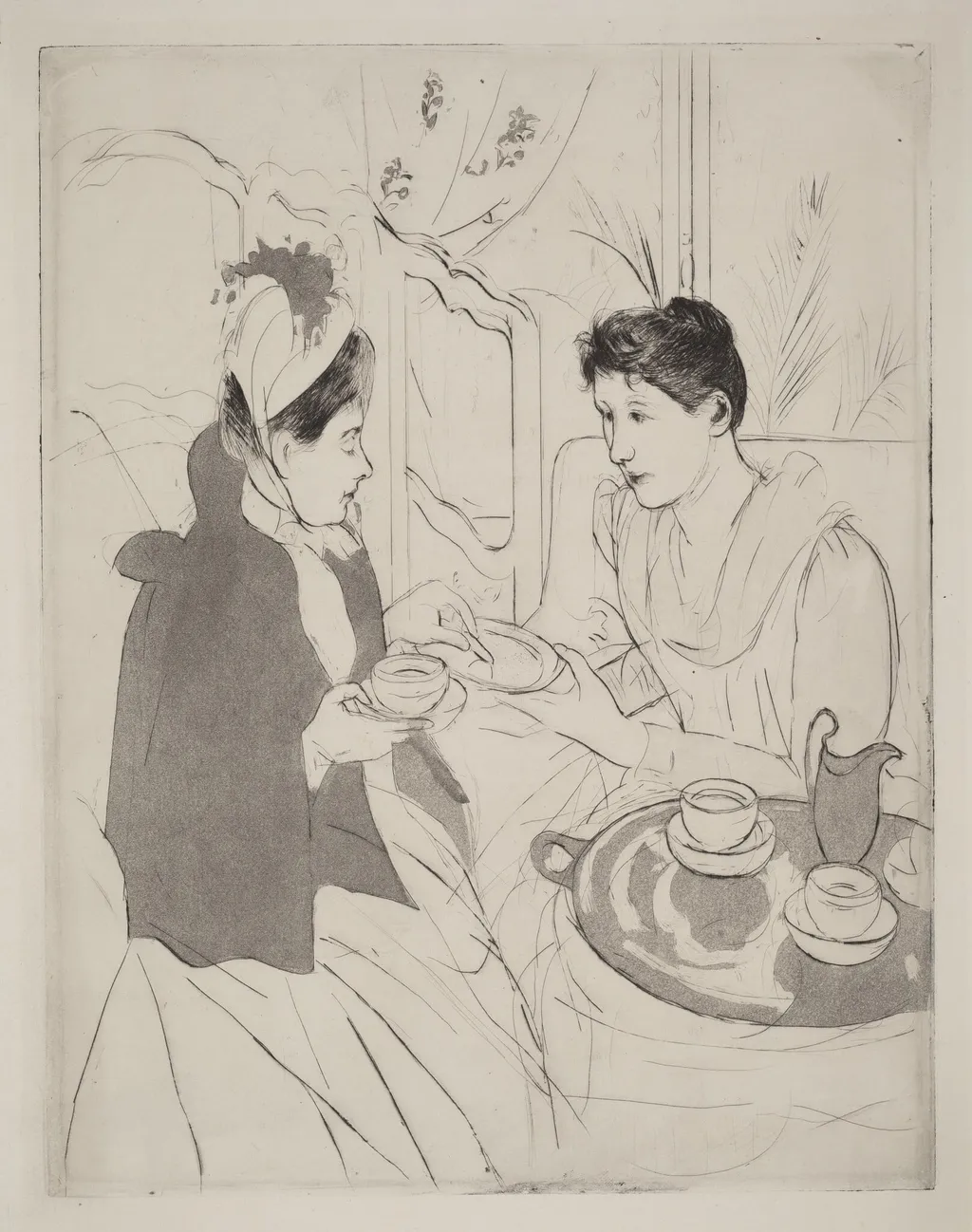
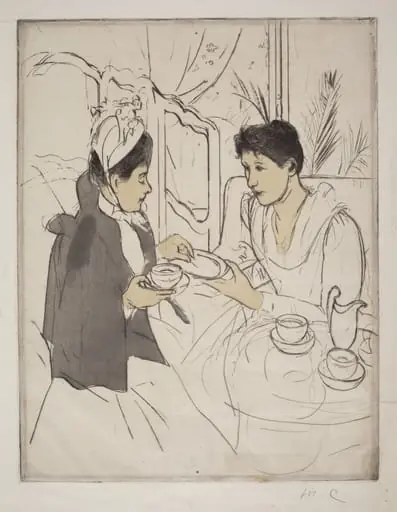
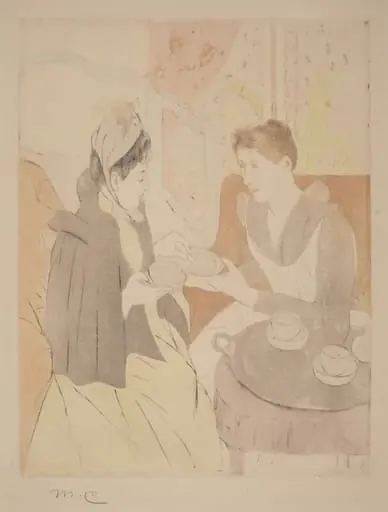
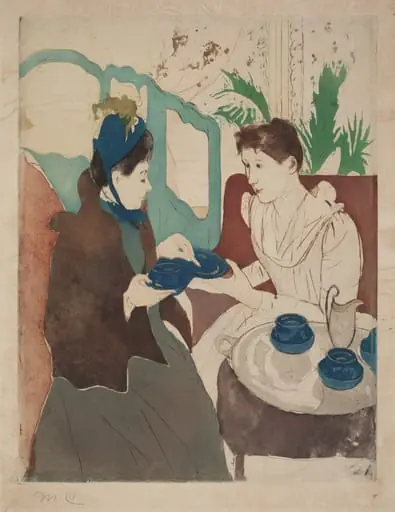
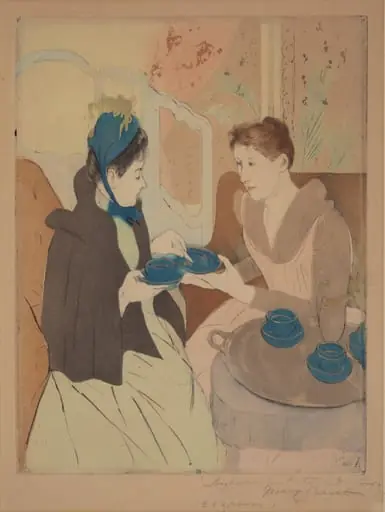
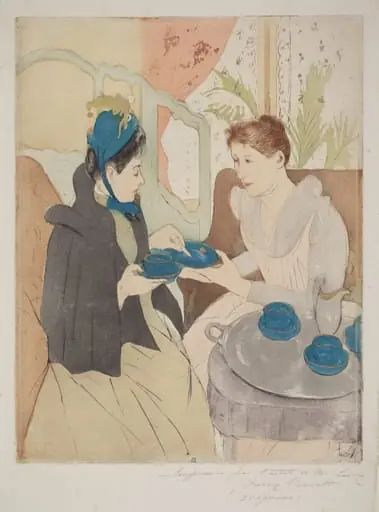
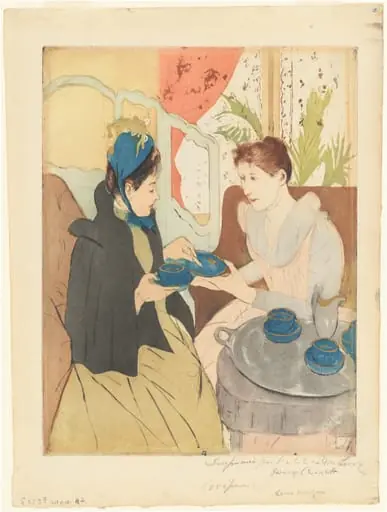
Afternoon Tea Party is an ink print by the Impressionist artist Mary Cassatt. It dates from 1890 and is held in the collection of the National Gallery of Art.
About this work
Overview
Created in 1890, *Afternoon Tea Party* is a multi-technique print by Mary Cassatt, combining drypoint, softground etching, and aquatint on wove paper.
Created in 1890, *Afternoon Tea Party* is a multi-technique print by Mary Cassatt, combining drypoint, softground etching, and aquatint on wove paper. As an American artist based in France, Cassatt specialized in intimate domestic scenes, often centered on women’s daily rituals. This work exemplifies her engagement with printmaking during a period when she was deeply involved with the Impressionist circle, refining her approach to light, texture, and quiet human interaction.
Subject & Meaning
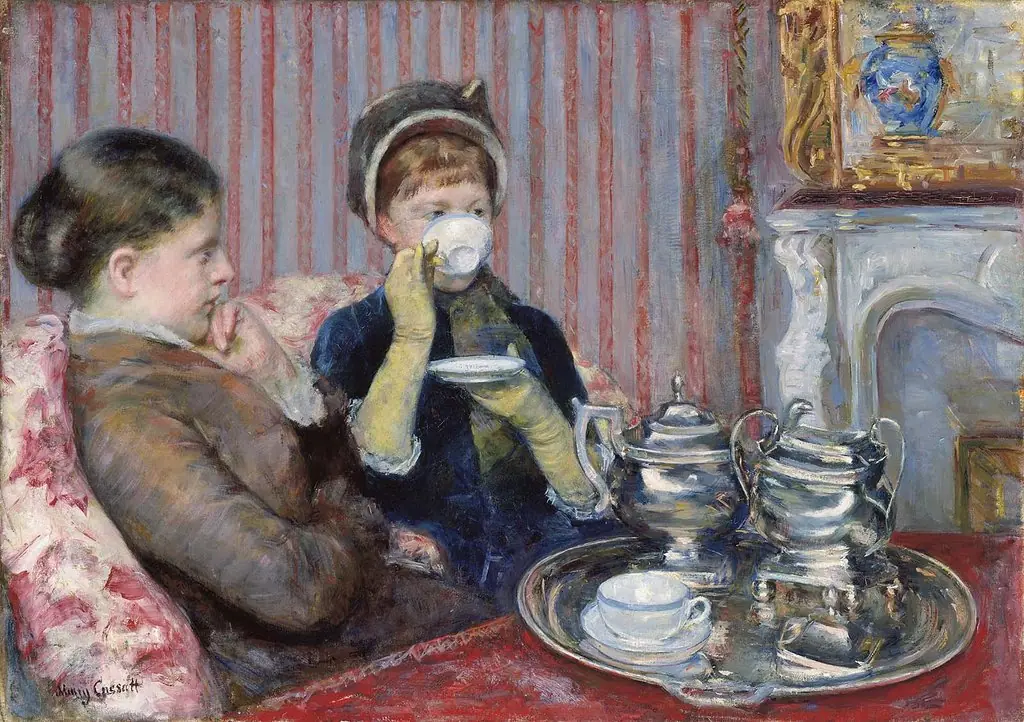
The scene depicts two women engaged in the ritual of afternoon tea—one pouring from a pot, the other holding a cup—surrounded by tableware and framed by bare winter branches visible through a window. The composition avoids narrative drama, instead emphasizing the rhythm of ordinary moments. Cassatt’s focus on such private exchanges reflects her interest in the unspoken bonds among women, elevating domestic routines to subjects worthy of artistic attention.
Technique & Style
Cassatt employed drypoint for its rich, velvety lines, softground to capture the texture of fabric and skin, and aquatint to modulate tonal gradations. The loose, fluid marks suggest spontaneity, as if the moment were observed in passing. The absence of sharp detail and the soft blending of tones align with Impressionist concerns for atmosphere over precision, while the print’s layered process reveals her technical innovation in a medium traditionally dominated by men.
History & Provenance
Produced during Cassatt’s most active period in printmaking, *Afternoon Tea Party* was likely part of a small edition, typical of her experimental approach. Though specific early ownership records are sparse, the work entered institutional collections in the 20th century, reflecting growing recognition of her contributions to printmaking. Its preservation underscores its significance as a key example of late 19th-century American printmaking in Europe.
Context
In the 1890s, Cassatt was among the few women artists regularly exhibiting with the Impressionists, challenging gendered norms in both subject and studio practice. While male contemporaries often depicted public life, she turned inward, portraying the domestic sphere with dignity. Her use of Japanese woodblock aesthetics—evident in flattened space and cropped compositions—further distinguished her work within the broader European art scene.
Legacy
Cassatt’s prints, including *Afternoon Tea Party*, expanded the possibilities of etching as a medium for personal expression. Her focus on women’s interiors influenced later generations of artists, particularly those exploring private life and gendered space. Today, the work stands as a quiet testament to her ability to transform routine moments into enduring visual studies, bridging technical mastery with empathetic observation.
Artist & collection
Artist
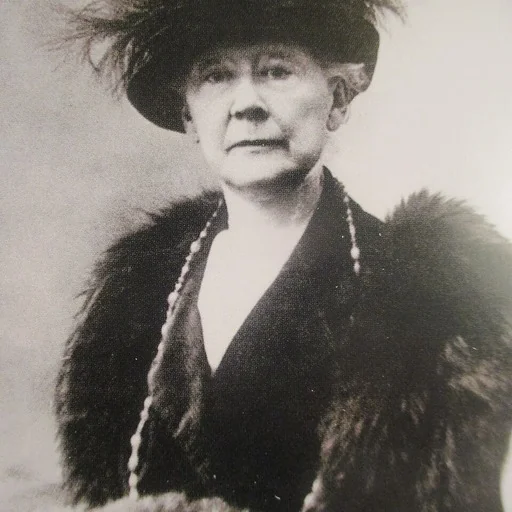
Mary Stevenson Cassatt (; May 22, 1844 – June 14, 1926) was an American painter and printmaker.