Artwork
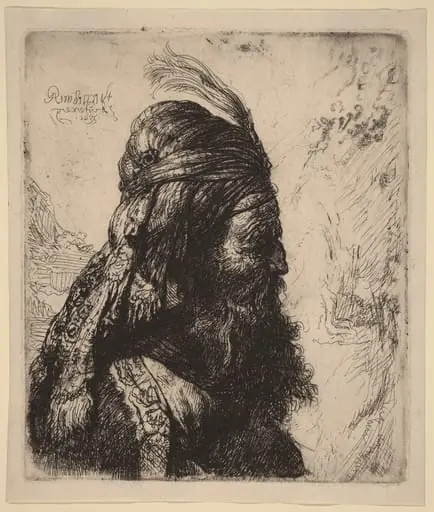
The Third Oriental Head
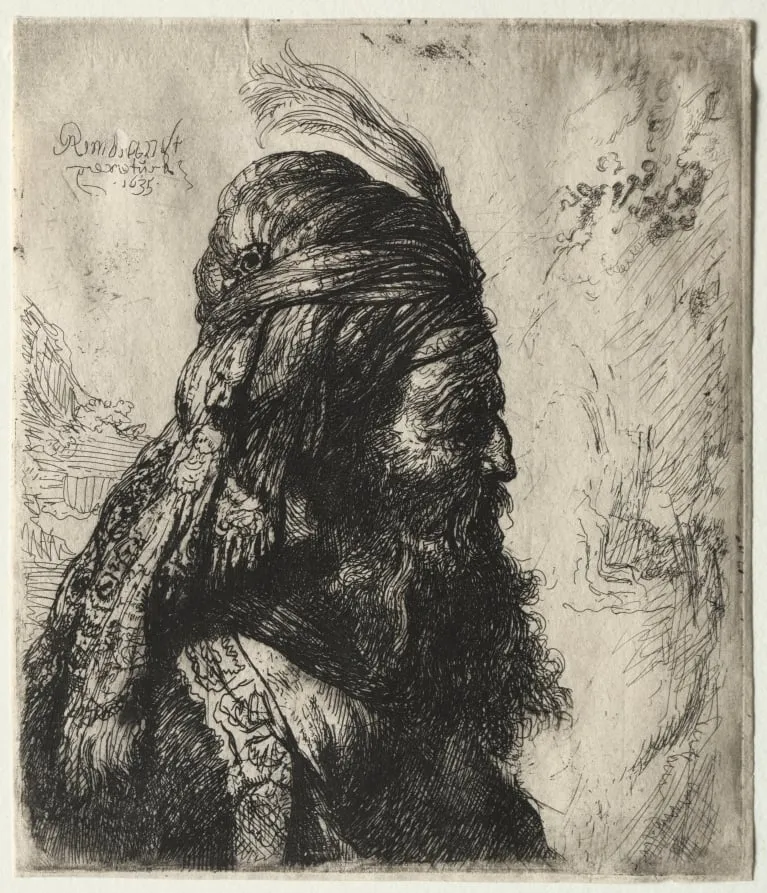
The Third Oriental Head is a print by the Baroque artist Rembrandt. It dates from 1635 and is held in the collection of the Cleveland Museum of Art.
About this work
Overview
It resides in the collection of The Cleveland Museum of Art, where it is studied for its technical precision and psychological depth.
Created in 1635, The Third Oriental Head is a print by Rembrandt van Rijn, executed in etching and drypoint. It depicts a male figure wearing a turban, rendered with intense focus on facial expression and texture. The work is part of a small series of orientalized portraits Rembrandt produced during this period. It resides in the collection of The Cleveland Museum of Art, where it is studied for its technical precision and psychological depth.
Subject & Meaning
The figure is not a portrait of a specific individual but an imagined representation of an Eastern subject, common in 17th-century Dutch art as a vehicle for exploring exoticism and human character. The direct gaze and furrowed brow convey introspection rather than stereotype. Rembrandt used this guise to investigate emotion and identity, distancing himself from mere costume studies by emphasizing psychological presence over cultural accuracy.
Technique & Style
Rembrandt employed etching and drypoint to achieve rich tonal contrasts and tactile surface variation. Deep shadows define the contours of the turban and face, while fine, incised lines capture the texture of skin and fabric. The chiaroscuro effect heightens the figure’s three-dimensionality, drawing attention to the eyes and the subtle play of light across the brow and cheek. The print’s spontaneity suggests rapid, expressive mark-making.
History & Provenance
The print was made during Rembrandt’s early Amsterdam years, a period when he was experimenting with printmaking and oriental themes. It entered The Cleveland Museum of Art’s collection in the 20th century, likely through a major acquisition of Dutch prints. Its provenance traces back through private European collections, though its early ownership remains partially undocumented.
Context
In the 1630s, Dutch artists frequently depicted figures in 'oriental' dress as a means of exploring identity and narrative. These were not ethnographic studies but theatrical constructs, influenced by theater, travel literature, and the presence of foreign traders in Amsterdam. Rembrandt’s versions stand apart for their emotional gravity, diverging from the decorative conventions of his peers.
Legacy
The Third Oriental Head contributed to the evolution of the printed portrait as a medium for psychological inquiry. Later artists and printmakers studied Rembrandt’s handling of light and texture in such works, recognizing his ability to transform costume into a vehicle for inner life. It remains a key example of how printmaking could rival painting in expressive depth during the Dutch Golden Age.
Artist & collection
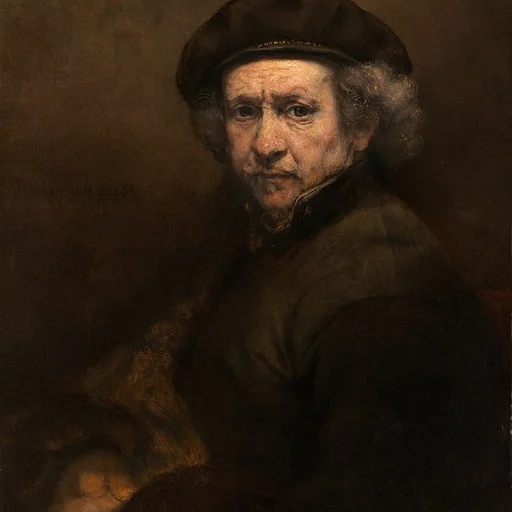
Artist
Rembrandt Harmenszoon van Rijn (15 July 1606 – 4 October 1669), known mononymously as Rembrandt, was a Dutch Golden Age painter, printmaker, and draughtsman.