Artwork
Bust of a Man Wearing a High Cap, Three-Quarters Right (The Artist's Father?)
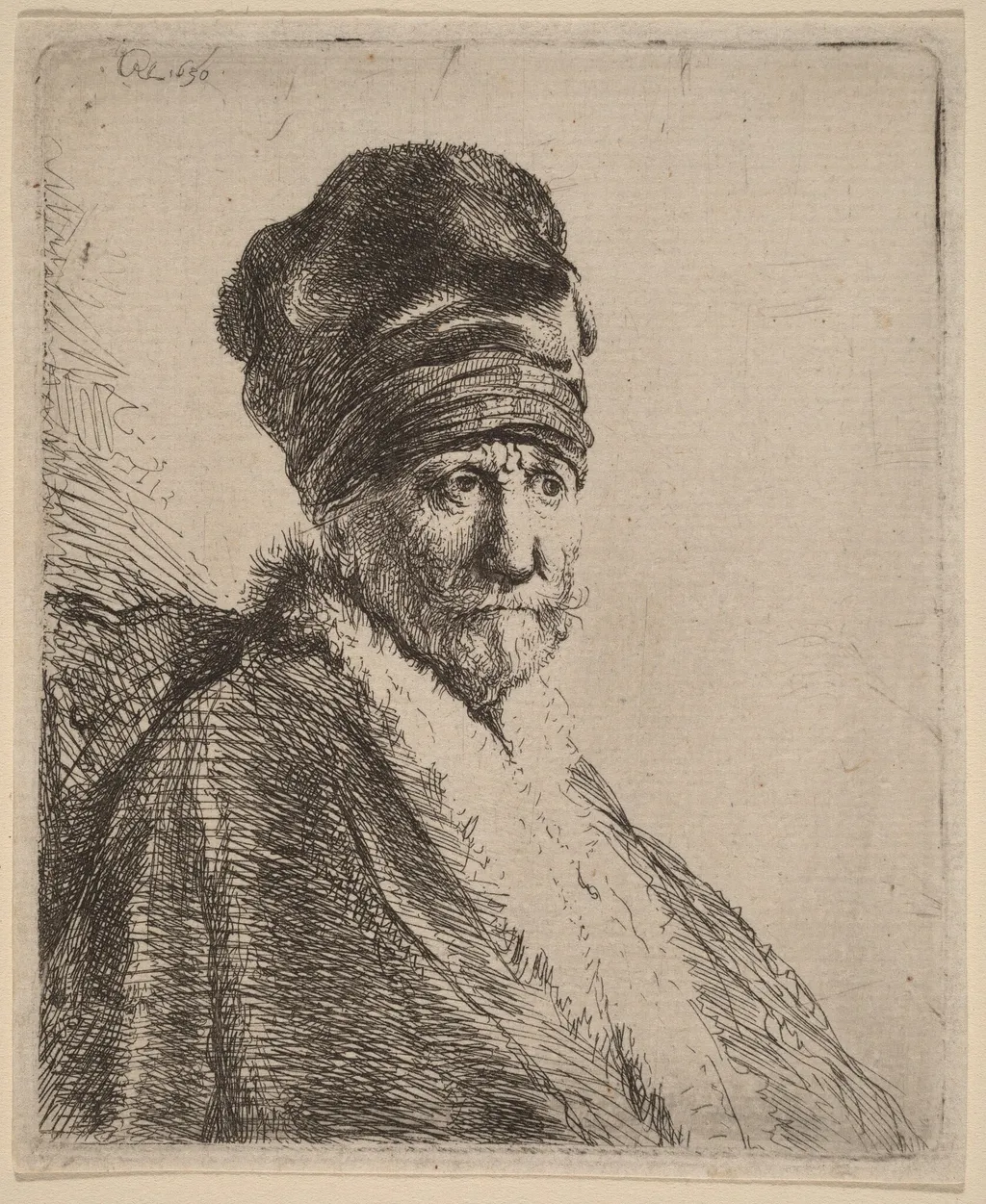
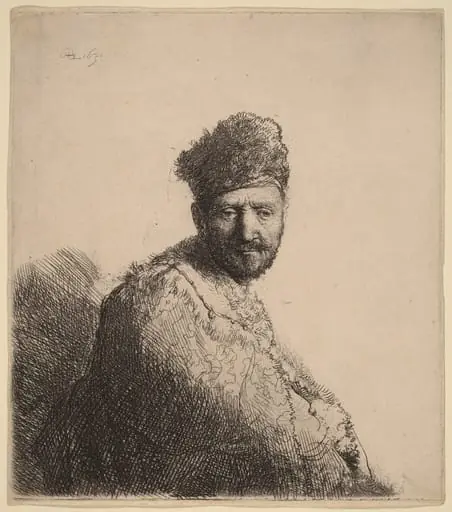
Bust of a Man Wearing a High Cap, Three-Quarters Right (The Artist's Father?) is an ink print by the Baroque artist Rembrandt. It dates from 1630 and is held in the collection of the National Gallery of Art.
About this work
Overview
Rembrandt’s 1630 etching titled *Bust of a Man Wearing a High Cap, Three‑Quarters Right* presents a half‑length portrait rendered in black ink on laid paper.
Rembrandt’s 1630 etching titled *Bust of a Man Wearing a High Cap, Three‑Quarters Right* presents a half‑length portrait rendered in black ink on laid paper. The image captures an elderly figure turned slightly away, his features marked by deep lines and a full beard, while a rounded cap and fur‑trimmed collar frame his head. The work belongs to the artist’s early printmaking period and is catalogued as a single‑sheet impression.
Subject & Meaning
The sitter appears to be an older gentleman, his age suggested by pronounced wrinkles and a weathered beard. The high, rounded cap and fur collar hint at a status of modest wealth or a particular profession, though no definitive identification exists. Some scholars have speculated that the figure could be Rembrandt’s own father, a hypothesis that remains unproven but adds a personal dimension to the study of the work.
Technique & Style
Executed with a traditional copper‑plate etching, Rembrandt employed a biting process that allowed ink to collect in the incised lines, producing a dense, grainy texture. The marks are intentionally irregular, giving the face a tactile, almost sketch‑like quality. This approach emphasizes chiaroscuro through stark contrasts, while the uneven line work conveys a sense of immediacy and psychological depth uncommon in more polished prints of the period.
History & Provenance
The print was first recorded in the early 18th century within a Dutch collection, later passing through several European hands before entering a major museum’s holdings in the mid‑20th century. No surviving preparatory drawings or related studies are known, and the plate itself has not been re‑etched, making extant impressions valuable for scholars tracing Rembrandt’s early print output.
Context
Created during a prolific phase when Rembrandt was experimenting with print media, the etching reflects the artist’s interest in capturing human character through direct, unrefined line work. It aligns with contemporary Dutch portraiture that favored realism over idealization, and it anticipates the more expressive, textural qualities that would dominate Rembrandt’s later drawings and etchings.
Artist & collection
Artist
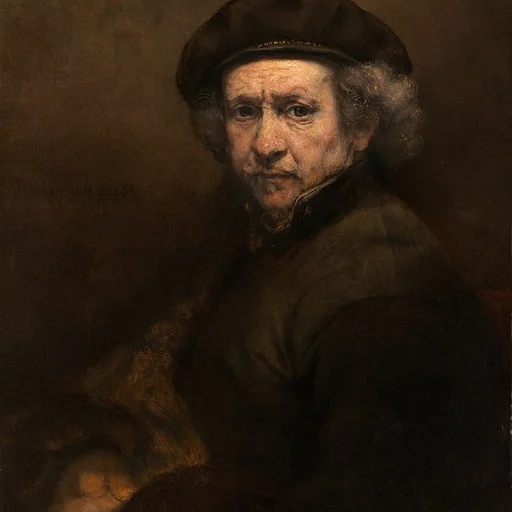
Rembrandt Harmenszoon van Rijn (15 July 1606 – 4 October 1669), known mononymously as Rembrandt, was a Dutch Golden Age painter, printmaker, and draughtsman.

 Bearded Man, in a Furred Oriental Cap and Robe: the Artist's Father
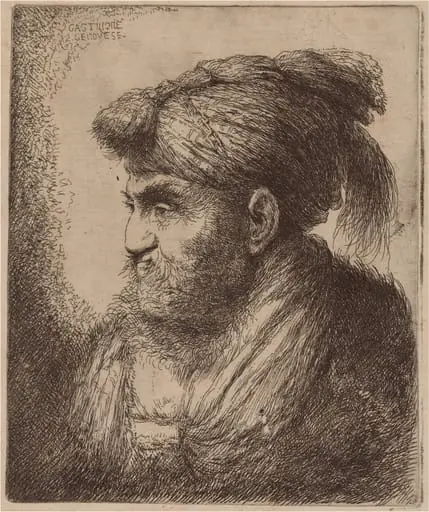 Man with a Beard and a Tassled Headdress, Facing Left
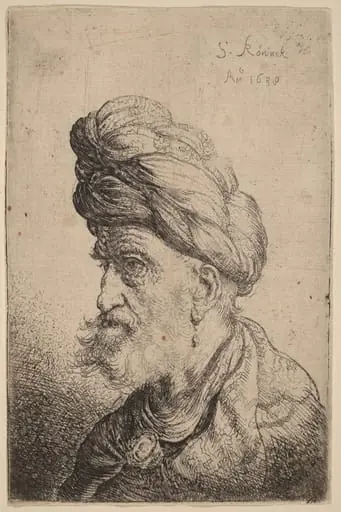 Bust of a Man with a Turban Facing Left
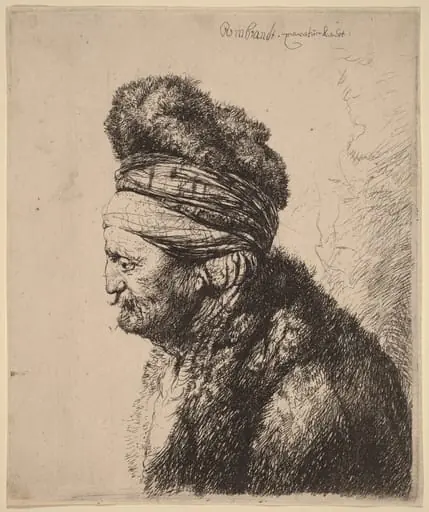 The Second Oriental Head
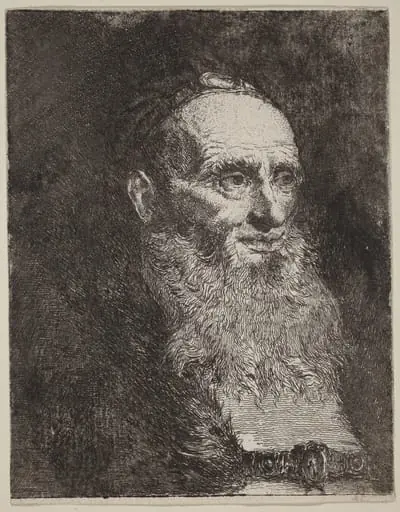 Old Man with a Beard
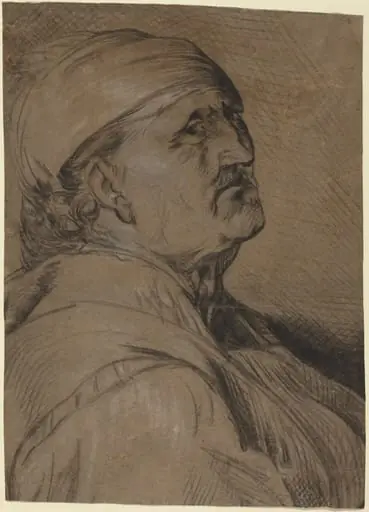 Head of an Old Man
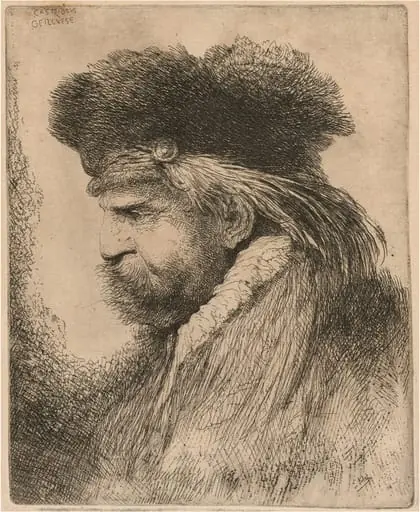 Bearded Man in a Fur Cap, Facing Left
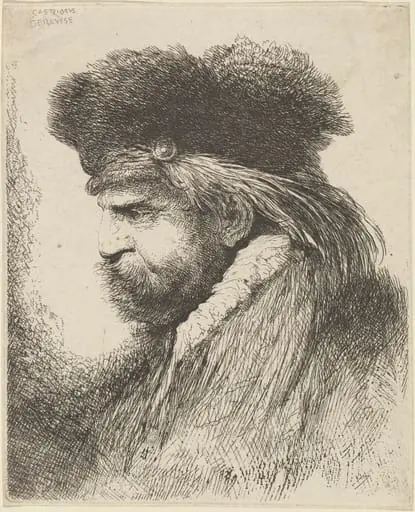 Bearded Man in a Fur Cap, Facing Left
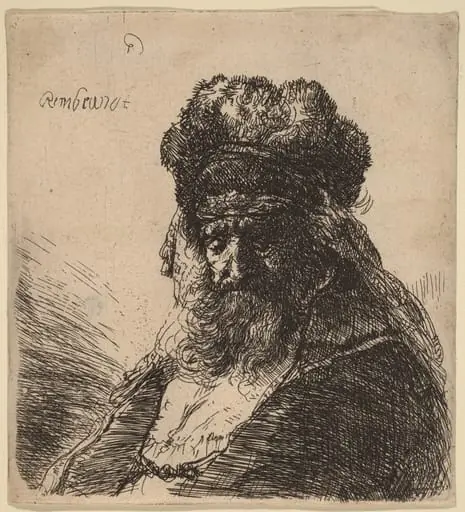 Old Bearded Man in a High Fur Cap, with Eyes Closed