Artwork
Great Temple at Abousimbal
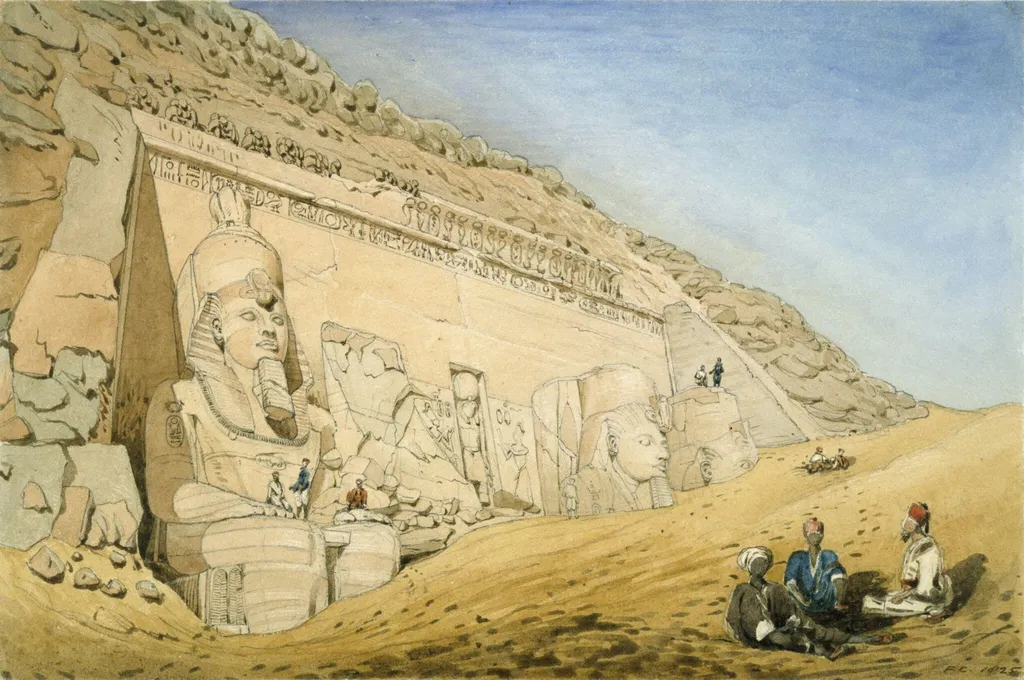
Great Temple at Abousimbal is a watercolor work on paper by the British Romanticist artist Frederick Catherwood. It dates from 1825 and is held in the collection of the Victoria and Albert Museum.
About this work
Overview
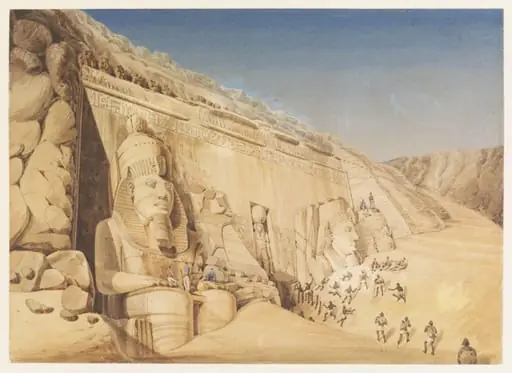
This 1825 watercolour by Frederick Catherwood captures the imposing facade of the rock-cut Great Temple of Ramesses II at Abu Simbel, Egypt, highlighting its monumental scale and intricate details.
Subject & Meaning
The painting focuses on one of the temple's giant stone faces, adorned with a crown and conveying serenity amidst surrounding activity. Smaller figures of people and animals at the base underscore the monument's awe-inspiring presence.
Technique & Style
Catherwood employed watercolour to achieve a textured, weathered appearance of the stone, accentuated by thoughtful manipulation of light and shadow. The inclusion of hieroglyphs along the cliff's edge adds depth and historical context.
History & Provenance
Created during Catherwood's January-February 1824 expedition to the site, this work was later sold at Sotheby's on October 12, 1977. Two companion pieces from 1824 are housed in a private U.S. collection.
Context
Part of Catherwood's broader project to sketch ancient Egyptian ruins, this piece reflects 19th-century European interest in Egyptian antiquities and the artist's personal fascination with these sites.
Artist & collection
Artist
Frederick Catherwood was an English artist, architect and explorer, best remembered for his meticulously detailed drawings of the ruins of the Maya civilization.

 Excavation of the Great Temple of Ramesses II at Abu Simbel
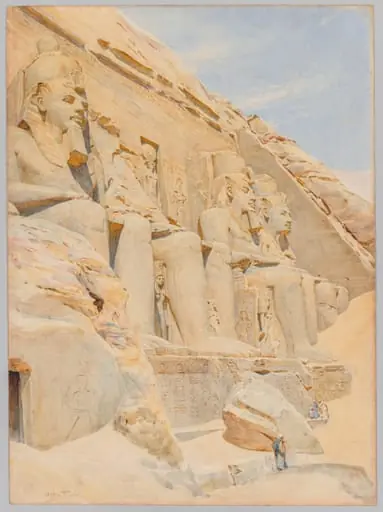 The Great Temple of Abu Simbel
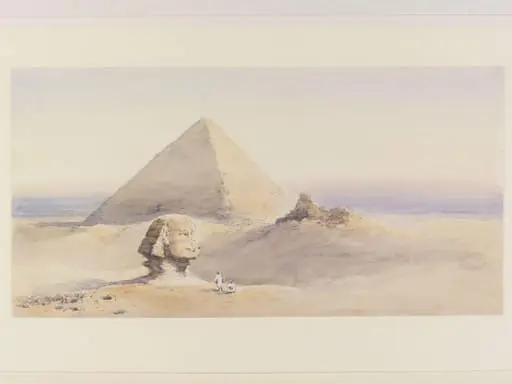 Sphinx & Great Pyramid
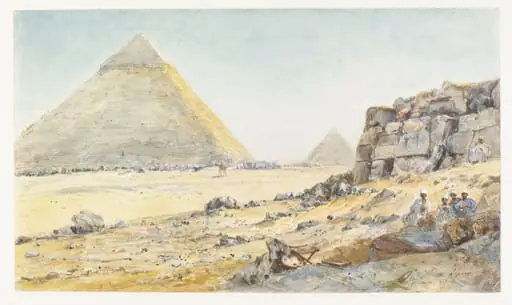 Tombeau de Lipsius. Pyramide. Chefren. 1880-1890
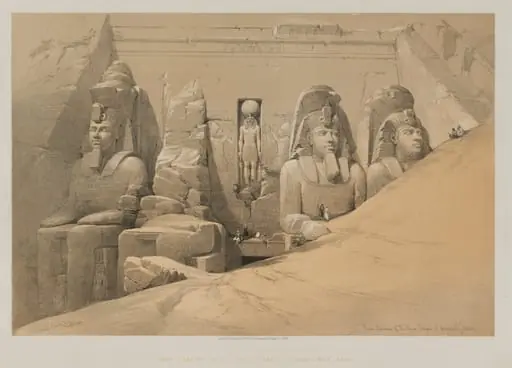 Egypt and Nubia, Volume II: Front Elevation of the Great Temple of Aboo Simbel, Nubia
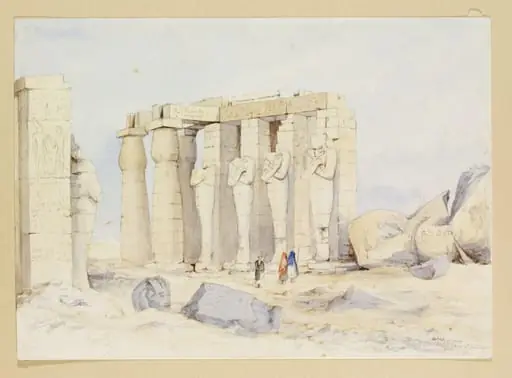 Osiride columns broken statue of Rameses II Memnonium Thebes
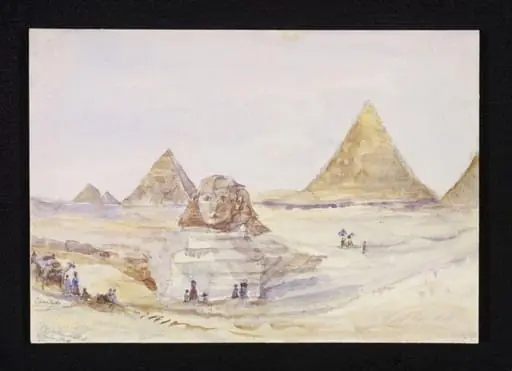 Pyramids and Sphinx
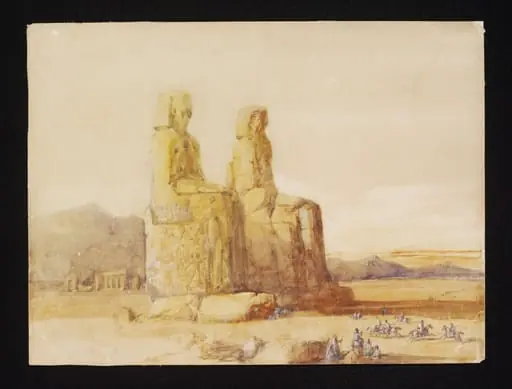 The Vocal Statue - Thebes, 1848